What Anti-Corrosive Jewelry Is Safe for Hot Spring Vacations?
There is a particular quiet joy to a hot spring vacation. Steam rising off mirror-smooth water, the faint scent of minerals in the air, your body unwinding as the rest of the world drops away. Yet I have lost count of how many times I have watched that serenity break when someone looks down mid-soak and realizes a favorite ring has darkened, a clasp has stiffened, or a plated pendant no longer gleams the way it did back in the hotel room.
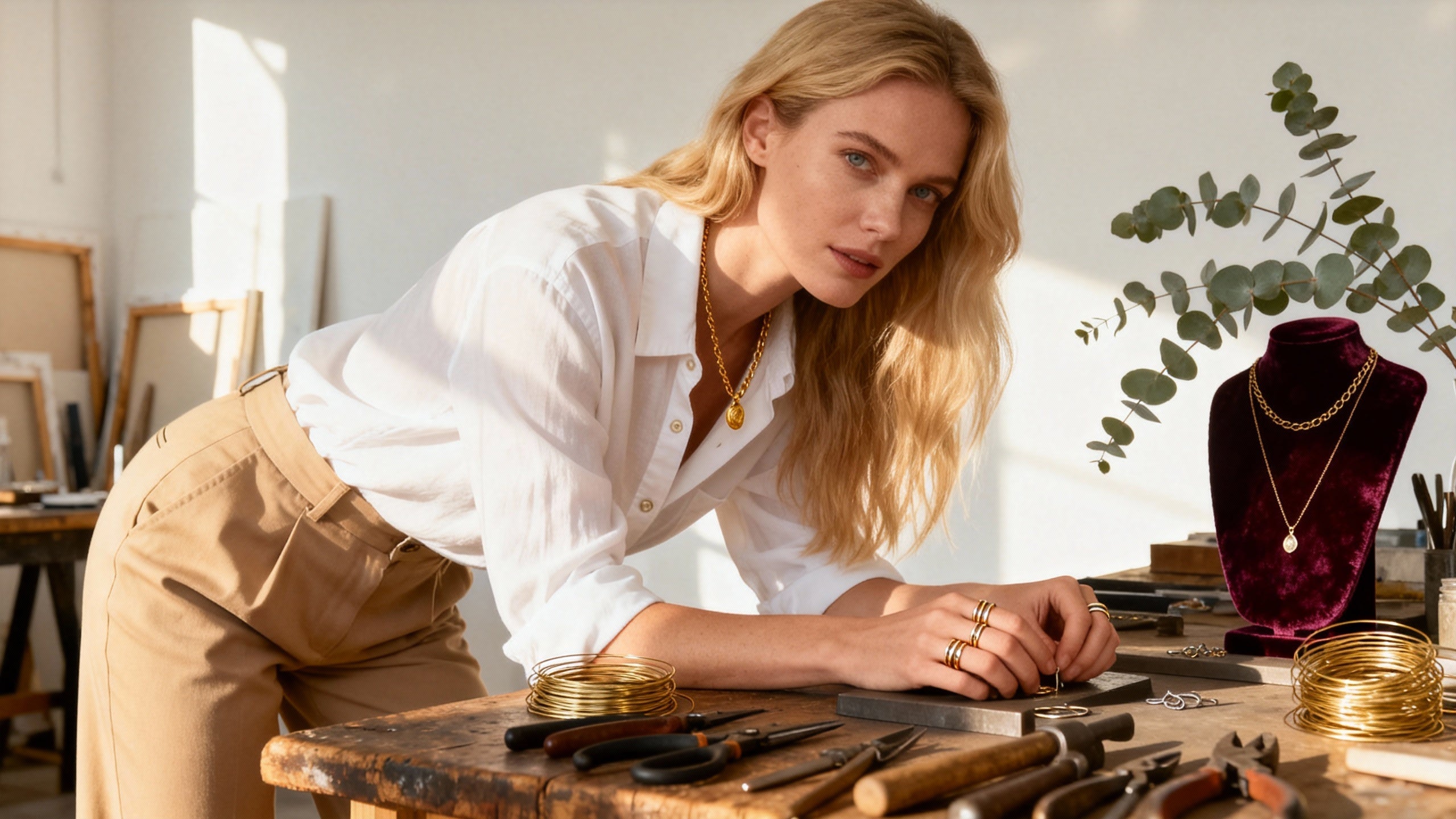
As a jewelry connoisseur who spends as much time in mineral pools and hot tubs as in ateliers and gem labs, I have learned that the question is not simply “Can I wear jewelry in hot springs?” but “Which truly anti-corrosive materials can tolerate that environment, and which should stay on dry land?” The answer is more nuanced than most marketing suggests.
Drawing on what manufacturers, metals specialists, and jewelry-care experts have established about tarnish, corrosion, and waterproof design, let us explore which metals and constructions are genuinely suited to hot spring vacations—and how to enjoy your pieces without sacrificing them to the water.
Why Hot Springs Are So Harsh on Jewelry
Before we talk about “safe” metals, we need to understand the enemy. Tarnish and oxidation are not cosmetic accidents; they are chemistry. Writers for Blake Bros. and several other specialist jewelers describe tarnish as a surface reaction between metal and its environment—air, moisture, sweat, and chemicals such as chlorine, sulfur compounds, or acids in skincare. The result is a dull, discolored layer that can even stain your skin.
Silver, copper, and nickel are particularly vulnerable. Sterling silver, which is about 92.5 percent silver and the rest usually copper, produces dark silver sulfide when exposed to sulfur in the air. Brass and bronze develop greenish patinas as copper reacts. Lower-karat gold alloys dull over time because the non-gold metals in the mix oxidize more readily. The “green ring” marks many people notice are classic copper-related reactions, as J.H. Young jewelers explain.
Hot springs combine several of the accelerants these sources warn about: moisture, dissolved minerals, and often sulfur-bearing compounds, all at elevated temperature. Tarnish-resistant jewelry brands and care guides also highlight that heat, humidity, and chemicals such as chlorine, salt, and cleaning agents speed up corrosion. That is why so many recommend removing jewelry before swimming in pools, soaking in hot tubs, or cleaning with harsh products.
A mineral pool may look more romantic than a hotel bathtub, but from your jewelry’s perspective it is simply another chemically active, hot, humid environment. If a metal is prone to tarnish, corrosion, or plating wear in everyday conditions, it will almost certainly struggle in a hot spring.

Anti-Corrosive, Non-Tarnish, Waterproof: What Each Really Means
Marketing language around “non-tarnish,” “anti-corrosive,” and “waterproof” jewelry can be seductive, especially when you are packing for a vacation. Yet these terms are not interchangeable.
Jewelry specialists writing for Tulipiece, Feebee Jewelry, and Eclater Jewelry emphasize that “anti-tarnish” or “tarnish-resistant” jewelry is engineered to resist the surface corrosion that causes discoloration. This can be achieved with inert base metals such as high-grade stainless steel, titanium, platinum, or high-karat gold, or with protective coatings such as PVD (Physical Vapor Deposition), rhodium plating, or clear e-coatings.
By contrast, Darling & Divine draw a clear line between “non-tarnish” and “waterproof.” A piece can resist tarnish under normal wear yet still suffer if adhesives soften, coatings lift, or thin plating wears away under repeated submersion in hot, chemically complex water. Waterproof, in their usage, means the entire construction—metal, plating, stones, and glue—is designed to tolerate full, repeated immersion without damage.
In the context of hot spring vacations, “anti-corrosive” jewelry is best understood as pieces made from metals that are naturally resistant to oxidation and corrosion, such as platinum, titanium, stainless steel, and high-karat gold, often enhanced by advanced coatings. “Waterproof” adds another layer: an overall build quality that does not depend on fragile plating or vulnerable adhesives.
The most reliable rule that emerges across sources is simple and sober: even if a piece is labeled non-tarnish or waterproof, repeated exposure to hot water, minerals, soaps, and cosmetics will shorten its life. Removing jewelry before soaking is always the safest option. When you do choose to wear something, you want the metals that are proven to withstand harsh environments better than others.
The Best Metals for Hot Spring Adventures
The good news is that not all metals react the same way. Modern jewelry materials science has given us alloys and constructions that are remarkably resilient in high-humidity, high-mineral conditions. Below are the standouts that emerge consistently across sources such as Atolea Jewelry, Feebee Jewelry, Tulipiece, and multiple metals-education guides.
Stainless Steel: The Understated Workhorse
If there is a single metal that the durability-focused sources keep returning to, it is stainless steel. Atolea Jewelry, The Chubby Paw, Feebee Jewelry, and several materials guides highlight high-grade stainless steel—especially 316L “surgical” or “marine” steel—as one of the best everyday options for resisting rust, tarnish, and corrosion.
Stainless steel is an alloy of iron, chromium, and often nickel. The chromium content forms a thin, self-healing chromium oxide layer that protects the metal underneath from rust and tarnish. Jewelry writers note its excellent resistance to water, sweat, and everyday chemicals, with Blue Streak Crystals describing it as tough, tarnish-resistant, and low maintenance. Feebee Jewelry goes so far as to call 316L stainless steel the best overall everyday choice for tarnish resistance.
In a hot spring setting, that protective chromium oxide film is your ally. While even stainless steel is not invincible in harsh chemicals, the same qualities that make it suitable for chlorinated pools, humid climates, and sweat-heavy workouts make it a logical front-runner when you want something on your body in mineral-rich water. Stainless steel’s affordability also means that if a piece does eventually dull, you have not sacrificed your most precious heirloom.
The trade-offs are aesthetic and practical. Stainless steel has a cooler, more modern shine than rich yellow gold, and resizing rings in this material can be more difficult than in softer precious metals. But when a client tells me they insist on wearing a bracelet or simple band in the springs, a sleek stainless steel piece is often my first recommendation.
Titanium: Featherlight Strength for Sensitive Skin
Titanium sits in a fascinating space between industrial strength and airy elegance. Across sources such as Atolea Jewelry, Blue Streak Crystals, and Feebee Jewelry, titanium is praised for its exceptional strength-to-weight ratio, corrosion resistance, and hypoallergenic profile.
This metal is chemically inert in most everyday conditions, resists scratches reasonably well, and is remarkably lightweight on the skin. Jewelry by Johan and other metals educators note that titanium is widely used in biomedical implants and aerospace applications precisely because it does not crack under pressure and handles harsh environments gracefully.
For hot spring vacations, titanium’s strengths translate into discreet, durable comfort. A slender titanium band or bangle can go from a mountain hike to a mineral pool without feeling heavy or worrying your skin. Titanium’s hypoallergenic nature makes it particularly appealing if your skin tends to react when heat and moisture open the pores.
The main drawback is adjustability. Titanium is more difficult to resize than gold or silver, so rings should be sized carefully before you rely on them as “always-on” pieces. It also lacks the perceived luxury aura of gold or platinum. But when I am packing for a weekend of soaking and trekking, my titanium studs and a minimalist band are usually the first into the jewelry roll.
Platinum and Palladium: Luxury That Endures
When jewelers speak about metals that do not tarnish, platinum is always near the top of the list. Blake Bros, J.H. Young, and Eclater Jewelry all emphasize that platinum is a dense, naturally corrosion-resistant precious metal that seldom tarnishes and is hypoallergenic. It does not require rhodium plating to stay white, and instead of developing a harsh tarnish, it acquires a soft patina of fine scratches that many collectors cherish.
Palladium, part of the same platinum family, offers a similar naturally white color and strong tarnish resistance at a lighter weight and often a lower price, as metal selection guides explain. Both metals are favored for engagement rings and wedding bands precisely because they are designed to be worn constantly, through years of sweat, humidity, and everyday life.
In a hot spring environment, platinum and palladium’s chemical stability serves you well. They are far less reactive than silver, brass, or lower-karat gold alloys. However, “anti-corrosive” does not mean indestructible. Abrasive sand or mineral deposits can still scratch the surface, and any attached elements—like prong-set stones held by small cross-sections of metal—are vulnerable to mechanical knock and trapped grit.
If you own a platinum or palladium band, it is structurally one of the safer metals to wear in the water. Yet given their value, I usually advise clients to treat them as “can survive” pieces rather than “should be worn” pieces in hot springs. Reserve them for evenings at the resort or quiet dinners after your soak.
High-Karat Gold: Rich Color with Thoughtful Caution
Gold’s romance is eternal, but its behavior under stress depends heavily on purity. Multiple sources, including Atolea Jewelry, J.H. Young, Tulipiece, and Feebee Jewelry, agree that pure 24K gold is essentially non-tarnishing because gold is a noble, highly unreactive metal. However, 24K is remarkably soft, prone to bending and scratching in everyday wear.
For most fine jewelry, especially rings, 18K gold is the practical high-purity choice. At roughly 75 percent gold and 25 percent alloy metals such as silver or copper, 18K retains rich color and strong inherent tarnish resistance while gaining hardness. Feebee Jewelry positions 18K as the standard that balances durability and noble character, while noting that slight tarnish over very long periods can arise from alloy metals.
Hot spring water introduces a few complications. The metals alloyed into 18K and 14K gold can react with sulfur and mineral-rich water, potentially dulling the surface or, over years, contributing to subtle color changes. Soil, grit, and abrasive minerals can also mar gold’s surface relatively easily compared with harder metals such as tungsten carbide.
As a result, many waterproof-jewelry and care guides, including Darling & Divine and The M Jewelers, recommend removing even solid gold pieces before extended exposure to hot water, chlorine, or harsh chemicals. For a hot spring vacation, I am comfortable wearing a simple, sturdy 18K or 14K gold chain or small hoops as I move around the resort, but I still slip them off before soaking. Gold can withstand a surprise splash; it does not need to live in the pool to be luxurious.
Tungsten Carbide and Ceramic: Armor with Caveats
Tungsten carbide and advanced ceramics occupy the “armored” end of the jewelry spectrum. Atolea Jewelry, Blake Bros, Feebee Jewelry, and Jewelry by Johan all describe tungsten carbide as extremely hard, with a hardness on the Mohs scale surpassed only by diamond. It is highly scratch-resistant, maintains a durable polish, and is generally hypoallergenic, especially when manufactured with a nickel binder rather than cobalt.
Ceramic jewelry, often based on materials such as titanium carbide, offers similar scratch resistance and complete immunity to rust. Coatings are not needed for color; the hue is intrinsic to the material. These properties make tungsten carbide and ceramic rings popular among people who want dark, modern bands that shrug off daily knocks.
In a hot spring setting, hardness is both blessing and curse. On one hand, these materials will not scratch easily if they brush against stone or grit. On the other, their very rigidity means that under a sharp impact they may crack or shatter rather than bend. They are also challenging or impossible to resize.
From a chemical standpoint, inert ceramics are quite comfortable in mineral water, and high-quality tungsten carbide with the right binder resists corrosion well. Yet because these bands cannot easily be cut or bent in an emergency, wearers should consider safety: any ring in a hot environment can contribute to swelling of the finger. If you do choose a tungsten or ceramic band for your trip, ensure the fit is generous enough for heat and wear it only when your hands are not likely to swell significantly.
Silicone Rings and Non-Metal Alternatives
Sometimes the most practical answer is not a metal at all. Adventure and lifestyle jewelry sources highlight silicone rings as an increasingly elegant solution for active wear. Blue Streak Crystals and other guides describe silicone bands as flexible, waterproof, and designed to fail safely if they snag. They can be rinsed clean with mild soap and warm water and will not tarnish or corrode.
In labor-intensive, high-risk contexts—from gardening to gym workouts—silicone rings are often recommended as “work rings.” The same logic applies beautifully to hot spring vacations. If you cannot bear the thought of bare fingers in family photos, a high-quality silicone band can stand in for your engagement ring while you keep the heirloom safe and dry.
Non-metal options like rope-based designs and wood accented with stainless steel hardware, spotlighted by brands such as Tula Blue and Leaf & Node, strike a similar balance of comfort and nature-inspired style. Rope constructions designed to be waterproof, sweatproof, and “adventure-proof” handle humidity and water with ease, while the stainless steel components carry the anti-corrosive burden.
The only caution is that organic materials such as wood still appreciate protection from harsh chemicals and constant abrasion. In hot springs, keep wooden elements away from direct friction against rocky edges and rinse them gently afterward.
At a Glance: How Common Materials Behave Around Hot Springs
The table below summarizes how key materials discussed across these expert sources tend to perform in harsh, wet environments analogous to hot springs.
Material |
Tarnish / Corrosion Resistance in Harsh Water |
Skin Friendliness |
Resizing and Repair |
Style Notes for Hot Spring Trips |
316L stainless steel |
Excellent; chromium oxide layer protects |
Generally good; check nickel |
Difficult but sometimes possible |
Modern, understated bands and chains you can worry about less in the water |
Titanium |
Excellent; chemically inert in most conditions |
Hypoallergenic |
Difficult to resize |
Featherlight rings and studs ideal for long, active days |
Platinum / palladium |
Outstanding tarnish resistance |
Hypoallergenic |
Easier to resize than steel |
Luxurious, but valuable; safer structurally than many metals, best removed for soaking |
18K gold |
Strong tarnish resistance, softer surface |
Good; watch alloy sensitivities |
Resizable and repairable |
Rich color for off-soak wear; remove before long soaks to avoid wear |
Tungsten carbide |
Highly scratch-resistant; good corrosion resistance if well-made |
Generally hypoallergenic |
Very difficult to resize; may shatter |
Sleek, dark bands that handle surface wear well, but consider fit and safety |
Silicone |
Fully waterproof and non-corroding |
Excellent for sensitive skin |
Not resizable but inexpensive |
Ideal “work ring” substitute in hot springs and other active settings |
Metals and Finishes to Treat Carefully Around Hot Springs
For every resilient metal, there are others that are simply not designed for prolonged exposure to hot, mineral-heavy water. Understanding why they struggle helps you decide what stays in your room and what might join you on the deck but not in the pool.
Sterling Silver and Lower-Karat Gold
Sterling silver has a devoted following for good reason: it is bright, versatile, and comparatively affordable. Yet virtually every expert source, from Blake Bros and The M Jewelers to Blue Streak Crystals, agrees on its weakness. With 7.5 percent of its mass typically in copper or other alloy metals, sterling silver tarnishes readily when exposed to air, moisture, and sulfur. It can be partly protected with rhodium plating, but that plating is a sacrificial shield, not an invincible armor.
In humid conditions, tarnish accelerates. Add heat and mineral-rich water, and you have exactly the kind of environment silver dislikes. You can certainly polish sterling back to brightness, but repeated cycles of tarnish and aggressive cleaning thin details and soften crisp lines over time.
Lower-karat gold, such as 10K or 14K, carries a similar compromise. Because these alloys contain higher proportions of copper, silver, nickel, or zinc, they are harder but more prone to tarnish and skin discoloration than 18K. J.H. Young and others advise discussing the balance of cost, durability, and tarnish resistance with a knowledgeable jeweler; for pieces you plan to wear constantly in harsh environments, higher-karat or alternative metals are preferable.
For hot spring vacations, I consider sterling silver and lower-karat gold ideal for dinners, strolls, and lounging by the fire, not for hours in the water. Let them frame your face in photos on the deck, then rest safely in your room while you soak.
Brass, Bronze, and Mystery Alloys
Brass and bronze, both copper-based alloys, can mimic the warmth of gold at a fraction of the price. However, multiple sources, including Blue Streak Crystals and J.H. Young, emphasize that copper alloys are prone to tarnish and can leave greenish marks on the skin. They may also trigger allergic reactions in sensitive wearers.
In hot, mineralized water, the reactions that create those patinas only speed up. Unless a piece is sealed with a robust coating—and even then, coatings are susceptible to abrasion—brass and bronze are poor candidates for long, hot soaks.
The same caution applies, even more strongly, to “gold-tone” or “silver-tone” jewelry. Deema & Co. warn that such vague labels often hide cheap mixed alloys that tarnish quickly and may contain problematic metals. Without clear disclosure of the base metal and plating method, it is impossible to know how a piece will respond to aggressive environments like hot springs.
In my own suitcase, any piece labeled only by color, not metal composition, never gets close to a hot mineral pool.
Thin Plating, Vermeil, and Protective Coatings
Not all plated pieces are fragile, but their resilience depends overwhelmingly on two factors: the quality of the base metal and the thickness and method of the plating.
Gold vermeil, as The M Jewelers explain, is a relatively robust category: a thick layer of 18K gold over sterling silver. Gold-filled jewelry goes further, mechanically bonding a substantial layer of solid gold—often making up at least 5 percent of the piece’s weight—to a base metal. Tulipiece notes that well-made gold-filled jewelry can retain its shine for three to five years with proper care.
By contrast, basic gold plating, with a very thin layer of gold over unknown base metal, is notorious for wearing away. Once that thin gold layer thins or cracks, water and chemicals reach the underlying alloy, which often tarnishes quickly. Smart jewelry guides from Dhgate and Deema & Co. emphasize that plating thickness and technology matter: advanced PVD coatings over stainless steel, for instance, can significantly increase color longevity and corrosion resistance.
Even the most sophisticated coatings have limits. Tulipiece points out that e-coatings and some plated finishes are less tolerant of alcohol, perfume, and harsh chemicals. Darling & Divine caution that repeated exposure to hot water, soaps, and shampoos can degrade coatings and adhesives, particularly in fashion jewelry.
Hot spring water is not gentle. If you choose to wear plated or coated jewelry around the pools, treat it as “deck wear” rather than “soak wear.” Enjoy it en route to the baths, then tuck it away safely before you slip into the water.

How I Actually Pack Jewelry for a Hot Spring Vacation
Theory is helpful, but I know what most travelers really want is a concrete, lived-in strategy. Over years of visiting hot springs, soaking in thermal baths, and learning from both clients’ mishaps and my own, I have settled into a simple philosophy.
I decide first which pieces absolutely must remain pristine: heirloom engagement rings, delicate pavé bands, sentimental silver lockets. Those stay in the hotel safe or a travel jewelry case whenever I am near the water. No exceptions.
For the springs themselves, I rely on a tiny capsule collection of truly durable companions. A smooth 316L stainless steel band, sized comfortably, has seen more steam and stone than any other ring I own and still gleams with a quick rinse and wipe. A pair of titanium or stainless steel studs, low-profile and hypoallergenic, have never once snagged on a towel or a strand of hair in the mist.
If a client tells me they cannot imagine photos without a ring on that particular finger, I suggest a high-grade silicone band matched in general style to their engagement ring. It carries the symbolism without risking the original. For necklaces, I favor a short, sturdy chain in stainless steel or solid 14K or 18K gold with no pendant at all or a very low-profile one, and I remove it before soaking unless I have a compelling reason to keep it on.
The guiding principle is this: the more complex the setting and the softer the metal, the farther it should stay from abrasive minerals and hot water. Clean lines, robust metals, and intentional minimalism are the best travel companions in a steam-filled world.

Post-Soak Care Rituals That Protect Your Pieces
Even when you choose resilient metals, what you do after your soak matters almost as much as what you wore into the water. Care guides from Atolea, The Chubby Paw, Darling & Divine, The M Jewelers, and Tulipiece converge on a few simple rituals that make an enormous difference.
As soon as you return to your room, rinse any jewelry that was exposed to water under lukewarm tap water. The goal is to remove dissolved minerals, body oils, and products before they dry on the surface. Follow with a brief wash in mild, detergent-free soap and warm water, using your fingers or a very soft brush for pieces with texture. Aggressive scrubbing is unnecessary and can create micro-scratches.
Dry pieces thoroughly with a soft, lint-free cloth. Trapped moisture in clasps, behind stones, or inside hollow structures not only encourages tarnish but also feels unpleasant against the skin later. For gold-filled and plated pieces, several brands advise letting the jewelry air dry completely before storage to protect coatings.
Storage itself is an underappreciated anti-corrosion strategy. Jewelry-care specialists at Intercept Silver & Jewelry Care point out that humidity and exposure to air are major accelerants of tarnish, particularly for silver and lower-karat gold. Their anti-tarnish packaging, based on patented polymers that neutralize corrosive gasses, is designed primarily for retailers and long-term storage, but the principle applies to individual travelers as well: keep your jewelry dry, separated, and protected from open air between wears.
At a hot spring resort, that can be as simple as a small travel jewelry case with individual compartments or pouches. Keep it away from steamy bathrooms and place a silica gel packet inside if you have one. When you return home, give frequently worn pieces a slightly deeper clean and store them in lined boxes or pouches rather than on a tray exposed to the atmosphere.

Eco-Conscious Choices for Mineral-Water Lovers
One of the more thoughtful threads emerging from brands such as Atolea, Tulipiece, and several others is an awareness of the environmental cost of jewelry metals. Mining gold, platinum, and other precious metals can contribute to habitat destruction, water pollution, and carbon emissions. That reality sits uneasily beside the nature-centric beauty of hot springs.
If you feel that tension, there are ways to honor both your love of adornment and your respect for the landscape around the pool. Choosing high-quality, tarnish-resistant metals that truly last—platinum, 18K gold, titanium, and 316L stainless steel—reduces the need for frequent replacements. Opting for recycled metals or brands that explicitly disclose ethical sourcing and recycling efforts further softens your footprint.
Alternative materials such as moissanite and carefully chosen synthetic gemstones, praised by gardening and active-lifestyle jewelry writers for their hardness and resilience, also offer sparkle with less environmental extraction than many mined stones. Eco-focused wood-and-steel designs and waterproof rope pieces, when produced responsibly, echo the textures of the natural world you are visiting.
Durability itself is a kind of sustainability. Jewelry that can withstand years of humid vacations and daily life without needing to be discarded or constantly re-plated is kinder to both your wallet and the world.

FAQ: Jewelry and Hot Spring Vacations
Can I wear my engagement ring in a hot spring?
Chemically speaking, a platinum or high-karat solid gold engagement ring is more resistant to tarnish than silver or low-karat alloys. However, experts across jewelry-care sources consistently recommend removing jewelry before exposure to hot water, chemicals, and rough environments. In hot springs, you have additional risks: grit under prongs, softened adhesives in mixed-material settings, and the possibility of the ring slipping off in the water. My professional and personal advice is to leave the engagement ring in a secure place and, if you want the feeling of a band, wear a silicone ring or a simple stainless steel or titanium band instead.
Is stainless steel really safe to wear while soaking?
High-grade stainless steel is one of the most corrosion-resistant, low-maintenance metals available, and durability-focused guides repeatedly recommend it for wet, active lifestyles. It handles sweat, splashes, and even occasional pool or seawater exposure with far less fuss than silver or basic plating, although rinsing after chlorine or saltwater is still recommended. In a hot spring context, a smooth stainless steel band or stud is among the most practical options, provided you clean and dry it afterward. No metal is completely immune to all chemicals, but stainless steel gives you a generous margin of safety and value.
Which metal should I choose if I want something I never have to take off?
Feebee Jewelry, Tulipiece, and other materials specialists point to a core set of metals for truly everyday, almost 24/7 wear: high-grade stainless steel, titanium, platinum, and, in some contexts, 24K or high-karat gold. They resist tarnish, maintain color, and tolerate sweat and ordinary water better than more reactive metals. That said, even these experts caution against unchecked exposure to hot water, harsh chemicals, and abrasive environments. The most sustainable habit is not to find a metal that can survive anything, but to pair a durable metal with thoughtful care, especially during hot spring escapes.

A Last Word from the Steam
In the hush of a hot spring, with your shoulders relaxed and your fingers tracing idle circles in the water, the last thing you should be thinking about is whether your jewelry is dissolving its beauty into the pool. When you choose anti-corrosive materials wisely—favoring stainless steel, titanium, platinum, and well-made gold, and reserving fragile alloys and plating for drier moments—you give yourself the freedom to be fully present in the steam.
Let your heirlooms rest, bring a few trusted, durable pieces to share the journey, and treat them with the same reverence you have for the springs themselves. Jewelry, like water, is at its most beautiful when it is cherished, not taken for granted.

References
- https://www.gia.edu/doc/GG-WN15-Taijin.pdf
- https://deemaandco.com/how-to-choose-tarnish-free-jewellery-that-lasts/?srsltid=AfmBOoquXBHeOYIQimKbne2EpRCU--907jfbHacDGWPpGfnQcjSLTiMo
- https://smart.dhgate.com/expert-tips-to-choose-waterproof-and-tarnish-resistant-jewelry-for-everyday-wear/
- https://www.feebeejewelry.com/best-tarnish-free-jewelry/
- https://themjewelersny.com/pages/care?srsltid=AfmBOooiG7NXwESf58bqOaJTFvX24poB7UKTfIlG79Wbu1aHS-EN3Dt0
- https://tulipiece.com/what-jewelry-does-not-tarnish/
- https://atoleajewelry.com/blogs/waterproof-jewelry-blog/what-jewelry-doesnt-tarnish-1?srsltid=AfmBOooreH3txnCNYrh_9t3PsH8CLjyw_pNgA4sbfyKYB0PJXsURy36_
- https://blakebros.com/blog/what-material-doesnt-tarnish-or-oxidize-for-jewelry/
- https://www.bluestreakcrystals.com/blogs/news/choosing-the-best-metals-for-jewelry-making
- https://brilliantcts.com/blogs/jewelry-guides/dirt-resistant-jewelry-for-gardeners?srsltid=AfmBOopHg5mPv5DsxU5pHOoOApoJhZ29X3HjZMHzd2op-nnolCbteoC4