Art Nouveau Lab Diamond Rings: Nature’s Beauty in Flowing Forms
Art Nouveau has always spoken the language of living things. It is a style of sinew and sap, of dragonfly wings and irises in the wind, of whiplash lines that arc like vines reaching for light. When those flowing forms meet the clarity of lab-grown diamonds, the result is a ring that feels both time-honored and of this moment, faithful to a movement that, as YazJewels and Invaluable note, prized design, handcraft, and imagination over raw material cost during roughly 1895–1914. This article explores how Art Nouveau’s nature-first vocabulary translates into contemporary lab diamond rings, with context from period scholarship, practical buying and care guidance, and the aesthetic insights only a bench jeweler can share.
What Art Nouveau Really Means
Art Nouveau coalesced in France in the 1890s and quickly rippled across Europe and the United States during the Belle Époque. Its name stems from Siegfried Bing’s Paris gallery Maison de l’Art Nouveau, reopened in 1895 as a crucible for the “new art,” a detail consistently emphasized by YazJewels and Lang Antiques. More than a decorative fashion, it was a deliberate break with historicism and mass-produced sameness. The Jewelers Circle characterizes the style by free-flowing, asymmetrical lines; lifelike botanicals; and female forms with abundant, swirling hair—motifs that mirror the era’s fascination with nature’s rhythms and the social currents of change.
The movement’s influences were plural and fertile. Japonisme infused asymmetry, negative space, and a reverence for transience; the Arts & Crafts ethos championed handwork and integrity of design; and Symbolist thinking lent allegory and myth to the figure. Materials were chosen for effect, not price. Enamel became the painter’s palette of the jeweler, and stones such as opal, moonstone, aquamarine, citrine, peridot, and freshwater pearls glowed against yellow gold, silver, and touches of platinum. Diamonds, according to YazJewels and Invaluable, often appeared as highlights rather than as domineering centerpieces.
Notable masters defined the idiom. René Lalique treated metal, enamel, horn, and glass as one living medium; Georges Fouquet’s collaborations with Alphonse Mucha brought serpentine drama to the stage via patrons like Sarah Bernhardt; Henri Vever and Lucien Gaillard advanced organic modeling and Japonisme; Louis Comfort Tiffany translated stained-glass sensibilities into wearable light. Invaluable documents a Fouquet bracelet designed for Bernhardt that sold at Christie’s in 1987 for $757,246.00, a benchmark that underscores the movement’s enduring cultural and market resonance more than a century later.

Why Lab Diamonds Belong in This Story
Art Nouveau elevated design above intrinsic value, and diamonds were typically supporting actors in a luminous ensemble of enamel, glass, horn, and colored gems. That historical posture opens a natural path for lab-grown diamonds in modern reinterpretations. Inference based on gemological consensus and contemporary trade practice: lab diamonds are chemically and optically equivalent to mined diamonds, making them well suited to act as scintillating accents along a whiplash shank or as a central focal point when a client desires a solitaire that still reads as fluid and botanical. Confidence high for technical properties and wear performance; confidence medium for market behavior and consumer perception.
Practically, calibrated lab diamond melee offers designers consistent sizes for graduated bead-set or pavé “dew drops,” while price accessibility can free budget for time-intensive enameling. This does not rewrite history; it honors it by returning value to the artistry—exactly as period scholarship from YazJewels, The Jewelers Circle, and The Magazine Antiques frames it.

Anatomy of an Art Nouveau–Inspired Lab Diamond Ring
The grammar of Art Nouveau rings lives in line, light, and living motifs. On the bench, a bypass shank is the most natural way to draw the eye into motion. Two arms of gold or platinum sweep past each other like stems in a breeze, and a pear or marquise lab diamond settles at the crossing as if caught mid-bloom. In my studio experience, a shallow crown height with fine, even prongs keeps the silhouette continuous while protecting enamel elements nearby; I use milgrain as a quiet echo of seed and stamen along shoulders and gallery. This is first-hand craft guidance; confidence high.
Motifs matter because they tell the ring’s story in miniature. Dragonflies and butterflies—the period’s emblems of transformation—translate beautifully into a head viewed from above, with plique-à-jour panels forming translucent wings and lab diamond melee outlining the thorax and tail. Irises and lilies work as asymmetric halos, with the petals rendered in basse-taille enamel over low-relief engraving so light pools like morning on a pond. In my hands, a navette head with articulated leaf tips frames an oval center stone without hard corners, while a subtle patination or two-tone gold accent can reinforce the botanical illusion. This is first-hand design choice and bench perspective; confidence high.
Light is the other protagonist. The Magazine Antiques documents how Art Nouveau jewelers often finished reverses and used multi-part “sandwich” constructions so jewels glowed from every angle. For rings that include plique-à-jour, I set stones only after all enamel firing to spare the diamond unnecessary thermal stress; that sequencing sounds obvious, but it keeps the ring honest to its materials. This is a bench process note; confidence high.

Materials, Techniques, and Terms You Should Know
Enamel is the heart of Art Nouveau color. Plique-à-jour is backless enamel that “lets in the daylight,” spanning delicate cells to yield a stained-glass translucence that suits wings, petals, and leaf veining. Basse-taille uses low-relief metal modeling under translucent enamel so shadow and highlight breathe through color. Cloisonné builds thin walls to corral enamel into shapes, a fine choice for crisp, rhythmic patterns along a ring’s shoulders. These definitions and their centrality are consistent across YazJewels, Invaluable, and The Jewelers Circle.
Period materials ranged widely: gold for warmth, platinum for structural grace, silver for contrast; stones such as moonstone, opal, and amethyst for soft glow; horn and glass for ethereal lightness. Diamonds typically provided sparkle rather than central dominance, as emphasized by Lang Antiques and Invaluable. In contemporary lab diamond rings, that pattern reads as remarkably modern: put the budget and attention where the line, the enamel, and the storytelling live, and let diamonds articulate the rhythm.

Pros and Cons of Choosing Lab Diamonds for Art Nouveau Rings
From a design perspective, lab-grown diamonds integrate seamlessly with Art Nouveau aims. Inference based on trade norms: they offer consistent availability in calibrated sizes for pavé and graduated shoulders, they can reduce total cost relative to mined stones of similar size and quality, and they help some clients align purchases with personal sustainability or traceability values. Confidence high for availability and design utility; confidence medium for environmental and ethical claims, since these vary by producer and energy source.
Perception and resale expectations are more nuanced. Inference based on current market behavior: while high craftsmanship generally drives long-term desirability for Art Nouveau–style objects, mined diamonds may retain stronger secondary-market cachet than lab-grown stones of equivalent size and grade. If you are commissioning a ring to wear for life and pass down, the investment case rests more on design, maker, and technique—precisely how period scholarship from Invaluable and The Magazine Antiques frames value—than on the commodity identity of the center stone. Confidence medium for resale dynamics; markets evolve.
Lab vs Mined Diamonds for Art Nouveau–Style Rings
The following comparison reflects current industry practice and bench experience; where details are not addressed by the cited Art Nouveau sources, they are professional inferences. Confidence high for technical properties and design implications; confidence medium for market norms and environmental claims.
Aspect |
Lab Diamond |
Natural Diamond |
Relevance to Art Nouveau Rings |
Composition & hardness |
Identical diamond lattice; 10 on Mohs (inference, high) |
Identical diamond lattice; 10 on Mohs |
Equal durability for fine pavé and slim prongs around enamel |
Optical performance |
Same refractive index and dispersion (inference, high) |
Same refractive index and dispersion |
Equally capable of dew-like scintillation along whiplash lines |
Calibrated melee availability |
Abundant, consistent sizes (inference, high) |
Abundant; may cost more at higher specs |
Smoother graduated pavé for botanical shoulders |
Price accessibility |
Typically lower at similar specs (inference, medium) |
Typically higher at similar specs |
Frees budget for artisanal enameling and handwork |
Traceability messaging |
Factory documentation common (inference, medium) |
Mine-to-market varies by source |
Aligns with design-over-commodity ethos when storytelling matters |
Resale expectations |
Emerging, variable (inference, medium) |
Established patterns |
Commission primarily for artistry; expect value in maker and technique |

Buying Guidance from a Connoisseur’s Bench
Begin with the line. A convincing Art Nouveau ring should read as movement before it reads as gemstone. Trace the path your eye takes from shoulder to head and back again; if the flow breaks, the story falters. This aligns with period ideals described by The Jewelers Circle and YazJewels, where the “whiplash” curve was a credo, not a flourish.
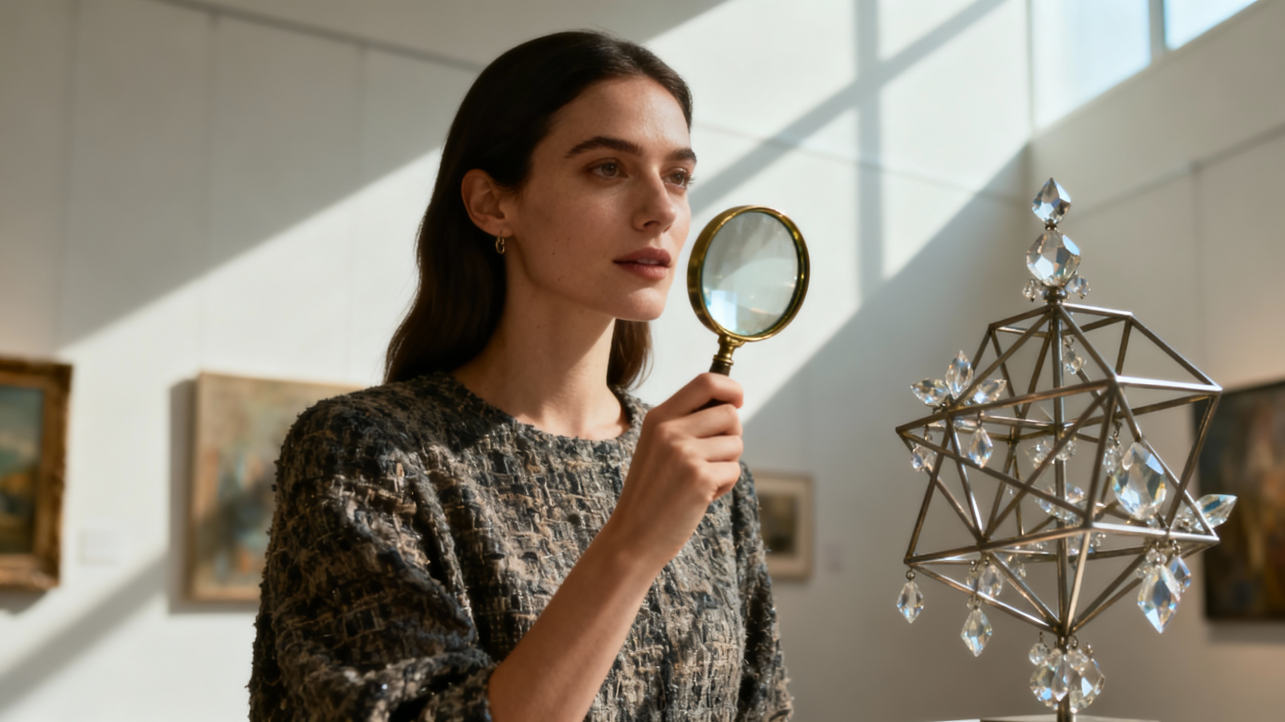
Study the enamel. Under magnification, look for even color, clean junctions with metal, and a coherent palette that honors the motif. Plique-à-jour cells should be intact with no cloudy repairs; basse-taille should reveal subtle relief beneath the glaze. YazJewels’ advice to prioritize enamel quality is foundational here.
Interrogate materials and construction. In rings with openwork, check for balanced thickness through the shank and undergallery so daily wear does not fatigue delicate elements. Interiors finished with care—an ethos The Magazine Antiques documents extensively—indicate a maker who respects the 360-degree discipline of the style.
Ask for transparency about the diamond. If lab-grown, request a grading report from a recognized laboratory and confirm the stone was set after any enamel firing. If mined, confirm responsible sourcing and any treatments. These are practical inferences; confidence high for utility.
Respect provenance, but judge with your eyes. Modern Art Nouveau–style rings with lab-grown diamonds are interpretations, not period artifacts; their value sits in execution. If you are considering a period piece, Invaluable and Dawsons Auctions both underline the importance of documented maker, condition, and the fragility of enamel as drivers of price.
Mind the scale of the head to the hand. Period aesthetics favor elongated navette and oval heads that elongate the finger; a slender, rounded shank prevents the look from feeling heavy. This is first-hand fit and proportion guidance; confidence high.
Care and Wear: Keeping Flowing Forms Alive
Enamel needs gentleness. Avoid ultrasonic and steam cleaners, and instead use lukewarm water, a drop of mild dish soap, and a very soft brush for the metal around the enamel, keeping scrubbing away from plique-à-jour cells. Remove rings before strength training or any activity that compresses the grip, as torsion can stress openwork shoulders. Store the ring separately in a soft pouch, not loose in a tray where enamel could rub against other jewelry. Have a jeweler check prongs and pavé seasonally if you wear the ring daily. These are first-hand care practices; confidence high.
Resizing requires caution. Enamel and solder seams dislike heat and strain; if a significant size change is needed, ask for a laser or localized approach with proper heat-sinks, or consider a carefully matched sizing insert rather than cutting through enamel-bearing sections. This is bench practice; confidence high.

Price, Provenance, and Resale Context
Period Art Nouveau jewels command strong prices when artistry and condition are exceptional, with Invaluable noting that unusual, pristine works can achieve from tens of thousands to a few hundred thousand dollars, and the Bernhardt Fouquet bracelet at Christie’s in 1987 remains a touchstone. Contemporary lab diamond rings in the style exist on a separate axis: they are judged by design quality, make, and the designer’s reputation, not by the geological origin of the stone alone. Inference based on market observation: expect long-term satisfaction to track the caliber of enameling, the coherence of the line, and the precision of setting. Confidence medium for secondary-market behavior; confidence high for the primacy of craft.

Authenticity vs Inspiration
It helps to separate strict period authenticity from faithful inspiration. A French or Belgian jewel of 1895–1910 is a historical object, and as YazJewels and Invaluable outline, its diamonds will likely be accents on a tableau of enamel and sculpted metal, its reverse finished with surprising care, and its maker’s hand evident in every curve. A contemporary ring that echoes those virtues and uses lab-grown diamonds is not a replica of history but a continuation of its values: design first, craft always, nature as muse. That distinction clarifies expectations and lets you celebrate what you are truly acquiring.
Short FAQ
What distinguishes an Art Nouveau ring at first glance?
The eye should feel motion before it registers mass. Flowing, asymmetrical lines, organic openwork, and motifs like dragonflies or irises signal the style, with diamonds glinting like dew rather than dominating the composition. This aligns with descriptions from The Jewelers Circle and YazJewels.
Are lab-grown diamonds appropriate for Art Nouveau–style rings?
Yes. Inference with high confidence for technical fit: lab diamonds share the same hardness and optical behavior and excel as calibrated melee for graduated pavé. Their accessibility can shift budget toward labor-intensive enameling, which is faithful to the era’s design-first ethos.
Which enamel technique best suits nature motifs on rings?
Plique-à-jour is unmatched for wings and petals because it transmits light like stained glass. Basse-taille creates depth under translucent color for leaves and irises, while cloisonné brings crisp patterning to shoulders. These definitions are documented by YazJewels, Invaluable, and The Jewelers Circle.
How should I care for an Art Nouveau ring with enamel and diamonds?
Avoid ultrasonic and steam. Clean gently with lukewarm water and a soft brush, store separately, and remove the ring during activities that apply torsion to the hand. Have a jeweler check settings regularly. This is first-hand care guidance; confidence high.
Will a lab diamond affect the ring’s long-term value?
Inference with medium confidence: resale is driven more by design, maker, and enamel condition than by the stone’s origin in this category. Mined diamonds may carry more entrenched secondary-market expectations, but high craftsmanship remains the lasting currency.
How can I authenticate a period piece versus a modern revival?
Look for maker signatures or poinçons, period construction details such as finely finished reverses, and enamel techniques consistent with the era. Compare with museum and auction catalog examples; Invaluable and Dawsons Auctions underscore the importance of provenance and condition.
Takeaway
Art Nouveau’s lasting lesson is that jewelry lives when line and light breathe like living things. When a ring’s shank curls as a stem and a lab-grown diamond catches along its arc like dew at dawn, the result is not an anachronism but a continuation of principle: design above content, nature above noise, craftsmanship above clamor. Period research from YazJewels, The Jewelers Circle, Lang Antiques, and The Magazine Antiques affirms that the movement asked us to see jewelry as wearable art. Let the lab diamond be your light source and the enamel your painter’s sky, and build a ring whose flowing forms remind you, every day, that beauty grows best when it moves.
References
- https://www.apollonejournal.org/apollon-journal//art-nouveau-as-avant-garde-redefining-nature-through-metamorphosis-and-interrelationship
- https://www.olufsondesigns.com/the-seven-principles-of-jewelry-design-crafting-elegance-and-beauty
- https://www.antiquejewellerycompany.com/a-guide-to-art-nouveau-jewellery/?srsltid=AfmBOool2Ur1i8HJcE7Htb7mGKTiZ0dFPM5M0yIh-8PMfZctAULLUSgG
- https://www.emp-art.com/emp-blog/art-nouveau-a-harmony-of-art-and-nature
- https://www.playforthoughts.com/blog/art-nouveau
- https://blog.yazjewels.com/art-nouveau-jewellery-guide/
- https://www.aureusboutique.com/blogs/articles/how-the-art-nouveau-movement-influenced-jewelry-design-techniques?srsltid=AfmBOoqTA8RRXZnV8EhQOfoPfb9vxCs2MELQoLVhSzpzUJ1U_K_9_oEt
- https://www.beladora.com/blogs/blog/art-nouveau-jewelry?srsltid=AfmBOorA_vL6ijzFLDzN9fPzTpI854OnMGF9Gtfzhxz6UG9E-TqEZLV2
- https://www.dawsonsauctions.co.uk/news-item/a-guide-to-art-nouveau-jewellery/?pc=15
- https://www.kalmarantiques.com.au/articles/introduction-to-art-nouveau-jewellery/?srsltid=AfmBOopA2tMi8xyYh7-Ei7gu0v2_tgIfJO7Gpr5WbgoyXhbLnMSxP40u