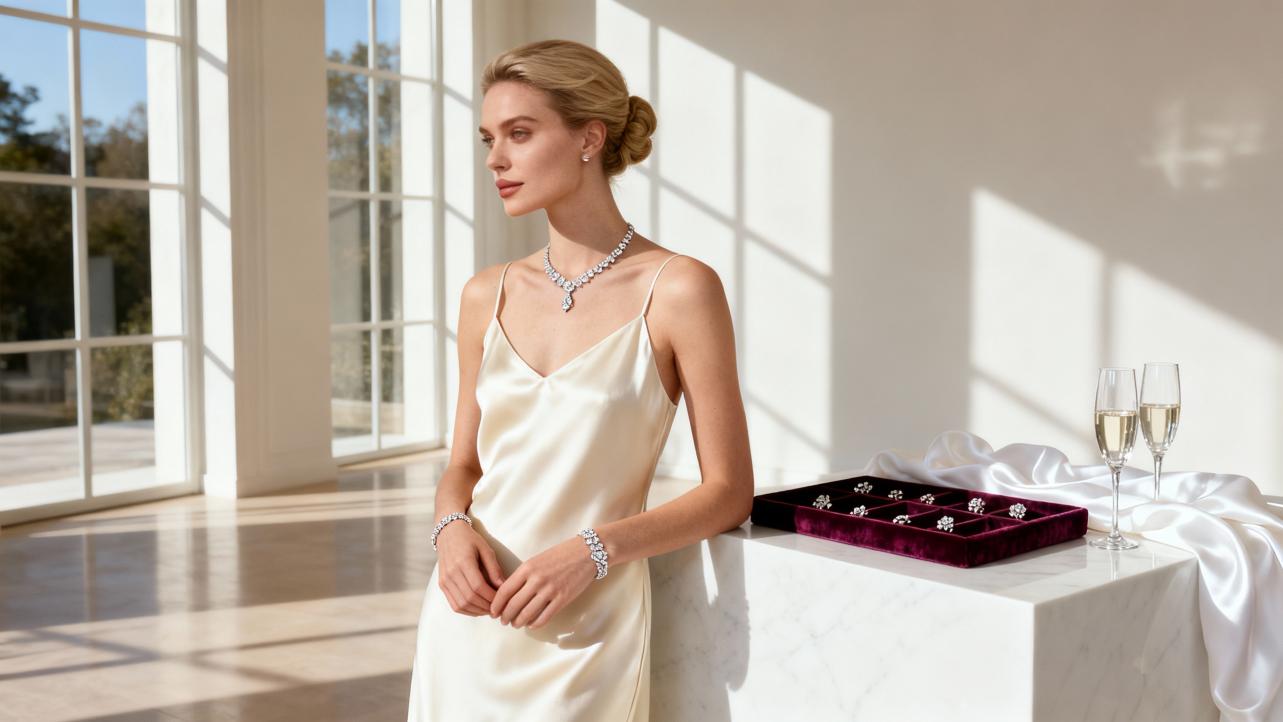
Which Piece of Jewelry Is the Wisest to Start a Collection With?
The first piece you choose does more than sparkle; it sets the philosophy for your collection. It establishes your taste, your standards for quality, and the rhythm by which you will add pieces over time. In my work helping clients build collections that truly live with them—pieces worn on school runs and red‑eye flights as readily as on gala nights—the wisest starting point is the one that delivers maximum elegance per wear, minimum friction to buy and maintain, and long‑term relevance across decades.
The Short Answer
If you want one piece that almost never misfires, begin with diamond stud earrings. They are the rare essential that cross dress codes and decades, play well with everything else you will eventually acquire, and scale as your budget and taste evolve. Editors and dealers converge here for good reason. Vogue places studs at the core of a timeless capsule. Contemporary houses like Ana Luisa call clear‑stone studs the default earring for any outfit, while Bondeye, TH Baker, Tirafina, and The Stripe all point to diamond studs as a foundational staple. After personally styling hundreds of first purchases, I have yet to meet a collection that wasn’t strengthened by a well‑chosen pair.

What Makes a First Piece “Wise”
A savvy first acquisition should excel in six areas. It must be versatile enough for daily wear, with a cost‑per‑wear that rewards you quickly. It should be easy to authenticate, with clear hallmarks and third‑party documentation where appropriate. It needs to be durable and low‑maintenance so you actually wear it, not admire it in a box. It should be emotionally resonant, because meaning is what transforms an accessory into an heirloom. It must stack or layer well with future pieces. And ideally, it should be an item whose value is driven by workmanship and materials rather than mere novelty; as Forbes notes through collector‑dealer Jill Heller, the best purchases function as a wearable asset class when the quality is truly there.
Why Diamond Studs So Often Win
Diamond studs synthesize elegance and practicality almost unfairly well. They are appropriate at an investor presentation at 9:00 AM, a birthday dinner at 8:00 PM, and a flight at 11:30 PM—no outfit planning required. You do not battle ring sizing or bracelet length; fit is a non‑issue. They travel light and wear comfortably. They layer invisibly with hoops, drop earrings, and statement necklaces when your collection grows. Most critically, they are straightforward to evaluate. As Roma Designer Jewelry advises, the combination of metal hallmarks and third‑party grading like GIA or AGS makes quality visible rather than mysterious. That transparency lowers risk for a first‑time buyer.
A starter pair can be modest or ambitious without compromising the premise. Tirafina distinguishes between lab‑grown and natural diamonds, noting both are chemically identical while lab‑grown typically cost less. This gives new collectors genuine choice: begin with beautifully cut lab‑grown stones to maximize size and sparkle within a first‑purchase budget, or choose natural stones if long‑term scarcity and traditional provenance matter more to you. Either path works when you select well. The Stripe’s editorial stance echoes my own experience: studs become the most indispensable item you own, and you will wear them so often that they quietly define your taste.
None of this is theory. I’ve watched clients who once hesitated to spend on fine jewelry reach for their studs five days a week for years. The wear tells you everything. When you feel good in a piece and you reach for it without thinking, you’ve made a wise start.

When Studs Are Not Right
There are exceptions. If you don’t have pierced ears or studs don’t feel like “you,” a different object can still deliver the same strategic advantages. Consider a quiet gold hoop, a classic pendant necklace that sits at your preferred length, a signet ring with meaningful engraving, or a slim bracelet you’ll never remove. Ana Luisa highlights hoops as a chic, versatile daily piece. A pendant can be your talisman, an idea echoed by Ana Luisa’s guidance to choose a shorter pendant for active days. A signet ring, championed by The Stripe and Aril Jewels, roots a collection with heritage and identity. All four choices meet the same brief: universal wear, minimal fuss, and a foundation strong enough to build upon.

A Useful Comparison for Your First Purchase
First Piece Option |
Why it Works on Day One |
Watch‑Outs |
Ideal If You… |
Diamond studs |
Universally appropriate, easy to authenticate, effortless daily wear, stack with future earrings |
Ear piercing required; quality and cut affect sparkle dramatically |
Want the clearest essential with the best cost‑per‑wear |
Small gold hoops |
Face‑framing, chic, and versatile; minimal maintenance |
Diameter and thickness must suit your features; cheap clasps loosen over time |
Prefer movement and softness over the purity of a stud |
Classic pendant necklace |
Personal talisman; layers well with future chains; no sizing ambiguity |
Chain length choice matters; pendants can catch during very active days |
Want symbolism or a daily signature without piercing |
Signet ring |
Heritage, engraving, and identity; anchors a ring stack |
Sizing and comfort; rings take the most wear; check craftsmanship |
Love tradition and intend to build a thoughtful ring wardrobe |
These are all sensible first steps, noted across Vogue for essentials, Ana Luisa for daily basics, and The Stripe for a refined, lived‑in approach. Choose the one that works hardest for your actual life.
New, Vintage, or Antique
Definitions matter, and they protect your wallet. One Kings Lane gives a practical taxonomy: antique pieces are generally more than 100 years old, vintage sits in the last 50 to 100 years, and retro typically refers to post‑1960s designs. Estate simply means previously owned, regardless of age. A novice can start with any category if you buy the piece for your life rather than solely for its label. That said, context helps. Forbes reports strong global demand for vintage at major houses, and highlights the enduring appeal of Art Deco designs from names like Van Cleef & Arpels and Cartier. If you begin vintage, you inherit unique character—and often a price anchored by craftsmanship rather than contemporary hype.
For authentication and due diligence, East Towne Jewelers recommends checking construction, clasps, hallmarks, patina, and overall condition, and advises a loupe‑level look at stones. Antique Jewellery Company’s guidance to build relationships with trusted dealers, ask detailed questions, and beware of modern replicas marketed as “style” rather than era is essential. This is not meant to intimidate; it is how you buy elegantly and sleep well afterward.

Choosing Metals and Stones with Confidence
Your first piece should flatter your skin tone and wardrobe immediately. DSF Antique Jewelry suggests a simple, time‑tested approach: warm tones often glow in yellow gold and coppery alloys; cool tones shine in white gold, platinum, and silver; rose gold is broadly flattering and can straddle both. If you love mixing metals, do it. DSF and Llume encourage mixing as a modern, personal expression—just keep the overall composition balanced so your first piece remains the quiet anchor.
On diamonds, Tirafina’s clear definition helps. Lab‑grown diamonds are created in controlled environments but are chemically identical to natural diamonds, typically at a lower cost. Your choice is philosophical as much as financial. If you go natural, Roma Designer Jewelry recommends independent grading; if you go lab‑grown, use the same quality standards. TH Baker adds that hallmarks like 18K and platinum stamps are your friends; they communicate metal purity and give you the language to compare pieces honestly.

Budget, Without the Noise
You do not need a five‑figure budget to start well. One Kings Lane notes that a curated vintage dealer often prices around $1,000. Tirafina outlines practical tiering: below $100 usually buys fashion or plated pieces, $100 to $500 often yields sterling silver or gold‑filled, $500 to $1,000 can reach solid 14k with small diamonds or gemstones, and $1,000 and above moves into heavier gold or larger stones. Forbes, via Jill Heller, makes a separate point for serious investing: if you are spending more than $20,000, prioritize high‑end designer pieces that historically hold value, much like art. Both truths can coexist. Buy the most refined version of the piece you will wear constantly in the tier that suits you today, and let your collection compound in quality, not clutter.
A concise view of starting scenarios is helpful.
Budget Snapshot |
Sensible First Pair of Studs |
Why This Makes Sense Now |
Trade‑Offs to Acknowledge |
About 500 |
High‑quality sterling or petite lab‑grown studs in 10k–14k settings |
Immediate daily wear, visible sparkle, honest materials |
Smaller scale; upgrade path becomes part of the plan |
About 1,000 |
14k studs with bright lab‑grown stones or curated vintage small natural stones |
Looks refined, holds up to daily wear, better findings and finishing |
Natural stones at this level are likely modest; prioritize cut |
About 2,500 |
14k–18k natural diamond studs with grading, or signed vintage studs |
Quality plus documentation; a piece that can anchor for years |
Discipline required to compare grading, make, and price carefully |
Above $20,000 |
Blue‑chip designer natural studs; provenance and excellence |
Treats jewelry as a wearable asset, per Forbes’ investment viewpoint |
Very selective market; insist on documentation and trusted sellers |
Whatever your lane, the governing principle from DSF is to add one or two high‑quality pieces a year. Collections built slowly age beautifully.
Quality Checks That Separate Treasure from Trouble
Your eyes will get better quickly, and a few habits speed that up. Roma Designer Jewelry recommends verifying metal hallmarks and inspecting settings for evenness and security. East Towne Jewelers cautions against household cleaners and suggests gentle cleaning with warm soapy water and a soft brush, then professional inspections when anything feels loose or looks off. TH Baker and Antique Jewellery Company both emphasize buying from reputable sources, asking detailed questions, and insisting on transparent documentation for stones. If you are new, it is not a sign of inexperience to ask a dealer to walk you through every mark and measurement; it is a sign that you are collecting with intention.
Storage is preventative medicine. DSF suggests separate pouches or lined compartments to avoid scratches and tangles. Silver prefers tarnish‑inhibiting environments. Pearls and delicate stones deserve their own soft spaces. The result isn’t fussy; it is how you keep your first piece looking like the day you fell for it.
Vintage Momentum and Modern Taste
The vintage market is not a niche playground. Forbes documents robust auction demand, including record results for storied pieces, and notes a broader styling revival for brooches across ages and genders. That said, your first piece should be chosen for wear, not trophies. One Kings Lane’s advice to let style guide purchases is the collector’s north star. I have seen a 1930s signet ring feel absolutely of‑the‑moment worn with a clean white tee, and an 18th‑century pair of earrings feel effortless with a modern sheath dress. Your taste is the algorithm; the era is the texture.

A First‑Piece Playbook You Can Trust
Set your intention before you set your budget. Audit your wardrobe honestly and decide if your first piece needs to sit quietly under a headset at work, move with you at the gym, or carry symbolism you want close to your heart. Decide on metal color. If you are undecided, try mixed‑metal fashion pieces for a week and see what you reach for without thinking. Set a realistic budget band, informed by Tirafina’s tiers and by your own thresholds. If you land on studs, choose whether you prefer lab‑grown or natural; both require the same standards for cut, polish, symmetry, and eye‑cleanliness. Ask for grading when appropriate and examine the finishing on posts and backs. If you land on a pendant or ring, check every little mechanical element—the jump ring on a chain, the tension and finishing on a band. Now wear the piece out of the boutique. If it disappears on your body in the best possible way and you forget you are wearing it until someone compliments you, you have chosen wisely.

When You Prefer to Lead With Personality
Some collectors rightly begin with a statement. Ana Luisa calls a chunky bracelet or layered necklace a bold transformer for a look; The Stripe presents a single standout cuff as a signature. If a bolder voice is your truth, you can still make a prudent first buy. Choose a piece with clean engineering, timeless motif, and materials you admire when trends fade. Antique Jewellery Company’s advice rings loud here: decide whether a piece is for daily wear or occasional magic, then match the material and construction accordingly. A cocktail ring is thrilling, as Aril Jewels’ sentimental case studies suggest, but rings endure the most knocks. If you start here, choose strength in the shank and a setting that protects the stone.
Care, Appraisal, and Insurance
Maintenance is not romance, but it keeps the romance alive. DSF and Llume both advocate simple routines—soft cloth wipes after wear and periodic professional cleanings. East Towne Jewelers adds a caution about aggressive household cleaners. For pieces of higher value, Aril Jewels recommends retaining invoices and certificates, arranging appraisals with specialists, and re‑appraising periodically. If you insure, confirm your coverage allows replacement with equivalent vintage or antique when relevant, a nuance Antique Jewellery Company rightly calls out.

The Optional Path: Start Vintage
If your heart beats faster for history, a vintage first piece can still be the wisest start. One Kings Lane provides clear terminology to shop confidently, and Forbes’ market reporting demonstrates genuine demand for the right eras. Prioritize signed pieces with maker’s marks, sound condition, and a dealer willing to explain provenance and repairs. You are not merely buying an object; you are connecting your life to a story that predates you. Collectors often find that deeply satisfying.

A Note on Patience and Joy
Jill Heller, profiled by Forbes, reminds us that great collections take time and that not everything needs to be a serious purchase. There is room in a sophisticated collection for pieces that simply bring delight. The discipline is to buy less but better, which is another way of saying buy what you will wear and love repeatedly. DSF’s pacing of one or two well‑made pieces per year, and The Stripe’s decade‑long evolution into a cohesive jewelry wardrobe, both model the quiet confidence that makes collections sing.

A Brief FAQ
Can a tennis bracelet be a wise first piece?
It can be, if you will wear it constantly and the clasp and settings are robust. TH Baker’s emphasis on quality and periodic professional checks is especially relevant for line bracelets with many stones.
What if I do not have pierced ears?
Begin with a pendant, a signet ring, or a slim bracelet. Ana Luisa highlights pendants as modern talismans; the signet, according to The Stripe and Aril Jewels, brings heritage and personalization from day one.
Should I buy lab‑grown or natural diamond studs first?
Tirafina explains that lab‑grown diamonds are chemically identical to natural stones and typically lower in cost, which can mean more sparkle per dollar. If you prefer traditional scarcity and provenance, natural stones graded by a respected lab are a classic choice.
In Closing
Start with the piece that earns its keep the moment it touches your skin. For most, that is a pair of diamond studs: quietly brilliant, endlessly wearable, and simple to buy well. If your signature lives elsewhere, choose the alternative you will wear instinctively and hold it to the same high standards. Collect slowly, ask good questions, and measure success not just in carats but in the life your jewelry witnesses. That is how you become not only a collector, but a curator of modern heirlooms.
References
- https://www.thesprucecrafts.com/vintage-costume-jewelry-identification-value-4066126
- https://blog.analuisa.com/jewelry-collection-essentials/
- https://www.antiquejewellerycompany.com/the-beginners-guide-to-collecting-vintage-antique-jewellery/?srsltid=AfmBOoo0zrT8xi67pvfKNStc4FGBVSQir0aPpJsD0N7g6BkflrZdkWAn
- https://www.baunat.com/en/how-do-i-start-my-jewellery-collection
- https://www.benolds.com/vintage-jewelry-styles-guide-to-timeless-treasures/
- https://www.thbaker.co.uk/blog/how-to-start-your-fine-jewellery-collection-a-beginners-guide
- https://easttownejewelers.com/complete-antique-jewelry-identification-guide/
- https://blog.onekingslane.com/our-vintage-jewelry-buying-guide/
- https://www.skydelldesign.com/blog/a-beginners-guide-to-jewelry-tips-for-starting-your-collection
- https://thestripe.com/building-a-fine-jewelry-collection/