Which Gemstones Can Help Menopausal Women Balance Their Emotions?
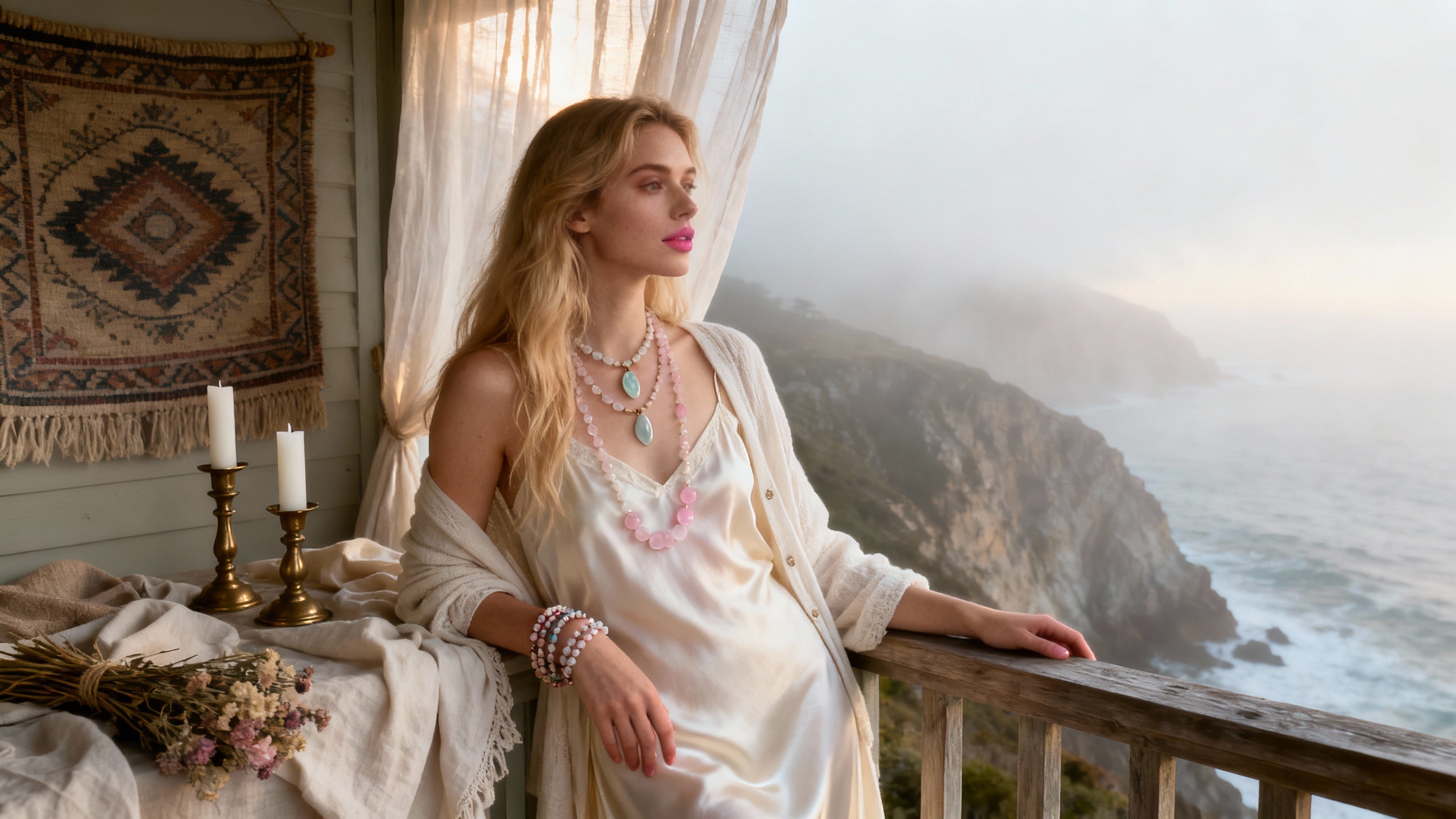
Menopause can feel like the heart’s own seismic shift. One moment you are grounded and focused; the next, a wave of heat, a flash of irritation, or a sudden ache of sadness arrives without warning. As a jewelry lover and gemstone observer, I have watched countless women in this life stage instinctively reach for certain stones: a Moonstone pendant, a soft Rose Quartz bracelet, a cool Amethyst palm stone to keep on the nightstand. They are not reaching for a cure. They are reaching for something that feels beautiful, symbolic, and emotionally steadying in the midst of change.
In crystal traditions and holistic circles, gemstones are framed as gentle allies rather than medical treatments. Sources such as Ayana Crystals, Little Crystals, The Holistic Hamper, Soulseeker Healing, and Handserenity consistently present them as complementary tools for emotional and energetic support during perimenopause and menopause, especially for mood swings, anxiety, fatigue, hot flashes, and sleep disruption. At the same time, a critical essay on alternative medicine highlights how practices like crystal healing are scientifically implausible and often work, when they help at all, through placebo and the comfort of ritual rather than proven biochemical effects.
In this article, I will walk you through how menopausal women can work with gemstones to support emotional balance, what each stone is traditionally believed to offer, and where the limits and risks lie. Think of these stones as jewelry with intention: meaningful, comforting, and potentially soothing, but never a substitute for evidence-based care.
Menopause, Emotions, and Why Gemstones Appeal
Perimenopause, the transition leading up to menopause, often begins in a woman’s 40s and can last from a few months to several years. As estrogen gradually declines, many women experience irregular periods, mood swings, anxiety, sleep disturbances, and hot flashes. The fully menopausal and post-menopausal years can continue to bring emotional and hormonal challenges, although symptoms vary widely. Some women hardly notice the shift; others feel as if their inner weather has turned unpredictable.
Crystal-based writers frame this phase as both demanding and deeply transformative. Menopause is described as the third great life stage, the Crone, where a woman can embrace truth and inner wisdom. Yet it can also bring years of physical, emotional, and hormonal stress. In that tension between difficulty and growth, gemstones enter as symbolic companions: physical anchors for intentions such as self-love, calm, courage, and resilience.
Crystals appeal here for several reasons. They are tangible, beautiful, and easy to integrate into everyday life as jewelry, pocket stones, or bedside pieces. They provide a focal point for mindfulness and self-care routines. And for those drawn to energy work, they represent a way to harmonize the body’s rhythms with larger cycles such as the moon and the seasons.
How Gemstones Are Used During Menopause
Across crystal-focused sources, there is a consistent message: crystals are complementary, not curative. They are suggested alongside lifestyle choices like diet, exercise, sleep routines, and, when appropriate, hormone replacement therapy (HRT). Ayana Crystals, for example, explicitly notes that crystals are often used safely alongside HRT, while encouraging women to discuss their overall wellness plans with healthcare providers.
The most common ways menopausal women are encouraged to use gemstones include wearing them as jewelry, carrying them as pocket stones, placing them under the pillow or by the bed for sleep, creating small grids or arrangements in the home or workspace, and integrating them into reflective practices such as meditation, intention-setting, or even a quiet bath. A typical routine described by crystal practitioners might involve starting the morning with Moonstone and Citrine for emotional steadiness and vitality, wearing a combination of stones during the day, then winding down at night with Rose Quartz and Amethyst for calm and sleep, and holding Lepidolite while reflecting before bed.
From an evidence-based standpoint, what these practices reliably offer is ritual, focus, and a pause for self-care. The stones themselves have not been proven to correct hormones or treat disease, but the routines around them can encourage rest, reflection, and a more compassionate relationship with one’s own body, which matters deeply during this stage of life.

Gemstones for Emotional Balance: A Closer Look
Moonstone: Riding the Hormonal Tides with More Grace
Moonstone is the stone that appears again and again in menopause-focused writing. It is associated with lunar cycles, the female reproductive system, and all hormonal stages of life. Sources such as Ayana Crystals, Little Crystals, Soulseeker Healing, and Charms of Light describe Moonstone as a hormonally balancing stone that may help stabilize fluctuations, soothe mood swings, and ease emotional turbulence. It is also recommended for hot flashes and night sweats in some holistic guides, which frame its energy as cooling and calming.
Emotionally, Moonstone is said to promote inner peace and intuition, helping women trust their own wisdom as they navigate this transition. Practical recommendations include wearing Moonstone jewelry, keeping a tumbled stone in a pocket, or placing it under the pillow to encourage restful sleep and emotional stability. Many women are encouraged to choose Moonstone intuitively if they feel drawn to its gentle shimmer, particularly when they are dealing with unpredictable moods or a sense of emotional rawness.
Rose Quartz: Self-Compassion for the Midlife Heart
If menopause stirs up questions about identity, self-worth, or changing bodies, Rose Quartz is often the gemstone of choice. Widely known as the stone of unconditional love and linked to the heart chakra, Rose Quartz is presented in multiple sources as an emotional healer that promotes self-love, compassion, and the release of emotional blockages. During perimenopause and menopause, when self-esteem and body image can be under pressure, Rose Quartz is recommended to foster gentleness and kindness toward oneself.
Writers suggest placing Rose Quartz near the heart, wearing it as a necklace or bracelet, keeping it close during meditation or bath rituals, or placing it in the home as a reminder to prioritize emotional nourishment. It is also framed as a stone that supports relationships, helping women communicate more softly and maintain connection with loved ones during a time when irritability or low mood might otherwise strain those bonds.
Amethyst: Calm for Anxiety, Stress, and Sleepless Nights
Amethyst is another cornerstone stone for menopausal emotional care. Across Ayana Crystals, Little Crystals, The Holistic Hamper, and Soulseeker Healing, Amethyst is consistently described as calming, cooling, and helpful for anxiety, stress, insomnia, and even hot flashes. Charms of Light calls it a natural tranquilizer that relieves stress and strain, soothes irritability, balances mood swings, dispels anger, fear, and anxiety, and relieves insomnia.
Practically, Amethyst is often placed under the pillow or on the nightstand to create a tranquil sleep environment. It can also be worn as jewelry or held during meditation. For women who feel emotionally “overheated,” whether physically due to hot flashes or metaphorically due to stress, Amethyst is presented as a cooling anchor. Even if the stone itself has no measurable physical effect, the ritual of holding a piece of Amethyst while taking slow breaths before bed can become a powerful nightly reset.
Lepidolite: Navigating Mood Swings and Major Change
Lepidolite is sometimes called a stone of transition, and that title fits menopause perfectly. It is notable for containing lithium, a metal used in some mood-stabilizing medications. Crystal writers are careful not to equate Lepidolite with a drug, but they do emphasize that it is associated with stabilizing mood swings, reducing stress, encouraging a positive outlook, and supporting personal growth during emotional upheaval.
Ayana Crystals highlights Lepidolite for perimenopause and menopause as a companion stone for handling mood swings and emotional turbulence. Other writers recommend it for anxiety and depression and suggest carrying it during the day, keeping it on a desk or in a pocket, placing it in calming spaces at home, or holding it during quiet evening reflection. While it should never replace professional treatment for serious mood disorders, it can serve as a symbol and reminder to seek balance, rest, and emotional support.
Citrine: Uplifting Energy When Fatigue Sets In
Fatigue and low motivation are common complaints during perimenopause and menopause. Citrine is frequently described as an energizing, uplifting crystal that combats fatigue, boosts vitality, encourages optimism, and stimulates creativity and self-expression. Ayana Crystals, Little Crystals, The Holistic Hamper, and Handserenity all frame Citrine as a “sunshine” stone that brings joy and helps clear negativity.
For emotional balance, Citrine is recommended when mood dips, lethargy, or burnout make it hard to stay engaged with daily life. Some sources even suggest it for hot flashes, describing its energy as bright yet clarifying. Women are encouraged to wear Citrine, carry it close to the body, or place it where they begin their day, such as on a dressing table or desk, as a visual and tactile cue to approach the day with a little more optimism.
Grounding Stones: Hematite, Smoky Quartz, and Turquoise
Not all menopausal emotional turbulence is about sadness or anxiety. Many women describe feeling ungrounded, shaky, or overwhelmed. In those moments, grounding stones come to the foreground. Hematite, in particular, is presented as a grounding and protective crystal that supports blood circulation, helps stabilize body temperature, and imparts a cooling effect. It is believed to reduce stress and anxiety and leave women feeling more energized and focused, which can be especially helpful when menopause brings both emotional swings and physical discomfort.
Smoky Quartz and Rose Quartz are paired in some hormone-balance guides as a combination for self-love, calmer mood, and relief of cramps, pain, and headaches. Turquoise is highlighted by Charms of Light as a stone that stabilizes mood swings, supports depression and exhaustion, and even has the power to prevent panic attacks. Together, these stones are often worn as bracelets, kept in pockets, or placed under the pillow to anchor the nervous system when emotions or physical sensations feel chaotic.
Stones of Resilience and Transformation: Labradorite and Carnelian
Menopause is not only a series of symptoms; it is also a profound life transition. Labradorite is known in crystal circles as a stone of transformation and change. Little Crystals and Handserenity describe it as easing anxiety and fear, supporting hormonal balance, and helping women navigate the emotional and physical shifts of menopause. It is also linked to the endocrine system and protection from energy drain, which speaks to women who feel depleted or overly affected by external stress.
Carnelian, by contrast, brings fiery vitality. It is associated with the sacral chakra, reproductive health, stamina, motivation, and low libido. Sources such as Little Crystals, The Holistic Hamper, and Soulseeker Healing recommend Carnelian for mood, fatigue, and energy. For women who feel that their spark has dimmed, Carnelian is suggested as a way to reconnect with creativity, desire, and enthusiasm. In jewelry, Carnelian is striking in rings and bracelets, giving a visible reminder that this stage of life can still be vibrant and passionate.
Stones for Clarity and Overwhelm: Lapis Lazuli, Fluorite, and Chrysoprase
Brain fog, forgetfulness, and overwhelm are well-known companions of menopause. Lapis Lazuli is recommended by The Holistic Hamper and Charms of Light for mental clarity, focus, intuition, communication, and insomnia-related anxiety. It is often suggested for women who feel they cannot find the right words or feel mentally scattered. Fluorite is described as increasing concentration and self-confidence, making it a helpful desk companion for women managing demanding work and family roles alongside menopausal shifts.
Chrysoprase appears in menopause crystal guides as a stone for relaxation and peaceful sleep, even assisting with restless legs syndrome. Collectively, these stones are often kept on bedside tables, desks, or worn as pendants near the throat or third-eye region to support clear communication and thinking.
Clearing and Amplifying: Selenite and Clear Quartz
Some stones are used more as “supporting actors” than main characters. Selenite is portrayed in crystals-for-menopause articles as a cleansing and purifying stone that clears emotional and energetic blockages, uplifts the energy field, and promotes mental clarity. Clear Quartz is known widely as a “Master Healer,” an amplifier of other stones and a general supporter for emotional and physical energy.
In practice, Selenite is often placed in rooms, on altars, or used in meditation to create a serene, purified atmosphere. Clear Quartz can be added to any menopause-focused jewelry piece or crystal arrangement to strengthen the overall intention, whether that intention is calm, courage, or self-love. Both stones can serve as neutral, luminous companions to more specific emotional-support stones like Rose Quartz or Lepidolite.

Pros, Cons, and a Realistic Perspective
To write responsibly about gemstones and menopause, it is important to step back and ask what we truly know and what rests on belief and anecdote. The essay “The Risks of Alternative Medicine” points out that many alternative practices, including crystal energy healing, are scientifically implausible. Where they appear to help, the benefits are often explained by the placebo effect: people feel better because they expect to, or because the ritual of care and attention itself is soothing. The same essay cites clinical research where certain herbal remedies failed to outperform placebo in trials, and it warns that relying solely on alternative therapies in place of modern medicine can be dangerous, especially in serious conditions.
Crystal-based menopause guides themselves acknowledge this to some degree. They describe benefits in energetic, spiritual, or symbolic language, not as clinically proven outcomes. They emphasize that crystals are complementary, non-invasive tools rather than replacements for medication or medical advice. They also highlight that personal resonance matters: women are encouraged to choose stones intuitively, pay attention to how they feel, and adjust combinations as needed.
At the same time, geriatric and aging-success resources from academic centers such as Saint Louis University underline the importance of evidence-based habits for emotional health in later life. Regular physical activity, supportive relationships, good sleep hygiene, managing chronic conditions, and seeking professional help for depression or anxiety are all supported by strong research. Gemstones might accompany and reinforce these habits by giving women something meaningful and beautiful to hold, wear, or focus on during self-care routines, but they do not replace them.
The table below summarizes some of the commonly recommended gemstones for emotional balance in menopause, along with their traditional focus and key cautions.
Gemstone |
Emotional focus in menopause |
Typical uses described in sources |
Key cautions and limitations |
Moonstone |
Mood swings, emotional stability, intuition |
Jewelry, pocket stones, under pillow, meditation companion |
Believed effects are energetic; not a replacement for hormone therapy or medical care |
Rose Quartz |
Self-love, compassion, emotional healing |
Heart-area jewelry, bath rituals, home placement, meditation |
Supports emotional self-care but does not treat depression by itself |
Amethyst |
Anxiety, stress, insomnia, emotional overwhelm |
Under pillow or by bed, meditation, daily wear |
Cooling, calming symbolism can be helpful; scientific evidence for direct effects is lacking |
Lepidolite |
Mood swings, transition stress, emotional resilience |
Carried in pocket or bag, placed in calming spaces, reflection |
Contains lithium but not a drug; should never replace prescribed mood-stabilizing medications |
Citrine |
Fatigue, low mood, optimism, creativity |
Worn close to body, placed on desk or dressing table |
Uplifting associations can help mindset, yet it does not correct underlying hormonal or medical issues |
Hematite |
Grounding, anxiety, cooling hot emotions |
Jewelry, pocket stones, “Mojo bags” for ongoing support |
Useful as a symbolic anchor; any claims about circulation or temperature remain unproven |

Choosing and Working with Gemstones Safely and Intentionally
If you feel drawn to explore gemstones during menopause, choose them with both intuition and realism. Crystal practitioners often encourage women to notice which stones they feel attracted to visually or physically, reflecting the idea that we are drawn to what we need. Articles from Charms of Light and Soulseeker Healing emphasize that each crystal carries multiple properties, and that following inner guidance can be a meaningful part of the experience.
At the same time, it is wise to keep your use of stones grounded. Crystals should be treated as supportive tools that coexist with, rather than compete with, medical care and healthy habits. Many crystal writers explicitly advise consulting a healthcare provider before starting or adjusting treatments such as HRT or herbal remedies, and they stress that crystals are not substitutes for professional diagnosis or medication.
As jewelry, stones are generally safe for most people when worn externally. Pay attention to metal sensitivities in settings or chains, and avoid placing small stones where children might access them. Some crystal traditions describe making essences or sprays by placing stones near water; if you are drawn to these practices, be cautious, since not all minerals are safe to place in water or consume. Several crystal sources instead focus on external methods: carrying stones, placing them under pillows, or using them in meditation, which avoid ingestion entirely.
From a lifestyle perspective, the real magic often lies in the rituals you create around your jewelry and stones. Wearing a Moonstone necklace every day can remind you to breathe deeply when a wave of emotion passes. Keeping Rose Quartz and Amethyst by your bed can signal that the last moments of the evening are reserved for calm and self-compassion. Holding Lepidolite while journaling about your feelings can help you acknowledge and process emotions instead of pushing them aside.

FAQ: Gemstones and Menopausal Emotions
Can gemstones replace hormone therapy or antidepressants?
No. Across both critical essays on alternative medicine and crystal-focused menopause guides, there is clear agreement that stones cannot replace evidence-based treatments. Modern medications and therapies are developed through rigorous testing, and they remain essential for conditions such as significant depression, severe anxiety, or complex medical issues. Gemstones are best understood as symbolic, supportive tools that can sit alongside conventional care.
Are gemstones safe to use with HRT and other treatments?
Crystal writers frequently say that stones are generally safe to use alongside HRT and other treatments because they act on an energetic or symbolic level. They still advise women to talk with healthcare providers so that all aspects of a wellness plan align. As long as stones are used externally as jewelry, pocket pieces, or decor, they are unlikely to interfere with medications. Be cautious about any remedy that asks you to ingest substances or herbs without professional guidance, since the alternative-medicine literature describes real risks and drug interactions in that arena.
Which single stone should I start with for emotional balance?
Moonstone and Rose Quartz are two of the most commonly recommended starting points. Moonstone is associated with hormonal cycles and mood swings, while Rose Quartz is associated with self-love and emotional healing. Many women choose one of these as a first piece of intentional jewelry for menopause, then add stones such as Amethyst or Lepidolite if they feel called. Let your emotional needs guide you: if you feel deeply anxious, Amethyst may resonate; if your primary struggle is self-criticism, Rose Quartz may be more fitting.
Can I combine several gemstones at once?
Yes. Crystal practitioners often encourage combining stones to address different layers of experience, such as Amethyst for calm plus Citrine for energy, or Moonstone for hormonal cycles plus Lepidolite for mood. The advice is to notice how each combination feels and adjust based on your own response. Since the mechanisms are not scientifically established, there is no evidence-based formula; instead, combinations are shaped by tradition, intuition, and personal experimentation.

A Closing Word from a Gemstone Storyteller
Menopause and perimenopause are not simply endings; they are initiations into a new kind of power. Gemstones cannot rewrite your hormones or replace your doctor, but they can lend beauty, presence, and meaning to the way you move through this chapter. A Moonstone ring can remind you that every tide recedes. A strand of Rose Quartz against your skin can whisper that your body, exactly as it is today, is worthy of tenderness. When chosen with clear eyes and worn with intention, these small pieces of the earth can become steady companions as you balance your emotions and step into the wisdom of your next season.

References
- https://www.academia.edu/6663697/Inteaz_Cheema_Communications_I_Persuasive_Essay_The_Risks_Of_Alternative_Medicine_For
- https://admisiones.unicah.edu/virtual-library/OyCnd8/2OK041/integrated__energy-therapy__vs__reiki.pdf
- https://www.slu.edu/medicine/internal-medicine/geriatric-medicine/aging-successfully/-pdf/spring-agingsuccessfully19.pdf
- https://diposit.ub.edu/dspace/bitstream/2445/195175/1/716217.pdf
- https://www.centreofexcellence.com/crystals-for-menopause/
- https://www.charmsoflight.com/blog/crystals-for-menopause-post-menopause
- https://www.theholistichamper.co.uk/blog/crystals-for-menopause-support?srsltid=AfmBOooleAAhYash_tlxa9NDXIBqv3rmp2O9F_eaN3GqS2IBhAq8BOU8
- https://energyinbalance.com.au/5-top-crystals-for-fevers-or-menopause-hot-flashes/
- https://www.handserenity.com/post/crystals-for-hormone-balance
- https://krisiaart.com/products/hormonal-balance-crystals-set