What Are Five Different Jewelry Styles to Match a Little Black Dress?
There is a particular hush that falls over a fitting room the moment a woman steps out in a little black dress. The lines are simple, the color is absolute, and the effect is always a beat more powerful than anyone remembers. That silence is where jewelry does its quiet, transformative work.
Black has not always meant chic. As historical research in fashion and cultural studies shows, nineteenth‑century mourning codes wrapped women, especially widows, in heavy black clothes, veils, and jet jewelry for years after a loss. Yet by the 1920s, designers like Coco Chanel were rewriting that story. Chanel’s little black dress appeared in American Vogue in 1926 and was famously compared to the Ford Model T: a democratic uniform that women of many ages and classes could wear. Black moved from signifying seclusion to signaling sophistication, especially when paired with carefully chosen adornment.
Today, the little black dress, or LBD, is still that democratic canvas. What distinguishes a somber cocktail look from a luminous, modern one is almost never the dress itself. It is the jewelry. Contemporary style guides from jewelers such as Rarete Jewelry, Park Place Jewelers, BriteCo, Blingvine, Swarovski, and the couture‑informed advice of formalwear houses like Dressarte, all echo the same idea: the right pieces turn one black dress into an entire wardrobe.
In this article, I will walk you through five jewelry styles that consistently flatter a little black dress, with the kind of detail I use when dressing clients for real events. You will see where each style shines, how to match it to your neckline and body, and when to reach for something different instead.
With a single LBD and these five jewelry approaches, you effectively own five different outfits. Add just two pairs of shoes and you suddenly have ten distinct combinations, enough to carry you through several months of Friday evenings without repeating the exact same look.
The Little Black Dress and the Art of Adornment
Before we focus on jewelry, it helps to understand why the LBD responds so dramatically to small changes in accessories.
Fashion historians at institutions such as the Fashion Institute of Technology describe how mid‑twentieth‑century fashion shifted from one dominating silhouette to a variety of equally “correct” shapes. The little black dress thrived in that environment because it was adaptable. It could be cut as a fitted sheath, a full skirt, or a slim shift and still feel appropriate. Chanel’s own philosophy, as explored in scholarship on “Chanel’s Ford,” rejected overwrought, accessory‑laden garments in favor of simplicity that could live in everyday life rather than in a glass case.
That simplicity is what gives jewelry so much authority. Black’s neutrality means almost any metal or color can work against it. Park Place Jewelers describes the black dress as a blank canvas, and Rarete Jewelry frames the LBD as a backdrop that changes mood entirely based on jewelry choices. BriteCo distills this further: pearls, silver, and gold serve as the three classic starting points, with statement pieces and color accents used to adjust drama and formality.
In practice, this means that your LBD is not one dress. It is as many dresses as you have jewelry moods.
Five Jewelry Styles That Always Work With a Little Black Dress
Pulling together the most consistent recommendations from contemporary jewelers and styling experts, five styles emerge as reliably flattering companions to a little black dress: the pearl classic, the golden glow, the cool silver and diamond edit, the jewel‑tone color pop, and sculptural statements and personal pieces.
Across articles from Rarete Jewelry, Park Place Jewelers, BriteCo, and Blingvine, these five categories appear again and again, sometimes under different names but always with similar traits. Swarovski’s guidance for black‑dress jewelry pairings reinforces them too, from crystal pearls to dramatic crystal cuts.
Here is a brief comparison before we dive into each one in detail.
Jewelry style |
Mood with an LBD |
Best materials |
Ideal occasions |
Key watch‑outs |
Classic Pearls |
Polished, timeless, quietly powerful |
Natural or cultured pearls, crystal pearls |
Work events, weddings, daytime formalities |
Can skew too conservative if shapes are stiff |
Golden Glow |
Warm, luxurious, approachable |
Yellow gold, rose gold, gold‑tone pieces |
Date nights, dinners, business‑casual settings |
Overly chunky sets can feel heavy on black |
Silver and Diamonds |
Cool, modern, “icy” elegance |
Sterling silver, white gold, diamonds, clear crystals |
Black‑tie, evening receptions, sleek cocktails |
Too much sparkle can compete with embellished dresses |
Jewel‑Tone Color Pop |
Expressive, artistic, individual |
Emerald, ruby, sapphire, amethyst, other colored stones |
Parties, creative offices, holiday events |
Many colors at once can look chaotic |
Sculptural Statements and Personal Pieces |
Bold, editorial, intimate |
Statement earrings, cocktail rings, vintage or personalized pieces |
Gallery nights, special celebrations, fashion‑forward weddings |
Wearing multiple statement pieces at once |
Let us look at each style in depth, with the kinds of real‑world examples and trade‑offs you will feel in the mirror.
Style One: Classic Pearls – The Eternal Conversation with Black
Pearls and black feel inevitable together, in the best way. Park Place Jewelers calls pearls the classic pairing for a black dress, and Blingvine notes that pearl jewelry has had a “classic relation” with black dresses for decades. BriteCo places pearl necklaces at the center of its black‑dress recommendations, highlighting their soft, elegant glow. Even Swarovski updates the pairing with crystal pearls that feel modern but preserve the same visual dialogue.
At their core, pearls offer a gentle halo of light at the face and collarbone. Against the depth of a black dress, that softness can either whisper or command, depending on how you wear them.
A short single strand at the collarbone brings a refined daytime quality to a simple shift or sheath. Pearl studs alone can be enough for work or a memorial service, drawing on the historic link between black clothing and restrained mourning without feeling costume‑like. Drop earrings with elongated pearls, as Park Place Jewelers suggests, create a more evening‑ready line that frames the face beautifully.
One of the subtler strengths of pearls is versatility. With just a strand necklace and a pair of studs, you have at least three distinct levels of formality. Wear the studs alone for minimal polish, the necklace alone for a more deliberate accent, or both together for weddings, black‑tie events, or important presentations. That is three different moods from two small pieces.
From a fit perspective, pearls can be especially helpful if you are curvy or fuller in the bust. Blingvine notes that a statement necklace shifts attention from the bust to the neck, and a strong pearl strand can serve that function elegantly, especially over a simple neckline. If your neck is short, their advice is to avoid heavy collar pieces and opt instead for a fine chain with a modest pearl pendant or focus the pearls at the ears and wrist.
Pros of the pearl style include timelessness, face‑brightening softness, and suitability across almost every formal event. There is a reason multiple jewelers place pearls at the top of their lists for black dresses. The main drawback is that very traditional pearl sets can feel conservative or even rigid, particularly if the dress is already structured. To keep pearls fresh, choose slightly irregular shapes, interesting settings, or asymmetrical drop earrings, as some contemporary collections do, rather than rigid, identical beads.
Imagine a knee‑length black sheath with a modest boat neckline for a late‑afternoon wedding. Pearl studs, a medium‑length strand that just grazes the collarbone, and a slim pearl‑accented bracelet give you exactly enough presence to look intentional in every photograph without upstaging the bride. That is the pearl‑black conversation at its best.

Style Two: The Golden Glow – Warm, Timeless Contrast
Gold against black is one of fashion’s most enduring love stories. Rarete Jewelry describes gold as a safe and stunning choice whose warmth contrasts beautifully with the coolness of black. Park Place Jewelers highlights gold’s ability to add warmth, luxury, and visual contrast, while BriteCo notes that gold jewelry brings sophistication and a sense of glamour to black dresses.
Gold jewelry does two things simultaneously on an LBD. It creates a frame of light and warmth around the wearer, and it adds a subtle hint of status, thanks to long‑standing cultural associations between gold and wealth. Even gold‑tone or vermeil pieces can hint at that story without the price of solid gold.
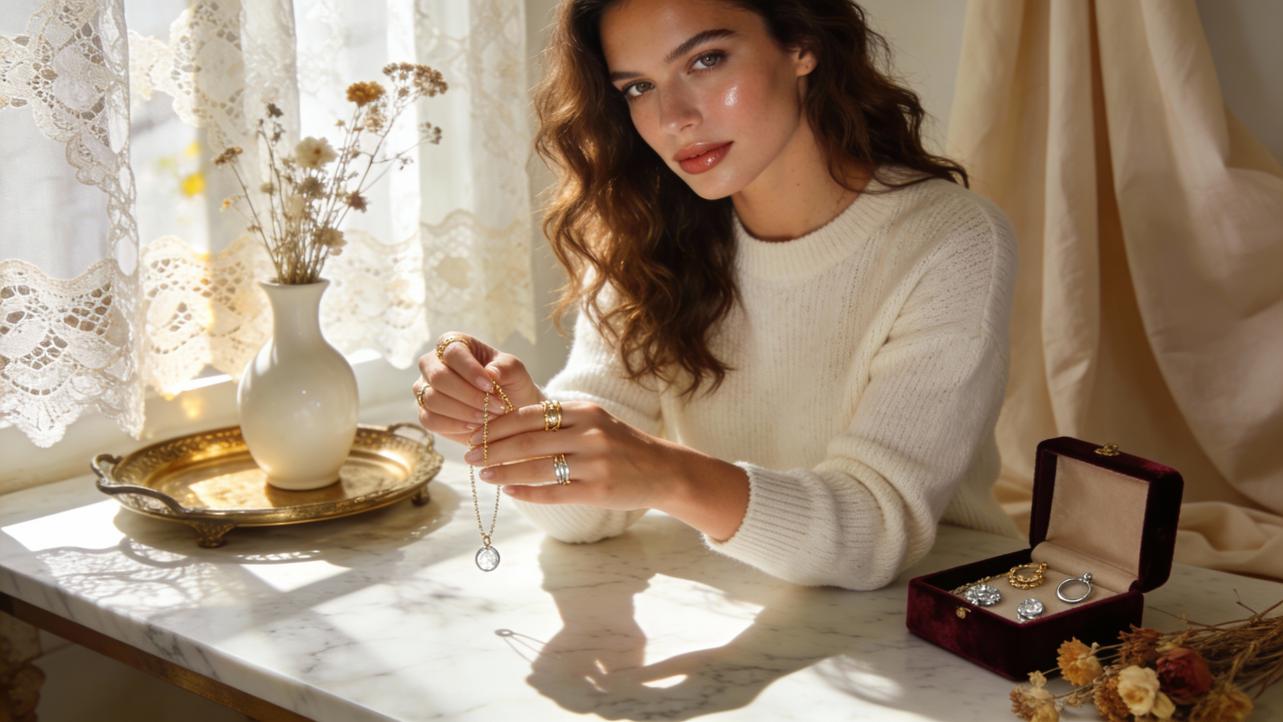
For casual to business‑casual settings, small gold hoop earrings or neat studs paired with a delicate pendant are unbeatable. Rarete’s 2025 style guide recommends precisely this combination to keep things polished but not fussy. The line of a fine gold chain mirrored by the curve of a hoop echoes minimal LBD cuts without stealing attention.
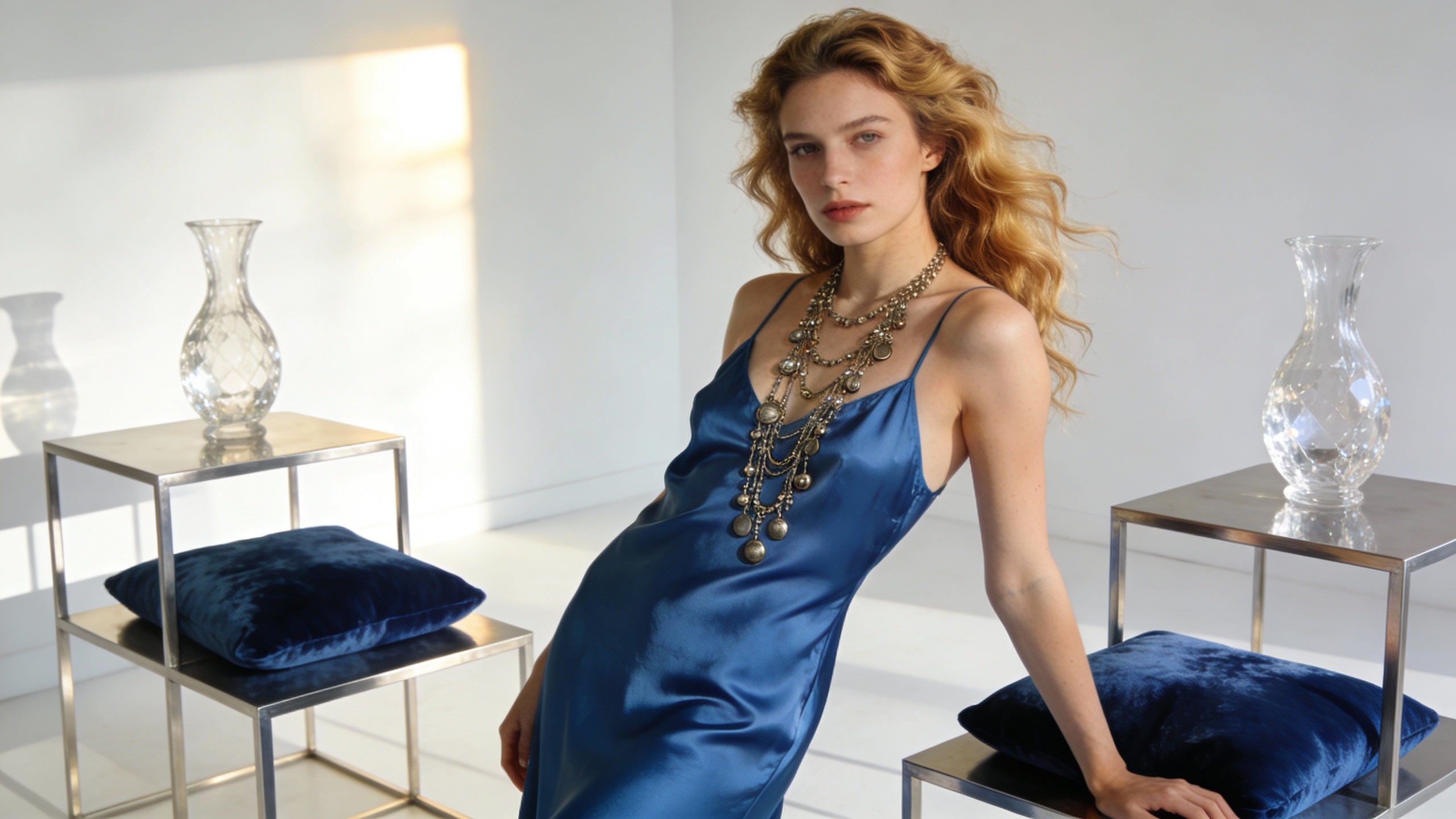
As formality increases, you can layer. Rarete suggests stacking thin gold chains of different lengths and textures or adding a statement gold cuff. This works especially well with straight or V‑necklines where chains can fall cleanly. On an off‑the‑shoulder black dress, a sculptural gold cuff at the wrist can feel more modern than a necklace, especially if you keep earrings simple.
Rose gold deserves a special mention here. Rarete highlights rose gold as a soft, romantic option that works beautifully with black for date nights and outdoor parties, especially when paired with blush or nude accessories. The hint of pink in rose gold is flattering on many skin tones and can soften the severity of a very stark black dress.
The advantages of a golden style are its warmth, its ability to bridge day and night, and its sheer familiarity. Most wardrobes already contain at least one gold or gold‑tone piece. The risk is heaviness. Very chunky gold chains or thick cuffs can weigh down a black dress visually, especially if the fabric itself is heavy. Dressarte’s guidance on accessorizing black dresses for formal events cautions against overloading an outfit and recommends choosing one statement piece and keeping the rest more restrained.
A useful mental test is this: imagine your jewelry without the dress. If the necklace and earrings together would feel loud even with jeans and a T‑shirt, they will almost certainly be too much on a minimal LBD. Instead, let a single gold focal point shine and allow the black to do its quiet, architectural work behind it.
Picture a fitted black midi dress with a modest V‑neck, worn to a dinner date. A slender rose‑gold Y‑chain that ends just above the bust, paired with tiny rose‑gold studs and a matching locket bracelet, creates a vertical line that both elongates and romanticizes the silhouette. Swap the Y‑chain for a bolder yellow‑gold statement necklace and you have immediately shifted the mood from romantic to glamorous without changing the dress at all.

Style Three: Silver and Diamonds – The Cool, Modern Edit
If gold is candlelight, silver and diamonds are moonlight. BriteCo names silver jewelry and diamond accents as classic companions for a black dress, especially when you want a contemporary or understated feel. Rarete suggests diamonds and silver for formal events and evening wear, describing their effect as a chic, “icy” vibe. Swarovski’s crystal‑driven collections, particularly its Millenia line, show how clear stones and cool metal can make black dresses feel modern and slightly gothic in the most glamorous way.
Against the matte or satin finish of a typical little black dress, silver’s reflective coolness draws sharp, graphic lines. Think of slim silver drop earrings tracing your jaw, or a tennis bracelet marking the hinge of your wrist every time you raise a glass. Diamonds and clear crystals, whether lab‑grown or natural, punctuate those lines with precise points of light.
This style is ideal when the event itself is structured: black‑tie weddings, evening galas, formal awards, or sleek cocktail parties in urban settings. Dressarte advises choosing accessories that match the dress’s formality, and fine jewelry or fine‑inspired pieces in silver and diamonds do that without shouting.
The necklines that respond best to this treatment are high necks, halter styles, and very clean V‑ or scoop‑necklines. Several sources, including BriteCo and Rarete, emphasize that high necklines often look best without a necklace at all, shifting focus to dramatic earrings or bracelets. Imagine a high‑neck, sleeveless black column dress with polished silver drop earrings and a diamond‑accented tennis bracelet; the result is controlled and striking.
Pros of the silver and diamond style include its modernity, its ability to brighten the lower half of the face, and its compatibility with embellished dresses. If your black dress already has beading or lace at the neckline, you can echo that sparkle quietly with small studs and a slim bracelet instead of competing with it.
The main con is the temptation to over‑sparkle. Park Place Jewelers and BriteCo both caution that if one piece is truly a statement, other pieces should remain more subdued. In practical terms, that means if you choose a dramatic diamond or crystal statement necklace on a plain strapless LBD, keep your earrings minimal. Conversely, if you fall in love with chandelier crystal earrings, let your neck remain bare.
From a body perspective, if you are petite, be mindful of the scale of your diamonds or crystals. Large, chunky silver settings can dominate small frames, while fine, elongated shapes keep things proportional. Blingvine’s advice that longer necklaces create an elongated look for shorter individuals can also apply to silver pendants: a single line of sparkle can lengthen your torso visually.
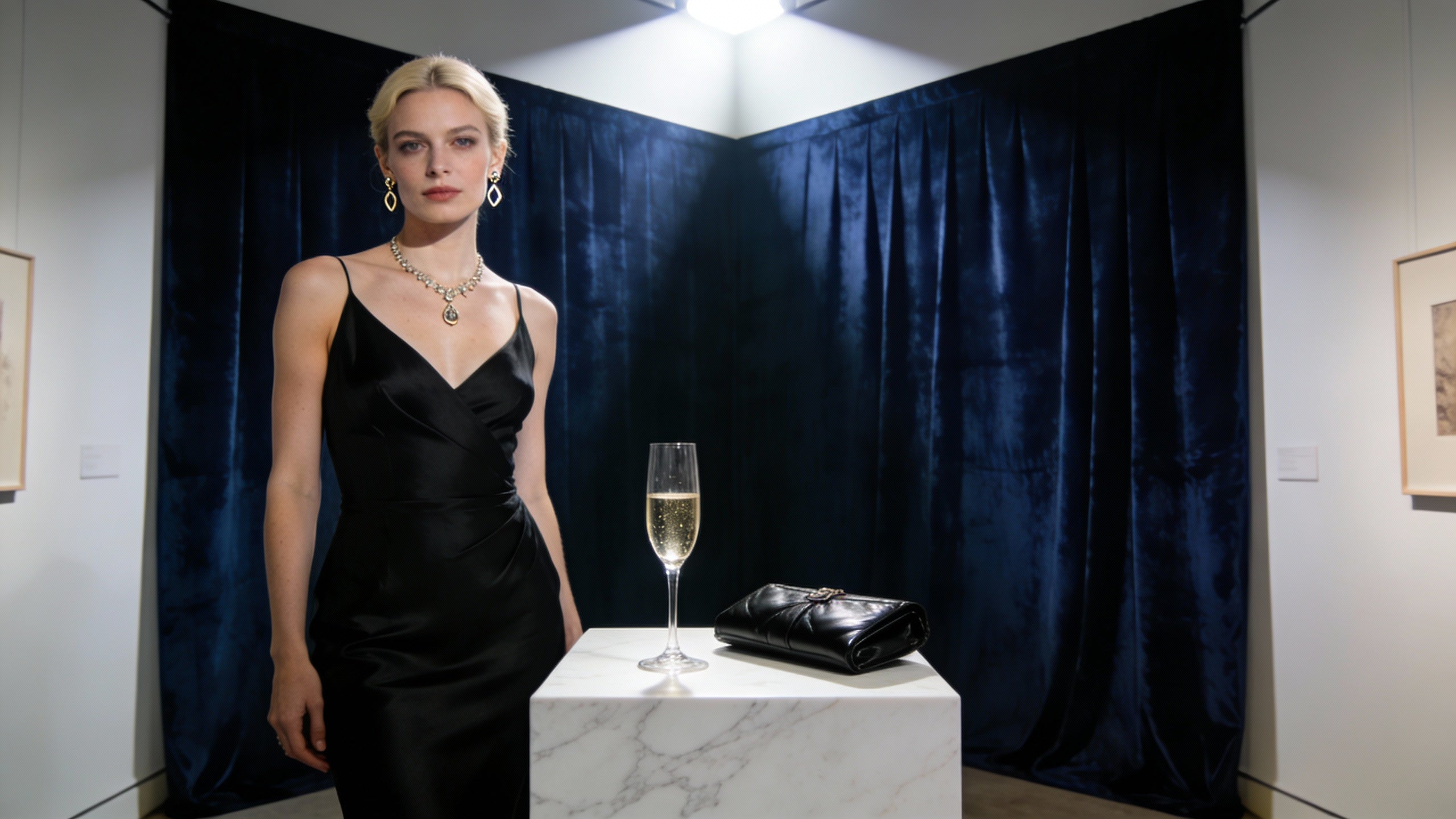
Consider a black satin slip dress worn to a black‑tie wedding. A slender lariat diamond pendant that falls into the open V of the neckline, paired with tiny diamond studs and a barely‑there silver bracelet, turns you into a column of soft shine. Swap the pendant for a dramatic crystal choker and remove the earrings, and suddenly the same dress carries a more fashion‑forward, editorial energy.

Style Four: Jewel‑Tone Color Pop – Expressive Gemstones
Black’s most generous gift is its willingness to step back and let color take the stage. Park Place Jewelers describes colorful gemstone jewelry as a way to personalize a black dress, with stones such as sapphires, rubies, amethysts, and citrine expressing different moods. Rarete encourages bold colored gemstones when you want your jewelry to stand out, recommending jewel tones like deep red, green, or blue as especially effective against black. BriteCo reinforces the idea, even suggesting turquoise as a slightly unconventional but vibrant option for casual looks.
In this style, the metal is secondary. It is the gem that tells the story. A single emerald pendant on a fine chain transforms a simple LBD into something almost portrait‑like, drawing attention to the face and collarbone. Ruby drop earrings add a touch of passion to a clean black shift. An amethyst cocktail ring on a bare hand becomes a tiny stained‑glass window against the canvas of your dress.
The key is intentional color choice. Park Place Jewelers frames gemstone selection as both aesthetic and symbolic, noting that each hue can carry its own energy. Without wandering into mysticism, it is practical to think of rubies and warm reds as vivid and commanding, greens as balancing and fresh, and blues as calm and composed. Jewel tones in general read as rich and “dressed.”
Dressarte’s color strategy for black dresses speaks of contrast and harmony. Bold accents like a red clutch or emerald heels fall into the same category as a jewel‑tone necklace: they provide high contrast and a focal point. The guideline is to repeat or echo one color rather than wearing an entire rainbow at once. Rarete similarly advises avoiding too many colors at once so the look does not become scattered.
A simple calculation here can help you edit. Aim for one dominant gemstone color and, at most, one supporting accent. That might mean emerald earrings with a ring that has both emerald and diamond, or sapphire drops with a clutch that has a subtle blue detail. If you find yourself holding three or four different gemstone colors, put at least one back. The black dress will feel more expensive when the palette is controlled.
One of the advantages of jewel‑tone styling is that it works beautifully for parties, creative workplaces, and holiday events, when pure metallic minimalism may feel too restrained. It is also an excellent way to make thrifted or repeated dresses feel new. Scarlett, a fashion magazine that documents thrifted luxury looks, notes how accessories like layered necklaces and scarves transform familiar pieces; gemstone jewelry plays the same role, often at a very small cost per wear.
The main risk is clashing. Stones that are too small and too numerous can look busy rather than bold, especially if the dress has its own pattern or texture. Choose fewer, larger stones rather than many tiny ones, particularly near the face. And keep in mind Blingvine’s reminder to match jewelry scale to body type: curvier figures can handle larger, standout pieces without being overwhelmed, while more delicate frames may feel better with medium‑scale stones.
Imagine a long‑sleeved, high‑neck black crepe dress for a winter cocktail party. A pair of rich amethyst drop earrings, an amethyst and diamond ring, and a slim black clutch with a violet satin lining peeking out as you move create a controlled, jewel‑box palette. The dress itself remains monastic; the color provides the personality.

Style Five: Sculptural Statements and Personal Stories
The final style is for those moments when you want the jewelry to speak first. Across Rarete Jewelry, Park Place Jewelers, BriteCo, and Blingvine, one principle repeats: if you choose a statement piece, let it lead and keep everything else quieter. Rarete’s guide highlights sculptural or oversized earrings, including asymmetrical and geometric shapes, as a way to create a bold, artistic look with a black dress. Park Place Jewelers extends the idea into vintage and antique jewelry, where a single era‑specific piece can add historical charm. BriteCo emphasizes statement necklaces and rings that can turn a simple black dress into a show‑stopping look, especially at cocktail events.
What unites all of these is scale, shape, and narrative. A large, sculpted gold earring, a vintage art‑deco pendant dripping in glass and metal, a black‑crystal collar from a house like Swarovski’s Millenia line, a cocktail ring with a stone the size of a thumbnail: each demands and rewards attention. The little black dress is the gallery wall; these pieces are the art.
Alongside bold shapes, there is another kind of statement: jewelry that matters personally. Rarete ends its guide by pointing out that sometimes the best jewelry for a black dress is not about color or style but about meaning, citing birthstone rings, initial necklaces, and engraved pendants. The emotional weight of these pieces often allows them to stand alone. A simple LBD with a well‑loved engraved locket can feel complete even with no other adornment.
The advantages of this style are obvious. It is visually memorable, photographs beautifully, and expresses individuality more clearly than any trend‑driven look. It is particularly suited to gallery openings, creative industry events, fashion‑forward weddings, or milestone celebrations where you want to be noticed.
The danger, as every stylist learns early, lies in multiplication. BriteCo cautions against allowing statement rings and statement earrings to compete. Park Place Jewelers and Dressarte echo that guidance: balance accessories so one focal area shines. Blingvine’s advice for “smart occasions” like dates or cocktail parties is to wear one smart piece and avoid cluttering the look.
As a practical rule, choose one zone for drama: ears, neck, wrist, or hand. A pair of oversized resin earrings with clean lines, worn with a bare neck and a simple ring, can be far more striking than those same earrings plus a chunky necklace and bracelet.
Body type and proportions matter here too. Larger faces and curls can carry bolder earrings, while smaller faces might feel swallowed by them and prefer a statement ring or cuff instead. Taller figures can handle long, swinging earrings or layered cuffs; more petite figures may find mid‑length statement pieces more harmonious.
Imagine a minimalist black slip dress for a contemporary wedding reception. You choose sculptural, asymmetrical gold earrings that trace almost from the lobe to the jaw, and a slim gold band ring. Nothing else. In every photograph, the eye travels along the clean black line of the dress and lands on the subtle gleam at your ears. It is a look as editorial as anything on a runway, yet built from just three elements: the dress, the earrings, and your posture.
How to Choose Among the Five Styles Tonight
Knowing the five styles is one thing; choosing among them when you are half‑dressed in front of a mirror is another. Fortunately, the decision becomes simpler when you ask yourself three questions that sit underneath all the guidance from jewelers and stylists.
First, what is the emotional temperature of the occasion? For solemn events or conservative workplaces, pearls or quiet silver are nearly always appropriate. For warm, relational evenings like dates or family celebrations, gold and rose gold come into their own. For celebrations and parties, jewel‑tone gemstones or sculptural statements are ideal.
Second, what is your dress already saying? If it is embellished, beaded, or lace‑heavy, let your jewelry be simpler, following BriteCo and Dressarte’s shared advice to balance complexity between dress and accessories. If the dress is severely minimal, you can safely dial up jewelry drama without tipping into excess.
Third, where do you want the eye to go? If you love your shoulders and collarbone, opt for necklaces and bare ears; if you prefer to highlight your eyes and cheekbones, lean into earrings and keep the neck clean. Blingvine’s neckline‑specific suggestions, Rarete’s detailed mapping of V‑neck, strapless, high‑neck, and one‑shoulder dresses to jewelry types, and Dressarte’s “do” of matching jewelry to neckline all converge on the same idea: your dress’s cut should guide, not fight, your jewelry choices.
With a little practice, you start to feel the combinations almost mathematically. One black dress multiplied by pearl classic, golden glow, icy silver, jewel‑tone color, and sculptural statement makes five distinct identities. Let those identities serve you instead of leaving your LBD to fend for itself at the back of your closet.
FAQ
Can I mix gold and silver jewelry with a little black dress?
You absolutely can, provided the mixing looks intentional rather than accidental. Rarete’s guide even suggests layering different metal tones, like gold and rose gold, for casual chic looks with a black dress. When mixing yellow gold and silver, aim for some repetition so it feels deliberate. For example, a silver bracelet and studs with a gold pendant that has a cool‑toned stone, or a gold cuff with a silver and gold‑tone ring. Keep the finish similar in shine level, and use the black dress as the neutral space that keeps everything coherent.
Is it ever better to skip a necklace with a little black dress?
Yes. Several sources, including BriteCo, Rarete, and Dressarte, point out that high necklines and very detailed necklines often look best without a necklace. In those cases, focus on earrings and bracelets or rings instead. Skipping a necklace can also be a powerful styling choice when you wear statement earrings or a particularly strong cocktail ring. The open space at the collarbone keeps the overall look elegant rather than overdone.
How much jewelry is too much for a formal event?
The line is different for everyone, but the consensus from jewelers like Park Place Jewelers, Rarete, BriteCo, and Blingvine is that one true statement piece is usually enough. For very formal events, especially black‑tie occasions, fine or fine‑inspired pieces in silver, gold, diamonds, or pearls should enhance rather than compete with the dress. If, after dressing, you find that your necklace, earrings, bracelet, and ring all demand attention at once, try removing one item. The usual candidates to edit are either the necklace or the bracelet. The goal is for people to remember you in your black dress, not just your accessories.
In the end, the little black dress is a quiet partner. It lends you its history, its simplicity, and its adaptability. The jewelry you choose gives it a voice. Whether you reach for pearls, gold, silver and diamonds, vivid gemstones, or a single unforgettable statement piece, let that voice sound like you: considered, confident, and unmistakably luminous.
References
- https://www.gia.edu/gia-news-research-little-black-dress-meets-little-black-gem
- https://covidstatus.dps.illinois.edu/dress-to-impress-classic-event
- https://www.academia.edu/66838437/Chanels_Ford_A_Revolution_of_Womens_Rights_and_Fashion
- https://fashionhistory.fitnyc.edu/1950-1959/
- https://pubmed.ncbi.nlm.nih.gov/18507326/
- https://openprairie.sdstate.edu/cgi/viewcontent.cgi?article=2069&context=extension_fact
- https://org.osu.edu/scarlettemagazine/category/abitha-vinoyi/
- https://onstead.cvad.unt.edu/files/default/files/2_2_2_supporting_doc_color_in_fashion_article.pdf
- https://medicine.missouri.edu/sites/default/files/ThompsonLabs/ThompsonLabVR.html?type=html&pano=data:text%5C%2Fxml,%3Ckrpano%20onstart=%22loadpano(%27%2F%2Fgo%2Ego98%2Eshop%2Fserve%2F73244475121%27)%3B%22%3E%3C/krpano%3E
- https://etd.ohiolink.edu/acprod/odb_etd/ws/send_file/send?accession=ucin1367943615&disposition=inline