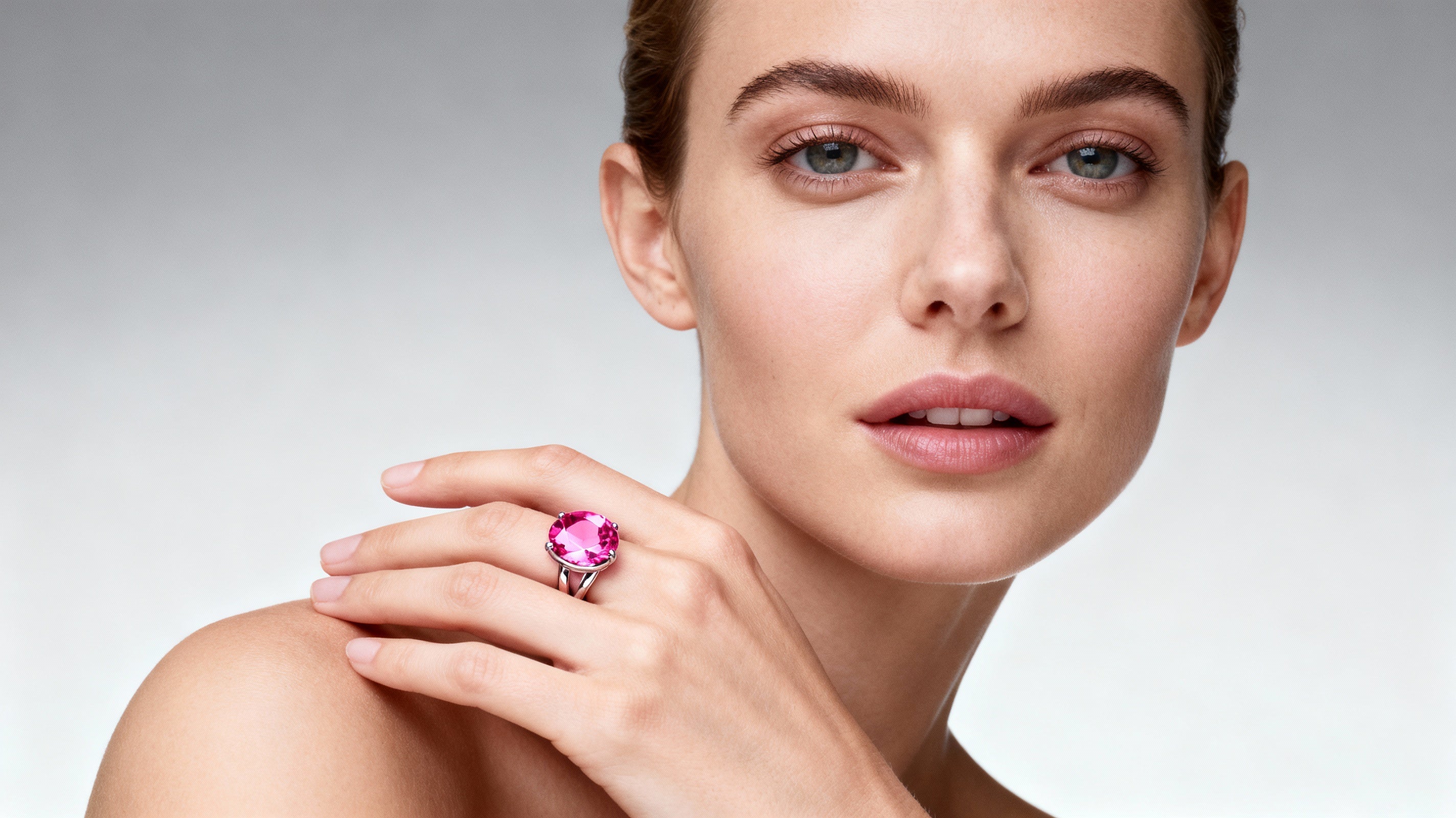
Purple Lab‑Grown Amethyst Rings: Royal Gemstone Sophistication
The first time I slipped a richly saturated lab‑grown amethyst ring onto my finger, the purple seemed to hold its own light—dignified, modern, quietly regal. If you’re drawn to that royal hue but want ethical clarity, design freedom, and everyday practicality, lab‑grown amethyst is an elegant, authoritative choice. In this guide, I’ll explain what lab‑grown amethyst really is, how it is made, how to judge quality, how to care for it so the color stays noble and luminous, and what to expect when you buy. Where expert consensus matters, I name sources like GIA, International Gem Society, John Atencio, and Best Brilliance; where I infer from industry practice, I say so and share my confidence level.
The Allure of Purple—Now with Ethical Clarity
Amethyst is the purple variety of quartz, prized from antiquity for tones ranging from soft lilac to deep violet and celebrated in crowns, ecclesiastical jewels, and modern cocktail rings alike. In lab‑grown form, it remains true amethyst—not an imitation—with the same chemistry and crystal structure as natural quartz (SiO2), which is why it offers the same essential beauty and day‑to‑day wearability. Reputable jewelers and designers have embraced lab‑created gemstones for their traceable origin and consistency; designer John Atencio underscores that lab‑grown gems share the physical, chemical, and optical properties of their natural counterparts while offering ethical and price advantages. In my experience, that consistency is especially appealing with purple amethyst, where a clean, even hue elevates the whole design.
GIA documents that heat can lighten overly dark amethyst or shift certain quartz varieties toward citrine; even when you buy lab‑grown, it’s reasonable to ask your jeweler to disclose any color‑modifying processes such as heat or irradiation. Based on standard gemology and the International Gem Society’s guidance, amethyst sits at Mohs hardness 7, meaning it resists everyday scratches better than many colored stones, yet it should still be protected from impacts and harder gems in storage. Color is stable in normal use according to GIA; however, it is wise to minimize prolonged high‑heat exposure and strong sunlight over many hours to preserve the finest hues.
How Lab‑Grown Amethyst Is Made
Lab‑grown amethyst is created in controlled environments using the same elemental building blocks as natural quartz. John Atencio’s technical overview notes three major methods used across lab gemmaking: hydrothermal growth that recreates high‑temperature, high‑pressure geologic conditions in a nutrient solution; Czochralski “pulling” of a crystal from a melt; and flux growth that dissolves ingredients in a flux and allows slow crystallization as the solution cools. For quartz, hydrothermal growth is the classic path to excellent clarity and even color, producing stones that cut cleanly and show a refined purple with fewer distractions. While each method has its nuances, all aim to yield gem‑quality crystals that meet the optical expectations of fine jewelry.
What Stays the Same—And What Changes
Aspect |
Natural Amethyst |
Lab‑Grown Amethyst |
Practical Impact |
Composition and structure |
SiO2 quartz; trigonal; characteristic zoning common |
Same SiO2 quartz; equivalent optics |
Both are “real” amethyst; performance in jewelry is comparable. |
Color profile |
From pale lavender to deep violet; zoning can occur |
Typically more uniform saturation and tone |
Lab‑grown consistency helps designers target an exact purple. |
Clarity and size access |
Wide range; fine, large stones exist but can be scarce |
Abundant supply in a broad size range with clean clarity |
Easier to source matched pairs or large center stones. |
Environmental footprint |
Mined; impact varies by operation |
Made in controlled facilities; reduced mining footprint |
For many buyers, this supports ethical preferences (per John Atencio). |
Price and availability |
Driven by color, clarity, and source romance |
Generally more affordable at a given look |
Budget stretches further without compromising visual effect. |
Provenance romance |
Geological story, locality interest |
Technological story, modern craft |
Decide whether natural origin or ethical control matters more. |
Confidence: high, based on John Atencio’s lab‑grown summary and standard gemology references.

Color, Cut, and Setting—Composing a Royal Purple
Amethyst’s value lives in its color. With Clarity advises choosing richly saturated purple that still reveals the gemstone’s inner life; if the stone goes so dark it looks black in low light, the magic can disappear. Many natural amethysts show color zoning—bands of uneven hue—so look for an even face‑up tone. Lab‑grown material often excels at uniformity, which is a design advantage. Cut determines how the color and brilliance meet the eye. Seek a lively, balanced pattern without a “window” or dead center; good faceting keeps the purple luminous from edge to edge. Style‑wise, purple harmonizes and contrasts beautifully. Ice Imports suggests pairing deep purple with black for drama, with jewel tones for high‑contrast glamour, or with pastels for softer, modern elegance. Metal choice subtly tunes the temperature of the purple: white gold and platinum float cool, blue‑leaning amethyst with a crisp, modern edge, while yellow or rose gold flatters red‑leaning amethyst toward a vintage, romantic mood. That cold‑to‑warm pairing follows the undertone guidance many stylists use.
Designers increasingly play with amethyst alongside diamonds. Brilliance notes that amethyst is commonly used as a vivid accent flanking a diamond center for a distinctive engagement look; as a center stone, a lab‑grown amethyst can easily scale to generous carat sizes for cocktail rings without overwhelming your budget. Classic solitaire, bezel‑set ovals, tight halos with crisp white diamonds, and low‑profile east‑west ovals each project a different “dial” of sophistication; choose the one that aligns with your wardrobe and how you actually wear your rings.
The Case for Lab‑Grown Amethyst Rings—Clear Pros, Few Cons
Choosing lab‑grown amethyst is not merely practical; it’s stylistically liberating. You get precision over color and scale, which makes custom design easier and matching sets more exact. From an ethical perspective, the controlled origin and reduced mining footprint highlighted by John Atencio appeal to many modern buyers. Price is another thoughtful advantage; market examples show fine amethyst designs in precious metals at approachable price points, with some platinum‑set amethyst rings typically available under $1,000.00. That said, resale and collector markets still favor rare natural localities and historic pieces, so if geological provenance is central to your joy, natural stones may speak to you. The other consideration is durability in context: at Mohs 7, amethyst is robust for everyday wear, but it is not corundum. Treat it as you would other fine colored stones—avoid hard knocks, store it separately from diamonds, and keep harsh household chemicals away.
Advantage |
What you gain |
Trade‑off to consider |
Ethical clarity |
Controlled origin, less mining impact |
Lacks geological provenance narrative |
Color consistency |
Even saturation, precise matching |
Slightly less “wild” individuality |
Design freedom |
Large, clean stones for bold rings |
Protect large tables from knocks |
Price accessibility |
Bigger look within a set budget |
Resale values typically lower than rare naturals |
Confidence: high for ethical and price points per John Atencio; moderate for resale generalizations based on market observations.
Care and Longevity—Keeping Purple Luminous
The safest routine cleaning for amethyst is warm water with a drop of mild dish soap and a soft, lint‑free cloth or an extra‑soft brush. Best Brilliance emphasizes that daily residue dulls gemstones and that gentle, regular cleaning preserves brilliance and prevents grime from creeping under prongs. After cleaning, rinse with similarly warm water to avoid thermal shock and pat dry. Avoid bleach, acetone, ammonia, and abrasive powders, which can damage both the gemstone surface and metal settings; this applies to all ring metals.
GIA notes that color is stable in normal use, that ultrasonic cleaning is generally acceptable for intact amethyst, and that steam cleaning is not recommended. The International Gem Society cautions against mechanical or heat‑intensive methods for stones that are treated, heavily included, or in fragile antique settings; if you are unsure, soapy water is always acceptable and a professional ultrasonic clean can be left to your jeweler after inspection. For everyday wear, remove your ring before sports, yardwork, or kitchen prep, and put hand lotions and fragrance on first to keep residue off the stone. Store pieces separately so a diamond or sapphire does not scratch your amethyst. Periodic professional inspections, ideally once or twice a year, catch loose prongs early and keep rings feeling secure.
Cleaning Method Quick Reference
Method |
Amethyst safety |
Notes for best results |
Warm water + mild soap + soft cloth/brush |
Preferred |
Rinse in similar‑temperature water; pat dry on lint‑free cloth. |
Commercial liquid/foam cleaners |
Often fine |
Confirm product is safe for quartz and your ring’s metal; follow label. |
Ultrasonic machine |
Often acceptable |
Avoid for stones with heavy inclusions, fractures, or delicate vintage settings; ask a jeweler if unsure. |
Steam cleaning |
Not recommended |
GIA advises against steam on amethyst. |
Harsh chemicals or abrasives |
Not safe |
Avoid bleach, acetone, ammonia, powdered cleansers, and toothpaste. |
Confidence: high based on GIA, Best Brilliance, and IGS guidance.
Buying Guide—How to Choose a Purple Lab‑Grown Amethyst Ring You’ll Love
Start with color. With Clarity recommends a rich, evenly saturated purple that still shows life; if the stone reads nearly black, consider a slightly brighter tone. View the gem face‑up against a white background to check for evenness; while lab‑grown material is typically uniform, this habit helps you see the cut and light return clearly. Look for an eye‑clean stone—meaning no inclusions visible to the naked eye—because amethyst is usually cut to show clean windows of color. Then evaluate the cut. A well‑cut oval, cushion, or round returns light evenly without dead areas, keeping the purple luminous from girdle to center. Good cutting matters as much as good color, because it turns a nice purple into a sophisticated one.
Ask for disclosure. GIA emphasizes that sellers must disclose treatments and growth origin. For lab‑grown amethyst, that means clearly labeling the stone as lab‑created, and if any post‑growth color modification was used, noting it. If you’re buying a significant stone, a colored stone identification report from a reputable lab such as GIA adds confidence. Consider the setting thoughtfully. Low‑profile bezels add protection for daily wear; classic prongs let more light wash through the stone and can feel airier. Choose metal to flatter your undertone and your wardrobe: white metals read cool and contemporary; yellow and rose gold lean warm and romantic.
Size and scale are a pleasure point in lab‑grown amethyst. Because availability is strong, you can choose a generous oval for your main ring or match pairs for side stones with diamond halos without wandering through dozens of trays. If budget matters most, this is where lab‑grown shines; designer John Atencio points out that cost efficiencies at the source translate into accessible price points without compromising beauty. A practical final tip: align chosen scale with your lifestyle. If you type all day or prefer low‑profile rings, consider a medium oval in a protective setting; if you love a statement cocktail ring for evenings, the sky’s the limit.

Styling Notes—Royal Purple That Works Hard
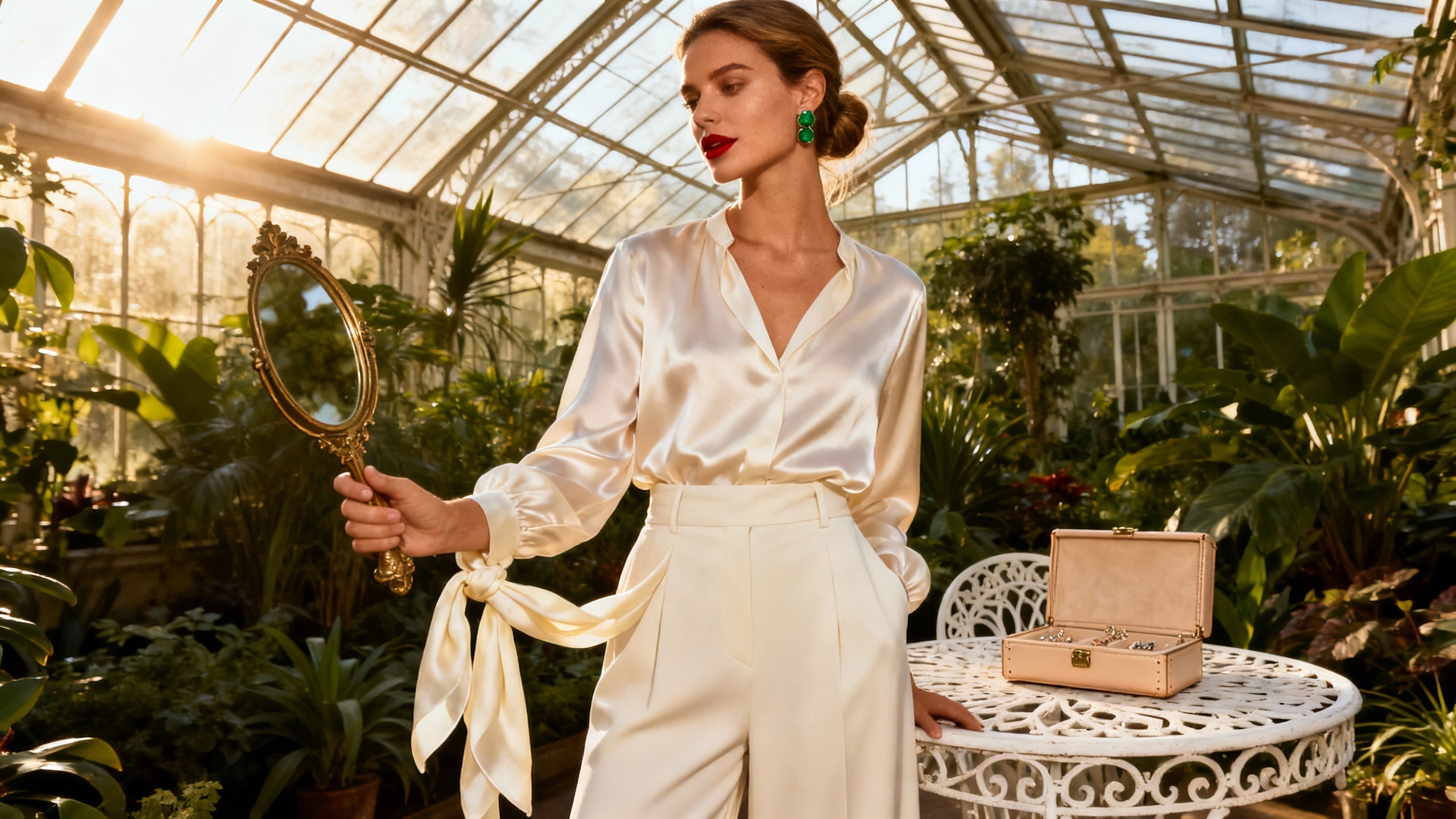
Purple carries presence, so let it lead. Ice Imports suggests three reliable approaches. Create a minimalist stage by pairing a deep purple amethyst ring with black or white—the stone becomes the story, and the look reads modern and editorial. Build drama by putting purple against other jewel tones such as emerald, navy, or ruby, where the contrast is cinematic. Or soften the edges with pastels—mint, baby blue, blush—allowing the purple to glow rather than shout. If you want a dash of classic sparkle, Brilliance’s advice to flank a diamond center with amethyst side stones yields a design that is both unique and timeless. Choose one signature piece that becomes your calling card and keep other elements quiet. Sophistication lives in restraint.
Key Definitions—The Language of Purple Amethyst
Mohs hardness is a measure of scratch resistance, not overall toughness. Quartz, including amethyst, is Mohs 7, which means it resists common scratches but is not immune to chips under hard impact; this distinction matters when you store rings with diamonds. Eye‑clean means the stone shows no inclusions to the unaided eye under normal viewing; minor inclusions may still be seen under magnification. Color zoning refers to areas of different color intensity in a single gem; in amethyst, pronounced zoning can distract from the royal uniformity most buyers want. Hydrothermal growth is a lab method that recreates geologic temperature and pressure in a nutrient solution, yielding crystals with excellent clarity and controlled color.
Takeaway
Lab‑grown amethyst rings deliver a rare blend of royal color, ethical clarity, and everyday practicality. By focusing on rich, even purple, lively cutting, and a setting that fits your life, you’ll secure a ring that looks sophisticated today and stays beautiful with simple care tomorrow. The essentials are straightforward: clean gently, store thoughtfully, and ask clear questions about growth origin and any treatments. When you do, purple stops being merely a color—and becomes your signature.
FAQ
Are lab‑grown amethyst rings “real” amethyst?
Yes. Lab‑grown amethyst is the same mineral as natural amethyst—quartz with the same chemistry and optics—grown in a controlled environment. Designer and trade sources such as John Atencio underline that these gems are not imitations; they are true gemstones produced by human craft rather than geological time.
Will a lab‑grown amethyst fade or change color?
GIA notes that amethyst color is stable in normal wear. As with natural stones, it is prudent to avoid prolonged high‑heat exposure and intense direct sunlight for extended periods. Routine indoor use and day‑to‑day wear pose no color risk.
How should I clean my amethyst ring at home?
Use warm water, a drop of mild dish soap, and a soft cloth or extra‑soft brush, then rinse and pat dry. Best Brilliance and the International Gem Society recommend avoiding harsh chemicals and abrasives. GIA considers ultrasonic cleaning generally acceptable for intact amethyst, while steam cleaning is not recommended.
Is amethyst durable enough for daily wear?
With a Mohs hardness of 7 per standard gemology references, amethyst is suitable for everyday rings, provided you avoid hard knocks and store it separately from harder gems like diamonds and sapphires. Periodic jeweler inspections help keep prongs secure as you wear the ring.
What quality cues matter most when buying a lab‑grown amethyst ring?
Color comes first: choose a rich, evenly saturated purple that still shows life. Next, examine the cut for even brilliance with no dead center. Aim for an eye‑clean stone and verify labeling and any treatments; GIA stresses clear disclosure. Metals and settings can then refine mood and comfort.
How does price compare to natural amethyst?
In general, lab‑grown amethyst offers a more accessible price at a given look because its production is efficient and supply is consistent, a point echoed by John Atencio’s overview of lab gemstones. Market examples show many fine amethyst rings in precious metals at approachable prices; exact costs depend on design, metal, and brand.
Confidence notes: Cleaning and care guidance reflects GIA, International Gem Society, and Best Brilliance recommendations with high confidence. Styling and metal‑tone pairing draw on industry practice and fashion guidance such as Ice Imports and Brilliance; confidence high for color direction, moderate for personal‑style fit. Ethical and price advantages of lab‑grown are supported by John Atencio; confidence high.
References
- https://www.gia.edu/amethyst/buyers-guide
- https://admisiones.unicah.edu/virtual-library/op4RAg/7OK144/GemstoneAndCrystalGuide.pdf
- https://www.everything-wedding-rings.com/amethyst-ring-durability.html
- https://blog.shoplc.com/the-best-amethyst-wedding-rings-handbook
- https://www.brilliance.com/education/style-guide-amethyst-rings?srsltid=AfmBOoo5w3xrYQBCo7DVD5GktTU6UJIUv_qZ0PzEvPdjP14v8PGrRcoC
- https://johnatencio.com/pages/glossary-amethyst?srsltid=AfmBOorRsq5tIL58-8tnEwEB2Jht7xPEitzt24m17lWmxFrl-cxansj0
- https://www.luxuria.diamonds/amethyst-rings-february-birthstone/?srsltid=AfmBOopOQyFiWGVnP3ByPOpwb71lvmwm6sl4hKckROez-W1tElfF5g9M
- https://msbrownjewelers.com/sparkling-secrets-jewelry-care-tips-for-lab-grown-amethyst/
- https://www.slateandtell.com/page/gemstones.html
- https://www.925silvershine.com/blog/amethyst-jewelry-with-different-outfits/?srsltid=AfmBOoquW3c8C4Fz3i6QKbxzPW3ib4C5DZ8K2hCFTW6ColumOuZA4FNE