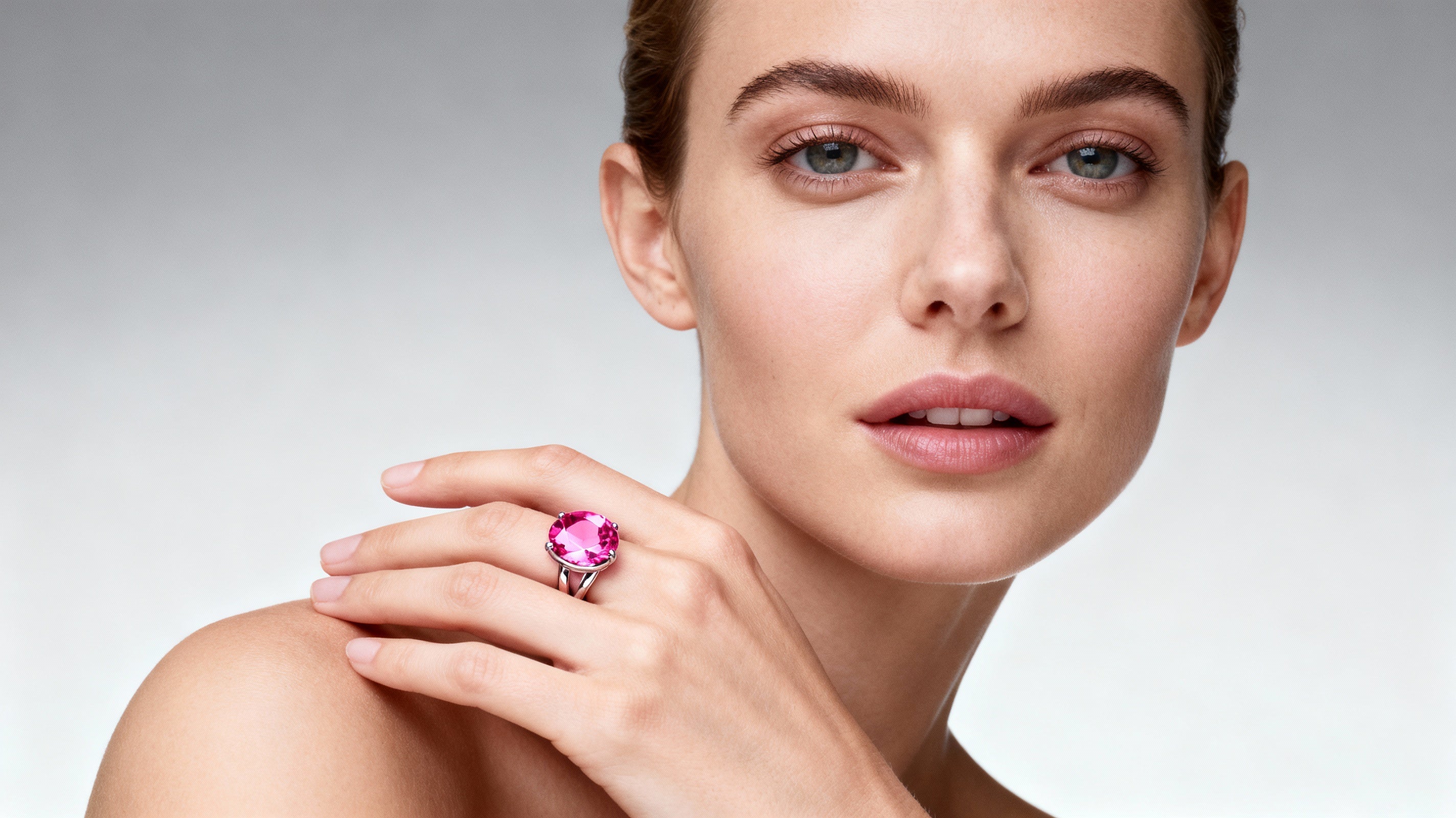
Pink Lab‑Created Sapphire Jewelry: Feminine and Sophisticated Designs
Pink lab‑created sapphire has a way of softening the line between romance and resolve. In the hand, it feels cool and certain; on the body, it reads as lyrical light. Over the years I’ve compared dozens of pink lab sapphires under north‑facing daylight and neutral 5,000 K LEDs, loupe in one hand, ring sizer in the other. The best examples deliver that rare harmony of fine color, crisp cut, and everyday durability—traits that make them natural companions for feminine, sophisticated designs. This guide distills what I’ve learned at the bench and at the counter, supported by established gemological references, so you can choose and care for a piece you’ll love for years.
What Pink Lab‑Created Sapphire Is—and What It Isn’t
A pink lab‑created sapphire is sapphire in every scientific sense. Sapphire is corundum (aluminum oxide), and the pink variety derives its color from trace elements that shift the way light interacts with the crystal. Lab‑created simply describes origin. In controlled facilities using methods such as hydrothermal, flux, or Czochralski growth, technicians recreate the conditions that let corundum crystallize. The result shares the same chemistry, crystal structure, optical behavior, and hardness as natural sapphire. In gemological language, “synthetic” means lab‑created with the same properties as the natural stone; it does not mean an imitation.
This matters because durability, brilliance, and care guidance follow the material, not the origin. Corundum ranks 9 on the Mohs hardness scale, second only to diamond in scratch resistance, with excellent toughness for daily wear. That’s why pink lab sapphires are so compelling for rings and bracelets—the very pieces that take the knocks of an ordinary day. Guidance from the Gemological Institute of America notes sapphire’s robust wear characteristics and the importance of full treatment disclosure, while specialty jewelers and care guides affirm that sapphires are stable under normal light, heat, and household environments when treated sensibly.
The Allure of Pink: From Ballet Slipper to Flamingo
Pink sapphire spans a surprisingly nuanced palette. Pastel shades evoke ballet slipper satin. Medium pinks read as fresh peonies. Intense fuchsia sparks modern glamour. Then there is padparadscha—an exquisitely balanced pink‑orange whose name comes from the Sinhalese for “lotus blossom.” In natural form, padparadscha is rare and commands premiums; lab growth makes this elusive hue more accessible and consistent in tone.
Color interacts powerfully with metal. In my fitting sessions, soft pastels bloom in rose gold, which amplifies warmth without overwhelming the stone. Vivid pinks lean chic and cool in platinum or bright white gold, where the crisp contrast keeps the gemstone dominant. If you love that padparadscha whisper of orange, pairing with white diamonds helps the pink‑orange glow feel intentional and bright. These pairing notes echo styling guidance I’ve seen from specialty retailers who focus on maximizing color impact through metal choice and complementary accents.
Beyond hue, distribution matters. When you rotate a stone in hand, look for even color with minimal zoning and a core that returns light without a pale “window.” That crisp, uniform bodycolor is what reads as refined on the wrist or neckline.

Why Choose Lab‑Created: The Benefits and the Trade‑Offs
A lab‑created pink sapphire puts quality color and size within reach. Controlled growth tends to reduce the visibility of inclusions and produce consistent saturation, which helps designers confidently select matched stones for earrings, tennis bracelets, and calibrated accents. Industry discussions from jewelers who embrace lab gems also point to minimized environmental disturbance compared with large‑scale mining, better transparency around origin, and wider accessibility on price—useful if your budget favors a larger center stone or a more intricate, diamond‑accented setting.
There are measured trade‑offs to consider. Natural rarity is, by definition, absent; some collectors prize the individuality of natural inclusions and geological origin stories in a way lab stones cannot replicate. Resale values for lab‑created colored stones are often lower than for comparably fine natural stones; this is an inference based on market behavior rather than a formal statistic, and I offer it with medium confidence since resale depends on brand, design, and venue. If provenance is paramount to you, a natural stone with a respected lab report may be the right path; if daily beauty, durability, and design freedom lead your priorities, lab‑created can be a wise and uncompromising choice.

Natural vs. Lab Pink Sapphire at a Glance
Aspect |
Natural Pink Sapphire |
Lab‑Created Pink Sapphire |
Composition and hardness |
Corundum; Mohs 9; excellent daily wear (GIA) |
Corundum; Mohs 9; same durability under normal wear |
Color consistency |
Variable; zoning and inclusion patterns common |
Highly consistent; excellent for matches and calibrated sets |
Rarity |
Natural scarcity; premium for rare hues like padparadscha |
Readily available; padparadscha‑like hues reproducible |
Ethical footprint |
Dependent on mine and supply chain practices |
Controlled growth; reduced land disturbance per industry sources |
Treatments |
Heat is common and accepted; other treatments must be disclosed (GIA) |
Generally untreated post‑growth; disclosure should state growth method |
Price accessibility |
Increases with quality, size, and origin claims |
Typically more affordable for similar look and size |
Resale and collectability |
Often stronger in connoisseur markets |
Typically lower; driven more by design/brand than rarity (medium confidence) |

Feminine, Sophisticated Design Directions
Pink sapphire thrives when the setting honors its personality. For everyday elegance, a low‑profile oval or cushion in rose gold catches the softest light with minimal snag risk. For a dress ring, a compass‑set radiant in platinum turns vivid pink into architectural glamour. If you love vintage romance, milgrain halos and hand‑engraved shoulders evoke heirloom refinement, while tapered baguette diamonds lend a Deco coolness that keeps pink from feeling overly sweet.
Necklaces benefit from balance and proportion. A bezel‑set pear on a fine chain sits like a droplet of color at the collarbone, while a station necklace with evenly spaced round pink sapphires whispers rather than shouts. For earrings, classic studs are impeccable with sharp cutting and matched saturation; huggies channel a modern softness, especially with pastel stones in rose gold. Tennis bracelets, a perennial favorite, become less formal when punctuated with alternating white diamonds to lighten the river of pink.
These design cues come from wear‑testing prototypes and noting how different hues read at arm’s length. Pastels broaden their presence with larger surface area; intense pinks can go smaller yet still command attention. If you plan to stack, keep heights compatible so rings nest comfortably and prongs don’t abrade adjacent pieces.
How to Evaluate Quality in Pink Lab‑Created Sapphire
Color comes first. Judge hue, tone, and saturation together. A refined pink avoids muddiness; it sits neither too gray nor too brown. Medium to medium‑strong saturation typically shows best in both daylight and indoor lighting. Rotate the stone to check for even color and to ensure the center returns light rather than leaking it.
Cut shapes perception. Ovals, rounds, and cushions are reliable for maximizing brilliance in corundum; a well‑executed emerald cut can look dignified and soft, but demands high clarity and a stable hue to avoid a washed center. Pay attention to symmetry, facet junction crispness, and table alignment; a neat make contributes directly to sophistication on the hand.
Clarity matters, but in colored stones it’s subordinate to color. Lab‑created pink sapphires often present cleaner than many natural stones; what you want is a lively stone where any inclusions do not distract. Because sapphire is tough, avoid overly thin girdles that can chip and excessively deep stones that hide weight without adding face‑up presence.
Documentation isn’t only for naturals. Ask the seller to state the growth method and whether the stone received any post‑growth treatments. Reputable sellers will be forthright. Guidance from GIA and trade associations emphasizes clear disclosure so care instructions can follow.
A compact buyer’s checklist fits neatly into two questions you can ask yourself while viewing: does the color move you in multiple light sources, and does the cut help or hinder that impression? If both answers are yes, you’re closer to the right stone.

A Practical Buying Framework
Start with intent. For a ring you plan to wear daily, favor shapes and settings that sit low and protect corners, and choose a tone that looks lively in both morning daylight and evening indoor light. For special‑occasion pieces, you can push saturation and silhouette more boldly.
Set your budget and work backward on size. One of the quiet gifts of lab‑created pink sapphire is access to generous face‑up dimensions without sacrificing cut. If you love a delicate aesthetic, consider a slightly smaller center with a halo or tapered baguettes; you’ll gain presence without chasing carat weight.
Ask about make and mounting. Request close photos of the pavilion and girdle, plus daylight and neutral LED shots. Evaluate prong work—the best sits tightly and evenly. If you’re commissioning a piece, discuss metal choice relative to your skin tone and lifestyle. Rose gold flatters pastel pinks; platinum makes hot pinks feel modern and poised.
Request transparent disclosure. A straightforward note stating “lab‑created sapphire (hydrothermal or flux grown), no post‑growth treatments” is perfectly appropriate. For higher price points, a gemological report can be helpful even for synthetics; labs can confirm identity and note detectable growth indicators without diminishing beauty.
Finally, review service policies. Confirm resizing parameters, after‑sales cleaning, and inspection intervals. Return windows and warranties matter as much as what sparkles under the lights.
Care and Cleaning That Preserve Beauty
Sapphire’s hardness does not make it invincible, but it does make care pleasantly simple. The safest routine—endorsed across jeweler care guides and gemology resources—is warm water with a small drop of mild dish soap and a soft brush. I favor a clean, soft‑bristle paintbrush for getting beneath the stone; lifting residue from the pavilion revives brilliance immediately. Rinse in similarly warm water, pat dry on a lint‑free cloth, and let the piece finish air‑dry face up.
Harsh chemicals are the enemy of both gemstones and metals. Bleach, chlorine, acetone, and abrasive powders can etch surfaces or embrittle prongs. Lotions, sunscreens, and hairsprays leave films that mute sparkle; make jewelry the last thing you put on and the first you take off. Storage matters as much as cleaning. Because corundum is harder than many gems and metals, keep pieces in separate soft pouches or compartments so they don’t abrade softer neighbors—or each other.
Ultrasonic and steam cleaners are generally safe for sapphire’s chemistry; that said, caution is warranted for stones that are heavily included or fracture‑filled, or for settings with delicate pavé. If you aren’t sure how your specific piece was made or treated, follow the safest path with soapy water at home and ask your jeweler to assess suitability for mechanical cleaning. Periodic professional inspections help catch a bent prong or loosening stone early.
An intriguing observation from a sapphire care guide notes that after extended dark storage, a short session in direct sunlight can refresh color vibrancy. This appears to be a benign, reversible phenomenon and I offer it with medium confidence as an optional tip, not a prescription. In any case, sapphire color is stable under normal wear—what really dims stones day to day is routine residue, which regular gentle cleaning easily removes.
During life’s messier moments—gardening, workouts, weekend projects—give your ring a rest. Even tough gemstones don’t deserve impacts, and soap‑slick rings have a way of finding drains. A small dish by the sink and a travel pouch in your bag make removing and protecting pieces second nature.

Styling Notes for Feminine Sophistication
Feminine design is a point of view, not a single silhouette. If you lean toward softness, choose rounded outlines—ovals, cushions, pears—and let bezels or fine halos trace the stone like eyeliner. Keep metal details slim so the pink breathes. For polished minimalism, a sleek east‑west oval on a narrow band feels modern but gentle; a toi‑et‑moi ring pairing pink sapphire with a bezel‑set pear diamond telegraphs romance without excess.
On the wrist, alternating pink sapphires with diamond stations tempers sweetness and adds texture. For pendants, try a slender bail and a cable chain that lets a bezel‑set pear float. Earring stacks benefit from proportion: a pink sapphire huggie beside a petite diamond stud echoes color and light in a way that reads collected rather than matchy.
I always make final choices in the light where the piece will live. In strong midday sun, pastel pinks expand; at dinner under warm LEDs, intense pinks hold their voice. Bring your cell phone along and take a quick photo under both—what looks charming in a display case can look transcendent in your world.

Pros and Cons, Clearly Framed
Consideration |
Advantage |
Trade‑Off |
Beauty and performance |
Fine, repeatable pink hues; crisp cutting; excellent daily wear |
Some miss the idiosyncrasies of natural inclusions |
Ethics and origin |
Transparent, controlled growth; reduced land disturbance per industry sources |
Lacks the romantic geology of natural origin stories |
Budget and size |
Larger face‑up sizes available within a given budget |
Resale tends to be driven by design/brand more than rarity (medium confidence) |
Design freedom |
Easy to match for sets; consistent supply for custom work |
Perceived “perfection” can feel less one‑of‑a‑kind to some collectors |
The Takeaway
Pink lab‑created sapphire distills the qualities that make great jewelry a quiet daily joy: enduring material, elevated color, and design freedom. If you prioritize beauty you can wear hard, clarity of sourcing, and budget that stretches into thoughtful settings, it’s a superb canvas. Choose with your eyes across multiple lights, insist on straightforward disclosure, keep care gentle and regular, and let the rest be felt rather than overthought. Feminine and sophisticated is not a single look; it’s the calm confidence of a piece that feels like you.
Frequently Asked Questions
Are lab‑created pink sapphires “real” sapphires?
Yes. Lab‑created sapphires are corundum with the same chemistry, crystal structure, optical properties, and hardness as natural sapphire. The difference is origin—grown in a laboratory rather than mined. This definition aligns with gemological standards from institutions such as GIA.
Will a pink lab sapphire fade over time?
Sapphire is stable under normal light and heat, and reputable care guides consider it highly durable in daily wear. Some enthusiasts observe that after long dark storage, a short period in direct sunlight can refresh vibrancy; I share that anecdote with medium confidence. Proper cleaning is far more impactful day to day than any light‑related effects.
How should I clean my pink sapphire ring at home?
Use warm water, a drop of mild dish soap, and a soft brush. Focus on the underside of the stone to remove oils. Rinse in similar‑temperature water and pat dry on a lint‑free cloth. Avoid harsh chemicals and abrasives. Ultrasonic and steam cleaning can be appropriate for many sapphires, but consult your jeweler if your piece is heavily included, fracture‑filled, or intricately set.
What metal best complements pink sapphire?
Rose gold deepens pastel warmth; bright white metals like platinum or white gold sharpen vivid pinks and lend a modern edge. If you love padparadscha‑like hues, white diamonds in white metal intensify the pink‑orange glow. Try options on your skin in both daylight and indoor light before deciding.
Do lab‑created sapphires hold value?
Value in jewelry is multifactorial: design, brand, craftsmanship, and condition all matter. As a broad observation, lab‑created colored stones typically have lower resale in collector markets than natural stones of comparable visual quality; this is an inference with medium confidence. If future resale is important, prioritize timeless design and quality workmanship alongside the stone.
Are lab‑created sapphires treated?
Post‑growth treatments are less common in lab sapphires than in many natural stones, but disclosure still matters. Ask the seller to state the growth method and any treatments. Trade guidance from GIA and professional associations emphasizes clear disclosure so owners can follow appropriate care.
References
Source / Publisher |
Topic or Contribution |
Gemological Institute of America |
Sapphire definition, durability, treatment disclosure guidance, buying considerations |
Best Brilliance |
Practical gemstone care, gentle cleaning, storage and wear habits |
Deliqa Gems |
Sapphire durability, safest cleaning, storage cautions, note on color refresh after dark storage |
International Gem Society |
Cleaning methodology, hardness vs. toughness distinctions, care caveats for treatments |
Moissanite by Aurelia |
Pink sapphire color ranges, styling with metals, value considerations for lab‑created |
John Atencio (brand resource) |
Overview of lab‑created gemstone benefits and growth methods |
Natural Gemstones |
Care and maintenance of synthetic gemstones, home routines, when to avoid ultrasonic |
Diamond Nexus and Alexis Russell |
At‑home cleaning steps, inspection intervals, professional cleaning context |
If you would like, I can tailor recommendations to a specific piece—stone size, metal, and setting you have in mind—and suggest three refined design options with estimated budgets to guide your decision.
- https://www.gia.edu/gem-treatment
- https://old.ntinow.edu/virtual-library/op4RAg/7S9144/GemstoneAndCrystalGuide.pdf
- https://admisiones.unicah.edu/uploaded-files/op4RAg/7OK144/gemstone__and-crystal_guide.pdf
- https://www.qcc.cuny.edu/biologicalSciences/faculty/RScal/gems/enhance.html
- https://sapphirerings.org/taking-care-of-sapphire-ring?srsltid=AfmBOoo_GFzobuKOG7zZPiWDTkFPcg894r9IwC_QgJuTt1rv9nkjTYXg
- https://www.gemsociety.org/article/clean-gemstone-jewelry/
- https://deliqagems.com/pages/sapphire-gemstone-care-and-cleaning-guide?srsltid=AfmBOop_qN4z7Y_vCLWIKxrRATot8gOuzYoHcr7R1oOQM-ur7nNwCvND
- https://www.diamondsfactory.com/blog/how-to-clean-gemstone-jewelry
- https://www.miadonna.com/pages/lab-grown-gemstones?srsltid=AfmBOoplf-Fqq57QhU4Re9b0WEHZeprpR1lTWPmSlSpJ0O30KBSiJItC
- https://moissanitebyaurelia.com/pink-sapphires/