What’s the Psychological Link Between Gemstones and Personal Lucky Colors?
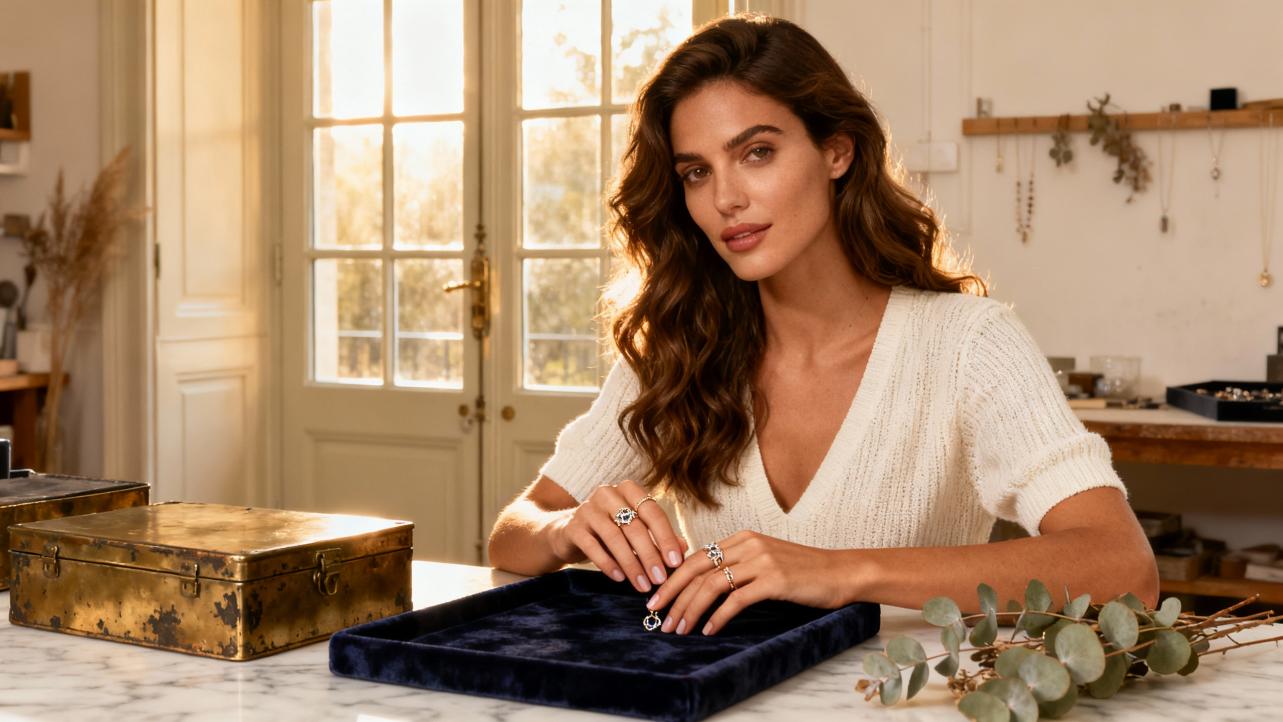
I have watched it happen countless times across a glass case: a client strides in restless and uncertain, then, almost without thinking, reaches for a particular stone. A garnet ring is slipped onto a finger before a big presentation and the shoulders square. A pale aquamarine pendant grazes the collarbone and a tense breath smooths itself into something calm and assured. We often say, “That’s your lucky color,” but luck is the shorthand we use for a deeper dance between color psychology, personal meaning, and the symbolism gemstones have carried for centuries. The real question is not whether certain hues bring fortune, but why some colors, embodied in gems, consistently make us feel braver, calmer, clearer, or more connected.
Defining “Lucky Color”: The Mood, the Moment, the Meaning
Lucky color is not a superstition so much as a personal shorthand for a color that consistently supports your goals through learned associations, cultural meaning, and lived experience. Color psychology shows that hues cue emotion and action long before fabric, silhouette, or even gemstones themselves register. Across fashion and design research summarized by FashionUnited and AyerHS Magazine, reds tend to feel bold and urgent, blues trustworthy and calm, greens balanced and renewing, and yellows optimistic and inventive. These are not ironclad rules; they are shared tendencies that your mind recognizes in a blink.
Clothing and adornment also work through a phenomenon known as enclothed cognition, which highlights how we embody the meanings we assign to what we wear. A well-known lab-coat experiment reported fewer errors when the garment was described as a doctor’s coat rather than a painter’s smock. The precise study has faced replication issues, yet a broader meta-analysis described in Aesthetics of Joy supports a reliable, if nuanced, effect of attire on emotion and behavior. The takeaway is subtle but powerful: meaning matters as much as color. When a sapphire’s midnight blue signals quiet competence to you, slipping it on can help your body and mind enact that script.
Why Gemstones Carry Color So Potently
If color psychology explains the “why,” gemology explains the “how.” Gems hold color because of trace elements in their crystal lattices. Chromium ignites ruby’s red within corundum; iron can yield the lemonade brightness of yellow sapphire; copper gives turquoise its sea-sky hush. These mineral architectures—formed under geologic heat and pressure—also confer the optical effects that make colored gems feel alive on the skin. Hardness, measured by the Mohs scale, determines durability in everyday wear. Quartz even exhibits piezoelectricity, converting pressure to electric charge, which is why it keeps our watches faithful to the second.
Where mainstream science draws a line is in claims that gemstones radiate healing frequencies that change physiology. As HTP Gemstones notes, robust clinical evidence remains limited; many reported benefits likely arise from expectation, ritual, and the emotional priming of color itself. That does not make the experience imaginary. It simply locates the mechanism within psychology—belief, intention, and the powerful sensory anchors we create when a cool stone meets warm skin.

Culture, Context, and the Stories We Wear
Color codes are never universal, and they shift across time. FashionUnited recounts how designers use color to shape collections, how “Valentino red” and “Tiffany blue” carry identities, and how trend forecasters—Lidewij Edelkoort and Hilde Francq among them—trace societal moods through palette. AyerHS Magazine reminds us that white reads as bridal in much of the West yet symbolizes mourning in parts of the East, while red is warned-of in some Western contexts and celebratory in others. Personal memory outweighs all. A ruby may be fierce on paper, but if your grandmother wore one every day she taught you to laugh, that red is your talisman of warmth and steadiness, not aggression.
What Research Says About Color Effects You Can Feel
Aesthetics of Joy synthesizes evidence showing that lighter colors often map to positive feelings, while darker hues can skew to sadness and anger. Brighter shades behave like a visual pick‑me‑up, with red and yellow linked to increased arousal and alertness—helpful for presentations or energizing a room. In sports, Hill and Barton’s analysis of the 2004 Olympics found athletes randomly assigned red more likely to win, suggesting red may project dominance or boost confidence. Frank and Gilovich’s work found teams in black uniforms were penalized more and perceived as more aggressive, which is useful to remember when you want warmth rather than intimidation. A brief exposure to green increased creative performance in a Journal of Environmental Psychology study, implying that a touch of green—say, jade studs or an emerald line bracelet—can prime ideation before a brainstorm. Glance’s fashion guide additionally notes how color strongly drives purchases, reporting that a large majority of shoppers cite color as a primary reason for choosing an item, which echoes what I see in the showroom every day.
The Gem-Color Map: Stones, Signals, and Smart Moments to Wear Them
Below is a distilled map blending research-backed color tendencies with widely shared gemstone associations from sources such as FineColorJewels, GemSelect, and The Healing Pear. Treat it as a compass, not a contract—your history with a color matters most.
Color |
Gemstones (examples) |
Psychological signal often reported |
Good moments to try |
Red |
Ruby, Garnet |
Drive, passion, assertiveness; can read dominant |
Presentations, decisive negotiations, bold launches |
Blue |
Sapphire, Aquamarine, Blue Topaz |
Trust, composure, clarity, articulate communication |
Interviews, client meetings, high-stakes conversations |
Green |
Emerald, Jade, Peridot |
Harmony, renewal, empathy; creativity priming |
Brainstorms, team-building, new beginnings |
Yellow |
Citrine, Yellow Sapphire |
Optimism, confidence, focus; sunny persistence |
Pitches that need warmth, creative sessions |
Purple |
Amethyst |
Calm, intuition, reflective depth |
Evenings, meditation, focused strategy |
Pink |
Rose Quartz, Pink Sapphire |
Nurture, compassion, soft strength |
First dates, reconciliation, caregiving roles |
Black |
Black Tourmaline |
Gravitas, mystery; can be perceived as severe |
Formal events where authority is desired |
Clear/White |
Diamond, Clear Quartz, Moonstone |
Lightness, simplicity, fresh starts |
Interviews in conservative settings, clean slates |
These pairings echo fashion psychology summaries from AyerHS Magazine and Aesthetics of Joy, and the traditional gemstone meanings observed by GemSelect and others. If you notice a repeated lift—better focus with yellow citrine, or easier listening with green jade—consider that your personal lucky color in that context.

How to Find Your Lucky Colors with Jewelry You Actually Wear
Begin with your own data. Keep a simple journal for two weeks noting your mood and outcomes when you choose specific gem colors. Do not overhaul your wardrobe; make micro-adjustments with rings, studs, or a pendant so the color is the main variable. If a meeting requires steadiness, try navy clothing with a single sapphire detail and record how you felt and how others responded. If you want to feel more present in a creative review, seat an emerald tennis bracelet beneath your cuff where only you notice it, and check whether ideas flow more freely.
Amplify your results with context. Enclothed cognition suggests your internal story about a piece matters. Before you fasten a ruby necklace, define the script in a sentence you believe, such as “I will speak with conviction and respect.” That private contract—supported by color and ritual—becomes a cue your mind can follow under pressure.
Consider undertones so color flatters you rather than fights you. Glance’s guide outlines how warmer undertones often glow in earthy and golden shades while cooler undertones thrive in jewel and icy tones. Metal choice can make or mute a color; yellow gold may intensify citrine, while platinum cools aquamarine to crystalline poise. If saturation feels overpowering, pivot to paler shades or smaller stones. You are after effect, not spectacle.

Evidence, Belief, and the Middle Path
People ask whether the benefits of gemstone colors are “real.” The honest answer is that different lenses answer differently. The psychological lens observes robust patterns in how color shapes perception and behavior across culture and context, with credible though nuanced studies summarized by Aesthetics of Joy, AyerHS Magazine, and FashionUnited. The metaphysical lens, as described by HTP Gemstones and FineColorJewels, links stones to chakras and planetary influences; such claims are meaningful within those traditions but remain scientifically unconfirmed. The material-science lens cares about durability, optical performance, and trace-element chemistry—this is the realm of gemological fact.
Here is a compact way to hold them together:
Lens |
What it claims |
Evidence snapshot |
Practical use |
Psychological color effects |
Hues cue emotion, behavior, and perception; meaning and context moderate the effect |
Supported by a range of studies and summaries including Aesthetics of Joy, AyerHS Magazine; examples include red and dominance, green and creativity |
Choose colors deliberately to align with desired outcomes; use jewelry as focused, low-effort color accents |
Metaphysical traditions |
Stones carry energies; align chakras; enhance traits or mitigate imbalances |
Not clinically established; many reports are anecdotal; HTP Gemstones notes mainstream science has limited proof |
Treat as complementary rituals; intention-setting tools rather than medical treatment |
Crystal lattices and trace elements create color and optical phenomena; hardness governs wear |
Strong gemological consensus; standard in gemology education and practice |
Select stones for durability and optics suited to daily wear and desired color fidelity |
Advantages and Caveats of Leaning on Lucky Color Jewelry
Using gemstone color as a performance tool has real advantages. It is subtle enough for any environment, quick to deploy, and deeply personal; a ring can become a pocket of calm in a turbulent schedule. Color carries social signals that others recognize preconsciously, which means a single sapphire stud can cultivate trust before you speak. This approach is also adaptable across budgets—lab-grown stones and well-cut simulants deliver vivid color affordably—and it aligns with modern values when you opt for ethically sourced pieces, a priority increasingly emphasized by jewelers who connect wellness narratives with responsible sourcing.
There are caveats. Color meanings vary by culture and subculture, and a hue that reads confident in one setting may feel severe in another. Black, for instance, can project elegance or intimidation; steer it toward polished rather than punitive by pairing with softer textures or gentler silhouettes. Overreliance on any talisman risks giving away agency, and gemstone lore—planetary alignments and energy fields—has not been verified by clinical science. Treat color as a skillful means, not a crutch, and never as a substitute for professional medical care.
Practical Pairings for Life’s Familiar Moments
In an interview where you want credibility without stiffness, anchor a navy jacket with sapphire studs or a slim aquamarine pendant; the palette telegraphs competence and calm, and the blue facet near your pulse can act as a quiet metronome for your breath. When a presentation needs fire without tipping into friction, let garnet warm a neutral ensemble; the red lifts arousal and focus while remaining grounded in wine rather than siren. For brainstorming, slip on an emerald line bracelet or jade hoop; green’s association with growth can cue flexibility and idea generation, and even brief glances at a green tint have been linked to creative upticks. On date night, rose quartz softens the edges of a long week; its blush cues warmth and openness, exactly the qualities that make conversation land. For steady recovery after a hard season, amethyst’s gentle violet can become an evening ritual—bracelet off phone on silent—reminding you to rest your attention on one thing at a time.
Shared color builds cohesion, too. A small team that aligns on a color family for a pitch—navy suits, blue gems—can project unity and trust faster than any slide. Aesthetics of Joy highlights how matching attire increases trust and a sense of common identity; jewelry is a low-stakes way to get there.

Tradition, Astrology, and Personal Resonance
Many clients ask about Vedic astrology and the Navagrahas, which pair gemstones with planetary influences. Historical systems like this, and the chakra maps often referenced by contemporary practitioners, have helped generations choose stones as companions for particular aims: citrine and yellow sapphire for confidence and abundance, ruby for vitality, emerald for eloquence, sapphire for integrity. FineColorJewels and GemSelect describe these lineages and the identities they express. If such a framework resonates, use it as a storytelling tool and an intention ritual, while holding the scientific boundary clearly in view. The most useful test remains personal: Does a color consistently help you feel and perform closer to your best in a specific context?
Ethics, Craft, and the Modern Jewel Box
Meaning deepens when the piece also reflects your values. There is a visible shift toward traceability and responsible sourcing in the trade, with jewelers increasingly foregrounding ethics and even integrating sensor-enabled pieces that track wellness signals, as noted by Royalty R Jewelers. Whether you choose mined or lab-grown stones, what matters for your psyche is the integrity of the story you tell yourself when you fasten the clasp. A gem that asks you to be kinder to your team, more honest in a negotiation, or calmer in uncertain weather—that is a jewel worthy of your name.

A Brief, Clear FAQ
What if my “lucky color” contradicts general advice?
Personal associations beat generalizations. If red makes you clench, choose a quieter path to confidence—perhaps deep green or a moody blue. The goal is consistent, helpful effect, not conformity.
Should I follow birthstones or my own preferences?
Let birthstones be a poetic starting point. Keep what works in practice and retire what doesn’t. Lucky is what proves itself in your life.
How quickly should I expect results?
Color cues act immediately on perception, but habits of mind take repetition. Give a pairing—context plus color plus intention—a few tries before judging.
Is any of this medical?
No. Color and gemstones can be empowering complements to evidence‑based care, not replacements. If you are navigating anxiety, depression, or health concerns, consult qualified professionals.
Closing
Your lucky color is not magic. It is the memory of your best self, sharpened by hue and held in mineral form, ready to be rehearsed each time you clasp the familiar weight. In a world that speaks loudly, choose the quiet color that helps you listen to the moment—and then answer it well.
Sources Mentioned
Aesthetics of Joy; FashionUnited; AyerHS Magazine; HTP Gemstones; GemSelect; Royalty R Jewelers; Glance (Colour Theory in Fashion Guide); FineColorJewels; Thrive Workwear.
References
- https://aestheticsofjoy.com/does-wearing-colored-clothes-change-our-feelings/
- https://www.brainzmagazine.com/post/the-art-and-impact-of-colour-in-personal-styling
- https://www.gemselect.com/other-info/gemstone-meanings.php?srsltid=AfmBOoqMyAiUaPLo2pk4oA3jfFOZoJnN6n1lmN4dwqlSld-AgYY2UTb5
- https://www.navratan.com/blog/gemstones-and-mental-clarity-myth-vs-science?srsltid=AfmBOop2-7IBfZPUHD-U19rprb6WekBorBkRXvieURAZrRsBPshVcftz
- https://royaltyrjewelers.com/the-science-of-jewelry-how-gemstones-affect-your-mood-and-energy/?srsltid=AfmBOopLuC6DO3GWIFQNBeOsF5N6l0zP0J3vuCc_HV-lsBcKDE-XFcmG
- https://sheragems.com/the-psychological-impact-of-gemstone-color/
- https://2men.it/blogs/journal/classic-menswear-color-guide?srsltid=AfmBOoqYLrGY7wBt5iJFyPQOUg61ZnmBLi0vFFYxCLwaH08tZPxIxKqz
- https://atolyestone.com/blogs/trends/gemstone-jewelry-benefits?srsltid=AfmBOoqepQZuWAzBTFhndbGXqdQ6T3CHebKnPMI3DrErj9hIYvatxM0O
- https://www.fibre2fashion.com/industry-article/10154/the-power-of-colour-in-fashion-branding-psychology-cultural-significance-and-global-impact
- https://finecolorjewels.com/blogs/news/gemstone-colors-womens-personalities-unlock?srsltid=AfmBOophYyM9ffjnfLtgmFv4tfl9Drs5QemvoqLiY4bPbCnnEQEYAJ9n