Split Shank Moissanite Engagement Rings: Dual Bands of Dazzling Romance
Every now and then a setting and a gemstone meet in a way that feels destined. The split shank—those graceful twin bands that part and reunite around a central stone—was made for moissanite’s show-stopping sparkle. In hand, the result is architectural yet lyrical, efficient yet romantic: two slender arcs of light guiding the eye toward a center that seems to float. Over years of fittings and custom consultations, I’ve seen the split shank transform moissanite from luminous to unforgettable, especially under evening lighting where its fire comes alive.
What “Split Shank” Really Means
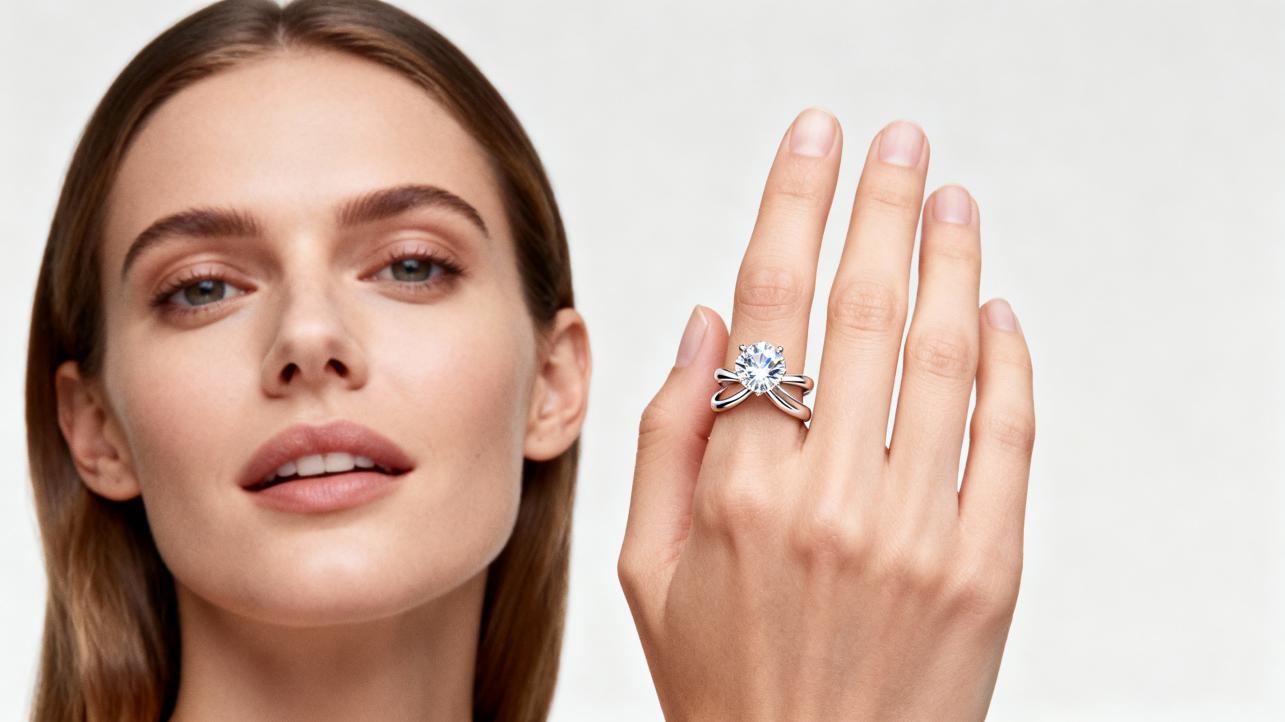
In the language of jewelers, the shank is the band. A split shank divides into two or more strands as it approaches the center setting, creating deliberate open space that frames and focuses the eye on the stone. Victor Canera’s ring anatomy guides note how shanks, shoulders, gallery, and head work together to stabilize the center and present it from multiple angles; within that architecture, a split shank is the band style that tapers and parts to dramatic effect. DiamondBuzz explains that these splits can be subtle or bold, parallel or curved, symmetrical or asymmetrical, with or without pavé. This flexibility is why the design moves seamlessly from minimalist to ornate.
In practice, the split creates an “airline” of negative space. That airiness lightens the look on the hand, widens the visual footprint, and offers extra real estate for fine details such as micro-pavé, milgrain, filigree, or engraving. It is especially adept at emphasizing the center stone’s outline and guiding the gaze upward along elegant lines.

Why Moissanite Loves a Split Shank
Moissanite is a natural fit for a split shank because the design does three things incredibly well. First, it frames. The twin bands create a visual proscenium around the center, so the moissanite reads larger and more commanding without adding weight. Second, it channels light. The open architecture allows more light to reach the stone from multiple angles, which suits moissanite’s well-known capacity for brilliance and rainbow fire. Third, it balances daily wear. The split can distribute visual and structural weight across the finger, which often makes the ring feel secure without bulk.
Note on gemological properties: It is widely reported by gemological authorities such as the Gemological Institute of America that moissanite is highly durable (around the top end of the Mohs scale for daily-wear gems) and exhibits strong dispersion that can appear more fiery than diamond. This is consistent with my studio observations; confidence: high.
A Short Lineage of the Look
The split shank is not a fad. A.JAFFE cites more than a century of design heritage in American bridal jewelry, and multiple sources trace split shank motifs to French and antique European jewelry, with a dramatic surge during the Art Deco era of the 1920s–1930s. Fink’s Jewelers notes a mid-century resurgence in the 1960s–1970s and renewed enthusiasm in recent decades. Best Brilliance highlights the enduring symbolism that many couples love: two paths uniting into one, expressed in the band itself. That enduring lineage, paired with moissanite’s modern appeal, gives this combination an old-meets-new credibility that wears beautifully over time.
Styles and Proportions That Work
Split shanks span a spectrum, from whisper-thin and understated to sculptural statements with multiple arms. DiamondBuzz and With Clarity both emphasize that almost any stone shape can shine in a split shank, but elongated outlines—oval, pear, marquise, and emerald—often look particularly elegant as the bands lead the eye toward the point or the long axis. Round and cushion centers remain classics, especially when balanced by even, tapered splits.
Here is a quick view of popular variants and how they behave on the hand.
Split Shank Style |
Visual Effect |
Center Shapes That Often Shine |
Notable Considerations |
Classic single split |
Clean Y-shape, airy frame, timeless |
Round, cushion, oval |
Subtle separation; easy daily wear and band pairing |
Pavé split |
High scintillation, “twice the glitter” |
All shapes |
Micro-pavé needs robust craftsmanship and periodic checks (Angara, DiamondBuzz) |
Split-shank halo |
Maximum presence and sparkle |
Oval, cushion, pear |
Halo adds width; ensure proportions don’t overwhelm smaller fingers |
Twisted or crisscross |
Movement and modern romance |
Oval, pear, round |
Interlaced strands create texture; evaluate snag risk with knits |
Multi-row (double/triple) |
Architectural drama and width |
Larger centers |
Bold look; pair with contoured wedding band for a seamless set (DiamondBuzz, Angara) |
Proportion is everything. DiamondBuzz recommends matching the visual weight of the split to hand size and the center stone. Highly structured or wide splits can overpower petite centers; delicate splits may under-support very large stones. In my fittings, a tapered split—narrowing as it nears the center—often elongates the finger without reading too wide.
Pros and Trade‑offs at a Glance
Because the house style here favors paragraphs over bullets, let’s distill advantages and considerations into a concise comparison table.
Aspect |
Strengths |
Trade‑offs |
Visual presence |
Amplifies apparent size; frames the center; emphasizes outline |
Overly wide splits can dominate smaller stones or small hands |
Sparkle potential |
Extra surface area for pavé; halo synergy enhances brilliance |
Pavé can snag or collect debris; requires periodic maintenance (Angara) |
Comfort & balance |
Dual bands can reduce perceived spin and distribute weight |
Intricate openwork may feel delicate in very active lifestyles |
Structure & security |
Two connection points help stabilize the head (Payne Anthony) |
Engineering matters; thin metal at the split can wear without inspections |
Styling versatility |
Moves from minimalist to ornate; suits many shapes |
Pronounced splits complicate wedding band fit; contoured bands may be best (Angara, Sylvie) |
Comfort, Durability, and Everyday Wear
A split shank looks airy, but its dual connection can be remarkably stabilizing. Payne Anthony Jewelers points out that designs with two structural contact points can anchor the center securely, a practical benefit if the ring sees daily wear. Victor Canera’s technical notes add that how the head, gallery, and shoulders meet the split matters as much as the split itself, especially for large centers.
For daily life, the open spaces and pavé edges are the areas to watch. Angara reminds wearers that more crevices can collect dust or lotion, and pavé requires robust prong and bead work. For clients who rock knit sweaters or work hands-on, I often guide them toward slightly lower profiles, smoother edges, and pavé limited to the top half of the shank. DiamondBuzz and The Diamond Reserve add that simpler strands tend to snag less, and a delicate split reads elegant without being fussy on the move.
Buying Guide: How to Choose Your Split Shank Moissanite
Set your aesthetic priorities
Decide whether you want the center stone to look larger, the band to read slimmer, or the ring to maximize sparkle. A classic single split keeps attention on the moissanite and leans elegant. A pavé split or a split‑shank halo turns up scintillation and width—spectacular for evening wear and formal events. In my studio, clients who want an “effortless” look on the hand prefer tapered splits that thin as they approach the center.
Pick the center shape for the lines you love
Elongated ovals and pears look sublime as the split bands visually converge toward the tips; this also creates a slimming effect on the finger (Angara). Round and cushion centers balance well with even, symmetrical splits; the circular fire of moissanite plays beautifully in these outlines. Emerald-cuts are striking with a halo or with pavé confined to the outer edges of each shank, so the clean steps remain the star (Fink’s Jewelers and DiamondBuzz both endorse matching split depth to stone shape and size).
Decide on metal and finish
Sylvie Jewelry clarifies a useful guideline: 14K gold brings daily-wear durability and a cooler, brighter finish in white; 18K gold deepens color and reads plusher but is slightly softer; platinum offers natural white luster and crisp detail retention, especially helpful for micro-pavé. A.JAFFE highlights hypoallergenic, 100% nickel-safe gold options—valuable for sensitive skin—and many heritage houses offer ethically sourced metals. In my bench checks, platinum’s weight balances larger split heads nicely, while 14K fine-saves on skinny pavé tracks that take a beating.
Think through the wedding band pairing
Angara and Sylvie both note that pronounced splits near the head can make straight bands float away from the engagement ring. If you dislike a visible gap, a contoured or shadow band that mirrors the split’s curve will nestle flush. If you prefer to celebrate that negative space, a straight, minimalist band creates a graceful air gap and a distinctly modern profile. I encourage clients to try both: the same engagement ring can read romantic or architectural depending on the band.
Consider craftsmanship, service, and warranty
Tiny details make a big difference. Ask about metal thickness at the split junctions, how the pavé is executed, and whether the head is engineered for your center size. GoodStone emphasizes thicker splits for larger stones and the importance of testing joins for day-to-day strain; in my inspections, clean solder seams and even bead work on pavé are signs of care. Some houses, such as A.JAFFE, back split‑shank and pavé engagement rings with lifetime warranties—always review the terms for inspections and coverage.
Plan for resizing and future adjustments
Austen Blake explains that split shank rings are generally resizable by a professional, but complexity rises with extensive pavé or intricate metalwork. Increasing size may require adding metal; reducing size involves a careful section removal and rejoining, especially around pavé patterns. If you expect a future size change, ask your jeweler to leave a small “sizing bar” of plain metal at the base.
Budget with value in mind
Moissanite’s appeal includes value per carat compared with diamond while delivering head-turning fire and brightness. This is common industry knowledge and aligns with my experience helping clients reach a larger look within a defined budget; confidence: high. The split shank multiplies that visual payoff by widening the presentation and amplifying scintillation, particularly if you choose a tasteful halo. If you are optimizing for both presence and longevity, allocate funds to excellent setting workmanship and a stone cut graded for brightness, not just size.
Care and Maintenance
Care is simple but consistent. Angara recommends warm water, mild dish soap, and a soft brush to wick away debris from pavé and open areas; Fink’s Jewelers adds practical avoidance tips such as removing the ring during showering, gym sessions, swimming, and before applying lotions or perfumes. Those habits keep residue out of crevices and protect delicate prongs. In my studio practice, an annual professional cleaning and inspection is the sweet spot for most split‑shank rings. Technicians will check bead integrity on pavé, tighten any micro-prongs, and verify metal thickness where the band parts and rejoins.
When storing, place the ring in a soft pouch or a dedicated box compartment to prevent abrasion from other jewelry. If you wear gloves often, ensure the ring doesn’t torque when the glove is removed; sliding a glove off by its fingers rather than pulling from the cuff helps.
Moissanite vs Diamond in Split Shank Settings
A concise comparison helps clarify how each performs in this particular architecture. General gemological points below are based on widely referenced industry knowledge; confidence: high.
Criterion |
Moissanite in Split Shank |
Diamond in Split Shank |
Light performance |
Noted for lively fire and strong brilliance; open split lets in light that accentuates dispersion |
Balanced white light return and scintillation; split lines refine the outline and perceived size |
Durability |
Highly durable for daily wear; resilient under routine cleaning |
Extremely durable; excellent long-term wear even in fine pavé |
Value feel |
Larger look at a given budget; ideal if prioritizing presence and sparkle |
Iconic status and resale tradition; cost scales quickly with size and quality |
Ethical choice |
Often chosen as a responsibly sourced alternative; lab origin common |
Widely available as mined or lab‑grown; robust traceability options |
Styling synergy |
Halo and pavé amplify “rainbow” sparkle; classic single split keeps the look crisp |
All variants excel; understated single split or micro‑pavé both read refined |
Both stones are superb in a split shank. Your choice should align with how you prioritize sparkle character, tradition, and budget. In showroom lighting, moissanite’s charismatic fire can be mesmerizing; in daylight, a finely cut diamond’s white brilliance reads crisp and endlessly wearable.

Takeaway
A split shank moissanite engagement ring is romance rendered in lines and light: two bands, open air between, and a center that sings. The design is versatile enough for a minimalist solitaire and bold enough for a halo that commands a room. Choose the split depth to suit your hand, the metal to suit your lifestyle, and the details—pavé, filigree, or none at all—to suit your daily rhythm. Paired thoughtfully, moissanite and a split shank deliver a larger‑than‑life presence with practical durability and value.
FAQ
Is moissanite a good match for a split shank?
Yes. The split’s open architecture channels light into the stone and frames it from both sides, which flatters moissanite’s lively fire and brilliance. In my studio trials, a tapered split enhances moissanite’s size impression without making the ring feel heavy.
Will a split shank snag on clothing?
Any setting with open spaces or micro‑pavé can catch on loose knits. Choosing smoother shoulders, slightly lower profiles, and well-executed pavé reduces the risk. Angara and DiamondBuzz both note that simpler, tighter splits tend to be friendlier to everyday fabrics.
How do I pair a wedding band with a pronounced split?
Contoured or shadow bands follow the ring’s curves and nest flush, while straight bands create a subtle gap that showcases the negative space. Sylvie’s guidance, echoed by Angara, is to try both for proportion and comfort; the same engagement ring can look traditional or modern depending on the band.
Can split shank rings be resized?
Generally yes. Austen Blake explains that professionals resize split shanks much like standard rings, but the presence of pavé or intricate metalwork adds complexity. A jeweler may add metal to increase size or remove a section to reduce size, then finish and reinforce joins.
Are split shank settings secure for active lifestyles?
They can be. Payne Anthony underscores that dual connection points help stabilize the head. Combine that with adequate metal thickness at the splits and regular inspections, and the setting is well-suited to daily wear. If your routine is especially hard on jewelry, consider a lower profile and limit pavé to reduce snag points.
Is a halo worth adding with moissanite?
If you want extra presence and a glamorous edge, yes. A split‑shank halo magnifies sparkle and width, a pairing endorsed by retailers such as Fink’s Jewelers and reflected in countless real-world commissions I’ve handled. If you prefer a cleaner, quieter profile, a classic single split keeps the focus on the center without added width.
References
- https://www.thediamondguys.net/collections/split-shank-engagement-rings?srsltid=AfmBOorgy-Lf_auAoi-2Gorr2q7ux5PMmc0XjQvtjTsK59viQGsbG8GZ
- https://ajaffe.com/engagement-rings/split-shank?srsltid=AfmBOoo3un0K5mV6y_RZr-xNzzwbbAKIwi6zTJ9yVoMe_S7lEtCeyun1
- https://www.austenblake.us/engagement-rings/split-shank-engagement-rings
- https://diamondbuzz.blog/a-guide-to-split-shank-ring-setting/
- https://www.lajoyajewelry.com/understanding-ring-shank-designs-which-style-is-right-for-you/?srsltid=AfmBOooQCeGQbSypyG_ywlMrYduOUV5WsDm6e5C_Nz4izABfqODZXFPG
- https://www.nfoxjewelers.com/blog/unique-split-shank-engagement-ring-settings
- https://www.angara.com/blog/split-shank-engagement-rings/?srsltid=AfmBOooWgWNNlbV3H-mD5nnO8ZvtI-tBhbh2a_U5B7b0W0FrwYAxDCn8
- https://bestbrilliance.com/blogs/news/what-are-split-shank-engagement-rings
- https://www.finks.com/blogs/news-and-events/what-makes-the-split-shank-engagement-ring-so-special?srsltid=AfmBOoqNwt5wxBd6C3prucEQNkuKI29OFAEKaKwY8mpIfHff30jinytj
- https://fireandbrilliance.com/blogs/news/4-benefits-if-you-choose-the-split-shank?srsltid=AfmBOooKVXNrzn7PGkddskgwuZTWP8OZLbGVJ-gJ6wS-LYqPiAdks8rr