How Can You Teach Children the True Value of Jewelry?
Jewelry becomes luminous when a child understands what glitters beyond the surface. The value is not only carats and price tags; it is the craft in a maker’s hands, the stories we inherit, the science locked inside minerals, and the economics that shape how metals and gems move through the world. As a passionate connoisseur and trusted storyteller, I’ve watched small fingers hold heirloom lockets and polymer clay pendants with equal reverence once they understand what they’re holding. Teaching the true value of jewelry is, at heart, teaching how to see: to see materials, to see history, to see labor, to see meaning, and to see money with nuance.
Begin With Meaning, Not Money
Children are enthralled by stories, so start with the oldest. Across ancient Egyptian society, jewelry was universal and richly symbolic; amulets prescribed in funerary texts, from heart scarabs to papyrus-shaped charms, promised protection and safe passage. The American Research Center in Egypt notes that adornment signaled status, duty, devotion, and sometimes even military honor, yet it also included humble beads worn by everyday people. Share with children that value is layered: a gold shebyu collar proclaims authority, but a small barrel of carnelian beads in an elite burial whispers a preference for quiet beauty. Ask your child what their favorite piece, real or pretend, might say about them.
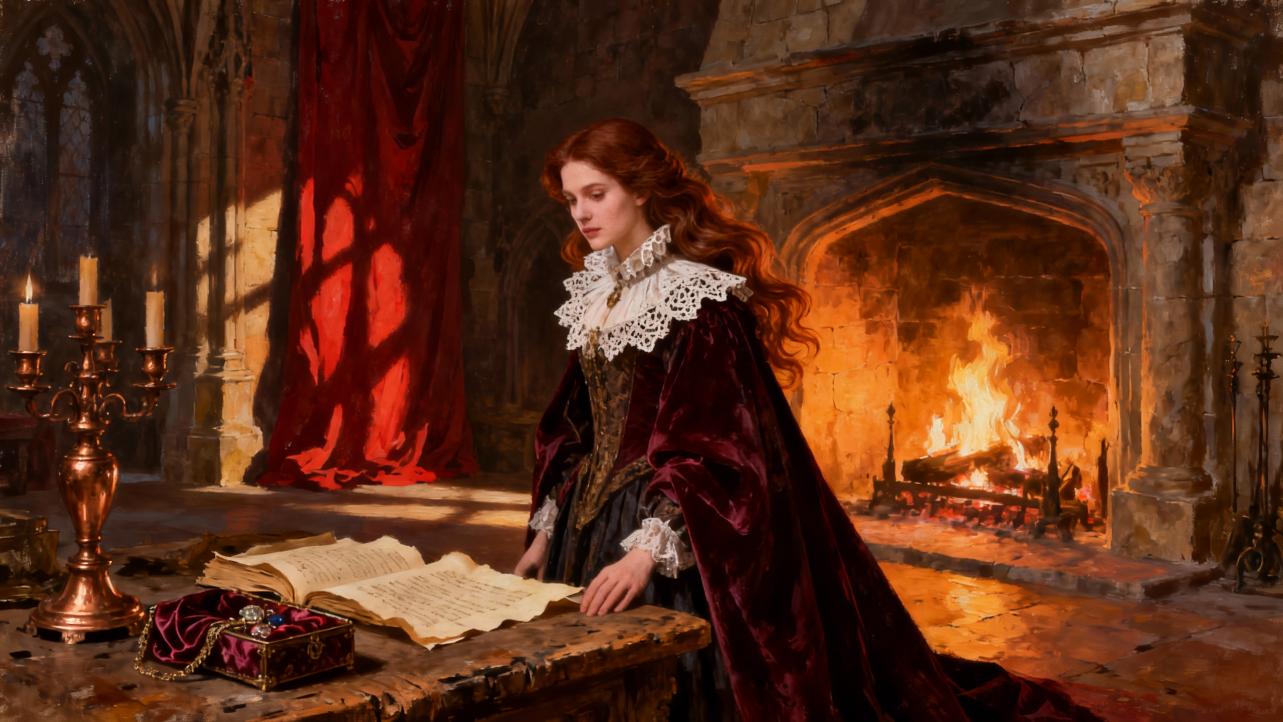
Then move closer to home through portraits and family albums. In Tudor paintings, such as the youthful Princess Elizabeth encrusted with pearls and gold, jewelry served dynastic messaging and moral display rather than modern notions of childhood. Dr. Sarah McAleer’s work on children’s jewelry history reminds us to read imagery within its time and not project our present onto the past. Have children examine old photographs or paintings and tell the story of a necklace or brooch: who commissioned it, who wore it, and why its motifs mattered. Storytelling makes value memorable.
What Jewelry Is Made Of: Clear Definitions Children Can Grasp
Before children can weigh cost, help them weigh categories. Encyclopedic overviews from Britannica make this simple. Natural gemstones are mined minerals with internal clues like inclusions and crystal structures. Synthetics are laboratory-grown but share chemistry and properties with natural stones; under magnification they may reveal telltale growth patterns. Imitations are look‑alikes made from different materials, such as colored glass used for centuries to mimic gems. Doublets are clever composites, where a thin slice of genuine stone is bonded to glass or a less valuable base to achieve the look at lower cost. Even organic gems—pearls, amber, jet, coral—are part of the conversation and carry their own vulnerabilities and care needs.
Let children look closely. A simple loupe transforms them into detectives searching for inclusions or bubble trails. Explain that some stones change with heat and light, like turquoise that can fade, and that treatments and enhancements alter appearance without necessarily erasing beauty. The lesson is not to shame imitations or synthetics; it is to name them accurately, appreciate the intentions behind them, and acknowledge how truth in materials affects price, care, and heritage.
A Quick Material Guide for Young Minds
Material Type |
What It Means |
How To Show A Child |
Teaching Advantage |
Watch‑Outs |
Natural |
Mined mineral or organic gem with natural inclusions |
Use a loupe to find tiny “birthmarks” |
Connects nature, geology, and rarity |
May be costlier; requires gentle care |
Synthetic |
Lab‑grown with same chemistry as natural |
Compare to natural under light; discuss growth layers |
Teaches science and innovation |
Confusion about labeling and price |
Imitation |
Different substance made to look like a gem |
Show colored glass vs. mineral heft and look |
Encourages honesty and design on a budget |
Can scratch or lose color more easily |
Doublet |
Thin real layer bonded to base |
View edge for seam lines |
Explains engineering solutions |
Needs disclosure and careful maintenance |
The goal is not to elevate one category above another. It is to teach how categories, disclosure, and care influence a piece’s lifespan and price.

Identification as Play: Science That Sparks Wonder
Turn gemology into a game and the vocabulary sticks. The International Gem Society publishes kid‑friendly activities that make facets, color play, and puzzle‑solving joyful. Let children color outlines of faceted stones and challenge them to notice how light creates flashes and shade transitions. Invite them to solve word puzzles by looking up gemstone facts in trusted references. Even more memorable is the “chocolate‑chip mining” game: each child “buys” a cookie mine and simple tools with play money, extracts as many chips as possible, keeps crumbs within the traced outline to avoid penalties, and gets paid by the gram of “ore.” It is loud, funny, and surprisingly instructive about extraction costs, tool choices, cleanup rules, and why not all mines yield the same.
If your young gemologist wants more, Fox’s High Rock Farm emphasizes core identification properties like color, luster, hardness, and streak. Translate that into a child’s station with safe samples, a streak plate substitute, and a scratch test on known items. Let them learn that hardness is not “strongness,” and that a softer stone can still be priceless if it holds a family story.

Let Them Make: Craft Reveals Hidden Labor
A child who has rolled a coil, conditioned clay, aligned a crimp, and tied a sliding knot looks at a finished bracelet with different eyes. Classroom guides from Sculpey blend history and hands‑on making beautifully. One thoughtful project introduces Roman agnomina—nicknames derived from achievements—then has students form protective pendants inspired by the bulla or lunula that Roman children wore. Polymer clay offers approachable magic: condition, blend color families, press textures with leaves or fabric, poke a hanging hole before baking, and bake according to manufacturer guidance. Organization matters in groups; labeled trays, parchment transfers to a baking sheet, and name‑marked plates keep dozens of small masterpieces sorted.
At home or in small clubs, an age‑by‑age approach also helps. Makers who document family craft wisely, like Moms & Crafters, note that toddlers thrive on stiff stringing with large‑hole items and preschoolers move into chunky beads and simple clay shapes. Around six to seven, children can design pieces that look “real,” while adults finish closures. By eight to ten, they can master basic loops and clasps if steps are broken down and the project remains simple. Tweens may explore wire‑wrapping or more refined beading, and teens can work at nearly adult levels, including forming hoops or hammering simple shapes. Keep adhesives in mind: industrial glues like E‑6000 belong in adult hands, and tacky glues suffice for younger crafters when durability isn’t critical. The result of making, regardless of level, is respect. Hours spent choosing colors, counting beads, and learning knots become an internal ledger of labor that reframes value.
The badge system used by youth groups underlines this blend of research and craft. Guides for earning a jeweler badge ask children to study what jewelers do, compare techniques across eras, watch short histories of diamonds and design, and then make a piece from a kit. The detail of kit contents—rolls of elastic and wire, chip beads by the thousand, findings by the handful—turns into a tactile lesson on inventory, supplies, and planning.
Connect Jewelry to Math, Money, and Markets
Once meaning and making are in place, introduce money with clarity and care. In elementary math, Education.com emphasizes coin recognition and composition of amounts; stringing patterns that encode skip counts for five, ten, and twenty‑five makes arithmetic feel like design. Set up a classroom or family shop with price tags, opening times to read, and role badges for “maker,” “shop assistant,” and “customer.” Twinkl’s jewelry‑shop role‑play packs are built for exactly this, blending vocabulary, design prompts, price tags, and play that practices adding and subtracting money.
Then talk about value that endures. A jeweler cannot teach the price of gold without teaching why gold became money. Chattanooga Gold & Silver suggests age‑banded ways to explain scarcity, intrinsic value, and inflation in child‑friendly terms. Little ones can hunt for “treasure,” make paper or clay coins, and hear stories. Older children can chart how rarity affects price, run a mock market with play money and fluctuating values, visit a coin shop to handle real pieces, and even begin a small collection that instills responsibility. The lesson lands because metals are tangible. Children can hold weight and watch light; the abstractions of inflation and diversification begin to make sense.
A frank family story about needs, wants, and earning ties it all together. One widely shared Quora account describes a parent using a grocery receipt and a pretend wage to show how long it takes to earn a cart of food, followed by household “jobs” with small weekly pay and the choice to spend immediately or save for a desired item. Adapt that to jewelry by allowing children to save toward a modest locket or a quality bead kit. The moment a child asks the price before reaching for a piece, you will know the lesson has matured into prudence.
Wearing and Caring: Responsibility in Daily Life
Jewelry carries risk in active environments, so teach stewardship alongside sparkle. Classroom‑oriented recommendations from PriceScope favor child‑safe choices: studs or close‑fitting hoops instead of long dangles, short necklaces that sit near the collarbone or that use breakaway clasps on lanyard‑style IDs, and low‑profile rings or silicone bands during recess, art, or science. Materials matter for comfort and safety; hypoallergenic choices like surgical stainless steel, titanium, or higher‑karat gold help sensitive skin, and smooth settings avoid snagging.
Maintenance is part of value. Show how mild soap, a soft brush, and a gentle rinse can restore luster. Explain why lotions and sanitizers can dull finishes or damage porous stones, and why heirlooms might stay at home while school‑day favorites take the knocks. Responsibility grows when children have a say in choosing what to wear and know how to care for it properly.

Heritage and Ethics, Told With Nuance
Not every lesson about value needs a moral lecture to resonate. Sometimes the history alone, presented with care, opens questions. The ASHI overview of jewelry’s long arc—from organic beads and first copper ornaments to Egyptian glass glories, Greek hammered gold, Roman brooches, and the prong settings of the 18th century—shows how techniques, tools, and tastes shifted. The Egyptian record in particular is instructive: imported lapis and turquoise waxed and waned with political stability; glass became a brilliant stand‑in for gemstones; and the portability of jewelry made it a target for robbery when state power weakened. The American Research Center in Egypt argues for analyzing jewelry not merely as decoration but as data for trade, economy, and ritual. In a child’s world, that translates into asking where materials come from, how designs travel between cultures, and why some pieces are made to be worn while others are made only for burial. Even the act of making replica artifacts—like clay pendants inspired by historic motifs—can deepen respect when paired with a few sentences about origin and symbolism.
When exploring living traditions, clarify context. Teacher resources that present Native American turquoise, wampum, and beadwork as posters or classroom materials should prompt attribution to specific tribes and a conversation about symbolism. Encourage research, credit original makers, and explain that style without story can flatten meaning.

A Practical Progression That Works
A proven pathway blends readiness, safety, and curiosity. For very young children, stiff stringing and oversized components are the safest and most satisfying; beads at least about 0.4 in across reduce choking risk and give small hands success. Preschoolers can move into chunky pony beads, paper or clay pendants, and yarn with taped ends. Around first and second grade, simple elastic bracelets and painted charms let children personalize while adults tie secure knots. By mid‑elementary, teach how to attach a clasp or form the first loop, using plastic needles or blunt tools and clear steps. Older students can try jump rings, crimp beads, and basic wire‑wrapping, with patient oversight and a rule that industrial glues are adult‑only. All along, repeat the cycle: research a culture or period, make an informed piece, price it for a pretend shop, and reflect on what the experience taught about time, tools, and trade.
Teaching Approaches at a Glance
Approach |
What It Teaches |
Suggested Ages |
Source Signal |
Story and heritage |
Symbolism, status, identity, empathy |
All ages with adapted depth |
American Research Center in Egypt; Children’s Jewelry History |
Materials and ID |
Science of gems, honest labeling |
7+ with supervision |
Britannica; International Gem Society |
Make and design |
Labor, planning, craftsmanship |
3+ with scaffolding |
Sculpey; Moms & Crafters |
Money and markets |
Scarcity, saving, pricing |
6+ in stages |
Education.com; Chattanooga Gold & Silver; Twinkl |
Games and labs |
Risk, extraction costs, evidence |
6+ with group rules |
International Gem Society |

Pros and Cons of Common Paths
Every path has trade‑offs, and naming them out loud helps children become balanced judges. Collecting natural gems or precious metal coins highlights rarity and care but invites worry about loss and may overemphasize price. Making with polymer clay or base‑metal findings cultivates design, fine‑motor skills, and resilience when pieces break, yet may produce objects with short lifespans that frustrate older perfectionists. Studying history sharpens cultural literacy and reverence, but without making, children can interpret jewelry as distant museum relics rather than living art. Role‑play shops excite applied math and social skills but require careful messaging so children do not equate value only with sticker prices. Rotate among these approaches and connect them: learn a symbol, craft it, price it, present it, and write its story.

How To Evaluate “Value” Together
Four questions guide a child toward sophistication without cynicism. First, what is this made of, and how do we know? A loupe, a magnet, and honest labels provide clues. Second, how was it made? Compare a cast pendant to a hammered one, a machine‑cut glass gem to a hand‑cut mineral, and a thick prong setting to a smooth bezel; frame the differences using historical overviews from jewelry educators like ASHI. Third, who wore or commissioned it, and what did it mean to them? The ancient Egyptian amulet sewn at the throat meant protection; a Tudor pearl‑encrusted bodice signaled legitimacy; a modern friendship bracelet encodes kinship. Finally, why does it matter to us now? Invite children to tell a piece’s story, then ask what part of that story holds value they would save for, repair, or pass on.
If you are working with museum replicas or family heirlooms, add one more layer. The American Research Center in Egypt underscores how scientists detect wear patterns to reveal whether pieces were ever worn or made only for burial. Share that detail with children, and watch their eyes widen; value includes the life an object lived—or didn’t.
A Few Questions, Simply Answered
Should children wear real gold or gemstones to school?
It depends on activity and temperament. For daily wear in active settings, favor studs, short chains, and smooth bezels in hypoallergenic metals, keep heirlooms safe at home, and teach cleaning and storage routines. The aim is to make wearing a lesson in care, not a source of anxiety.
When should I explain synthetics or imitations?
As soon as curiosity appears. Frame synthetics as a marvel of science with the same chemistry as natural stones and imitations as artful design choices at accessible prices. Honest words build trust, and trust is the soil of all value.
How do I respond when a child asks, “Is this diamond real?”
Encourage them to ask better questions: what is it made of, how was it set, and who gave it to you? Show that a piece can be precious without being pricey and that truth is part of beauty.

Closing
Jewelry is the most patient teacher I know. It waits in a drawer or a museum case or a child’s palm until we decide to look closely. When you weave together meaning, materials, making, markets, and mindful wearing, you hand a child more than adornment; you hand them a way to read the world. That is the truest value of all.
References
Publisher/Source |
Topic Cue |
American Research Center in Egypt |
Jewelry as cultural data; amulets; status; workshop evidence |
Britannica |
Gem materials and identification; natural vs synthetic vs imitation vs doublets |
International Gem Society |
Kids’ gemology games; chocolate‑chip mining; puzzles |
ASHI |
History of jewelry techniques and settings across eras |
Children’s Jewelry History (Dr Sarah McAleer) |
Tudor portraiture of children; elite regalia and messaging |
Education.com |
Coin values, classroom shops, and bead‑pattern math |
Chattanooga Gold & Silver |
Teaching precious metals, scarcity, and mock markets |
Leader Connecting Leaders |
Jeweler badge study and making framework |
Sculpey |
Classroom polymer clay jewelry and Roman bulla/lunula |
Moms & Crafters |
Age‑appropriate jewelry making and materials guidance |
Twinkl |
Jewelry‑shop role‑play for numeracy and vocabulary |
PriceScope |
Safe, classroom‑ready wearing and care considerations |
References
- https://kids.britannica.com/students/article/jewelry-and-gems/275153
- https://arce.org/resource/egyptian-jewelry-window-ancient-culture/
- https://www.gemsociety.org/article/gemology-kids-games-activities/
- https://childrensjewelleryhistory.com/
- https://www.teacherspayteachers.com/browse?search=jewelry
- https://www.chattanoogagoldandsilver.com/post/value_of_precious_metals
- https://www.education.com/resources/?arts-crafts=beads-jewelry&occasion=summer&q=recognizing%20and%20knowing%20the%20value%20of%20coins%20pop%20culture%20and%20events
- https://foxshighrockfarm.com/an-interactive-kids-guide-to-gemstone-identification-skills/
- https://jewelrymakingjournal.com/teaching-jewelry-making-to-fifth-grade-girls-what-to-teach/
- https://www.momsandcrafters.com/jewelry-crafts-for-kids/