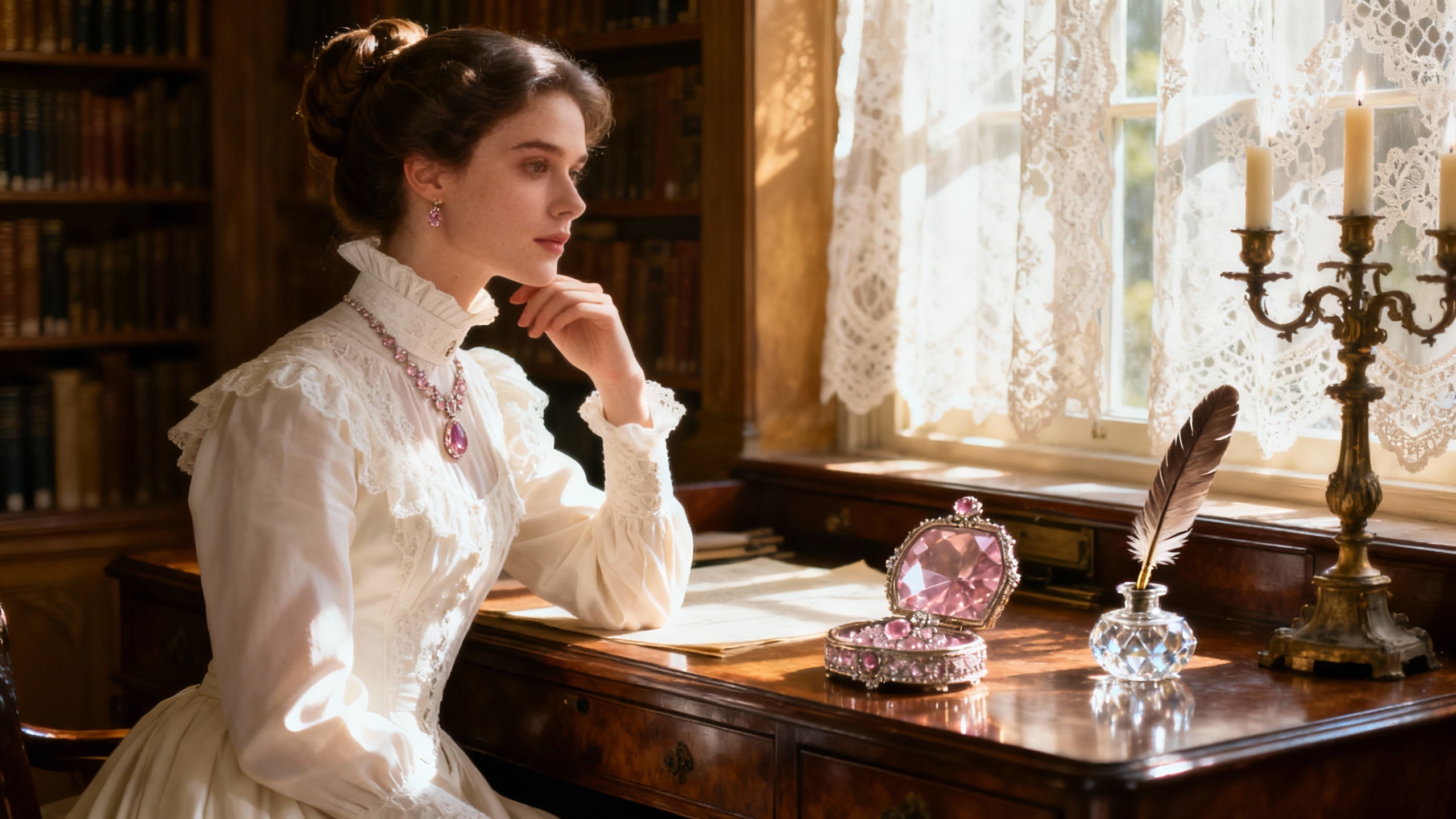
Victorian Era Inspired Moissanite: Regal Elegance from a Bygone Age
The Victorian imagination never really left us. It lingers in the arched silhouette of a cathedral setting, the lace-like breath of filigree, and the soft glint of milgrain that frames a stone like a whisper from another century. When that old-world romance meets a modern gemstone such as moissanite, the result is a regal aesthetic that feels both faithful to the past and responsible to the present. For couples who love the symbolism and story of 19th‑century design but want a gemstone that’s brilliant, durable, and ethically made, Victorian-inspired moissanite delivers a rare balance of soul and sense.
This guide draws on established gemological facts and practical studio know‑how to help you evaluate Victorian-era inspired moissanite with confidence. It clarifies terms, compares moissanite to diamond in period-style settings, weighs advantages and trade‑offs, and closes with care and buying advice that reflects how jewelers and informed collectors actually select, test, and wear these pieces. Citations to reputable jewelry publishers are included by name for easy follow‑up.
What Moissanite Is—and Why It Shines in Vintage Style
Moissanite is a lab‑created form of silicon carbide. Natural crystals are extraordinarily rare; modern gem-quality stones are grown in controlled conditions. As a material, it’s exceptionally well suited to everyday jewelry. On the Mohs scale, moissanite measures about 9.25, second only to diamond at 10, with excellent toughness and strong resistance to scratching. Optically, it possesses a high refractive index of roughly 2.65–2.69 and dispersion around 0.104, which produce intense brilliance and uniquely prismatic “fire.” Under magnification, moissanite exhibits double refraction, leading to doubled facet junctions—one of several diagnostic traits gemologists use in identification.
Those optical properties matter in Victorian-inspired jewelry. The era prized intricacy—filigree, hand engraving, and high-set silhouettes that brought stones closer to light. Moissanite’s capacity to throw bright rainbow flashes enhances the miniature architecture of antique-style mounts, especially halos, floral clusters, and cushion‑like profiles that echo the look of old European and old mine cuts. Because moissanite is less dense than diamond (specific gravity around 3.22 vs. diamond’s ~3.52), its weight-to-size relationship differs; retailers often state DEW (diamond equivalent weight), but the most reliable way to shop is by millimeter measurements for the face‑up look you want.
One practical note on testing: older diamond thermal testers can misread moissanite as diamond because both conduct heat efficiently. Jewelers and appraisers rely on moissanite-capable testers and a loupe to check for doubled facets and characteristic growth features, rather than trusting a single device reading.
Victorian Style, Reimagined for Today
Motifs, Metals, and Meaning
Victorian design (1837–1901) is a language of romance and nature. Hearts, bows, and floral garlands appear alongside engraved shoulders and pierced filigree. Yellow and rose gold convey warmth and sentiment, while later‑period pieces transition toward more delicate lace-like metalwork that would blossom fully in Edwardian design. In modern interpretations, milgrain—those tiny, bead-like edges—outlines petals, scrolls, and scalloped halos to create the soft, tactile borders associated with heirlooms. These hallmarks translate beautifully to moissanite, whose brightness accentuates the negative space inside filigree and the sparkle along hand‑finished edges.
Old-World Cuts and Contemporary Choices
While 19th‑century rings often featured old mine and old European cuts with taller crowns and smaller tables, the contemporary market for moissanite leans on round brilliant, oval, pear, cushion, and step‑cut emerald shapes. Round brilliant stones maximize white‑light return; elongated shapes offer a graceful, finger‑lengthening profile; and emerald cuts bring a refined, “hall of mirrors” elegance that pairs well with linear engraving and architectural motifs. Some specialist retailers offer old European cut moissanite for antique lovers seeking a soft, candlelit character to go with Victorian detailing. With elongated shapes, pay attention to bow‑tie effects; well-cut stones minimize dark bands and keep the center lively.

Moissanite vs. Diamond in Victorian Aesthetics
The right gemstone isn’t merely about raw performance; it is about how a stone partners with a period’s architecture and mood. The comparison below focuses on the qualities that matter most in Victorian-inspired design.
Attribute |
Moissanite (lab-grown silicon carbide) |
Diamond (natural or lab-grown carbon) |
Implications for Victorian Style |
Brilliance and fire |
Very high brilliance; stronger rainbow fire due to higher dispersion |
High brilliance; lower dispersion yields whiter flashes |
Prismatic fire amplifies halos and filigree sparkle; for a subtler period look, pair moissanite with warmer metals or antique-style cuts |
Hardness (Mohs) |
About 9.25 |
10 |
Both tolerate daily wear; moissanite is highly scratch-resistant, though impacts can still chip facet edges |
Dispersion (fire) |
Around 0.104 |
Around 0.044 |
Moissanite’s colorful flashes can read modern under cool LEDs; candlelit or warm settings temper intensity for vintage mood |
Refractive index |
About 2.65–2.69 |
About 2.42 |
Higher refractive index supports vivid scintillation in ornate settings |
Density (SG) |
About 3.22 |
About 3.52 |
Shop by millimeters for face‑up size; DEW is a helpful equivalence, not an exact weight match |
Price (representative) |
Often 600.00 for a near‑1 ct look, scaling modestly with size |
Commonly 18,000.00 for a 1 ct, scaling steeply with size and quality |
Budget can go to handwork—engraving, milgrain, halos—or a larger center, preserving the Victorian presence |
Lab-grown; conflict‑free; lower environmental impact |
Natural involves mining; lab diamonds are an alternative |
Moissanite aligns with sustainability goals while honoring period aesthetics |
|
Tester behavior |
Older diamond testers can read moissanite as diamond; use moissanite-capable devices |
Standard diamond testers work reliably |
For studio checks and appraisals, combine tools with loupe observation |
Color and clarity options |
Colorless and near‑colorless, plus fancy tints; often eye‑clean at VVS–VS levels |
Broad range across natural and lab-grown |
For antique warmth, near‑colorless stones in yellow or rose gold feel period-authentic |
Sources for specifications and price context include James Allen’s Blog, Diamondrensu, and Moissanite Brilliance.
Benefits and Trade‑Offs in Period Settings
The case for moissanite in Victorian-inspired design is compelling. It is durable enough for everyday wear and resists clouding, and it exhibits sparkle that animates beadwork and lace-like metal. Its affordability allows buyers to prioritize craftsmanship—hand engraving, scalloped halos, and intricate gallery details—without compromising on stone presence. Lab creation supports ethical preferences, a resonance with Victorian ideals of sentiment and virtue that today’s couples often seek to honor in modern ways.
On the other hand, moissanite’s stronger rainbow fire can read more vivid than the mellow, candlelit glow many associate with antique diamonds and historic lighting. If you prefer the softer look, consider antique-leaning cuts, warmer metal colors, and slightly lower‑profile mounts that diffuse light. Step‑cut moissanite emphasizes clarity, line, and depth rather than fireworks; it provides an elegant counterpoint for collectors who favor Victorian geometry and engraving over maximal sparkle. Sinuous, high‑relief filigree and pronounced prongs can snag in active wardrobes; protective bezels, pavé with careful stone setting, and modest cathedral heights keep the romance practical for daily wear.

Buying Guide: Bringing Victorian Romance to Life
Choose the Era and Shape Intentionally
Focus your inspiration. Victorian motifs skew floral and sentimental, with yellow or rose gold harmonizing beautifully with colorless or near‑colorless moissanite. If you are pulled toward geometric symmetry or bold halos, you are edging toward Art Deco; if you crave lace-like platinum and garland motifs, you are reaching into Edwardian. For a strictly Victorian brief, round, cushion, and old European styles feel faithful, while ovals and pears keep the silhouette graceful and elongating.
Cut Quality and Proportions Matter Most
Cut governs sparkle and character. In brilliant shapes, prioritize excellent or very good proportions to avoid windowing or dead zones. In step cuts, look for clean, parallel facets and strong contrast without overly broad extinction. View videos under varied lighting when possible; elongated shapes should minimize bow‑tie and maintain lively centers.
Color, Clarity, and the Millimeter Advantage
Moissanite is offered in colorless (D–F) and near‑colorless (G–I) ranges. Colorless stones feel crisp; near‑colorless can impart a period warmth, especially in yellow or rose gold. For clarity, stones in the VVS–VS spectrum are typically eye‑clean; verify with magnified media when buying online. Shop by millimeter size rather than carat weight alone; DEW is a helpful shorthand, but the face‑up diameter determines what you will actually see.
Settings and Metals That Respect Daily Life
Prong settings maximize light; bezels protect edges and streamline snag risk. Halos reinforce the romantic aura of Victorian styles and can scale a smaller center tastefully. Cathedral arches evoke historic silhouettes, yet extremely high profiles are less forgiving under sweaters and gloves. Yellow and rose gold flatter antique styling; white metals can push the look toward late‑Victorian or Edwardian, especially alongside lace-like milgrain.
Authenticity, Documentation, and Risk Controls
Certification for moissanite is not centralized under a single dominant lab. Retailer certificates, laser-inscribed IDs, and third‑party reports all exist, and each carries different levels of reliability and cost. Favor reputable sellers with specific stone data, magnified images or videos, clear return windows, and written warranties. Treat prices that are dramatically below market norms with caution, and avoid settings that look thin, poorly finished, or structurally weak.
Simple At‑Home Checks
A fog test can be illustrative: condensation typically clears quickly from moissanite. Under a loupe or strong phone zoom, look for doubled facet edges indicative of double refraction. Observe the stone across daylight, warm indoor lamps, and cool LEDs; that broader viewing shows how the fire will read in real life. Avoid destructive scratch tests; there is no need to risk damage to prove hardness.

Care and Longevity for Heirloom‑Caliber Wear
Routine care is straightforward. Clean jewelry in warm water with a drop of mild soap, gently brushing behind the stone and around prongs, then rinse and dry with a lint‑free cloth. Avoid bleach and harsh chemicals, and remove rings for sleep, workouts, heavy manual work, and swimming. Store pieces separately to prevent metal‑to‑metal friction. Ultrasonic and steam cleaning are generally safe for moissanite, though the setting and accent stones determine what is prudent; when in doubt, ask your jeweler. A brief professional inspection once or twice a year helps catch loose prongs before they become lost stones.
Studio Notes on Light, Metal, and Mood
Victorian romance is as much about atmosphere as architecture. Under warm lamps, the prismatic fire of moissanite mellows into a story‑book glow, especially when framed by yellow or rose gold. Under cool LEDs, it can become a crisp, modern sparkle—still beautiful, simply different in temperature. If you want that candlelit impression associated with old mine and old European diamonds, a slightly higher crown, a cushion or old European style, and warm metal hues combine to temper the rainbow flashes without muting them. If you love scintillation, let round brilliant moissanite breathe inside a milgrain halo; the period frame and the modern light show can coexist elegantly.

Quick Reference: The Specs That Matter
Property |
Typical Moissanite Value |
Why It Matters |
Hardness (Mohs) |
About 9.25 |
Resists scratches for daily wear; still avoid hard knocks |
Refractive index |
About 2.65–2.69 |
Drives brilliance; looks lively in intricate settings |
Dispersion (fire) |
Around 0.104 |
Produces colorful flashes; balance with metal and cut to suit taste |
Specific gravity (SG) |
About 3.22 |
Lighter than diamond by weight; shop by millimeters and note DEW |
Thermal behavior |
High conductivity |
Older diamond testers may misread; use moissanite-capable tools |
Color range |
Colorless and near‑colorless common |
Choose color to complement metal and period mood |
Figures and guidance reflect sources such as James Allen’s Blog, Moissanite Brilliance, and Diamondrensu.
Takeaway
Victorian-era inspired moissanite offers a rare combination: the poetry of a bygone age, the performance and practicality of a modern gemstone, and the ethics many buyers now expect. When you choose era‑appropriate shapes, prioritize cut quality, and match color and metal to your desired mood, moissanite can feel every bit as regal as the antique ideal it honors. Spend thoughtfully on craftsmanship—engraving, milgrain, and well-made halos—because in Victorian design, the metalwork is a co‑star. With sane care and a clear-eyed buying process, your ring will carry 19th‑century romance into everyday life without asking you to live in a museum.
FAQ
Q: Will moissanite look “too rainbow” for authentic Victorian style? A: Moissanite’s dispersion is higher than diamond, so it shows more colorful flashes, especially under cool LEDs. To keep the look period‑soft, consider a cushion or old European style, choose yellow or rose gold, and avoid very high, exposed profiles that amplify glare. Under warm indoor light, many find the effect beautifully nostalgic rather than modern.
Q: Is old European cut moissanite a good choice for Victorian-inspired rings? A: Yes. Old European style emphasizes a taller crown and a gentler, candlelit sparkle that suits Victorian motifs. Specialist retailers offer such cuts, and they pair well with milgrain halos, engraved shoulders, and floral filigree to capture the era’s character.
Q: How should I size moissanite if I normally think in carats? A: Focus on millimeter measurements for the face‑up look you want. Because moissanite is less dense, DEW (diamond equivalent weight) gives an approximate comparison, but diameter and length‑by‑width dimensions determine how large the stone actually appears.
Q: Will moissanite pass a diamond tester? A: Some thermal testers can misread moissanite as diamond due to similar heat conduction. Jewelers use moissanite-capable multi‑testers and a loupe to check doubled facet edges; do not rely on a single tool reading for identification.
Q: Can I wear a filigree Victorian-inspired moissanite ring every day? A: Yes, provided the setting is built for daily wear. Moissanite’s hardness supports routine use, but ornate, high‑relief metal can snag. Ask for protective design choices such as a modest cathedral height, carefully finished prongs, or partial bezels if you lead an active lifestyle.
Q: What paperwork should I expect with moissanite? A: There is no single dominant certification body for moissanite. Many reputable sellers provide detailed specs, in‑house certificates, and sometimes laser inscriptions or third‑party reports. Pair documentation with clear returns and warranties rather than relying on any single certificate type.
References
This article draws on guidance and data from established jewelry publishers and retailers, including James Allen’s Blog, Diamondrensu, Keyzar Jewelry, Lily Arkwright, LooseMoissanite.com, KNT Jewelry, Moissanite Brilliance, Smart DHgate (expert buyer guides), Rosec Jewels, Natural Diamonds, and Valerie Madison. Where the market or design interpretation goes beyond published figures, the recommendations are practical inferences consistent with those sources and are identified as such.
- https://www.moissanitebrilliance.com/moissanite-for-first-time-buyers-a-comprehensive-guide
- https://www.allurez.com/education-guide/moissanite-buying-guide.html?srsltid=AfmBOorRXSol1WyIlOOBFBOyN_ULshKD1Q0Pg-RMQiv04s64wrKkm448
- https://smart.dhgate.com/essential-tips-for-confidently-choosing-authentic-moissanite-rings-and-avoiding-fakes/
- https://www.doamore.com/moissanite-rings-read-before-you-buy/?srsltid=AfmBOoqE47eSSh2FyZY9qbGMV1rOkWnfN1JnDIEowN0KpDWexXAO2FNh
- https://blog.jamesallen.com/moissanite-101-a-complete-guide/
- https://sofialior.diamonds/moissanite-vintage-engagement-rings/
- https://divena.co.uk/blogs/blog-posts/the-timeless-charm-of-vintage-inspired-moissanite-jewellery
- https://www.diamondere.com/blog/a-buyers-guide-to-moissanite-rings/?srsltid=AfmBOoq1kwj61mI9QyykydTq6kLsu2TksBrvc7lSmKpHhWeAGL2eMeQF
- https://diamondrensu.com/blogs/what-is-moissanite/what-is-the-best-quality-moissanite?srsltid=AfmBOop7GZjlEF9ZecN0yGntx2IbtgOE1msqTymzOiXD94eZgPW_HGpM
- https://www.engagestudio.com/pebble/moissanite-buyers-guide/