Why Do Some People Feel That One Piece of Jewelry Is Enough?
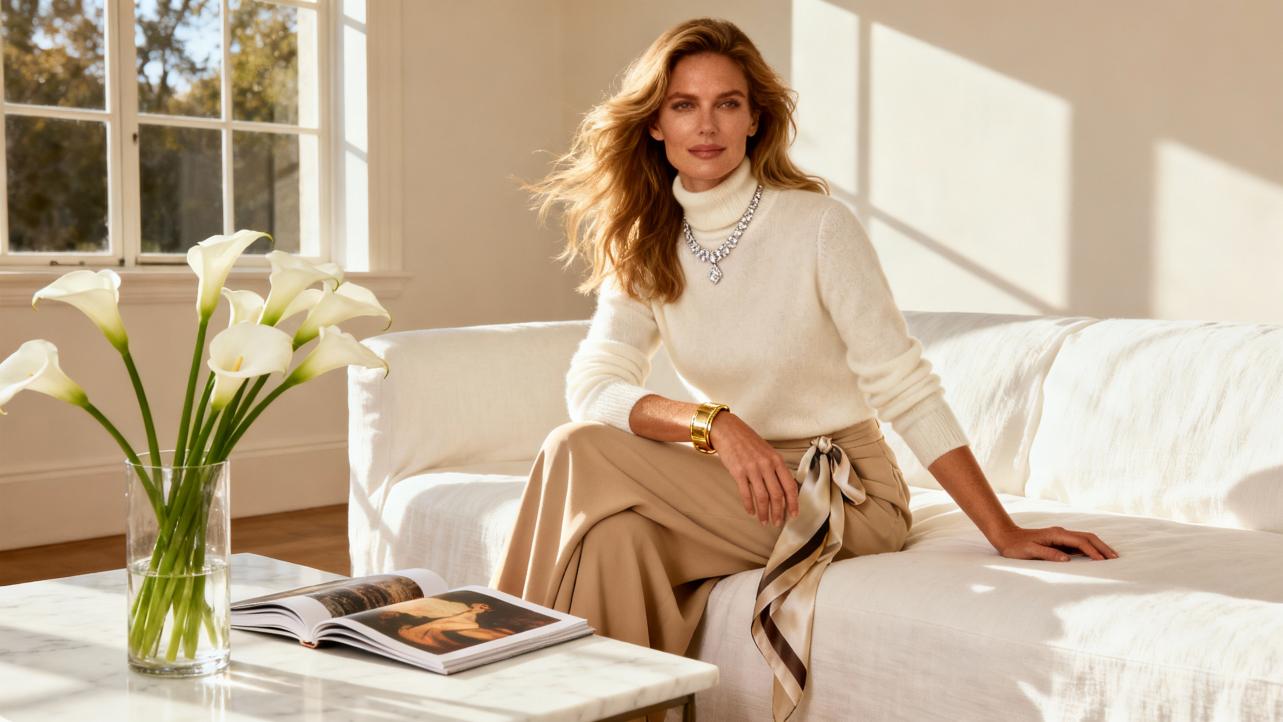
There is a moment I love in private styling appointments: when a client tries on a single piece—a slim gold bangle, an oval signet, a delicate diamond pendant—and suddenly exhales. Shoulders drop. The mirror becomes less about self-editing and more about self-recognition. In that quiet click of rightness, you can almost hear the philosophy behind minimalism whispering that less isn’t a compromise; it’s clarity. For many of us, one piece is enough because it restores focus, honors proportion, and lets personal presence—not objects—do the talking.
The Quiet Power of Singular Adornment
Wearing one piece is not about austerity. It is about directing attention with intention. Minimalist design leans on the same principle that master jewelers and modern architects celebrate: negative space. By allowing space to exist around a jewel instead of stacking on more, the single item becomes visually legible, and the person wearing it remains the true focal point. Designers and educators frequently discuss how negative space shapes the aesthetic and engineering of a piece; the Gemological Institute of America has framed this as a central idea in contemporary design thinking, precisely because it creates rhythm, comfort, and an elegant visual cadence.
There is also a psychological ease to the singular choice. Decision fatigue is real; it’s why capsule wardrobes have endured. One well-chosen item ends the internal debate and creates an unmistakable through line from outfit to identity. The result reads as self-assured rather than showy. You’re not under-accessorized; you are fully expressed.

What Minimalist Jewelry Really Means
Minimalist jewelry is a design language, not a scarcity mandate. Across respected retail and education sources such as James Allen’s Blog (published August 24, 2022) and the Blue Nile Blog (published November 27, 2023), you’ll see it defined by clean lines, slender proportions, balanced negative space, and an unwavering commitment to quality over ornament. Think delicate chains, slim bands, geometric or softly organic shapes, and subtle texture rather than overt embellishment. It’s the “little black dress” of accessories: meant to complement, never to overpower.
Minimalist and timeless often overlap but are not identical. Minimalist favors restraint; timeless simply endures. A tennis bracelet, for instance, can be timeless with its classic line of stones, even if it isn’t always strictly minimalist in scale or sparkle. Understanding that nuance helps you choose a single piece that reflects both your aesthetic and your life.
Fit, Scale, and Proportion
Scale is the difference between whisper and shout. Lifestyle stylists remind us to test proportion against real bodies and real necklines. A V-neck often pairs gracefully with a small pendant that mirrors the neckline’s point. A round crew can frame a choker or huggie earrings without crowding the face. Hands benefit from mindful ring proportions relative to finger length; slim stackable bands or one polished signet tend to flatter most shapes. Because photos can mislead, trying pieces on—and shopping where returns are straightforward—prevents disappointment and keeps the experience true to your eye and comfort, a point echoed by practical style guides from retailers such as Adventures Frugal Mom (published May 1, 2024).

How One Piece Works Across Real Life
In the office, a single pair of diamond or pearl studs communicates polish without stealing attention from conversation; The Diamond Store’s trend overview for 2024 highlights the enduring role of studs, micro-hoops, and huggies for exactly this reason. On weekends, a slender chain with a small pendant can elevate a tee and jeans as effortlessly as a crisp white shirt. In the evening, a tennis bracelet worn alone reads as elegant, modern, and intentional. Each choice lends coherence—one distinct note in the score rather than a competing chorus.
You can apply a similar discipline across categories. If your day revolves around typing and meetings, a sleek bangle or bracelet might be your hero because it stays visible while you work. If you spend time on camera, a pendant that sits just below the collarbone can frame the face with a refined glimmer. If hands are your expressive instrument, a single ring—the classic signet, a clean solitaire, or a sculptural bypass—becomes your signature.

Craftsmanship You Can Feel
Minimalist pieces leave nowhere to hide. With fewer elements, every edge, clasp, and stone seat must be executed with precision. Designers who specialize in open, airy structures and negative space remind us that interior corners should be radiused rather than sharp to avoid stress points, and spans should remain sensible so the piece resists flexing. In my own evaluations at the bench and under magnification, the same quality cues separate keepers from disappointments: crisp profiles, smooth interiors that won’t snag, secure closures, and clean, even finishing where solder seams and cutouts meet the eye.
Material choice is equally deliberate. Fourteen-karat gold often strikes the right balance between everyday durability and color; platinum offers exceptional wear resistance; sterling silver is bright and comfortable but benefits from routine care to minimize tarnish. Gold-filled can outlast common plating, while vermeil and standard plating require gentler wear. Stainless steel brings notable scratch resistance at approachable prices. Collectors who choose one piece to carry the whole outfit often invest in the most robust alloy they can, precisely because they will rely on it day after day.
Pros and Cons of Wearing Just One Piece
An honest evaluation acknowledges both sides. Wearing a single item heightens clarity and comfort. It reduces visual noise and prevents tangles, competing silhouettes, or fussy adjustments. It also cuts the temptation to overspend on pieces you’ll seldom wear. The trade-off is that you have fewer dialed-in variables to change the mood. Layering can inject dimension and personal storytelling, while one piece leans on subtlety. If you crave variety, the solution isn’t necessarily “more today, less tomorrow” but choosing one highly expressive item that carries meaning or distinct texture—perhaps a birthstone pendant, an engraved signet, or a beautifully engineered cuff.
Here is a concise comparison that can help you decide how you like to wear your minimalism:
Approach |
Key Strengths |
Trade-offs |
Best Use Cases |
One-piece minimalism |
Focused, elegant, low-maintenance; zero tangles; instant polish |
Less room for layered dimension; relies on exceptional craftsmanship |
Professional settings, on-camera work, everyday uniforms, travel |
Layered minimalism |
Depth and personalization through lengths, textures, or mixed metals |
Requires careful balance; can drift into fussiness if unchecked |
Evenings, creative roles, fashion-forward expression |

Choosing Your Signature Piece
A capsule philosophy is as powerful for jewelry as it is for clothing. Retailers who curate minimalist wardrobes often suggest starting with a few evergreen categories and then appointing one as your personal anchor. Stud earrings are universally flattering and comfortable. A signature pendant—solitaire, bar, initial, locket—can stand alone or layer when you wish. A go-to bracelet, whether chain, slim cuff, or tennis, wears year-round and plays nicely with watches. A single ring with crisp lines or a meaningful motif becomes shorthand for your style. A classic watch bridges utility and adornment and, for some, is the only “one piece” they ever need.
Metal color deserves a moment of thought. Style guides note that warmer complexions often glow in yellow gold while cooler complexions harmonize with silver or white gold. Mixed metals are fully modern; if you love the interplay, one dual-tone piece can act as a bridge through your wardrobe. If prints are bold or silhouettes oversized, keep the jewelry small in scale and simple in geometry. If your clothing is pared back, let surface finish do the talking—high polish for crisp formality, satin or matte for quiet luxury.
Smart Spending Without Regrets
Minimalist design has a broad price spectrum because the geometry is efficient even when the metals are precious. A practical framework seen in consumer guides is to match budget tiers to materials and usage. The aim is not to dictate prices but to steer expectations toward durability that suits your lifestyle.
Budget Tier |
Typical Materials |
Durability |
Best Use |
Under $30 |
Base alloys, standard plating |
Low to medium |
Trend testing, occasional wear |
100 |
Gold-plated brass, sterling silver |
Medium to high |
Everyday basics with mindful care |
$100+ |
14k gold, platinum, fine silver |
High |
Investment pieces, heirloom potential |
Whichever tier you choose, prioritize craftsmanship. Check that clasps close decisively, stone seats are secure and even, edges are smoothed, and cutouts are finished cleanly. These details matter more when one piece carries the look.

Care Rituals That Keep Subtle Pieces Radiant
Delicate proportions deserve deliberate care. The Blue Nile Blog underscores gentle handling and recommends avoiding ultrasonic cleaners for many minimalist pieces, since the vibration and intensity can stress fine components. A soft cloth, mild soapy water, and a light touch preserve luster without over-polishing. Keep jewelry away from harsh chemicals and apply perfume or lotion before dressing. Store items in a soft-lined compartment or pouch, and hang chains when possible to prevent kinks. Sterling silver benefits from wear—it can actually tarnish less when it isn’t sitting idle—yet it still appreciates a quick wipe before storage.
Culture, Icons, and Why Less Feels Modern
Minimalism’s gravitational pull is cultural as much as aesthetic. Lifestyle shifts toward simplicity and mindful consumption have pushed fashion toward pieces that can move from morning errands to evening plans with only a change of shoes. Public figures known for their refined restraint—including Meghan Markle, Kate Middleton, and Jennifer Aniston—have normalized the elegance of small hoops, slim bracelets, and dainty pendants. Retailers and designers continue to champion this direction, and 2025 outlooks from industry blogs point to mixed metals, fine-scale stacking, and sustainable materials as pillars. There’s also a renewed interest in “permanent” welded chains measured to the wearer, offering a subtle, daily signature that neatly answers the question of what to put on: you already did.

Definitions, Quickly
Every field has its shorthand. A few terms help you navigate choices with precision. Huggies are small hoops that sit close to the earlobe, lending comfort, subtlety, and a modern profile. Lariat necklaces create a front drop that elongates the neckline without a clasped pendant; they feel effortless when worn alone. Station necklaces are delicate chains with evenly spaced stones or beads and work beautifully as a quiet, stand-alone focal point. Toi et moi rings set two stones together in dialogue, creating romance without the bulk of a cocktail piece. Negative space describes the intentional voids in a design; in minimalist jewelry it is as important as the metal, shaping rhythm, lightness, and strength.

When One Is Not Enough—and How to Keep It Minimal
There are days when you want more than a whisper. Layered minimalism preserves restraint by editing around a single focal zone. If you stack bracelets, consider a clean hand with fewer rings. If your pendant and choker are doing the work near the face, keep earrings simple so the overall effect stays calm. Retail trend guides advise varying necklace lengths to avoid tangling and choosing items of similar visual weight so the layers feel related. Even in a layered mood, the best results come from a minimalist mindset: choose thoughtfully, add deliberately, and stop just before “too much.”

First-Hand Notes from the Bench and the Boutique
In the studio, I’ve learned that the pieces clients reach for most share three qualities. They fit with precision so they never distract, they feature materials that stand up to everyday life, and they tell a story quietly enough to wear often. I also notice that the clients who wear one piece by choice, not default, look the most at ease. They aren’t apologizing for simplicity; they’re luxuriating in it. When you invest in a single item that can carry a look—whether that is a pair of classic studs, a satin-finished gold bangle, or an initial pendant—your mornings become shorter, your outfits read cleaner, and your jewelry box gets more love, not less.

A Brief Word on Sustainability
Minimalism and sustainability often align because a smaller number of better-made pieces can reduce replacement cycles and waste. Several retailers and designers emphasize recycled metals, ethically sourced gemstones, and low-waste processes; beyond the virtue, these practices tend to produce jewelry that is designed to last. A single reliable piece, worn hundreds of times, has a cost-per-wear that no trend-driven impulse buy can touch.

Putting It Into Practice
Start by looking at your week, not your wishlist. If your wardrobe centers on tailored shirts and jackets, a signature pendant that sits just below the collarbone will appear in nearly every outfit shot. If your work is hands-forward, a polished ring or bracelet becomes visible punctuation. If you’re on video calls, modest sparkle near the face frames your expression without stealing the scene. Choose the metal color you naturally reach for, confirm the fit against your most-worn necklines and cuffs, and study your reflection from a few feet away, not just in the magnifying mirror. The right piece will feel as if you’ve always owned it.
If you are tempted to layer, apply minimalist editing rather than maximalist volume. Two pieces that acknowledge each other through shape, texture, or finish will usually look more refined than five that argue for attention. Remember the best advice from stylist-forward retail guides: keep one area active and let the rest breathe.
Quick Answers
Is one piece appropriate for formal events?
Absolutely. A tennis bracelet worn solo, a pair of diamond studs, or a luminous pendant can be more elegant than an armful of shine. Trend roundups from retailer blogs repeatedly show that refined restraint photographs beautifully under evening lights and feels current rather than conservative.
Can I mix metals if I’m only wearing one piece?
You can. A single dual-tone item bridges your wardrobe and gives you freedom with belts, hardware, or eyewear. Many modern guides encourage mixing; the key is intent. If your one piece includes both gold and silver, the rest of your look can follow either path.
What if I love statement pieces?
Minimalism isn’t anti-statement; it’s pro-edit. Choose one bold item and keep everything else simple. A sculptural cuff or a singular drop earring can be breathtaking when you let them own the moment.

Closing
One piece is enough when it is the right piece. It is enough when form honors function, when materials respect daily life, and when the design reveals you rather than replaces you. As a lifelong jewelry observer and maker, I’ve come to believe that elegance is not the absence of adornment; it is the presence of intention. Choose with care, wear with ease, and let your singular sparkle be the exclamation point on your story.
References
- https://adventuresfrugalmom.com/how-to-choose-the-perfect-minimalist-jewelry-for-any-occasion/
- https://www.benolds.com/minimalist-fashion-jewelry/
- https://smart.dhgate.com/how-to-choose-minimalist-jewelry-that-effortlessly-makes-a-statement/
- https://blog.jamesallen.com/minimalist-jewelry-a-beginners-guide/
- https://www.vogue.com/article/minimalist-jewelry-guide
- https://www.amarewear.com/blogs/amare-wear-jewelry-blog/minimalist-the-rise-of-understated-everyday-elegance?srsltid=AfmBOor_mQEIUWpAk1tvpcFSxchGuO4XGVl_by3G24bDwa7ml2dEvfee
- https://www.befruitfuljewelry.com/blogs/news/minimalist-jewelry-defining-2025-trends?srsltid=AfmBOoo0LkbVrZx09eKhyC88ScNU51N3FulYUQMfSkmpdiLgrcNGCLFg
- https://www.bluenile.com/blog/fashion/minimalist-jewelry-guide?srsltid=AfmBOooVx9uTVrI9NYIXELOVYPsmzmky8gi7xMa0Rz8PHXRAy_nJs5Gx
- https://bondeyejewelry.com/blogs/guides/the-art-of-minimalist-jewelry-how-to-keep-it-chic?srsltid=AfmBOopY2TfkT4-ep-xaCmH4ORckrQhrpU9dfTcUfgOzNCXu6R83uqYE
- https://caratly.in/blogs/jewellery-tips/the-power-of-minimalistic-journey?srsltid=AfmBOoroaiDLqPpX2KIlcNnFZrnrfiNCzKvWlGZhAak_5OIxN6YtS0OD