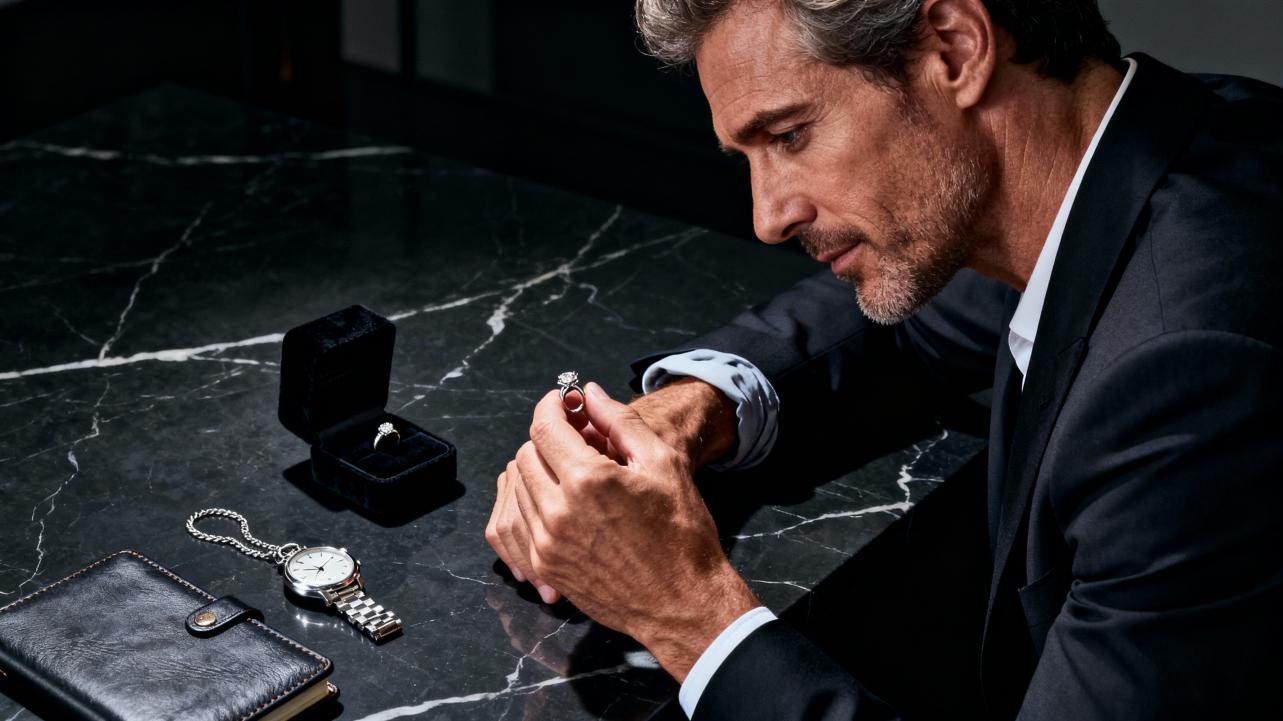
Why Do Some People Always Think Their Diamonds Are Not Big Enough?
The question comes across my bench more often than any request for a four‑prong or a halo: Why doesn’t this diamond feel big enough? After years of sizing, setting, and studying stones under the loupe and on the hand, I have learned that the answer rarely lives in the carat number alone. It lives in the eye, in culture and marketing, in cut geometry and face‑up spread, and in how our minds make quick comparisons every time a hand enters our field of view. Understanding those forces—psychological and optical—turns “not big enough” into a much more nuanced, and far more satisfying, conversation.
The Psychology Behind “Not Big Enough”
Size dissatisfaction is often a mirror of social comparison. Decades of branding made diamond size a stand‑in for devotion and success; the famous tagline “A diamond is forever” was more than poetry, it was persuasion. Behavioral cues amplify the effect: on platforms where hands and highlights are curated, our brains anchor to the largest stones we see, recalibrating what “normal” looks like. Psychology and retail experts point to status signaling, fear of regret, and heuristics like “bigger must be better” as recurring drivers of diamond decisions and second‑guessing. Qualitative insights from jewelry marketers and consultants describe how anticipated judgment—what friends or colleagues might say—pushes some buyers toward sizes they never intended.
Cultural norms also set expectations that shape the “enough” threshold. In North America, many couples shop in the one to one‑and‑a‑half carat range for center stones, and reports like The Knot have noted that roughly one in four engagement rings in the U.S. exceeds two carats. In parts of Europe and Japan, the prevailing ideal often favors modest sizes with refined craftsmanship and excellent cut. Trade observers have long segmented buyer preferences by region: size‑forward in the U.S., mid‑range balance in Europe, and top grades at smaller sizes in Asia. When people move or scroll across cultures, their baseline shifts. What felt abundant last month can start to look understated next to a new peer set.
Budget dynamics add another layer. Because diamond prices rise nonlinearly with carat weight, every step up feels costly, which paradoxically keeps size top‑of‑mind. That constant trade‑off—more weight versus more quality—can leave buyers wondering if a little more would have felt right. Intriguingly, when surveyed, most people say quality wins: a commonly cited industry poll found the large majority preferred a slightly smaller diamond in higher quality over a bigger, lower‑grade stone. Nonetheless, as life and circles change, so do expectations, and the mind reopens the question.
Carat Versus Size: What Your Eyes Actually See
Carat is weight. Size is what the eye reads face‑up. The distinction matters. Standards bodies like GIA treat carat as a precise mass measurement, with one carat equaling one‑fifth of a gram, but the spread you see on the hand is governed by cut proportions, shape, and the way weight is distributed. Two diamonds that weigh exactly the same can present very differently once set, which is why so many “not big enough” moments are really “not wide enough” or “not bright enough.”
Cut quality drives perceived size. A round brilliant with excellent proportions returns light edge‑to‑edge, creating a crisp outline and energy that reads large. A stone cut too deep tucks weight into the pavilion where you cannot see it, shrinking face‑up diameter. A stone cut too shallow can look broader at first glance but leak light, diminishing the look in motion. Reputable cut guidance underscores that depth and table must live in harmony for the best spread and sparkle.
Shape alters perception even when weight is constant. Elongated outlines such as oval, pear, marquise, and many emerald cuts pull the eye along the length, making the diamond appear larger per carat; square and deep shapes often look more compact. Length‑to‑width ratio—the simple division of length by width—becomes a powerful aesthetic control for fancy shapes; moderate increases in ratio can make a stone look meaningfully longer without changing weight.
To visualize real‑world differences, consider how a one‑carat diamond typically presents across shapes. These are face‑up spans you notice at a glance.
Shape (1 ct) |
Typical face‑up span (inches) |
Round (diameter) |
≈ 0.26 |
Princess/Cushion/Asscher (side) |
≈ 0.22 |
Emerald/Radiant (length) |
≈ 0.28 |
Oval/Pear (length) |
≈ 0.30 |
Marquise (length) |
≈ 0.39 |
These shape averages reflect measurements gemologists and educators publish for shoppers comparing face‑up appearance. Your eye reads those spans much faster than it computes weight, which explains why some one‑carat rings look “bigger” than others.
The Price Illusion: Magic Sizes and Nonlinear Jumps
Another reason “not big enough” lingers is that pricing psychology frames round carat numbers as milestones. In the trade, weights such as a quarter, half, three‑quarter, and one carat are nicknamed “magic sizes.” Because supply thins out as weight increases, stones at or just above those round numbers often command higher per‑carat prices than stones a few points shy, even when the visual difference is negligible. Education resources from GIA explicitly note that a 0.98‑carat round and a 1.01‑carat round are difficult to distinguish face‑up, while the price gap can be real. This is why veteran buyers sometimes target just‑under weights; doing so can keep the budget in check without sacrificing the look.
Comparisons get clearer when you use per‑carat price for similar stones graded by the same lab. If two diamonds both cost $15,000 and one weighs 1.50 carats while the other weighs 1.60, the per‑carat price is different even though the total is the same. Apples‑to‑apples means holding shape and cut, color, and clarity as constant as possible, then deciding whether you prefer a little more size or a little more quality at a given spend.

Cut, Depth, and Table: Invisible Millimeters That Change Everything
I have seen countless diamonds lose their charisma because of proportions rather than carat. Depth percentage and table percentage—the ratios that describe how tall a diamond sits and how wide the top facet is—shape light performance and face‑up spread. When total depth is excessive, the stone can look small for its weight; when it is far too shallow, the optics suffer with fisheye effects and dulled contrast.
Independent cut educators who study performance recommend narrow ranges for round brilliants that consistently deliver both spread and sparkle. Depth around the low 60s and a table in the mid‑50s tend to strike the balance, assuming crown and pavilion angles are in their own ideal windows. The interaction among those angles is where the fire and brilliance live. As a first pass, proportions tell you whether you are paying for hidden weight or visible presence.
Step‑cut shapes like emerald and Asscher have their own language. Their broad, open facets do not hide inclusions the way brilliant faceting can, and their scintillation pattern is architectural rather than glittery. That means your eye is more sensitive to clarity and color in these cuts, and their depth can make them feel a touch smaller per carat than elongated brilliants, even when their elegance is undeniable.
Shape and Setting: Honest Optical Illusions
If the goal is a diamond that “reads” larger, shape and setting are your most ethical illusions. Ovals, pears, and marquises stretch along the finger, emphasizing length. Radiants and elongated cushions can combine a rectangular outline with lively faceting that carries size and sparkle together. Rounds may not always measure the largest surface for their weight, but a top‑tier cut can compensate with extraordinary edge‑to‑edge brilliance that makes the outline pop.
Settings frame the performance. A delicate prong head exposes the girdle and lets more light enter, which can make the center feel airy and expansive. A thin, tapered band increases contrast around the stone so it dominates the visual field. Halos rim the center with small diamonds, often adding meaningful visual diameter without increasing center‑stone weight. A bezel adds a metal outline that can heighten perceived width even as it slightly covers the edge; taste and lifestyle determine whether that trade‑off feels right. These tricks are not gimmicks; they are centuries‑old design tools for balancing proportion on the hand.
One caution with elongated cuts is the bow‑tie phenomenon, a dark bow‑shaped area across the center that can sap visual size and brightness if proportions are off. Good cutting minimizes it; videos and performance images help you assess.
Culture, Trends, and Shifting Baselines
What counts as “big enough” is not universal. Data on ring sizes by region point to meaningful variation: North America often favors larger center stones compared with the United Kingdom and much of Europe, where many buyers choose sizes around the middle of the carat range and prioritize timeless looks. In Japan and parts of the Asia‑Pacific, buyers frequently emphasize cut quality, craftsmanship, and symbolism over raw size, with modest carat weights that wear beautifully in minimalist designs. Cultural segmentation described by industry analysts even shows how producers historically routed different quality mixes to different regions based on those preferences, which helps explain why your aunt in London and your cousin in Los Angeles talk about “big enough” in such different ways.
Materials also influence perception. The rise of lab‑grown diamonds, which many retailers price significantly below comparable natural stones, enables buyers to increase carat or quality at a given budget. Trade sources often cite that lab‑grown options can cost about three‑quarters less, though the calculus around long‑term value and rarity differs from natural stones. Meanwhile, younger buyers are increasingly open to alternatives such as moissanite; some surveys have noted substantial adoption among Gen Z for its look‑for‑budget profile. All of these shifts nudge the baseline for what feels appropriately sized.

Practical Ways to Choose a Diamond That Feels Right
The surest antidote to “not big enough” is a plan that prioritizes how the diamond performs for your eye, on your hand, within your context.
Start by defining what matters most. If scintillation across a room is your vision, prioritize cut before carat and choose faceting styles and proportions that return light properly. If finger coverage matters, explore elongated shapes and target dimensions—not just weight—so you know the real face‑up span you are buying. For many buyers, the sweet spot is a slightly under‑threshold weight with excellent cut, where you sidestep magic‑size premiums while keeping the look.
Next, compare fairly. Use per‑carat price only when the stones share the same shape and were graded by the same independent laboratory. GIA’s grading and measurement standards are widely trusted, and a grading report verifies that the carat listed has been weighed accurately and that cut, color, and clarity are what the seller claims.
Then, validate the optics. Depth and table on paper tell part of the story. Videos, light‑performance images, and side‑by‑sides reveal where the sparkle lives, whether a bow‑tie distracts, and how brightness holds in everyday light. Remember that step cuts reward higher clarity and often higher color, while brilliant cuts can be forgiving in those areas.
Finally, tune the design. Slimmer bands, prong settings, and halos are honest tools for presence. Bezel settings have a strong design language and can make a diamond read larger in width, but understand that they slightly cover the edge. There is no wrong answer—only the right match for your style and everyday life.
To make those levers easy to consider at a glance, here is a compact map of what affects perceived size and what to watch.
Lever |
What it amplifies |
What to watch |
Just‑under weight (for example, 0.98–0.99 vs 1.00) |
Budget without visible loss |
Magic‑size psychology |
Elongated shape (oval, pear, marquise, many emeralds) |
Finger coverage and length |
Bow‑tie in some cuts; clarity for step cuts |
Excellent/Ideal cut proportions |
Edge‑to‑edge brightness and perceived size |
Avoid overly deep or shallow stones |
Prong head and thin band |
Exposure and contrast |
Durability on very thin bands |
Halo frame |
Apparent diameter |
Style balance and maintenance |
Bezel frame |
Defined outline, width |
Slight edge coverage, aesthetic preference |
Lab‑grown alternative |
Carat or quality at same budget |
Different rarity/value story |
Definitions That Keep Choices Clear
A few terms will help you translate the spec sheet into a mental picture. Carat measures weight; it does not guarantee a particular visual size. Total carat weight describes the sum of all diamonds in a piece; the center stone’s carat weight is a separate number and drives most of what you see. The per‑carat price is a simple division—stone price divided by weight—that lets you compare similar diamonds more fairly. Length‑to‑width ratio describes fancy shapes’ outline, nudging them more rectangular or more square. Depth percentage and table percentage are proportions that govern light return; for round brilliants, experienced educators often recommend depth in the low 60s and a table in the mid‑50s as a dependable starting region, with crown and pavilion angles tuned to suit. Lastly, “magic sizes” are round numbers at which pricing often jumps because buyer demand clusters there and larger weights are rarer.
Pros and Cons of Chasing Size Versus Chasing Quality
There is nothing wrong with wanting presence. Larger diamonds cover more finger, command attention, and photograph boldly. They can also accentuate inclusions if clarity is too low, and they cost disproportionately more per carat. Stones that sacrifice cut to preserve weight tend to look smaller than their carat suggests and often feel less alive in daily light.
On the quality‑first side, prioritizing cut and balanced color/clarity produces a diamond that performs like a miniature theater of light; it usually reads larger than its dimensions because the outline is lit. The trade‑off is that, in a culture or circle where size is the shorthand, a beautifully cut smaller diamond may feel subtler than the zeitgeist. That is not a flaw; it is a choice. Survey data in the trade has repeatedly shown that most people, when asked abstractly, prefer the smaller, higher‑quality diamond. What matters is aligning that preference with how you, and your partner, want the ring to feel in real life.

Care and Wearing Tips That Preserve Visual Size
Sparkle is the easiest way to “add size” without touching carat. Everyday lotions and soap films mute brightness, especially on flat open facets and along the girdle. Gentle home cleaning with warm water, a touch of mild dish soap, and a soft brush restores the optics in minutes; periodic professional cleanings and prong checks keep both performance and security high. Designs with many small stones, like halos and pavé bands, deserve particular attention to maintenance so the frame that adds apparent size keeps doing its job.

A Note on EEAT: Where These Insights Come From
When I discuss carat, cut, and price thresholds, I lean on standards and guidance from the Gemological Institute of America, which created the 4Cs and codified lab grading. When I talk about depth and table, I reflect what independent cut educators publish after examining proportion sets and light behavior. Shape‑size relationships and length‑to‑width ratios echo teaching resources from gemological societies that help consumers predict face‑up dimensions. Average size norms and market tendencies come from specialty jewelers and consumer reports that track what people buy and why. Against that backdrop, my bench‑side habit of putting stones on real hands—and watching how real people respond—grounds the advice in what most shoppers actually see.
FAQ
Is the difference between 0.98 carat and 1.01 carats visible on the hand?
For most eyes, no. Education from GIA notes that differences of a few points around a round number are difficult to distinguish face‑up, yet prices can jump at “magic sizes.” If you are trying to maximize value, buying just under a round threshold is a smart way to preserve the look while moderating the spend.
Which shapes tend to look largest for their weight?
Elongated shapes such as oval, pear, and marquise tend to offer the most finger coverage per carat because they stretch along the length of the finger. Many emeralds and radiants read long as well, with the caveat that step‑cut facets emphasize clarity and color more than brilliant cuts. Rounds can still look commanding when cut superbly, because edge‑to‑edge brightness makes the outline crisp.
How do I compare two diamonds fairly when shopping?
Hold shape, cut, color, and clarity as constant as possible and ensure both stones were graded by the same lab. Then compare dimensions and per‑carat prices rather than only the total. A trusted grading report from GIA verifies that you are comparing apples to apples and that the listed weight and grades are accurate.
Will a halo or thin band make my center look bigger?
Yes, that is their purpose. A halo adds a bright rim that increases apparent diameter, while a thin, tapered band heightens contrast so the center dominates the visual field. A prong head exposes more of the diamond’s edge for an airy look; a bezel creates a bold outline that can also add perceived width, though it slightly covers the edge.
Are lab‑grown diamonds a way to go bigger without overspending?
Many retailers price lab‑grown diamonds significantly below comparable natural stones, which lets buyers increase carat or quality at the same budget. Trade sources often cite that lab‑grown options can cost about seventy‑five percent less than natural counterparts. The choice is personal: natural diamonds carry a different story of rarity; lab‑grown offers a compelling look‑for‑budget and an alternative supply.
What is the average engagement stone size in the U.S., and should I care?
Reports that track trends in North America commonly show center stones around the one to one‑and‑a‑half carat range, with some datasets noting that roughly a quarter of rings in the U.S. exceed two carats. Those numbers are context, not commandments. The right size is the one that matches your taste, your values, and your budget on your hand.
Takeaway
“Not big enough” rarely points to a number; it points to a misalignment between what your eye wants and what your diamond is doing. When you separate weight from face‑up size, when you honor how cut ignites a stone, when you match shape and setting to your hand and your life, size anxiety fades. Let independent grading set the baseline. Let dimensions and proportions guide the look. Let cultural noise recede behind your own priorities. The diamond that is “enough” is the one that holds your gaze because it is cut to sing, framed to flatter, and chosen with clarity about what matters most to you.
References
- https://4cs.gia.edu/en-us/blog/nine-things-about-diamond-carat-weight-you-need-to-know/
- https://www.gemsociety.org/article/diamond-measurements/
- https://www.almasdiamond.com/post/psychology-behind-diamond-buying-decisions
- https://www.xennoxdiamonds.com.au/diamond-size-vs-quality/?srsltid=AfmBOooB4Uaj2OGserd_XtEq37EUlSnx0HZSXv64C8tOKB3TdWygrq__
- https://fashionmingle.com/the-cultural-influences-on-engagement-rings/
- https://karenhandmade.com/cultural-engagement-ring-choices/
- https://articles.lightmarkjewelry.com/size-of-average-engagement-ring-worldwide/
- https://nohoartsdistrict.com/6-common-misconceptions-about-diamond-size-and-cut/
- https://www.revediamonds.com/blog/which-diamond-shape-tends-to-look-the-smallest-understanding-how-shape-affects-size-appearance
- https://anationofmoms.com/2025/04/diamond-shape-and-perceived-size.html