What Jewelry Doesn’t Affect a Pianist’s Keyboard Performance?
Jewelry can feel like a quiet expression of who you are: a thin wedding band that holds a life story, a treble-clef pendant that whispers your love of music, a ring that carries a family name. Yet at the piano, every ounce of metal meets a world of nuance. Keys glide beneath the fingers, wrists hover in the air, arms gesture across octaves; anything you wear must coexist with that choreography.
Across conversations among pianists, teachers, and jewelry makers, a clear theme emerges. The question is not whether a pianist may wear jewelry. It is which jewelry allows the hands to speak freely, without stealing even a fraction of control, comfort, or attention. Drawing on piano forums, musician-focused jewelry collections, and metal specialists, this guide looks closely at what jewelry typically does not interfere with keyboard performance—and how to choose it wisely.
How Jewelry Interferes with Piano Playing (And Why It Often Doesn’t Have To)
Pianists report three main ways jewelry can become a problem at the keyboard.
The first is mechanical interference. Large, rigid rings can bump neighboring fingers, snag on black keys, or make fast glissandi feel dangerous. In a long discussion on the Piano World Piano & Digital Piano Forums, players describe how oversized rings can hamper difficult passages and even risk scratching instruments, especially when someone reviews a piano that is not their own and decides to sweep across the keyboard with a dramatic glissando. The consensus there is simple: anything on the hands that physically obstructs the keys or threatens the instrument should either be redesigned or removed.
The second is sensory and psychological distraction. Some pianists are exquisitely sensitive to the feeling of weight or bulk. A professional-level pianist on WeddingBee explains that most rings, bracelets, and even bulky sleeves “don’t feel right” at the keyboard. After experimenting, she discovers that only very thin, plain bands feel invisible enough to keep on while teaching and performing. For players like this, even a ring that does not literally hit the keys can still feel intrusive if it alters the natural sensation of the fingers and hands.
The third is long-term comfort and health. Tarnishing metals can discolor the skin and trigger irritation or allergic reactions, as noted by jewelry resources such as Brite and Blake Bros. For a pianist playing and sweating under stage lights, this can turn into soreness, itch, or swelling around the joints. Jewelsplint’s medical perspective goes further: repetitive high-precision movements in instruments like piano, guitar, and violin place real strain on joints and tendons, and chronic overuse can lead to trigger finger, joint hyperextension, osteoarthritis, or tendinitis. The wrong ring—too stiff, too loose, or constantly catching—may aggravate stressed fingers over time.
Yet none of this means jewelry and piano are enemies. The same sources show that with the right materials, shape, and profile, many musicians wear jewelry daily without compromising their playing. The key is thoughtful selection.

Rings: The Most Critical Jewelry for Pianists
Rings are the only pieces that live directly on the fingers, which makes them the most consequential for technique.
Why Most Serious Pianists Avoid Large, Gaudy Rings
On Piano World, participants point out that very few major classical pianists regularly perform with multiple large rings. Aldo Ciccolini is mentioned as a rare exception in a particular video, and even then forum members note that in other recordings he plays without rings, speculating that the ornate look may have been a one-off or a director’s choice. The prevailing pattern at the top levels of classical performance, at least in this community’s observation, is simple: big, conspicuous rings are extremely uncommon.
The reasons are both aesthetic and practical. Many listeners feel that a pianist’s attire should not distract from their musical expression. More importantly, large, rigid settings can interfere with finger freedom and glissandi, and they increase the risk of scratching the instrument. One forum participant, with more than a hint of sarcasm, describes reviewers wearing large rings while dragging their hands across someone else’s keyboard as a sure way to “damage it properly.”
From these discussions, a quiet norm emerges: if your ring makes you think twice about a gesture, it is too much for the piano.
Thin, Low-Profile Bands: The Pianist’s Best Friend
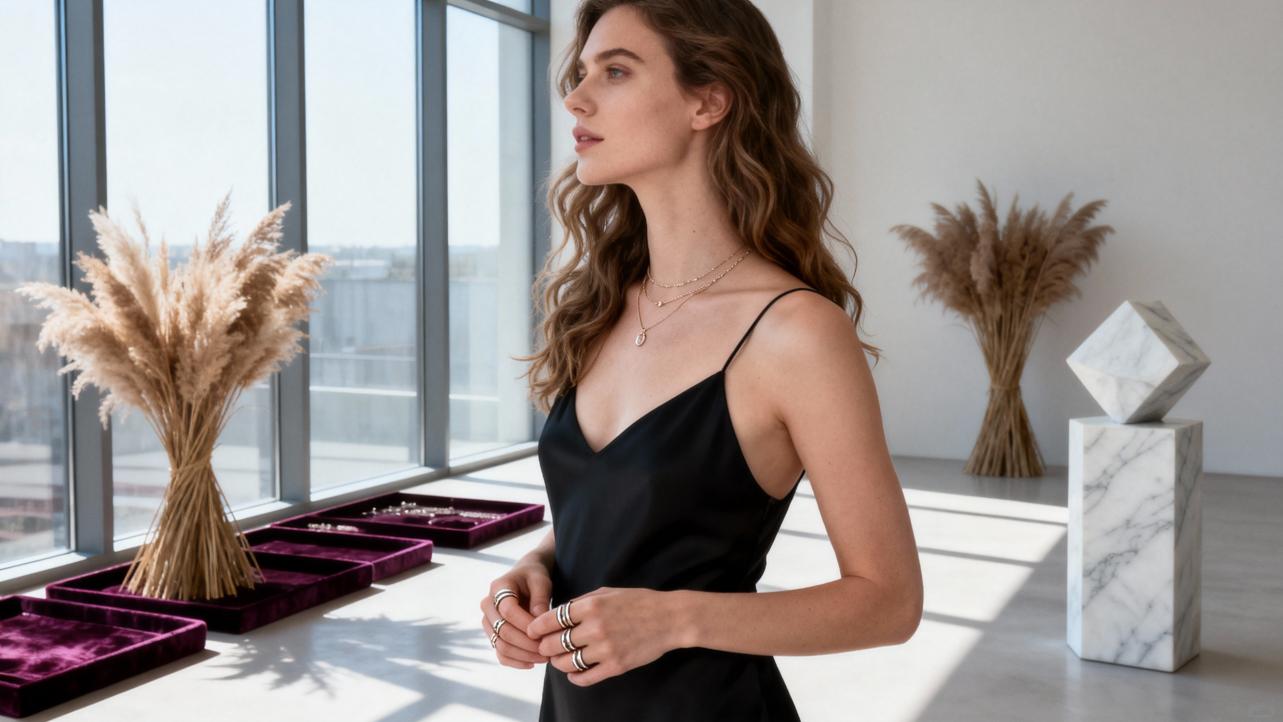
In contrast, thin, low-profile rings repeatedly emerge as the sweet spot. The WeddingBee thread about engagement rings for a pianist is especially revealing. The original poster, a professional-level pianist and teacher, can only comfortably play in a very thin, plain band. She worries about constantly taking off and putting on a typical engagement ring. Multiple respondents, including another pianist who plays and teaches for hours each day, echo the same solution: choose a very thin, minimalist band.
Several design features consistently help:
A thin, low-profile band. Narrow bands minimize bulk between the fingers and reduce the sensation of “stuff” on the hands. The pianist on WeddingBee who opted for a thin solitaire engagement ring and slender eternity wedding bands finds them comfortable enough for daily use at the keyboard.
Small or low-set stones. Stones that sit flush or close to the band are less likely to catch on keys, clothing, or score pages. Suggestions in the same discussion include small stones and low-set designs specifically to reduce obstruction while playing.
Smooth inner surfaces and comfort-fit profiles. Articles on musician rings emphasize snug but not tight fits with comfortable inner curves, allowing for slight finger swelling during long performances. This aligns with the general advice that rings should feel like an extension of the hand, not a separate object.
For pianists who want to keep symbolic jewelry, such as engagement or wedding rings, on their fingers while they play, this combination of thinness, low profile, and smooth comfort is the safest starting point.

Materials That Stay Comfortable, Clean, and Discreet
The choice of metal matters not just for style, but for weight, skin comfort, and how often you need to fuss with cleaning. Metal specialists from Atolea, Blake Bros, Brite, and Jewelry By Johan outline a spectrum of properties—from noble metals that almost never tarnish to budget-friendly alternatives with impressive durability.
To make sense of those options from a pianist’s point of view, it helps to look at them side by side.
Ring option |
Why it suits pianists |
What to watch for |
Thin titanium band |
Titanium has an exceptional strength-to-weight ratio; Jewelry By Johan and Atolea describe it as very lightweight yet durable, with a reputation for hypoallergenic comfort. On WeddingBee and other musician discussions, titanium is repeatedly recommended for pianists who want the feeling of almost nothing on the finger. |
Titanium scratches more easily than some harder metals, though scratches can be buffed. Jewelry By Johan notes that titanium rings must be cut off in emergencies, so sizing correctly is important. |
Thin palladium or platinum band |
Brite and Blake Bros describe platinum and palladium as noble metals that resist oxidation and do not tarnish under normal conditions. They are hypoallergenic and luxurious, making them strong candidates for heirloom-quality rings that can be worn constantly without discoloring the skin. Palladium is mentioned in the pianist engagement-ring discussion as a lighter alternative with a look similar to platinum. |
Platinum is denser and can feel weighty compared with palladium or titanium, which matters to highly sensitive players. Both metals are among the most expensive options. |
18K gold solitaire on a thin band |
High-purity gold is naturally tarnish resistant. Atolea and Blake Bros note that 24K gold almost never tarnishes but is very soft, while 18K gold balances durability and purity, making it well suited for everyday wear. On WeddingBee, one pianist successfully chose a very thin band with a solitaire diamond, plus thin eternity bands, as a comfortable daily set. |
Gold is softer than metals like titanium or tungsten and will show scratches, particularly on the underside of the hand where it contacts surfaces. A high-set stone in any gold ring is more likely to catch on keys, so low-profile settings are preferable. |
Stainless steel band |
Blake Bros and Brite describe stainless steel as one of the most tarnish-resistant jewelry metals, essentially rust and tarnish proof under normal conditions. It is strong, corrosion-resistant, and budget-friendly. Jewelry By Johan adds that it is hypoallergenic and available in multiple finishes. For a pianist, that means a piece that can withstand constant wear with minimal maintenance. |
Stainless steel is heavier than titanium and can feel more present on the hand. It can dent under heavy impact and may be more challenging to repolish than softer white metals. Overly wide stainless bands may feel bulky between the fingers. |
Tungsten carbide band |
Atolea and Blake Bros emphasize tungsten carbide’s extreme hardness, noting that it is second only to diamond on the Mohs scale. It is highly scratch resistant, maintains a long-lasting polish, and resists tarnish and corrosion. Brite notes its popularity for wedding bands that need to stay pristine through rough conditions. |
Tungsten does not bend; under strong impact it can crack or shatter. Jewelry By Johan confirms that rings are heavy and rigid, which may feel intrusive to pianists who are sensitive to weight. Breaking rather than bending can be acceptable in an emergency, but the sheer heft makes it less ideal if you crave lightness. |
Silicone ring |
A pianist on Piano World describes switching from a cumbersome traditional wedding ring to a silicone band and calling it “the best of both worlds,” feeling that they can move better compared with the older metal ring. Silicone is soft, flexible, and cannot scratch keys or other surfaces. |
Silicone has a casual, sporty look and lacks the visual presence of precious metals. It may not suit formal concert attire if traditional appearance is important to you or your audience. |
Custom finger ring splints in silver or titanium |
Jewelsplint explains that finger ring splints are small, lightweight devices worn like rings that stabilize joints while still allowing playing, unlike bulky braces. For musicians, they help prevent hyperextension, reduce pain and swelling, and improve control through better alignment. Silver and titanium options are specifically recommended for durability and aesthetics. |
Splints must be properly sized and fitted; wearing the wrong size or model can restrict motion excessively. Jewelsplint advises introducing splints as soon as early warning signs appear—stiffness, locking, hyperextension—rather than waiting for advanced injury. Consultation with a medical professional is wise for persistent symptoms. |
Across all of these materials, one theme stands out. Tarnish-resistant, hypoallergenic metals reduce the need to remove rings for cleaning and reduce the risk of irritation during long practice sessions. Brite and Blake Bros both point out that tarnish is a chemical reaction that can darken metal, stain skin, and cause discomfort. Since pianists rely on relaxed, healthy hands, choosing metals that stay stable against sweat, lotions, and the occasional cleaning product is not just a cosmetic preference; it becomes part of protecting your technique.

Necklaces and Pendants: Expressive, Often Harmless Companions
While rings sit in the midst of every keystroke, necklaces and pendants live several inches away from the action. For most pianists, that physical distance makes them far less likely to interfere with keyboard performance, provided they are chosen with a modicum of common sense.
Several jewelry makers focus specifically on music-themed necklaces. Bellaforma Jewelry, for example, offers a musical note necklace centered on a G-clef pendant with a small sparkling accent. The chain length is sixteen inches, which places it near choker height on many wearers. This shorter length keeps the pendant resting near the collarbone rather than swinging wildly toward the keys. A reviewer even comments that the piece might feel more refined with a bit of texture or a matte finish instead of high gloss, reinforcing that the main concerns around such neckwear are aesthetic, not mechanical.
Other brands push necklaces into functional territory. DJ.Style sells a gunmetal DJ necklace that incorporates a fully functional quarter-inch audio adapter; the adapter can be removed and used as real audio gear “in a pinch.” Tinsel’s Dipper necklace hides a pair of wired earbuds inside a gold-toned fashion piece, allowing the wearer to pull out earphones while the necklace remains around the neck. Trend Hunter describes a ThinkGeek harmonica pendant that is not merely decorative but actually playable, turning a chic, dual-tone accessory into a tiny musical instrument.
Across all these designs, none of the sources report any interference with keyboard playing. Necklaces rest on the chest and shoulders; their main pitfalls for pianists are more about taste and subtle practicality than technique. If a pendant is excessively long or heavy, it might sway forward during vigorous movement and tap the fallboard or key cover. If it is very shiny, it could draw the eye in close-up camera work, which may or may not be desirable. In live performance, however, a modest, mid-length pendant usually coexists peacefully with the keyboard.
For pianists who want overt musical symbolism without touching their fingers, a distilled G-clef pendant, a petite instrument charm, or even a functional audio necklace is a safe, expressive choice.

Bracelets, Watches, and Other Wristwear
Bracelets and watches sit at a crossroads between the hands and the torso, and their suitability depends heavily on design and playing style.
The WeddingBee pianist who cannot tolerate most rings also mentions that bracelets feel disruptive during performance. This makes intuitive sense: bracelets can slip toward the hand, clack against the keyboard edge, or interfere with the free vertical motion of the wrist. In fast passages that require flexible wrists and forearms, anything that alters the weight distribution or restricts motion can feel like a small but constant drag.
Because the research notes focus more deeply on rings and finger health, there is less formal guidance on bracelets. However, the same principles clearly apply. Low-profile, lightweight wristwear that stays put and does not extend down toward the hand is far less likely to interfere than chunky bangles, heavy watches, or stacks of bracelets that rattle with every gesture. For serious practice, many pianists simply remove wristwear entirely, then put it back on after they leave the bench.

When Jewelry Becomes Protection: Ring Splints for Pianists
Most jewelry exists to adorn, commemorate, or signal identity. But a particular subset of ring-like devices exists primarily to protect: finger ring splints.
Jewelsplint describes the everyday reality for instrumentalists in demanding disciplines like piano. Hours of repetitive, high-precision playing strain joints, tendons, and ligaments. Early warning signs include stiffness after practice, mild pain, reduced flexibility, fingers that lock, snap, or hyperextend. Ignoring these can lead to chronic issues such as trigger finger, joint hyperextension, osteoarthritis, tendinitis, or boutonniere deformity. Once those conditions advance, they can severely limit playing ability.
Finger ring splints, as presented by Jewelsplint, are small, lightweight devices worn like rings that stabilize and support finger joints while allowing musicians to continue using their hands. Unlike bulky braces, they are specifically designed to reduce excessive motion, maintain alignment, and limit hyperextension without immobilizing the finger. For pianists, the core benefits include better joint stability, reduced pain and swelling, and improved control as the finger tracks in a healthier path over the keys.
The article highlights silver ring splints as durable and aesthetically pleasing for long practice, titanium splints as lightweight and strong for frequent performers, and adjustable plastic designs such as Oval-8 splints for flexible fitting. The central recommendation is to use them proactively. Musicians are advised to begin using finger ring splints as soon as they notice stiffness, mild pain, locking, snapping, or hyperextension, rather than waiting until chronic damage sets in.
In this context, ring splints are a rare category of jewelry that can actively enhance a pianist’s ability to play, provided they are properly fitted and introduced under appropriate guidance. They do not simply avoid affecting performance; they can protect it.

Everyday Comfort: How Pianists Actually Wear Rings
Beyond specialist articles, informal communities give valuable insight into how real pianists negotiate jewelry in daily life.
In the Piano World discussion about large rings, one member describes the appeal of rings inspired by performers like Elton John or Liberace, only to acknowledge that their first wedding ring felt cumbersome with smaller hands. Switching to silicone rings became a revelation, offering the emotional satisfaction of wearing a band with the physical sensation of greater freedom at the keyboard. The same pianist even contemplates replacing rings with tattoos in the future, underlining how strongly some musicians prioritize unencumbered fingers.
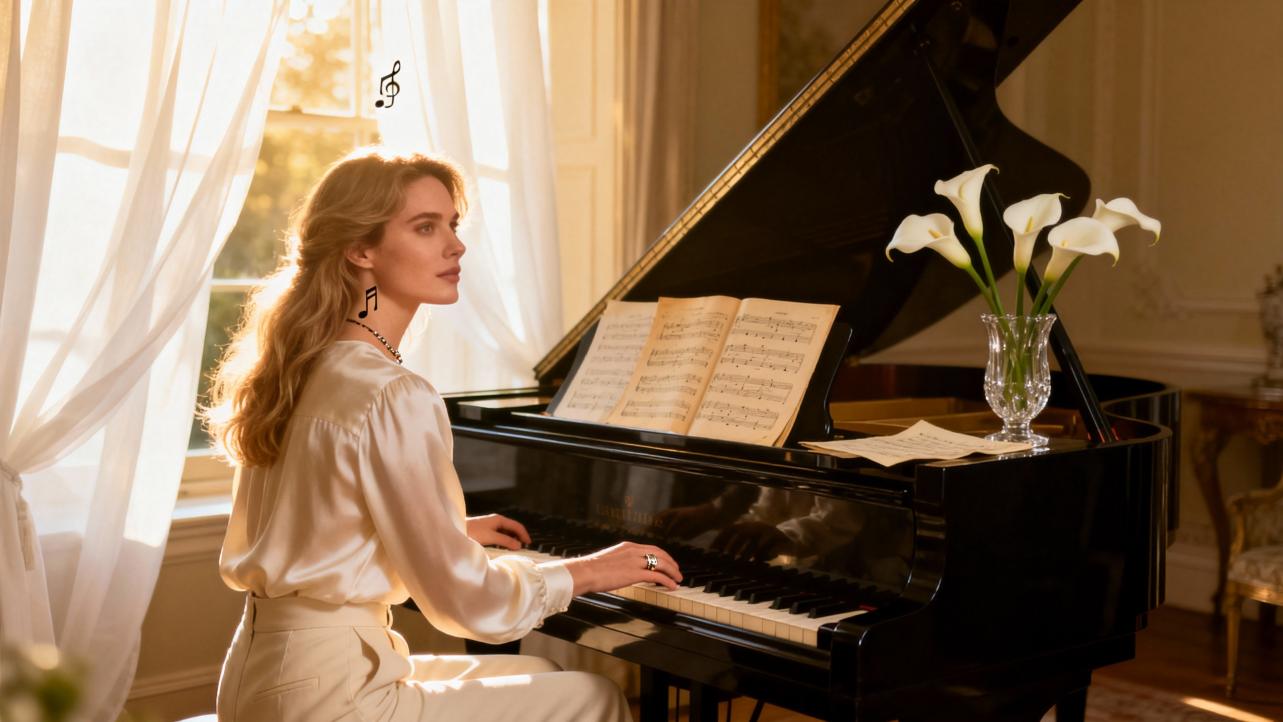
Another snapshot comes from a Facebook post in the “Pianists and Piano Lovers” group. The poster wears two rings while playing: a gold ring on the right middle finger, inherited as a grandfather’s wedding band, and a titanium ring on the left middle finger. They report that neither ring has ever been a distraction. This anecdote aligns neatly with the broader picture: lightweight, well-fitting rings in suitable materials can disappear into the background of a pianist’s awareness.
Taken together, these experiences show the spectrum of sensitivity. Some pianists can wear two rings on middle fingers and never notice them. Others need the thinnest band imaginable—or a flexible silicone ring—to feel proper control. The right jewelry is the piece that vanishes for you.
Choosing Jewelry That Does Not Affect Your Keyboard Performance
If you are drawn to jewelry but committed to uncompromised playing, certain selection habits serve you well.
Begin with honesty about your own sensitivity. If you already know that you are distracted by sleeve seams or wristwatches, aim for the lightest and thinnest possible designs on your hands. The WeddingBee pianist’s experience suggests that a very thin band with a simple solitaire or a delicate eternity ring can work even at a professional level, as long as the profile is low.
Next, choose metals that are kind to skin and keys. Titanium, stainless steel, tungsten carbide, platinum, palladium, and high-purity gold (especially around eighteen karats and above) all appear in multiple sources as highly tarnish resistant. They resist the dark discoloration and chemical reactions that Brite and Blake Bros describe as tarnish: reactions with water, sweat, chemicals, or air that can leave marks and cause irritation. Hypoallergenic options such as titanium, stainless steel, tungsten carbide, and noble metals like platinum and palladium are particularly helpful if you have sensitivities or play long sessions.
Consider the setting and silhouette with the keyboard in mind. Low-set stones, smooth edges, and bands that do not flare wide between the fingers reduce the chance of catching or bumping the keys. Remember the Piano World cautions when playing instruments that are not your own: it is courteous to avoid dramatic glissandi or heavy hand movements with large rings, both for your safety and for the instrument’s protection.
Decide where you want your symbolism to live. If you cannot stand anything on your fingers while practicing the most demanding repertoire, you might reserve rings for teaching, lighter pieces, or life away from the bench and instead wear your musical identity as a pendant. G-clef necklaces, functional audio jack pieces, or harmonica pendants described by Bellaforma, DJ.Style, Tinsel, and ThinkGeek give you a way to keep music visibly close without touching your hands at all.
Finally, listen to early warning signs from your body. As Jewelsplint makes clear, stiffness, mild pain, or hyperextension are signals, not badges of honor. If you find yourself adjusting rings constantly, rubbing irritated skin, or noticing fingers that lock or snap, it may be time to redesign your jewelry choices or introduce supportive devices such as ring splints before a small discomfort becomes a long-term injury.
Caring for Tarnish-Resistant Jewelry in a Pianist’s Life
Even the most durable, tarnish-resistant metals benefit from straightforward care, especially when worn in the intense, repetitive context of piano playing.
Resources like Atolea, Blake Bros, Brite, and Smart guides on tarnish-free jewelry converge on a simple routine. Clean pieces periodically with mild soap and warm water, using a soft brush for crevices, then dry them with a soft cloth. Store jewelry in a cool, dry place—ideally in soft-lined boxes or individual pouches. Silica gel packs or anti-tarnish strips in storage boxes help reduce humidity during longer breaks, which slows any chemical reactions even on resilient metals.
Many experts recommend removing jewelry before swimming, cleaning, or applying lotions, perfumes, and hand sanitizers. Chlorine, saltwater, and harsh household chemicals can dull or damage even highly resistant metals such as platinum, titanium, and stainless steel over time. For pianists, this routine often fits naturally around practice schedules: slip rings off before deep cleaning the house or heading to a chlorinated pool; slip them back on for teaching and rehearsal.
For high-end pieces in gold, palladium, or platinum, occasional professional cleaning and inspection keep settings secure and finishes refined. Given that many pianists choose thin, delicate designs to preserve comfort, periodic checks with a trusted jeweler are a worthwhile insurance policy.
FAQ: Common Questions Pianists Ask About Jewelry
Can I safely wear my wedding ring while playing piano?
Community experiences suggest that many pianists do play comfortably with a ring, provided it is thin, low-profile, and well fitted. The professional-level players in the WeddingBee discussion chose very slender bands with modest stones and reported that they could play and teach for hours daily. If your ring feels bulky, catches on keys, or makes you hesitate before certain gestures, consider resizing, redesigning to a slimmer profile, switching to a lighter metal like titanium or palladium, or using a silicone band during heavy practice periods.
Which metals are best if I have sensitive skin and play a lot?
Jewelry references from Brite, Blake Bros, Atolea, and Jewelry By Johan consistently highlight titanium, stainless steel, tungsten carbide, platinum, palladium, and high-purity gold for their tarnish resistance and hypoallergenic qualities. Titanium and stainless steel offer a strong balance of durability, low maintenance, and skin safety at accessible price points. Platinum and palladium provide exceptional stability and prestige, while eighteen-karat gold balances purity with everyday durability.
Do finger weights and similar devices help or harm pianists?
An archived page from HearandPlay refers to a finger-weights set for piano students but does not include substantive content, recommendations, or data. In contrast, Jewelsplint offers detailed guidance on finger ring splints and their role in preventing overuse injuries. Given the lack of captured information about finger weights and the clear, medically oriented support for splints, it is wiser to treat ring splints as the better-understood option and to discuss any training device that adds resistance with a qualified teacher or health professional before using it extensively.
Jewelry at the piano is not a question of yes or no, but of harmony. When you choose metals that stay quiet on the skin, designs that respect the anatomy of your hands, and pieces that honor both your artistry and your instrument, jewelry ceases to be a compromise. It becomes part of your story: a ring that moves as cleanly as your scales, a pendant that sings your love of music before you play a single note, perhaps even a ring splint that quietly guards the future of your hands. The goal is simple and beautifully demanding—the only thing that should shape your sound is you.
References
- https://www.hearandplay.com/fingers.html
- https://www.alibaba.com/showroom/music-symbol-jewelry.html
- https://www.amazon.com/piano-jewelry/s?k=piano+jewelry
- https://bellaformajewelry.com/products/musical-note-necklace?srsltid=AfmBOopugXBa30iWlNkVNwtr_NWhs3yqDqNpM8qFsqeUYudA6OEvZIkJ
- https://smart.dhgate.com/expert-tips-for-choosing-high-quality-jewelry-that-stays-tarnish-free-and-lasts-longer/
- https://dj.style/products/gunmetal-dj-necklace-with-functioning-1-4-aux-adapter?srsltid=AfmBOorJ2w8MitqzZE2AeiRIFTjZFPhibnXPPOGmiQHRoc6WickDvZIE
- https://www.ebay.com/itm/357657737612
- https://www.etsy.com/market/mens_piano_ring
- https://jewelrybyjohan.com/collections/rings-for-musicians?srsltid=AfmBOoqjEgzAU8oJDJ6TV0uZ1PKG4d6aRPP5mVfG3vJqILSckDKHF2UP
- https://www.jewelsplint.com/protect-your-fingers-how-finger-ring-splints-help-musicians-prevent-long-term-injuries/