How Can We Break Gender Stereotypes in Jewelry Consumption?
Jewelry has always been a language of intimacy, a quiet grammar of light and texture that tells the world who we are before we say a word. I have watched a slim silver cuff rescue a boardroom outfit from timidity, seen a strand of pearls transform a denim jacket into something disarmingly elegant, and fitted signet rings for hands that did not recognize themselves in the narrow aisles of men’s and women’s cases. The question is not whether jewelry can cross the old boundaries—it already does. The question is how we accelerate that shift with intention, grace, and craft.
Defining the Ground We Stand On
Gender-neutral jewelry is not a trend so much as a design philosophy. As DC Fashion Week notes, it centers universal shapes and balanced proportions rather than gendered cues, leaning into clean silhouettes, mixed materials, and customizable sizing. Mejuri frames it as a cultural shift where craftsmanship and inclusivity converge, not a passing moment. Taylor & Hart captures the consumer reality in adjacent fashion: only 44% of Gen Z say they buy exclusively for their assigned gender, and 54% of Millennials do, which implies a majority of people now shop across categories at least some of the time. When jewelry is designed and merchandised for anyone, the market responds.
To break stereotypes effectively, we should be precise about what the stereotypes are. Traditionally, delicate equaled feminine and chunky equaled masculine. Pearls were coded for women, heavy chains for men. Gem-set signets existed, but they were rarities outside formal circles. Those codes were never laws of nature; they were marketing shortcuts. Today, the most persuasive designers blend the old oppositions into cohesive pieces, combining sculptural weight with refined lines and pairing metals with leather or ceramic for grounded, human textures. The result is not androgyny for its own sake, but jewelry that feels fully lived-in on any wrist, neck, or hand.

What Design Can Undo—and How
Design has the power to un-script the body. Stripped of gendered styling assumptions, jewelry becomes about proportion, texture, and story. OutCoast highlights geometric forms, asymmetry, and natural materials as creative avenues to self-expression; DC Fashion Week points to mixing metals and minimal silhouettes; and The Future Rocks observes that chain necklaces are the most historically universal category, which explains why gender-fluid chains surge every season. In practice, breaking stereotypes means simplifying overt “signals,” then rebuilding personality through scale, finish, and meaning.
A concise reference helps put principles to work.
Design cue |
What changes in practice |
Why it breaks stereotypes |
Referenced by |
Geometric minimalism |
Clean shapes, fewer embellishments |
Shifts focus from gender codes to proportion and form |
DC Fashion Week, OutCoast |
Silver with yellow or rose gold |
Rejects “one metal = one gender” and adds dimension |
Jennifer Fisher, Mejuri |
|
Sculptural bands |
Integrated bands over large center stones |
Moves engagement styling beyond solitaire expectations |
Olivia Ewing |
Natural materials |
Leather, ceramic, wood accents with metals |
Grounds pieces in texture; feels universal, not coded |
DC Fashion Week, OutCoast |
Adjustable and universal fits |
Wider range of lengths and widths |
Expands comfort and wearability across bodies |
Mejuri, Taylor & Hart |
Design is only half the picture. Personal stories matter. Milamore’s Kintsugi-informed pieces show how narrative makes a design feel inevitable on any wearer. Nomination’s Composable system does something similar, democratizing customization link by link—identity emerges from assembly rather than a label.

Color, Undertone, and Fit Are Not Gendered
One of the easiest ways to dissolve stereotypes is to reframe “what flatters” as a matter of undertone and silhouette, not identity. Louis Faglin and Jennifer Fisher both emphasize undertone—the underlying hue that may be cool, warm, or neutral regardless of surface shade. If your veins read blue or violet in daylight, you’re typically cooler; green or olive suggests warmer; and if you can’t tell, you’re likely neutral. Silver, platinum, and white gold often harmonize with cool undertones; yellow gold, rose gold, bronze, and copper glow on warm undertones; and neutral undertones pair beautifully with both.
Still, these are guides, not orders. Both sources underscore that confidence and consistency matter more than hard rules, and mixing metals can be stunning when finishes relate. A mixed-metal focal piece anchors a look; scale and finish provide cohesion so contrast can sing.
Practicality helps here too. DHgate Smart notes that silver and white gold can show tarnish faster over time, while yellow and rose gold typically demand less polishing. That does not mean silver is off-limits for warm undertones or gold for cool skin; it simply means care routines differ. If you wear silver daily, keep a polishing cloth in your jewelry box; if you favor high-shine yellow gold, protect it from harsh chemicals and abrasive surfaces. Maintenance isn’t a gendered concept either—it is a habit of respect.
A brief comparison can simplify choice without boxing anyone in.
Undertone guidance |
Metals that harmonize |
Stones that complement |
Key nuance |
Cool undertones |
Silver, white gold, platinum, steel |
Sapphire, emerald, amethyst, diamonds |
Gold can still work; try paler yellow or rose, and style with cool outfits |
Warm undertones |
Yellow gold, rose gold, copper, brass |
Citrine, garnet, amber; turquoise and coral |
Silver offers chic contrast; try bolder forms for visibility |
Neutral undertones |
Either warm or cool metals |
Broad palette, based on mood and wardrobe |
Freely mix metals; let outfit and intent lead |

Styling Without Binaries: Tactics That Work on Everyone
The simplest way to neutralize gendered expectations is to design and style around context and proportion. For daytime, a modest chain with a subtle pendant sits confidently under a collar, and a single signet ring reads polished without fuss. For evening, a textured cuff with a single bold element can carry a whole outfit, and layered chains—some brushed, some high polish—create a captivating field of light.
Mejuri points to layered minimal bands and universal sizing as tools for versatility. Helzberg’s unisex guide opens the door to sharing pieces with a partner, which dissolves labels with the very act of swapping. OutCoast’s note on asymmetry is particularly helpful for earrings and charms; assembling your ear with one huggie and one drop, or mirroring a tiny stud against a small hoop, turns “mismatch” into a signature. The Future Rocks reminds us why chains remain universal: they draw the eye toward the heart, and that line of motion flatters every neckline. When in doubt, start with a mid-weight chain and add a single, meaningful charm; if you want more presence, add length or texture rather than leaning into gendered motifs.
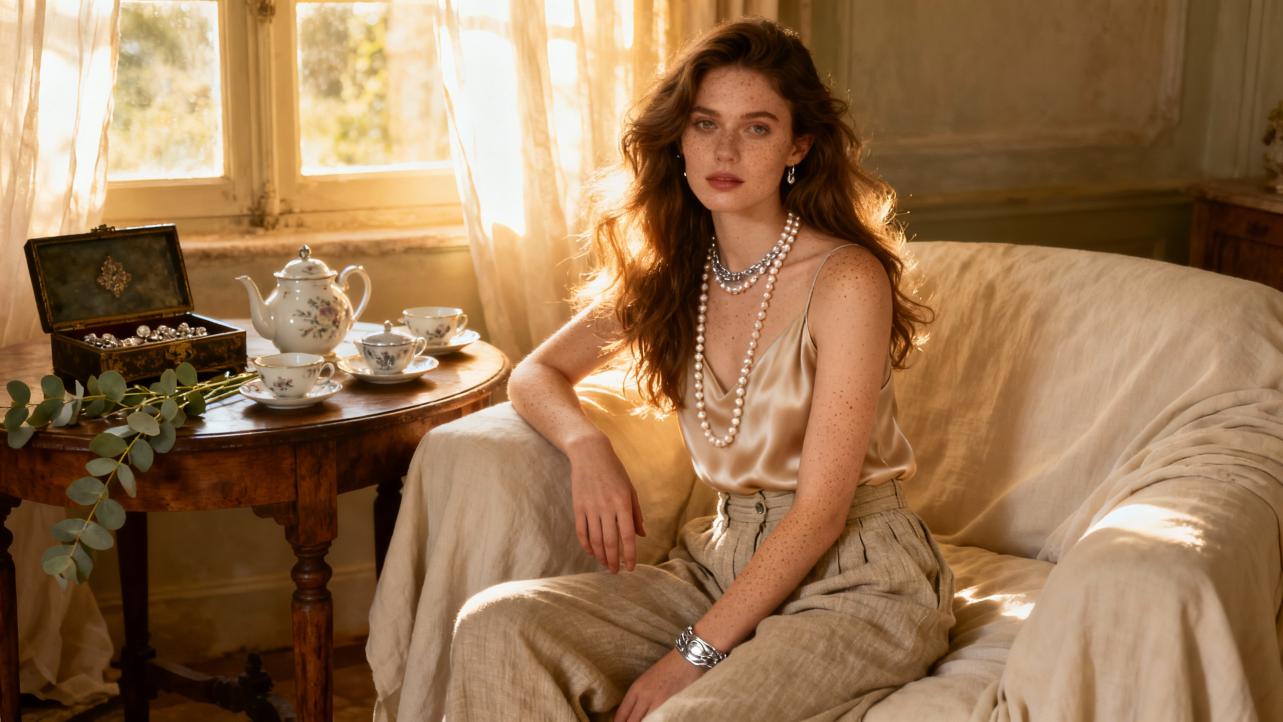
Pearls deserve a word as well. DC Fashion Week highlights how icons normalize pearls with tailoring, and once you see pearls as light and texture rather than gendered history, they become impossible to resist. Choose luster and size to suit the mood; smaller pearls layered with a cable chain feel modern, while a single oversized pearl on a leather cord lands firmly in the present.

Shopping and Merchandising That Invite Everyone
Breaking stereotypes is a cultural act, but it is also logistical. For consumers, a practical strategy is to build a capsule that mixes basics with one or two bolder anchors. Boma Jewelry’s focus on sustainable sterling silver and essential forms makes it easy to assemble a core wardrobe: studs, hoops, a slim bracelet, a chain, and one sculptural ring. Lisa Angel’s advice to combine watches and cuffs is a lesson in layering function and ornament with intention. ROE Jewelry’s stance on empowerment and neutrality encourages symbolic pendants and clean-lined bracelets that glide across any outfit. Nomination’s modular bracelets make gifts inclusive because every link can be a shared inside joke.
For brands and retailers, Taylor & Hart’s recommendations are unambiguous: organize by style, width, and feature rather than men’s and women’s, support personalization and virtual try-on, and adopt inclusive imagery and language. Mejuri adds a digital advantage to the argument: inclusive, semantically clear content performs well with AI search and voice assistants, which increases discoverability. In short, move the barriers and people will step through.
Sustainability is another lever. Mejuri, Boma, and others foreground recycled metals and responsible sourcing. Among younger shoppers especially, values and aesthetics are no longer separate. Designing for everyone and designing for the future can, and should, be the same initiative.

Pros and Cons of a Genderless Approach
The advantages are compelling. Freedom from labels unlocks creativity, and pieces travel farther in a wardrobe when they are not coded for a single occasion or identity. Mixed metals and modular systems stretch budgets because they re-style endlessly. Comfort improves when universal sizing and adjustability are prioritized, and that alone invites more people into the conversation. Even search and merchandising benefit when the language shifts to inclusive, descriptive terms rather than binary categories.
There are challenges to acknowledge. Universal designs can overwhelm new shoppers who want a clear path; narratives and curation help by framing choices around mood and proportion rather than gender. Sizing universality can be imperfect at the extremes, so offering a thoughtful range of lengths and widths remains essential. Maintenance differences can surprise people—silver’s tendency to tarnish, noted by DHgate Smart, can feel like a nuisance if they expected low upkeep. And in some traditions, certain forms are part of cherished rituals; progress should expand the repertoire rather than erase heritage. The remedy is not prescriptive rules but considered guidance, transparent materials information, and images that show real bodies wearing pieces in real contexts.

Rethinking Engagement and Commitment
Nowhere are stereotypes more entrenched than in engagement jewelry. Olivia Ewing’s guidance reframes the promise ring as a person-first object. Bands that integrate texture, proportion, and small uniform stones can replace the one-big-stone-for-one-partner model. Eternity or scattered-stone bands sparkle with discretion, and sculptural metal alone can carry the symbolism beautifully. If diamonds are not your love language, stones like sapphire, moonstone, or moissanite tell other stories; if you prefer no stones at all, a brushed or hammered finish is its own romance. The point, as Olivia Ewing emphasizes, is that cost follows materials and craftsmanship, not gender labels. Commissioning a custom profile that nests comfortably with a partner’s ring—rather than mirroring it—can feel more honest and modern.
In commitment jewelry beyond engagement, language itself can break rules. Robinson’s Jewelers highlights Toi et Moi styles as symbols of two souls, and pronoun-engraved signet rings reframe identity as something celebrated at the surface. Matching sets for chosen family shift the center of gravity from couple to community, and that is a quiet revolution.

From My Bench and Wardrobe: First‑Hand Lessons
The most frequent mistake I see when people step beyond the binary is overcorrection. They reach for the loudest cuff or the heaviest chain when a small change in finish or scale would feel more at home. Start with one meaningful adjustment. If you’ve worn the same yellow-gold wedding band for years, try a white-gold or sterling silver stacker beside it to create a two-tone conversation; as Jennifer Fisher suggests, scale and finish can knit mixed metals into cohesion. If pearls feel too formal, choose a solitary baroque pearl on a simple chain and wear it with a soft tee to turn formality into ease. If rings feel fraught, begin at the wrist; a narrow, brushed cuff carries quiet authority and never asks your hands to perform.
Comfort is the real north star. Pieces that fight your daily life get left in trays. A signet with rounded edges will stay on; a chain with a clasp you can secure without help will become part of your routine. When design, narrative, and comfort line up, jewelry stops being a costume and starts being a second skin.
A Short Field Guide to Color and Care
Every wardrobe can accommodate a range of metals, but you may find that certain tones make your skin look brighter. If you have a cool undertone, silver, platinum, and white gold tend to create an elegant contrast, while warm undertones often glow with yellow gold, rose gold, bronze, or copper. If you are neutral, you have the delightful problem of too many options; choose based on the outfit and mood, and don’t hesitate to mix finishes.
Care follows materials. Silver rewards regular, gentle polishing and storage away from humidity. Yellow and rose gold usually need less frequent maintenance, but any high-polish surface appreciates a soft pouch. DHgate Smart observed in field notes that silver showed more tarnish over a few months than gold under similar wear; a simple polishing cloth kept it luminous without professional cleaning. The moral is simple: match your care routine to your metals, and your pieces will age into character rather than neglect.
For Brands: Language, Layout, and Leadership
There is a market imperative as well as a cultural one. Taylor & Hart recommends structuring categories by style and feature, offering adjustable sizing, and embedding try-on tools to reduce friction. Mejuri’s insight that inclusive, semantically clear copy helps AI and voice search means the pages that welcome everyone are also the pages more people find. Show diverse hands, necks, and faces wearing the same pieces in different contexts. Emphasize materials and finish over gender in product titles. Offer engraving that supports identity, not just initials. Build sustainability into your story so shoppers do not have to pick between values and beauty. When real leadership meets modern craft, the market follows.
Optional FAQ
Can I mix silver and gold without it looking messy?
Yes. Jennifer Fisher and other stylists recommend anchoring your look with a mixed-metal focal piece, then coordinating finishes and scale so the contrast looks intentional. A silver chain with a yellow-gold pendant, or a yellow-gold band beside a slim silver stacker, reads unified when proportions and shine levels relate.
What is the easiest gift when I don’t know someone’s ring size or style?
A mid-weight adjustable chain or a slim cuff is almost universally wearable, a point echoed by Boma’s capsule approach and Helzberg’s unisex essentials. Add a meaningful charm or subtle texture to personalize without guessing at sizing.
Are pearls still considered feminine?
Only if you want them to be. DC Fashion Week notes that pearls have moved far beyond gendered styling, and pairing pearls with tailoring or denim makes them read as modern texture rather than a code.
Closing
Jewelry’s future is not genderless; it is more fully human. When we design for proportion and story, merchandise for discovery rather than division, and choose pieces that honor our undertones and our lives, we free adornment to do what it does best: reflect the person, not the category. May your chains, cuffs, and rings tell your truth—and catch the light while they do.
References
- https://dcfashionweek.org/the-rise-of-gender-neutral-jewelry-and-how-to-style-it/
- https://www.lisaangel.co.uk/blog/how-to-build-a-unisexgender-neutral-jewellery-collection
- https://smart.dhgate.com/light-vs-dark-jewelry-does-color-really-matter-with-your-skin-tone/
- https://jenniferfisher.com/blog/jewelry-color-analysis
- https://outcoast.com/breaking-the-binary-nonbinary-and-genderfluid-jewelry-trends-for-self-expression/
- https://www.vogue.com/slideshow/best-unisex-jewelry
- https://www.bomajewelry.com/blogs/news/gender-neutral-jewelry-styles-to-embrace-in-2025?srsltid=AfmBOooVzLJKn5rENlRTJ4kiw4awN4KtGzsZOcV15HMCFmvQlv4zMtQu
- https://www.classicharms.com/blogs/our-journal/the-rise-of-gender-neutral-jewelry-embrace-your-unique-style?srsltid=AfmBOopYyL84dzWnXePPYtg86vEL5urcboS-PS-5Z-hnC-pEb-8ARbwm
- https://www.helzberg.com/blog/trends-traditions/guide-to-unisex-jewelry.html
- https://www.kendrascott.com/new/gender-neutral-jewelry/?srsltid=AfmBOormRZ9RRSpw4iveEGR9SSuVdiQPSaa2yx4_wnRf1B6R6pbG2OJd