Eco‑Friendly Lab Diamond Necklaces: Statement Pieces with Purpose
The modern diamond necklace no longer needs to choose between breathtaking sparkle and a clear conscience. As a lifelong jewelry connoisseur who has set more pendants than I can count and evaluated stones under daylight, gallery lighting, and a jeweler’s loupe, I’ve watched the rise of lab-grown diamonds transform not only what we wear, but why we wear it. Eco‑friendly lab diamond necklaces offer a rare promise: unmistakable brilliance and meaningful impact, crafted for people who want their most radiant pieces to reflect their values as much as their style.
What “Ethical” Really Means in Diamond Jewelry
In jewelry, “ethical” is not a slogan; it is a set of end‑to‑end practices that respect people, communities, and the planet. That includes traceable supply chains, fair wages, safe working conditions, responsible water and waste management, and honest disclosure about origin and treatments. Bondeye Jewelry’s primer on ethical diamonds underscores the difference between “conflict‑free” and genuinely ethical sourcing. The Kimberley Process verifies that rough diamond shipments are not funding violence, but it does not speak to worker protections, wages, or environmental stewardship. The Responsible Jewellery Council audits broader practices around human rights, environmental care, and disclosure. In this context, lab‑grown diamonds can be part of an ethical approach when producers are transparent and, crucially, power their growth with cleaner energy.
Necklaces occupy a special place in the ethics conversation because they join a gemstone with precious metal—two supply chains that can either amplify or offset one another. Choosing recycled gold for the setting, traceable growth for the diamond, and clearly documented finishing practices turns a pendant into a truly responsible statement piece.
Lab‑Grown Diamonds, Defined
A lab‑grown diamond is a diamond in every technical sense: pure carbon, bonded in a cubic crystal lattice with a hardness of 10 on the Mohs scale, and the same fire, brilliance, and durability as mined stones. These diamonds are created in controlled facilities using either High Pressure High Temperature (HPHT) or Chemical Vapor Deposition (CVD), reaching gem quality within weeks rather than geological epochs. As Diamondrensu and other educational sources explain, visual differences to the naked eye are nonexistent; identification typically requires specialist instruments, and many stones carry laser inscriptions that match their grading reports from labs such as GIA or IGI.
HPHT vs. CVD at a Glance
Aspect |
HPHT |
CVD |
Typical strengths |
Often strong color performance |
Often strong clarity and purity |
Common inclusions |
May show metallic inclusions from growth |
Fewer growth-related inclusions; can be Type IIa |
Color tendencies |
Can achieve appealing near‑colorless to fancy |
Often very high purity; post‑growth treatments fine‑tune color |
Pricing dynamics |
Frequently more affordable |
Often priced for higher clarity and purity |
Practical note |
Great for vivid fancy colors when targeted |
Great when you prioritize ultra‑clean appearance |
These differences are not better or worse; they are trade‑offs you can harness to suit your taste, budget, and design. When I’m advising clients on pendants that sit near the face, I often prioritize cut and clarity for CVD stones that perform brilliantly in everyday light, and color-forward HPHT options for vivid personality pieces.

Why Lab‑Grown Appeals to the Eco‑Conscious Neckwear Collector
The eco case for lab-grown begins with what is avoided. Traditional mining can disturb land, strain water resources, and risk pollution when oversight fails. Reports cited by Keyzar note that diamond mining can move substantial earth—sometimes modeled as hundreds of tons per carat—while John Atencio’s education materials emphasize the real footprint that open‑pit activity can leave on local landscapes. By contrast, lab growth occurs in compact facilities, which reduces habitat disruption and affords tighter control over waste streams.
Carbon emissions are another part of the equation. Limelight Diamonds highlights the possibility of lower footprints, especially when growth is powered by renewables. Industry claims vary widely, and Frost & Sullivan has been cited by brand sources asserting orders‑of‑magnitude differences between mined and grown emissions per carat. Results are highly dependent on a producer’s energy mix, efficiency, and geography. Diamondrensu offers a balanced caution: lab‑grown is not automatically green; the advantage depends on cleaner energy and transparent reporting. That said, the direction of travel is encouraging. More producers are shifting to renewable power, third‑party carbon accounting, and clearer documentation, and that momentum supports your intent to choose better.
There is also the social dimension. Lab‑grown production avoids the risks of funding conflict and can offer safer, documented labor conditions under a single roof. While the Kimberley Process helps reduce conflict diamonds, Bondeye Jewelry and other sources remind us that ethical excellence demands broader commitments—fair wages, community investment, and environmental restoration—that you should still expect from any brand you support.
A Balanced View: Trade‑Offs to Consider
Every choice carries nuance, and part of ethical buying is acknowledging it. Resale value for lab‑grown diamonds has trended lower than for comparable natural diamonds, as Daniel Diamonds and Varnya note. If your aim is a future trade‑in or investment‑grade rarity, natural stones—especially large, rare‑color diamonds—still hold the collector’s position. If your aim is wearing beauty you love, with modern transparency and a gentler footprint, lab‑grown is compelling. Also consider energy sources. A lab‑grown diamond powered by fossil‑heavy grids may not deliver the eco advantage you’re seeking. Ask detailed questions, and reward the producers who answer them clearly.

Necklace Design Decisions With Purpose
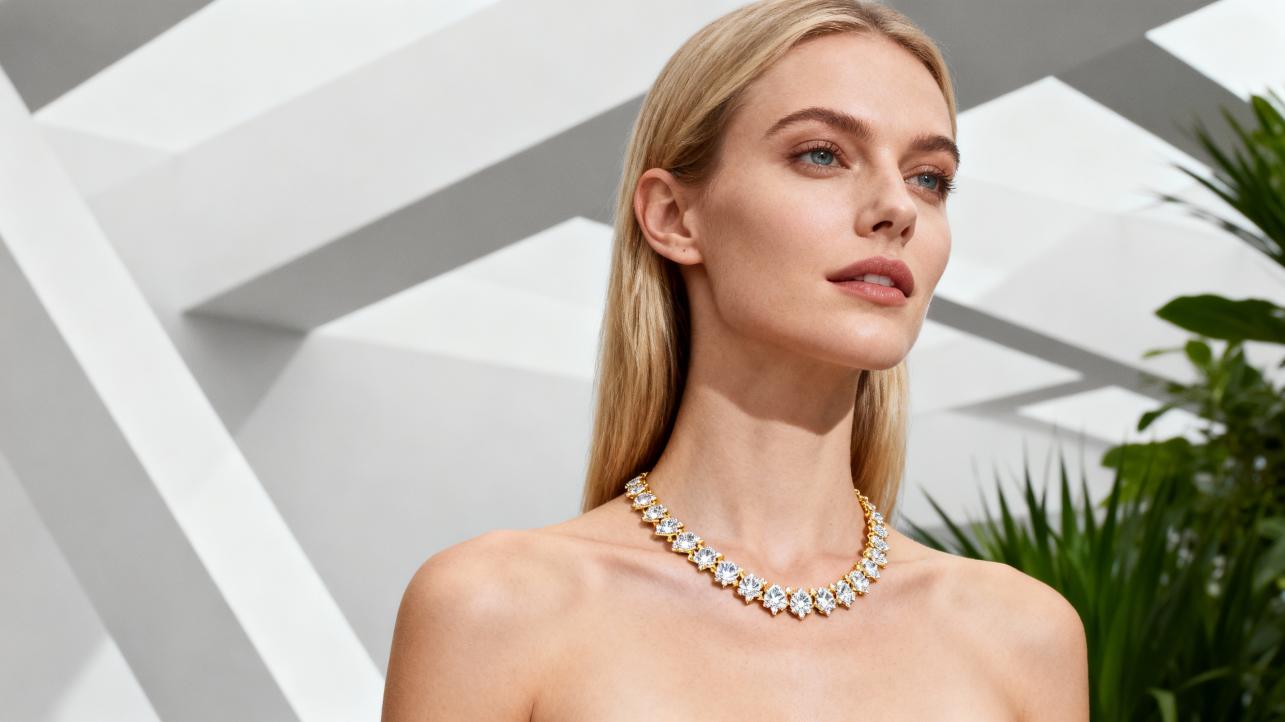
A necklace rests close to the face, so its light return, color, and proportion matter in daily life. Lab‑grown diamonds give you elbow room to optimize for beauty because they typically cost less than mined equivalents. For round stones, I encourage Excellent or Very Good cuts to maximize scintillation in office and outdoor light. For fancy shapes—oval, pear, cushion, princess—focus on symmetry, polished facets, and well‑balanced proportions that avoid windowing or dark bow‑ties.
Pendant settings shape both style and durability. A four‑ or six‑prong solitaire maximizes light, while a bezel provides sleek modern protection for active days. A halo amplifies the perceived size and spreads sparkle beautifully across the décolletage. For a “statement with purpose,” consider bold bezels in recycled yellow or rose gold for warmth, or a cleverly engineered hidden halo that punches above its carat weight without feeling ornate.
Chain length is a silent stylist. A 16‑inch chain sits higher, framing a collarbone elegantly; an 18‑inch chain offers a classic, easy drape for most necklines. If you plan to layer, keep bail sizes and chain gauges coordinated so pieces don’t tangle. For everyday wearers, I suggest a secure lobster clasp and a chain with soldered links that resists pulls from sweaters and scarves.
Fancy‑color lab diamonds—pinks, blues, yellows, and greens—expand what a “signature necklace” can be, without the heavy environmental cost of searching for rare natural colors. Brand sources such as Britta Dietsche and Keyzar showcase how these lab‑grown hues can deliver romance and modernity at once.
Statement Pieces, Responsibly Made
The diamond is half your story. The metal is the other half. When a pendant is cast in recycled gold, the design sidesteps the intensive impacts of new metal extraction. John Atencio describes using recycled precious metals sourced from components such as circuit boards, which, in skilled hands, become refined, luminous settings. The Good Trade’s editorial guidance also recommends recycled metals, documented provenance, and third‑party credentials as signals that a brand’s sustainability claims are more than surface‑level.

How to Evaluate Quality, Sustainably
The 4Cs still rule, but lab‑grown pricing shifts your strategy. Because you are not paying a scarcity premium, you can prioritize the C that delivers the most visible beauty for neckwear: cut. For round lab diamonds in necklaces, I aim for Excellent cut and clean symmetry. In clarity, VS2 often strikes a sweet spot where inclusions are not visible to the naked eye at typical viewing distances. For color, D through F gives crisp white brilliance, while G offers near‑colorless value with minimal perceptible warmth in most lighting. Carat weight affects presence; lab‑grown affordability widens the field from everyday 0.50 ct to high‑impact 2.00 ct and beyond, depending on your style and chain.
Grading matters as much as ever. Reputable reports from GIA or IGI verify the cut, color, clarity, and carat, and the report number should match the laser inscription. In my studio, I always compare the hard copy or digital report to the stone under a loupe; it is an easy, reassuring moment in the buying journey.
Recommended Starting Targets for Necklaces
Factor |
Practical target for everyday elegance |
Cut (round) |
Excellent or Very Good |
Clarity |
VS2 or better for eye‑clean appearance |
Color |
D–F for crisp white, G for value near‑colorless |
Carat |
0.75–1.50 ct for daily wear; larger for bold statements |
Metal |
Recycled 14K or 18K gold; consider bezel for active lifestyles |
Use these as a starting point, not a rulebook. Your taste, skin tone, wardrobe, and the distance at which a pendant is typically seen will inform fine‑tuning.
What to Ask Before You Buy
Provenance and process define whether a necklace earns the eco‑friendly label. Ask for documented origin and chain‑of‑custody for the diamond. Inquire about the growth method and, importantly, the energy mix used to power it; brands referencing renewable energy or credible carbon accounting should be able to explain their approach. Confirm membership or alignment with standards such as the Responsible Jewellery Council, and, for natural stones in mixed collections, insist on Kimberley Process compliance. Bondeye Jewelry recommends pressing for audit frequency and supplier vetting policies; that same diligence applies to lab‑grown sources.
Do not forget the metal. Ask whether the gold is recycled, and request documentation. If you purchase in the United Kingdom, Diamonds Factory notes that hallmarking by an Assay Office is required above certain weights; internationally, verify purity markings and brand guarantees appropriate to your jurisdiction. Close the loop by reviewing the brand’s return window, warranty, and service options. Ethical intent should extend into customer care.

Care and Longevity for Daily‑Wear Necklaces
Diamonds are extraordinarily hard, but pendants are still jewelry, not armor. I recommend a simple home ritual: after wear, wipe the pendant and chain with a lint‑free cloth to remove skin oils. Every few weeks, soak briefly in warm water with a drop of mild dish soap, then brush behind the stone with a soft brush and pat dry. Avoid chlorine and abrasive cleaners that can erode settings and dull finishes, and remove necklaces for swimming, contact sports, and gardening. Store pieces separately to prevent tangling and micro‑abrasions. Schedule periodic inspections to tighten prongs and evaluate clasps; a five‑minute check can preserve decades of worry‑free wear.
Pricing, Value, and the Market
Lab‑grown diamonds typically retail for less than mined stones of comparable visible quality, often on the order of 30–50% less according to education content from Happy Jewelers, Keyzar, and others. That efficient pricing is one reason you see more substantial center stones in lab‑grown pendants without breaching budget. Market watchers, including Yahoo Finance, have reported strong growth trajectories for lab‑grown diamonds over the last few years, and editorial sources such as Varnya estimate meaningful market share gains by 2023. New World Diamonds describes a consumer shift toward sustainability and transparency, particularly among younger luxury buyers who see “conscious luxury” as both a personal value and a social signal.
One caveat deserves repeating: lab‑grown resale is generally lower, and in my experience it should not drive a necklace purchase. The right reason to choose a lab‑grown pendant is to wear more beauty, more often, with clearer documentation and a lighter footprint.

Quick Comparison: Lab‑Grown vs. Mined vs. Recycled
Dimension |
Lab‑Grown Diamond Necklace |
Natural Diamond Necklace |
Recycled Diamond Necklace |
Environmental impact |
Lower land disturbance; footprint depends on energy mix; potential for renewable power (Limelight, Diamondrensu) |
Land and habitat disruption; heavy water and energy use; oversight varies by region |
Lowest new extraction; leverages existing stones; minimal new mining |
Social considerations |
Factory labor with potential for safer, documented conditions; no conflict financing |
Requires rigorous controls to avoid conflict and abuses; traceability can be complex |
Extends life of existing gems; provenance depends on original stone |
Traceability |
Often clear, single‑site growth with laser inscription and lab reports |
Varies; Kimberley Process covers rough shipments, not all downstream steps |
Varies; best when paired with reputable documentation |
Price/value |
Typically 30–50% less for similar visible quality |
Higher pricing for rarity; stronger long‑term collector appeal |
Often favorable pricing; strong sustainability story |
Aesthetic range |
Broad, including fancy colors and larger sizes within budget |
Broad, with natural rarity in colors and sizes |
Broad; shaped by what is available in estate and reclaimed channels |
Future of Traceability and Proof
Provenance is getting smarter. Bondeye Jewelry points to the rising use of blockchain to record a diamond’s journey. While adoption is uneven, the trend is unmistakable: stones with digital birth certificates, laser inscriptions tied to grading reports, and supply‑chain data that your jeweler can actually show you. As a buyer, this future benefits you. As a steward of your own jewelry box, it also sets a standard that your next piece should meet or surpass.

Real‑World Sourcing Notes and Caveats
Even today, transparency is rarely perfect. Daniel Diamonds notes that full end‑to‑end traceability for natural diamonds can be difficult to guarantee, with Canadian stones often cited as clearer because of government oversight and origin documentation. In the lab‑grown world, claims about carbon footprints vary widely; some brand posts cite Frost & Sullivan to argue dramatic emissions differences, while other educators emphasize that results hinge on the producer’s energy. My take, after many years reading reports and asking uncomfortable questions across the counter, is simple: do not rely on marketing alone. Read the grading report, review the brand’s sourcing page, ask how the diamond was grown, and request details about power and audits. If a seller cannot answer clearly, take your budget and your values elsewhere.
Takeaway
An eco‑friendly lab diamond necklace can be both a conversation starter and a confident daily companion. When you marry a well‑cut, responsibly grown diamond with recycled metal and honest documentation, you are not compromising; you are elevating. Choose your sparkle intentionally, and let your necklace speak for your style and your standards every time you clasp it.
FAQ
Are lab‑grown diamonds real?
Yes. Lab‑grown diamonds are chemically, physically, and optically identical to mined diamonds, with the same hardness and brilliance. Education from Diamondrensu, Happy Jewelers, and Wondr Diamonds aligns on this definition, and established grading labs such as GIA and IGI issue reports for lab‑grown stones.
Will anyone be able to tell that my pendant uses a lab‑grown diamond?
Not by eye. Distinguishing origin typically requires specialized instruments. Many lab‑grown diamonds carry laser inscriptions tied to their grading reports, which is how professionals verify identity and details.
Do lab‑grown diamond necklaces hold up to everyday wear?
They do. The diamond itself is as hard and durable as a mined stone. Longevity depends on the setting and your care habits—clean gently, avoid harsh chemicals and impact, and have prongs and clasps checked periodically.
What is the main trade‑off compared with natural diamonds?
Resale value is generally lower for lab‑grown, and natural diamonds retain advantages in rarity and collector appeal. If your priority is daily beauty and ethical transparency at a friendlier price, lab‑grown excels. If investment-grade rarity matters, consider natural.
Are eco claims around lab‑grown diamonds reliable?
Sometimes. Limelight Diamonds and others highlight renewable‑powered growth with lower footprints, while Diamondrensu cautions that benefits depend on energy mix and reporting. Ask about power sources, audits, and certifications, and favor producers and retailers who provide specifics rather than slogans.
Which settings are best for an active lifestyle?
A bezel protects the girdle and travels well; low‑profile prongs can also be secure if inspected regularly. Pair with a sturdy chain and soldered links, and choose 16 or 18 inches based on your preferred drape and layering plans.
Selected Sources
Responsible Jewellery Council; Kimberley Process; Bondeye Jewelry; Diamondrensu; Happy Jewelers; Frost & Sullivan; Limelight Diamonds; John Atencio; Daniel Diamonds; Yahoo Finance; Varnya; The Good Trade; GIA; IGI; Diamonds Factory; Wondr Diamonds; Keyzar; Gem Stone King; Rêve Diamonds; Shop LC; New World Diamonds; Mvraki.
References
- https://www.altinbas.us/collections/lab-grown-diamond-necklaces?srsltid=AfmBOor7knl_9aCNRwCDmcWhpORtKwfBeTR2NGC7syd58ypMBndForEO
- https://www.diamondsfactory.com/diamond-pendants/lab-diamond
- https://gemstoneking.com/collections/lab-grown-diamond-necklaces?srsltid=AfmBOorr2Oqnmal5TFzY9UjEm8uViucbkG6t-m36ti9heICgbYUMt0pZ
- https://mvraki.com/collections/necklaces?srsltid=AfmBOooplV6DeR_dRarX9nDOVWsS8ElIHjmRkhBrw7Aw0d8sSeWInfl3
- https://www.shoplc.com/c/lab-grown-diamond-pendants?srsltid=AfmBOorPsqPhyZuWihQRBcNtXzw0kxx26ZJAd5Lke3jC1_0BAZjE4pOz
- https://thesolitario.com/blog/6-reasons-to-buy-lab-grown-diamonds
- https://bondeyejewelry.com/blogs/guides/the-ultimate-guide-to-ethical-diamonds?srsltid=AfmBOortiWvTWwE5BQZzTe8trIectwlTVGLBZFc48txCi6vRQxEb8M3U
- https://www.brilliantearth.com/lab-grown-diamonds/buying-guide/
- https://brittadietsche.com/blogs/news/guide-for-lab-grown-diamonds
- https://danieldiamonds.com/blogs/news/how-to-choose-an-ethical-sustainable-conflict-free-engagement-ring?srsltid=AfmBOorr_n0Ao0GJ8bp55cD5u9u0TwBmm0oH_O2X-nxNGoQsNiA7FJ2d