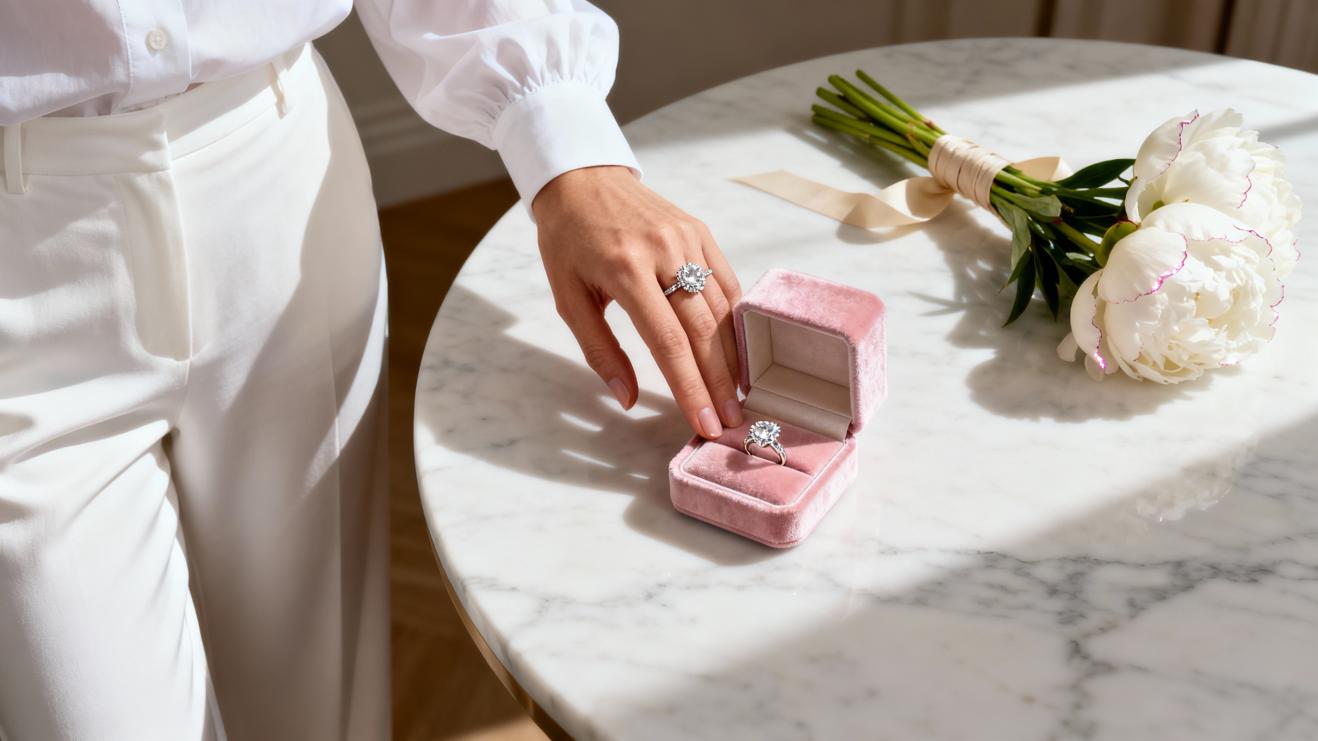
How to Explain Your Decision to Choose Lab‑Grown Diamonds to Conservative Elders
There is a particular hush that settles over a family living room when an engagement ring is announced. Eyes soften. Stories surface. Heirlooms are passed from palm to palm. As someone who has spent years guiding multi‑generational families through these moments, I have learned that conversations about lab‑grown diamonds are not only about gemstones. They are about values, legacies, and the way we honor both. If your elders lean traditional, your task is to meet them there—with respect, clarity, and facts that preserve the romance they cherish while explaining the responsibility you feel toward the world you share. This is a guide to help you do exactly that.
Begin With Shared Values
Start where your elders already agree with you. Lab‑grown diamonds do not have to be a break with tradition; they can be a way to uphold what tradition has always intended—love made visible, a promise made durable, and a family’s resources stewarded wisely. Acknowledge the symbolism that matters to them: the ring is a pledge, not a price tag. Emphasize that your choice keeps the spirit intact while aligning with modern information about origin, impact, and value. Framing your decision around continuity, not disruption, lowers defenses and opens minds.
Clarify What Lab‑Grown Diamonds Are
Real Diamond, Different Origin
A lab‑grown diamond is a diamond in every gemological sense. The American Gem Society notes that both lab‑grown and natural diamonds are pure crystalline carbon with the same optical and physical properties, including the famous hardness that makes diamond a 10 on the Mohs scale. The difference is origin, not substance. Natural diamonds crystallized deep in the Earth roughly 90–150 miles below the surface over immense spans of time; lab‑grown diamonds crystallize in high‑precision facilities within weeks. To the unaided eye, and even to trained jewelers without specialized instruments, they look the same. Independent labs can separate them with spectroscopy and pattern analysis, and reputable grading reports clearly disclose origin.
How Growth Works: HPHT and CVD
Two primary methods grow diamonds in the lab. High Pressure High Temperature re‑creates mantle‑like conditions by subjecting a tiny diamond seed to extreme pressure—on the order of hundreds of thousands of pounds per square inch—and temperatures well beyond 1,400°F. Carbon dissolves and re‑crystallizes onto the seed, forming a larger diamond. Chemical Vapor Deposition places a seed in a vacuum chamber with a carbon‑rich gas, then energizes the gas so carbon deposits onto the seed in successive atomic layers at roughly 1,300–2,400°F. In both cases, the result is a diamond crystal that is cut and polished by the same master craft techniques used for natural stones. GIA and the American Gem Society affirm that performance and durability are identical when quality is equal.
Address Common Misconceptions With Respect
You will earn trust by naming the questions your elders may be asking quietly.
Explain that “lab‑grown” is not a euphemism for simulants. Moissanite is silicon carbide and cubic zirconia is zirconium dioxide; both can be beautiful but are different materials with different optical behavior. A lab‑grown diamond is diamond—pure carbon in a cubic crystal lattice—so it has the same brilliance, fire, and wear resistance as a natural stone when cut well. If they worry that a jeweler could “spot it as fake,” reassure them that independent grading reports from GIA or IGI disclose origin and often include a laser inscription on the girdle for transparency. Without such documentation or specialized equipment, even professionals cannot reliably tell in a quick glance.
If longevity is the concern, answer simply: the diamond’s hardness does not depend on origin. A diamond will last for generations whether formed in a mantle or in a meticulously controlled reactor. Care is identical—routine cleaning, mindful setting design, and periodic prong checks.
When the conversation turns to ethics, honor the nuance. The Kimberley Process was created to prevent conflict diamonds, and the natural diamond industry states that most stones in the mainstream trade comply. At the same time, a BBC Future analysis has documented gaps in traceability and the narrow definition of “conflict,” and Global Witness and other NGOs have urged stronger oversight. Lab‑grown diamonds, by contrast, have a controlled origin that does not finance armed groups. Neither pathway is impact‑free. Responsible miners invest in land restoration and community programs; responsible growers publish energy and sourcing data. A thoughtful buyer can choose either path with integrity, and you have chosen the one that best aligns with your priorities.
Eco‑claims deserve candor as well. The fairest answer is that lab‑grown diamonds eliminate direct mining impacts but draw significant electricity, and the carbon footprint depends on the power grid. Hauser’s Jewelers’ review of industry data notes that efficient growers report roughly 250–750 kWh of electricity per polished carat, with less efficient operations higher. On water, lab production has a clear edge: an efficient lab‑grown carat can use around 18–19 gallons, versus roughly 119–132 gallons per natural carat when mining and processing are included. Carbon emissions vary widely. Analyses cited by industry reports show that lab‑grown diamonds made with renewable energy can have near‑negligible emissions, while fossil‑heavy production can be far higher, in some cases surpassing averages reported for natural stones. The Federal Trade Commission has cautioned against blanket “eco‑friendly” marketing without specific, verifiable disclosures. The upshot is simple: ask how the diamond was grown and powered, the same way you would ask where and how it was mined.
The Value Conversation Elders Care About
For many elders, value is measured across generations. This is where you can both acknowledge their instincts and explain yours. Natural diamonds carry geologic rarity and established secondary markets. Lab‑grown diamonds have surged in quality and availability, which has softened resale prices. Several jewelers, including Diamond Mansion and Casale Jewelers, note that lab‑grown diamonds typically cost substantially less than natural stones of comparable quality and that their resale markets are younger and more volatile. Many families find this compelling precisely because it allows them to invest in what they will actually wear and enjoy now rather than tie resources up in perceived future value.
A frank way to say it is that you are buying a ring for meaning and daily joy, not for speculative appreciation, and you prefer to put savings toward an exceptional cut, a durable setting, or shared life goals. If numbers help, some recent jeweler price snapshots have shown comparisons such as a 1‑carat natural diamond around $4,000.00 versus a comparable 1‑carat lab‑grown around $1,100.00, and a 2‑carat natural around $18,000.00 versus a 2‑carat lab‑grown around $2,500.00. While prices move with the market and exact specifications, the ratio illustrates why buyers can allocate more toward beauty—especially cut—without expanding the budget.

Lab‑Grown vs Natural at a Glance
Aspect |
Lab‑Grown Diamond |
Natural Diamond |
What it is |
Real diamond; same chemistry, optics, hardness (American Gem Society, GIA) |
Real diamond; formed in Earth’s mantle |
Origin |
HPHT or CVD growth in controlled facilities |
Crystallized 90–150 miles underground over geologic time |
Identification |
Visually identical; origin confirmed with specialized instruments; grading reports disclose “laboratory‑grown” |
Visually identical; grading reports disclose “natural” |
Price and access |
Lower entry cost enables higher cut quality or larger carat at a given budget (Diamond Mansion, Casale Jewelers) |
Higher prices reflect geologic rarity and established markets |
Resale dynamics |
Younger, less predictable secondary markets |
Better‑defined secondary markets, though resale depends on quality and demand |
Water use per carat |
About 18–19 gallons in efficient operations (Hauser’s Jewelers synthesis) |
About 119–132 gallons when mining and processing are included (Hauser’s Jewelers synthesis) |
Energy profile |
Electricity‑intensive; roughly 250–750 kWh per polished carat for efficient growers; footprint hinges on power mix (Hauser’s Jewelers synthesis) |
Energy use varies widely by mine and process; some operations report lower kWh per carat (Hauser’s Jewelers synthesis) |
Carbon footprint |
Ranges from very low with renewable power to high on fossil‑heavy grids; FTC urges careful claims (Hauser’s Jewelers; FTC guidance) |
Industry estimates place averages in the low hundreds of kilograms CO₂e per polished carat; varies by operation (Hauser’s Jewelers synthesis) |
Land/waste |
Negligible land disruption; roughly 0.07 sq ft and ~1 lb waste per carat cited in some analyses (Hauser’s Jewelers synthesis) |
Land‑intensive; around 100 sq ft disturbed and ~6,000 lb mineral waste per carat cited in some analyses (Hauser’s Jewelers synthesis) |
These are directional comparisons rather than absolutes. The responsible choice in either category is the one you can document and stand behind.
A Conversation Script You Can Adapt
Invite your elders into the process rather than presenting a verdict. You might say that you treasure the tradition they taught you—a ring that symbolizes an unbreakable promise—and that you also want the ring to reflect how your generation approaches stewardship. Explain that you chose a real diamond that was grown rather than mined so you could prioritize an exemplary cut, fine craftsmanship, and a setting built to last, while staying mindful of origin and impact. Offer to show the grading report and the laser inscription that documents the stone’s identity, just as you would with a natural diamond. If an heirloom exists, include it. Use a lab‑grown center stone in a setting that echoes the family piece, or incorporate heirloom side stones to connect past and present. When elders see that you are not discarding legacy but curating it, they tend to listen differently.
Buying Well: What to Show Your Elders
Certification and Disclosure
Bring the paperwork to the kitchen table. A grading report from GIA or IGI should clearly state “laboratory‑grown” and list the 4Cs. Many lab‑grown diamonds have laser inscriptions that correspond to the report number, an easy way to demonstrate transparency. The American Gem Society recommends reviewing the report language and confirming origin on appraisals and insurance documents. Documentation reassures elders that nothing is being hidden.
Quality You Can See
Help them see what you chose with intention. Cut governs brilliance more than any other C. A well‑cut lab‑grown diamond will outshine a poorly cut natural stone at a glance, which is often the moment when skepticism softens. If you have flexibility thanks to lower prices, allocate toward excellent cut proportions and a setting that protects the stone for daily wear. Consider a side‑by‑side comparison with a jeweler’s loupe to talk through what your eyes perceive.
Vendor Transparency and Policies
Ask and share specifics you would want as a steward. For lab‑grown diamonds, request information on the growth method, any post‑growth treatments, and the producer’s energy mix. For natural diamonds, ask about provenance, Kimberley Process compliance, and environmental programs. Either way, explain the retailer’s return window, inspection/maintenance schedule, and upgrade policy. Show that this decision is as pragmatic as it is principled.
Insurance and Documentation
Insure the ring, and list origin and report numbers on receipts and appraisals. This is not only practical but also demonstrates the seriousness with which you’re treating the asset—another point that earns confidence from traditionalists.
Care and Longevity
Daily life does not distinguish between origins, and neither does care. Clean with a gentle solution formulated for fine jewelry or mild dish soap and a soft brush. Avoid hard blows to the girdle and sharp prongs, and have a jeweler check the setting periodically. Before any repair or resizing, disclose that the diamond is laboratory‑grown so the bench jeweler can choose appropriate temperatures and techniques. Properly set and maintained, a lab‑grown diamond will become part of your family’s story in precisely the same way a natural diamond does—through birthdays, holidays, and ordinary Tuesday dinners that become the memories you carry.

Pros and Cons in Plain View
Advantages |
Considerations |
Same beauty, hardness, and wear for everyday life as natural diamonds; independent labs confirm identity and grade quality |
Secondary markets for lab‑grown stones are younger and often less robust; buy for personal meaning rather than expected appreciation |
Lower entry cost allows you to prioritize superior cut or a more substantial carat without overspending |
Energy use can be high; environmental benefit depends on the power grid and producer disclosures |
Transparent, controlled origin removes the risk of financing conflict; conflict‑free by origin |
Some traditionalists still equate geologic rarity with prestige; sensitive communication helps bridge values |
Often lower water footprint and negligible land disruption per carat compared to mining |
Marketing claims around sustainability require scrutiny; look for verifiable data rather than slogans |
How Generations View the Choice
Cultural attitudes toward diamonds are evolving. The Cut Jewellery observes that Baby Boomers and Gen X often prize natural diamonds for their heirloom resonance, while Millennials and Gen Z lean toward lab‑grown options that align with ethics and accessibility. Vogue’s recent feature reframes the debate from “authenticity” to “what value means to you,” noting that chemically identical lab‑grown diamonds challenge old assumptions. Communities like Weddingbee are filled with owners who report delight with their lab‑grown rings and relief that their budget could deliver the look and quality they wanted. If your elders wonder whether choosing lab‑grown diminishes the symbolism, you can point out that modern couples are choosing in ways that reflect both their love and their larger responsibilities, and that this expansion of the tradition has only deepened the meaning for many families.
Practical Tactics That Keep the Conversation Warm
Use familiar reference points. Point out rings in classic films and talk about what you love in those designs—an elegant, simple silhouette or a timeless vintage detail—before you ever discuss origin. Invite your elders to browse with you in a local jewelry store to try on shapes and discuss which sits best on your hand. Consider creating a favorites list on a reputable diamond search engine to share examples across lab‑grown and natural options, including cut, color, clarity, and style. When preferences are visible and the mood is light, origin becomes one decision among many rather than a red‑line debate.
Takeaway
Explaining a lab‑grown diamond to conservative elders starts with honoring what they value and ends with showing how your choice preserves that meaning in a way that is honest for your time. A lab‑grown diamond is a real diamond. It shines, endures, and carries your promise just as beautifully as a natural stone. The difference is origin and the way that origin aligns with the facts and values that shape your life. Bring documentation, speak gently, and let great cut and craftsmanship do the persuading your words do not have to.
FAQ
Are lab‑grown diamonds real diamonds?
Yes. Gemological authorities such as the American Gem Society and GIA recognize lab‑grown diamonds as diamonds with the same chemistry, crystal structure, hardness, and optical properties as natural stones. The difference is origin, and reputable grading reports disclose that distinction.
Can jewelers tell the difference just by looking?
Not reliably without specialized tools. High‑quality lab‑grown and natural diamonds are visually indistinguishable to the unaided eye. Professional labs separate them by analyzing growth features and spectral signatures, and grading reports state “laboratory‑grown” or “natural.”
Will a lab‑grown diamond hold its value?
Secondary markets for lab‑grown stones are less established than those for natural diamonds, and prices have declined as supply grew. Many jewelers advise buying any diamond—lab‑grown or natural—for its meaning and the daily joy it brings rather than as a financial investment, unless the natural stone is exceptionally rare.
Is choosing lab‑grown automatically better for the environment?
It depends on the producer’s energy mix and practices. Lab‑grown diamonds avoid land disruption from mining and often use far less water per carat, but growth is electricity‑intensive and can carry a higher carbon footprint on coal‑heavy grids. Industry reviews summarized by Hauser’s Jewelers and guidance from the FTC encourage buyers to seek specific, verifiable disclosures.
How do I reassure elders who care about heirloom tradition?
Connect your choice to the tradition they love. Choose a timeless setting, incorporate heirloom side stones, and document the diamond with a grading report and laser inscription. Emphasize that you are preserving the symbolism—love, commitment, and continuity—while making a thoughtful choice about origin.
What should I look for when buying?
Prioritize cut quality because it governs brilliance. Review a grading report from GIA or IGI that clearly states origin and the 4Cs, confirm any laser inscription, and ask about growth method and post‑growth treatments. For environmental claims, request producer disclosures. Insure the ring with documentation that includes origin and report numbers.
References
- https://www.gia.edu/gia-news-research/difference-between-natural-laboratory-grown-diamonds
- https://www.americangemsociety.org/natural-vs-laboratory-grown-diamonds/
- https://www.casalejewelers.net/blog/2025/Aug/06/why-people-dislike-lab-grown-diamonds/
- https://www.kay.com/lab-grown-vs-natural-diamonds
- https://www.nathanalanjewelers.com/lab-diamonds-vs-natural-diamonds
- https://www.razny.com/5-reasons-to-buy-natural-diamonds-versus-lab-grown?srsltid=AfmBOopMWOK5Z_T6hztpegFnYS_e5RtEJIgj6_mLOic1eO926S4qjd5N
- https://blog.diamondwatcher.com/how-to-drop-hints-about-the-engagement-ring-you-want-a-guide-for-women/
- https://www.vogue.com/article/lab-grown-diamonds-debate
- https://www.bbc.com/future/article/20200207-the-sparkling-rise-of-the-lab-grown-diamond
- https://www.brilliantearth.com/lab-grown-diamonds/buying-guide/