What Creative Jewelry Works Best for Art Exhibition Openings?
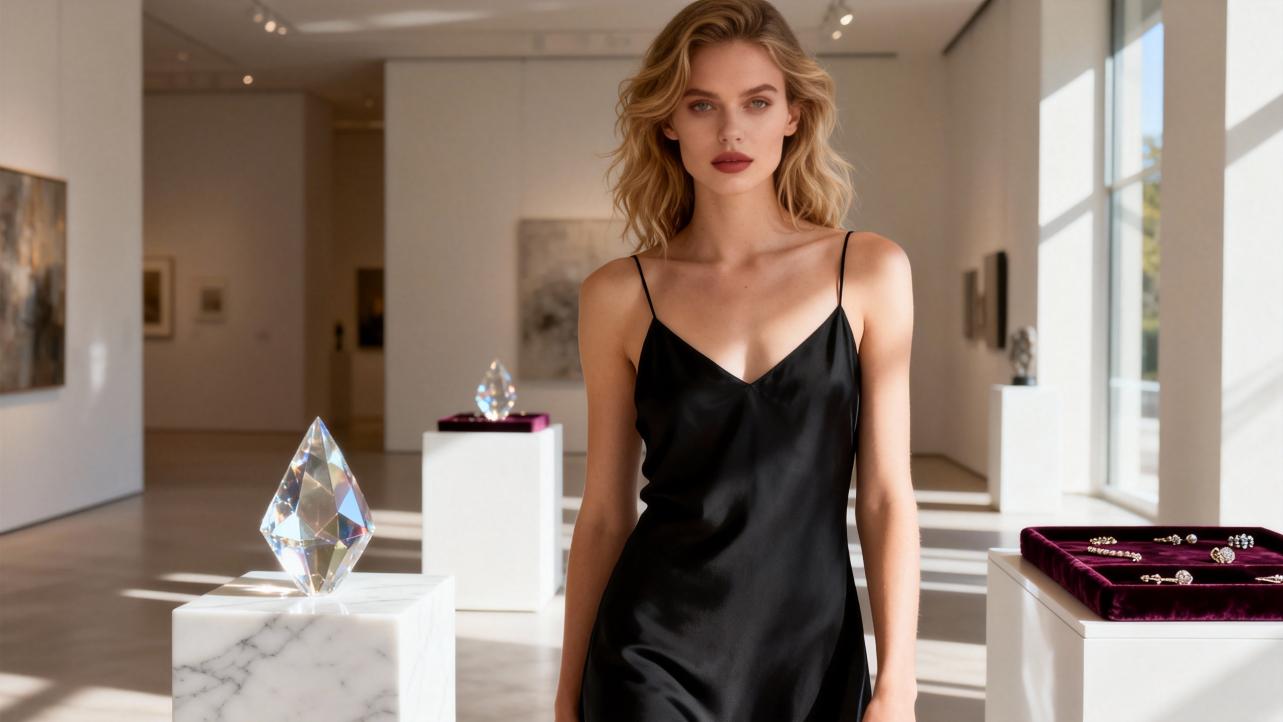
Walking into an art exhibition opening, you are not simply another guest in a well-cut jacket. You are entering a room where every surface has been considered, every object curated, every shaft of light choreographed. In that atmosphere, your jewelry is no longer an accessory; it becomes a moving, breathing extension of the show itself. Done well, it reads as wearable art, a quiet but confident statement that you understand the language of the gallery.
Over years of watching artists, collectors, and curators arrive at openings, I have learned that the jewelry that truly belongs in these spaces shares a few essential traits. It respects the art on the walls while refusing to disappear. It feels imaginative yet intentional, and it can withstand the realities of a crowded, social evening. The good news is that you do not need a vault of diamonds to achieve this. You need a small set of creative pieces chosen with the same care a curator brings to a show.
In this guide, we will explore what works best at art exhibition openings, drawing on contemporary jewelry practice, museum and gallery display thinking, and the world of fine art jewelry styling.
Jewelry As Wearable Art, Not Just Decoration
Before choosing specific pieces, it helps to shift your mindset. Much of the most compelling jewelry at openings sits within what Adastra Jewelry and Art Jewelry Forum describe as contemporary or art jewelry: jewelry that deliberately departs from traditional ideas of luxury and treats the piece as wearable art rather than status symbol.
Contemporary jewelry, as outlined by Adastra Jewelry, emerged in the late twentieth century as a movement that prioritized artistic expression, concept, and individuality over preciousness. Designers began using wood, acrylic, plastics, ceramics, and found objects. Many pieces were explicitly conceptual, created to carry emotional or political messages and to invite interpretation, just like the works on the walls.
Kaelin Design goes further and frames art jewelry as objet d’art, designed to last for generations and valued far beyond the intrinsic worth of its materials. The advice from this perspective is surprisingly strict: do not buy or wear art jewelry unless it truly suits you, fits your life, and holds personal meaning. That standard is entirely aligned with the spirit of an opening. The pieces that feel most at home in a gallery are the ones that could stand on a plinth on their own, yet make profound sense when worn by you.
Museums reinforce this idea of jewelry as art. The Met Store explicitly frames its jewelry as tributes to five thousand years of art history, often derived directly from objects in The Metropolitan Museum of Art’s collection. The de Young and Legion of Honor museum stores gather their pieces under an “Art to Wear” category, tying jewelry to specific artists and exhibitions. When you arrive at an opening wearing such a piece, you are in quiet dialogue with institutional practice: you are, in effect, curating yourself.

What Kind Of “Creative” Jewelry Belongs At An Opening?
Not all creativity looks the same. A dramatic sculptural choker, a pair of conceptual earrings made of repurposed materials, and a minimalist titanium ring can all be deeply creative, yet their effect at an opening will differ.
A concise way to think about it is to distinguish among three broad families that show up again and again in the research: sculptural statement jewelry, author or contemporary art jewelry, and studio-friendly fine art jewelry.
Jewelry Type |
Defining Qualities |
Best Opening Context |
Main Tradeoffs |
Sculptural statement jewelry |
Bold, oversized forms; architectural or organic silhouettes; mixed materials like metal, resin, pearls |
Openings where fashion and art blur, design fairs, shows with strong formal or architectural themes |
Visually powerful but can be heavy, impractical, or overshadow art |
Author / contemporary art jewelry |
Concept-driven, often handcrafted; unconventional or recycled materials; strong narrative |
Gallery and museum shows, especially contemporary or conceptual art; events with collectors and curators present |
Intellectually rich but sometimes visually subtle or challenging |
Compact, durable, expressive metals and stones; designed for real working conditions |
Long preview nights, large art fairs, occasions involving travel and constant movement |
Comfortable and practical but can read understated if not chosen well |
Sculptural jewelry, as described in the sculptural trend piece for twenty twenty five, is unapologetically bold. Oversized metal earrings, chunky pearl necklaces, geometric cuffs, and abstract layered rings become the focal point of an outfit. Influences span both modern architecture and organic curves, often blending metals with pearls or stones. At an opening, a single sculptural “hero” piece can read almost as a tiny installation traveling through the crowd. Runway and celebrity styling place this kind of jewelry at the center of the look rather than as an afterthought, which resonates with the heightened theater of an opening night.
Author or contemporary art jewelry, on the other hand, may or may not be large, but it is always deeply intentional. Art Jewelry Forum’s review of Design Miami and Basel notes that many galleries showed jewelry lying flat, treated as autonomous objects rather than body adornment. There were hardly any mannequins or fabrics to suggest wear. Curator Anne Dressen reads this as a deliberate attempt to emphasize conceptual and artistic value for an art audience. During the same period, exhibitions like “Jewellery and Garment” at the Bröhan-Museum in Berlin explored the opposite approach: they loaded dressmaker’s dummies with contemporary pieces over avant-garde clothing and even everyday T-shirts and jeans, demonstrating how art jewelry can live on the body.
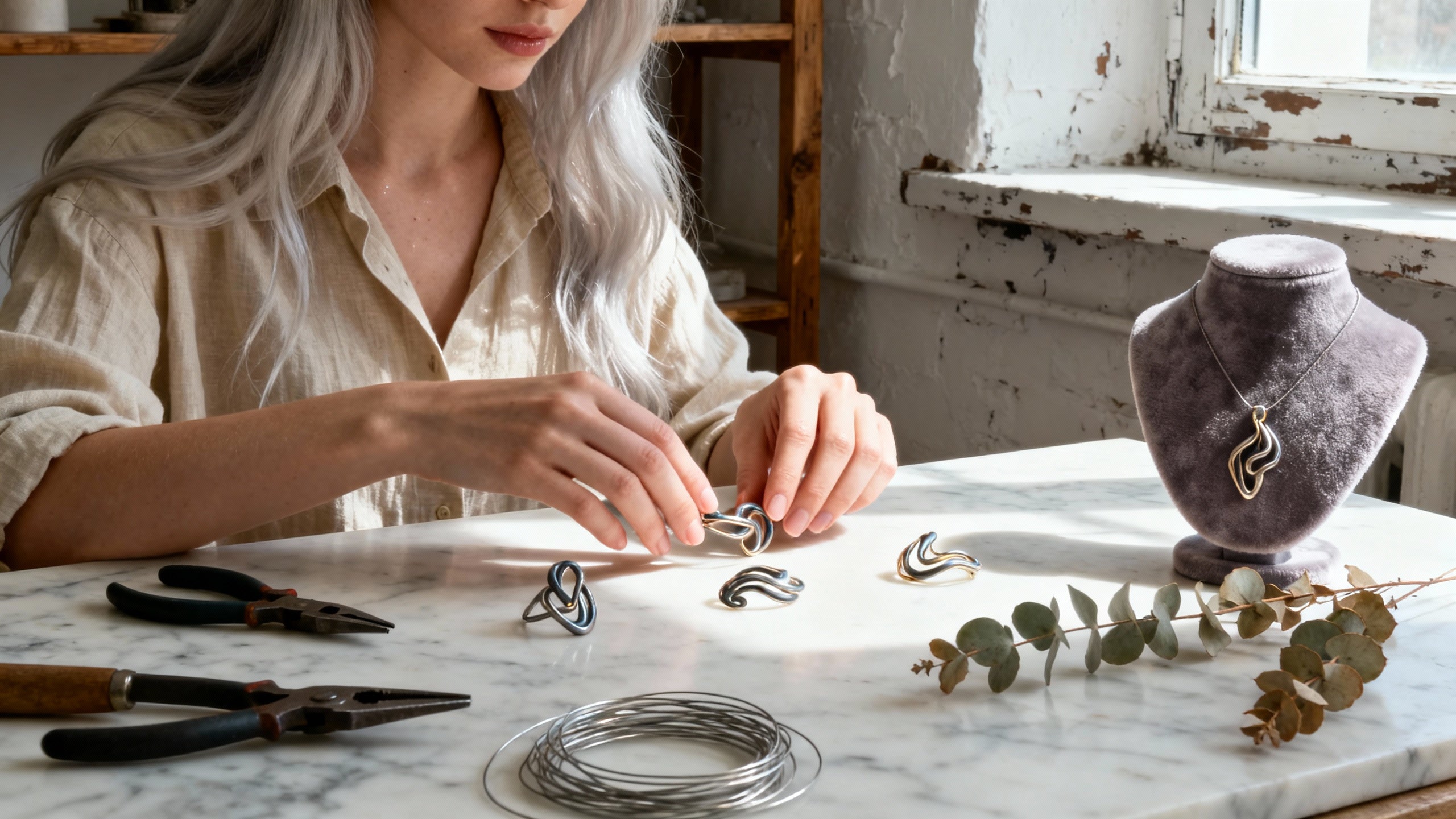
Studio-friendly fine art jewelry, as explained by BrilliantCTS, introduces a pragmatic dimension. In the artist’s studio, jewelry must withstand mess, heat, movement, and frequent cleaning, while still supporting mood and creative identity. Practical pieces are compact, durable, hypoallergenic, and expressive. Although the studio and the gallery opening are different environments, the demands are surprisingly similar. Openings involve hours of standing, gesturing, shaking hands, and moving through crowded spaces. Jewelry that is supportive rather than distracting lets you focus on the art and the conversations without fuss.
The question, then, is not whether your jewelry is creative enough, but which kind of creativity best suits the specific opening, your role there, and your own body.

Balancing Impact And Respect For The Art
One of the great tensions at an exhibition opening lies between wanting to make an impression and not competing with the work on the walls. The field of jewelry display offers an unexpectedly useful lens here.
Art Jewelry Forum’s account of Design Miami and Basel observes that most displays chose to show jewelry flat, almost like miniature sculptures, with very few references to the body. This de-bodied presentation can help jewelry claim space as art, but it risks denying its identity as adornment. In that context, the person who wears jewelry to an opening becomes a crucial bridge. Your body becomes the missing pedestal, the moving wall, the context that reconnects jewelry to lived experience.
To honor both the art and the jewelry, consider three questions before you dress.
First, ask where the visual weight should sit. If the show itself is visually dense, with intense patterning or saturated color, a single sculptural ring or a thoughtful pair of contemporary earrings might be all you need. They register as art to those who are paying attention, but they do not shout across the room. If the exhibition is minimal or monochrome, the space can absorb a bolder, more sculptural necklace or cuff without feeling crowded.
Second, consider thematic resonance instead of literal matching. The Bröhan-Museum’s “Jewellery and Garment” exhibition paired contemporary jewelry with avant-garde fashion based on shared artistic strategies rather than obvious motifs. Pieces that reveal their construction, incorporate found materials, or foreground sustainability were matched with garments that do the same. For an opening, you can echo this thinking. A conceptual necklace made from recycled materials aligns effortlessly with a show concerned with ecology. Nature-inspired rings or bracelets connect beautifully to a painting series exploring landscapes or botanical forms, without resorting to one-to-one illustration.
Third, think about how approachable your jewelry feels. At some fairs and museum shows, London galleries like Louisa Guinness and Elisabetta Cipriani deliberately encouraged touch and try-ons, describing their pieces as affordable, wearable art. Their booths functioned as both mock museum and curator’s office, with drawers to open and mirrors for experimentation. At a crowded opening, jewelry that looks dangerously delicate or overly precious can create distance, while pieces that seem robust and inviting can act as conversation starters and even invitations to handle similar work.
In short, impactful jewelry at an opening should feel like a thoughtfully curated micro-exhibition that you carry with you, tuned to the tone of the event.

Earrings: The Quietly Powerful Choice
If you choose only one category to focus on for an opening, make it earrings. They sit close to the face, catch the light, and appear in almost every photograph, yet leave your hands free for handshakes, catalogues, and a glass of wine.
The sculptural jewelry trend research highlights oversized metal earrings as one of the defining styles of the moment. These pieces often use architectural shapes or organic curves, sometimes mixing metals with pearls or colored stones. They are conversation pieces in their own right and work particularly well when the rest of your outfit is pared back. At an opening of bold contemporary painting or sculpture, a pair of sculptural earrings can mirror the drama on the walls without competing with any single artwork.
At the same time, the studio-friendly guides from BrilliantCTS recommend small studs and huggie hoops as the “workhorses” of daily wear. They are quiet, close to the ear, and unlikely to snag or tangle. For a very crowded opening, or if you are the artist and expect to be constantly turning and embracing people, these compact forms are invaluable. They allow you to wear precious metals and thoughtfully chosen stones in a way that will not catch on clothing or hair.
A fine art jewelry stylist like llyn strong goes further and encourages breaking old “less is more” rules, suggesting that multiple statement pieces can coexist. In practice, that balance is delicate in a gallery. Large, swinging earrings paired with a bold necklace can feel gloriously maximalist at a fashion-focused design fair, but cramped in a small exhibition space with low ceilings and intense artwork. When in doubt, let your earrings lead and keep the neck area calmer.
The pros of creative earrings at openings are clear. They frame your face in conversation, they register powerfully in photographs, and they offer a relatively small footprint for a high level of creativity. The only real cons are practical. Oversized pieces can be heavy over a long evening, and very long drops may interfere with scarves, high collars, or name badges. Testing them at home for a few hours before a major event is a wise, very professional move.

Necklaces And Chokers As Moving Installations
If earrings are the quiet powerhouses, necklaces are the opening’s theatrical set pieces. Sculptural jewelry research points to statement chokers, chunky pearl necklaces, and architecturally structured collars as central forms in the current wave of art-driven jewelry. At an opening, these pieces can function almost like small installations, defining the silhouette of your upper body.
Styling guidance from fine jewelry and fall layering articles suggests a few useful frameworks. One approach is to create a vertical narrative of differing lengths: a short choker, a mid-length chain that sits near the collarbone, and a longer pendant that drops over the torso. For openings, this concept has to be edited carefully. In the softer light of a gallery, too many reflective points can become visually noisy, especially against complex artwork.
A good rule is to choose either a single sculptural statement necklace or a deliberately layered but subtle stack. A hero piece could be an abstract metal collar, a contemporary artist’s one-of-a-kind pendant, or a vintage-inspired necklace derived from museum collections, such as those offered by The Met Store. These art-linked necklaces quietly signal that you see jewelry as more than ornament; you are wearing your relationship to art history.
Layered stacks work best when each chain is relatively fine and close to the body, an idea also supported by studio-friendly recommendations. Compact pendants worn high on the chest sit safely above potential splashes or bumps and above exhibition name tags. They can carry talismanic meaning through color, symbol, or stone, reinforcing your personal creative narrative without shouting.
The main advantages of creative necklaces at openings lie in their ability to structure your outfit and to echo or contrast the lines of the garments and the artwork. The drawbacks concern practicality. Heavy pieces may become tiring over a long evening, and very rigid chokers can feel constricting when you are talking animatedly. If the exhibition includes performance or interactive installations that require movement, consider slightly shorter, flexible designs that move with you.

Rings And Hand Pieces: Intimate Works For Close Conversation
Rings are the most intimate of art-opening jewelry. They rarely dominate a room, yet in close conversation at a bar or beside a sculpture, they invite attention. Museum display research notes how small pieces, especially rings, can visually disappear behind larger objects unless brought to the very front of cases. On the hand, however, they are ideally placed for interaction when you gesture, hold a glass, or sign a catalog.
Studio jewelry guidance advises slim, low-profile, stackable bands that avoid catching on tools or materials. Translated to the opening environment, those same traits protect your rings from bumping into glass or fabric and keep them from scratching others during greetings. Small gemstone rings or textured bands in durable materials such as gold, sterling silver, stainless steel, or titanium, recommended by BrilliantCTS as daily-wear metals, are ideal foundations.
For more creative impact, sculptural trends point to abstract layered rings and chunky, art-driven designs. A single sculptural ring in an unusual silhouette or material can act as a quiet showstopper for those close enough to notice. This is a beautiful choice for artists and collectors who prefer understated clothing but enjoy rich detail on the hand.
The benefits of focusing creativity into rings are subtle but significant. They allow you to carry strong symbolism, heirloom connections, or conceptual ideas in a place that feels both personal and accessible. The potential downside is visibility. Unless you are in an environment where people naturally look closely—collector dinners, smaller previews—rings can be overlooked. If rings are your main creative outlet, you may want to pair them with at least one other visible element such as a small pendant or earring to ensure your aesthetic is legible at a glance.

Bracelets, Cuffs, And The Soundtrack Of Your Presence
Bracelets and cuffs occupy a middle ground at openings. They can be immensely sculptural, especially in the form of broad metal cuffs or geometric bangles, and they sit at a level that is highly visible as you lift a glass or reach for a catalog. At the same time, they introduce an often overlooked dimension: sound.
BrilliantCTS suggests avoiding noisy bracelet stacks in active studio environments, favoring a single smooth bangle, slim cuff, or close-fitting adjustable bracelet that sits flush to the wrist. The same logic holds in a gallery. The gentle clink of one or two pieces can be charming, but loud, constant jangling can be distracting to people trying to focus on artwork or listen to speeches. A designated “jewelry wrist,” leaving the other free for functional tasks, is a clever strategy borrowed from working artists.
Sculptural jewelry research highlights geometric cuffs and bold sculptural bracelets as core styles. These pieces make wonderful sense at design fairs or openings where the jewelry is as much a part of the spectacle as the art. They work best when allowed to stand alone or with minimal stacking, so their form can be appreciated.
The pros of expressive wrist jewelry at openings include strong visual impact and an easy way to echo architectural or organic forms in the show. The cons center on noise and practicality. Very large cuffs can impede movement, and intricate pieces may be vulnerable in dense crowds. Choose shapes that feel sturdy and secure on the wrist, and test whether you can comfortably hold a drink, a small bag, and a catalog without discomfort.
Color, Material, And Symbolism In The Gallery
Color is one of the most powerful tools you have when styling jewelry for art exhibitions. Research on studio jewelry and retail display both emphasizes how color can shape emotional response. Warm, bright tones can support high-energy brainstorming, while cooler tones and greens cue calm and focus. Podium’s insights into color psychology in retail spaces similarly note that warm hues can create excitement, while blues and greens feel soothing.
For openings, this means you can use jewelry colors to modulate your presence in the room. If you are an exhibiting artist about to give a talk, a piece with energizing tones—amber, citrine, warm enamel, or rich gold—can reinforce your confidence and help you feel vivid without shouting. If you are a curator or critic who prefers to observe quietly, cooler stones or metals in silver, titanium, or subdued gems can align your appearance with that calm, even as the pieces themselves remain inventive.
Color-blocking guidance from Moira Antique suggests treating jewelry as part of a broader color story. Strong contrasts such as blue with orange or red with green create a modern, assertive effect, while tonal or monochromatic pairings feel more composed. Colorful gemstone jewelry is especially potent here. Stones like amethyst, peridot, aquamarine, or lapis lazuli can either echo the colors in a featured artwork or set up a deliberate contrast.
Material choices also carry meaning in an art-context. Contemporary jewelry artists often favor recycled or unconventional materials to challenge traditional ideas of preciousness, a trend that aligns with sustainability-focused practices noted by llyn strong and by Adastra Jewelry. Wearing a piece that conspicuously uses reclaimed metals or found objects signals awareness of environmental and ethical concerns, which can connect deeply at exhibitions dealing with social or ecological themes.
At the same time, the durability and hypoallergenic properties of metals like gold, sterling silver, platinum, stainless steel, and titanium, highlighted in studio-focused guides, make them practical for long evenings. The Met Store even notes that eighteen-karat gold-plated pieces can sometimes be more durable in wear than very high-carat solid gold, which is softer. For openings, the ideal is a material palette that feels authentic to your values and comfortable against your skin while standing up to the wear of a busy night.
Practical Realities: Comfort, Movement, And Care
Creative jewelry that works in theory must also perform in practice. Exhibition openings can involve hours of standing, navigating tight spaces, and moving between indoor and outdoor environments. This is where the concept of studio-friendly jewelry becomes a lifesaver.
Pieces that are compact, durable, and easy to clean are wise choices, especially if you are traveling to an art fair or museum opening. Sterling silver, stainless steel, titanium, and well-crafted gold or platinum are recommended in studio research precisely because they tolerate frequent washing and gentle cleaning without rapid wear. These same qualities make them excellent companions for a long night that may include spilled drinks, humidity, or sudden weather shifts.
Comfort also extends to weight and ergonomics. Very heavy earrings or rigid collars can become distracting over a multi-hour event, pulling your attention away from the art and onto your own discomfort. Fine art jewelry stylists emphasize wearing bold pieces as everyday adornment rather than saving them for rare occasions, but only when they fit your body comfortably. An opening is not the time to debut an untested piece. Wear it at home for an evening first and see how your body responds.
Finally, practical care matters. Fall-layering guidance points out the importance of removing jewelry before certain activities and cleaning pieces regularly with gentle solutions and soft brushes. For openings, it is wise to tidy and inspect your chosen pieces the day before. Check clasps, backs, and settings so that nothing fails when you are in front of a major work of art. That level of quiet preparedness is part of the professionalism that seasoned gallery-goers learn over time.
Building A Small Art-Opening Jewelry Capsule
While it is tempting to accumulate endless options, both capsule wardrobe thinking and studio jewelry guides advocate for a tight, intentional collection. For art exhibition openings, a small capsule of wearable art can serve you better than a large but incoherent assortment.
Think in terms of roles rather than sheer variety. You might choose one sculptural hero piece in each main category, balanced by a set of subtle, durable companions. For example, a bold pair of sculptural earrings, a single architecturally significant necklace, one geometric cuff, and an abstract ring could form the dramatic side of your capsule. Alongside them, you could keep a pair of small studs, a compact talismanic pendant, slim stackable bands, and a quiet bracelet for more subdued nights.
Museum-store jewelry that references historic artworks can also play an important role. These pieces, inspired by centuries of art, bridge the gap between tradition and contemporary life. They are especially effective at openings with a strong historical or retrospective focus, where visually echoing the era of the work can feel thoughtful rather than costume-like.
A well-chosen capsule saves you from last-minute panic and encourages a deeper relationship with each piece. In the spirit of Kaelin Design’s guidance, every piece you include should feel like something you could love and wear for years, not a trend-driven impulse purchase.
Brief FAQ: Navigating Jewelry Choices At Openings
Is it appropriate for the exhibiting artist to wear very bold jewelry?
It can be, provided the jewelry supports rather than competes with the work. Sculptural jewelry research and fine art styling advice both suggest that a single statement piece, especially one that resonates conceptually with the show, can be powerful. If your work is visually intense, consider keeping your jewelry conceptually rich but visually slightly quieter, perhaps in the form of one strong ring or a pair of earrings that echo your themes without repeating your motifs literally.
Can museum-store jewelry be creative enough for contemporary openings?
Yes. The Met Store and the de Young and Legion of Honor museum stores intentionally design jewelry as wearable translations of art objects, spanning five thousand years of history. These pieces can be profoundly creative, especially when derived from lesser-known works or unusual periods. At a contemporary opening, museum-inspired jewelry can signal deep engagement with art history while your clothing and other accessories keep the overall look current.
How much jewelry is too much at a small gallery?
Space and scale matter. Research on jewelry display emphasizes the importance of negative space so small pieces do not visually disappear or overwhelm a case. Apply the same principle to your body. In a small, intimate gallery, it is often better to wear fewer, more considered pieces and let the room breathe. A sculptural earring and one ring, or a single striking cuff with understated companions, will often feel more in tune with the environment than maximal stacking from head to wrist.
A Final Word From A Fellow Jewelry Devotee
An art exhibition opening is one of the few places where jewelry can truly meet its match. Paintings, sculptures, garments, and installations all watch as you arrive, asking quietly whether you, too, have something to say. The most compelling answer is not the loudest or the most lavish; it is the one that feels considered, personal, and in conversation with the work around you.
Choose pieces that could hold their own in a vitrine, yet come alive when they move with your body. Let color and material tell your story, let comfort keep you fully present, and let meaning be your ultimate guide. When you walk into the next opening carrying your own small exhibition of wearable art, you are not merely dressed for the occasion. You are part of the show.
References
- https://shop.nga.gov/accessories/jewelry
- https://store.metmuseum.org/jewelry-watches/all-jewelry-watches?srsltid=AfmBOorqj9MiSbYbZgECM-MRn2sxOxmdwp2HlRAUoB_4YcBVae9FVult
- https://artjewelryforum.org/reviews/display-matters/
- https://shop.famsf.org/collections/art-to-wear/jewelry?srsltid=AfmBOopTQ4eoXipQ25TaJmDB4NjroRHoEkR5qRhO_oEKKzeLyQa12PNP
- https://jewelryshowcasedepot.com/how-to-choose-the-perfect-jewelry-display-sets-for-your-showcase
- https://adastrajewelry.com/blog/exploring-the-rise-of-contemporary-jewelry-a-fusion-of-art-and-fashion?srsltid=AfmBOooCu2nhptAIEzjsKvzrK06FObqo4zsmBos6y8vFdUY75qMRrIaG
- https://www.amexessentials.com/style-jewellery-and-fashion-accessory-exhibitions/
- https://www.etsy.com/market/art_fair_jewelry
- https://galeriemagazine.com/7-must-fashion-accessories-art-fairs/
- https://jewelryblog.greenlakejewelry.com/galleries/