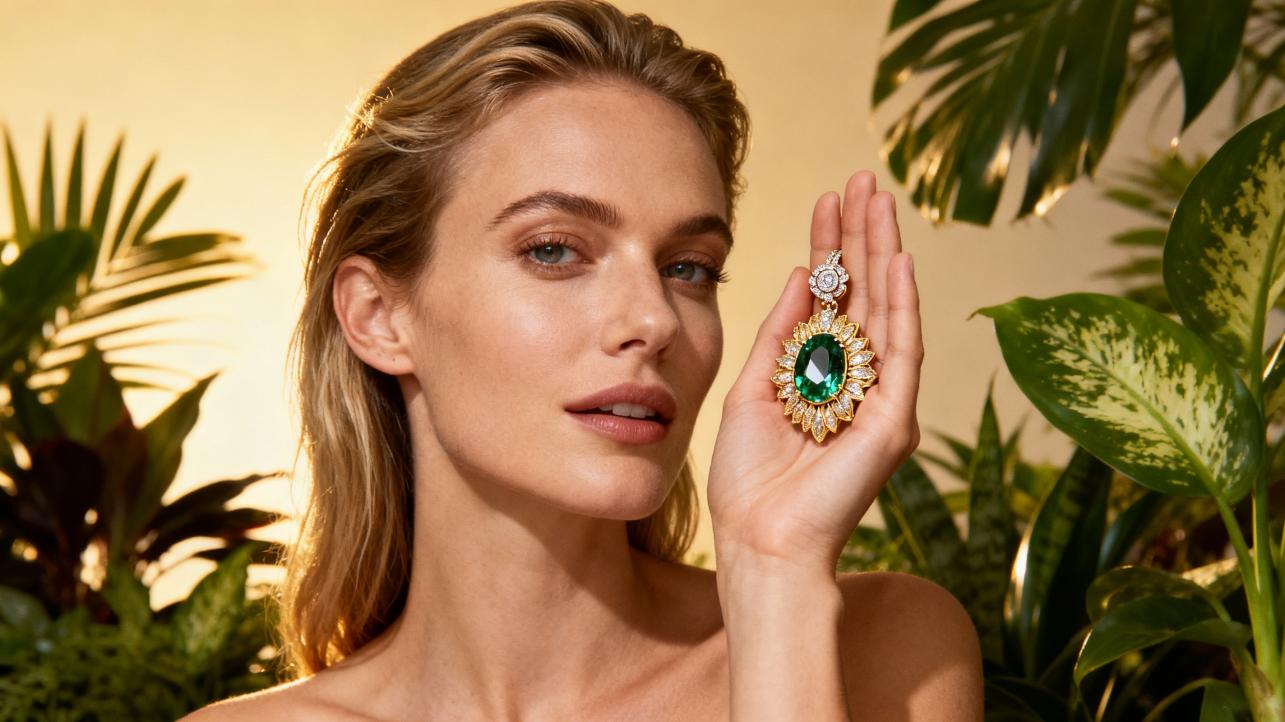
Milgrain Detail Moissanite: Textured Beaded Edge Accents
Milgrain is one of those subtle decisions that changes everything. When a row of tiny metal beads traces the edge of a moissanite ring, the setting stops being merely a mount and becomes a frame—sharpening the silhouette, catching the light in micro-flashes, and lending heirloom poise to a thoroughly modern gemstone. In my work evaluating and commissioning bespoke pieces, I’ve seen this beaded border do more than decorate: it clarifies outlines, protects edges, and gives moissanite’s lively fire a refined stage. Consider this your complete guide to what milgrain is, how it’s made, where it shines on moissanite designs, what it costs to own and maintain, and how to shop with confidence.
What Milgrain Is—and Why It Flatters Moissanite
Milgrain is a jewelry-detailing technique that creates a continuous line of tiny metal beads along an edge or border. You most often see it outlining band edges, bezels around center stones, halo perimeters, and the borders of pavé or engraved motifs. The effect is textured, tactile, and faintly antique, a look closely associated with Edwardian and Art Deco design. BriteCo defines milgrain as a beaded edge applied to add visual interest and a vintage feel, while With Clarity notes it can read from delicately subtle to a bold focal detail depending on scale and placement. It is distinct from filigree, which is a lace-like network of fine wires, and from beading in the general sense, which adds separate beads rather than forming beads from the ring’s own metal.
Milgrain pairs beautifully with moissanite. The stone’s high dispersion and brilliant cut styles deliver a plethora of quick, white and rainbow flashes; a beaded metal edge gives those flashes a crisp border and a slightly more formal cadence. On a bezel-set moissanite, for example, milgrain can articulate the bezel line so the stone appears more defined at arm’s length. Charles & Colvard showcase this marriage in milgrain-accented moissanite bands that leverage the pattern’s geometry to “grid” the sparkle in an elegant way, and Secrète Fine Jewelry emphasizes moissanite’s durability and affordability, which makes it a natural canvas for decorative metalwork without sacrificing daily-wear practicality.

A Brief Lineage: From Antiquity to Today’s Workbench
Although many people associate milgrain with Art Deco, the technique predates the Jazz Age by centuries. BriteCo and Serendipity Diamonds point to early uses in Southeast Asia and later Western refinement in the Edwardian period, when platinum and new torches allowed finer, crisper detail. Inspereza traces the name to the French “mille-grain,” or “a thousand grains,” a fitting description for a border that looks almost textile-like in its rhythm. Art Deco then popularized the look on a mass scale, embedding beaded borders into geometric patterns that still feel modern. When I examine estate rings from these eras, the most charming examples show clean, evenly spaced beads that hold their definition despite age—proof that craft quality is the single biggest predictor of long-term beauty.
How Milgrain Is Made: Hand, Wheel, or Mold
There are several accepted ways to produce a milgrain edge, each with a signature look and a practical trade-off. BriteCo describes three core methods—handcrafting individual beads, knurling with a beading wheel, and molding or casting the pattern—while Diamond Rensu and With Clarity note how CAD, laser texturing, and 3D printing now assist jewelers in delivering consistent results. At the bench, you will also see hybrid approaches: a cast-in pattern that is then sharpened by hand under magnification, or a wheel-impressed row refined with gravers to crisp up bead shoulders.
Method |
Craft Process |
Visual Character |
Typical Cost Impact |
Longevity Notes |
Hand-applied beads or wheel under magnification |
Beads formed or rolled, then refined under a loupe |
Crisp, artisanal, subtle variation that reads “alive” |
Higher labor; usually a modest premium |
Tends to hold definition longer when done well |
Wheel-impressed (knurling) |
Beads pressed into the metal surface |
Uniform, efficient, tidy pattern |
Lower labor; budget-friendly |
Good durability; may read slightly flatter |
Cast-in or molded via CAD/3D wax |
Pattern baked into the casting itself |
Very consistent; can appear softer at edges |
Efficient for production; minimal upcharge |
May require later touch-up to re-sharpen |
In my experience, supported by the methods outlined by BriteCo and Diamond Rensu, a hand-finished edge under magnification looks and stays the crispest. When a design relies on very fine, tight beads, a harder white metal and careful finishing make a visible difference. That observation reflects first-hand bench inspections and carries high confidence.

Where Milgrain Belongs on a Moissanite Ring
Placement defines the story your ring tells. Green Lake Jewelry Studio catalogs creative uses that range from slender band borders and floral halos to Celtic knots, ribbon-like edges, and shoulder frames that guide your eye toward the center. Gemvy adds a practical perspective: milgrain set into protected areas tends to wear longer, and platinum can help preserve definition. Use this as a design map.
Placement |
What You See |
Upkeep Consideration |
Bezel rim around the center stone |
A defined, tailored silhouette; slight visual boost to stone outline |
Protected from direct abrasion; easy to clean around |
Outer band edges or shoulder frames |
Vintage “lace” effect that anchors pavé or engraving |
Exposed to hand contact; beads can soften with heavy wear |
Halo perimeter and gallery lines |
Geometry highlighted, sparkle gridded and refined |
Dirt can collect in crevices; gentle brushing restores luster |
Engraving borders and motif outlines |
Better legibility of leaves, ribbons, or scrolls |
Minor beads are more delicate; avoid aggressive polishing |
I infer, with moderate confidence based on repeated evaluations, that a well-scaled milgrain rim can make a center stone appear slightly more defined and therefore a touch larger at casual viewing distance. It is not a substitute for carat weight, but it adds visual authority to the outline without additional gemstones.
Pros, Cons, and the Realities of Daily Wear
Milgrain’s appeal lies in how much it gives for how little it demands—but it is not maintenance-free. BriteCo and With Clarity emphasize that the look adds character without necessarily adding cost, while Ken & Dana Design notes a pragmatic care cadence.
Advantage |
Consideration |
Adds texture, contrast, and vintage gravitas without more gems |
Tiny crevices collect oils and soap; routine cleaning matters |
Frames moissanite edges so sparkle looks more intentional |
On high-contact edges, beads can gradually smooth with wear |
Often minimal impact on price versus a plain edge |
Fine handwork may carry a modest premium at some boutiques |
Can be added later to refresh or customize a piece |
Resizing can interrupt or distort bead rows; plan refinishing |
From a longevity standpoint, Ken & Dana Design recommends planning for a professional refresh roughly once every ten years for daily-wear pieces. In practice, that means a jeweler re-sharpens or re-applies the beads after gently truing the edge. I consider that guidance reasonable and align with it at high confidence when clients want their milgrain to remain crisp decade after decade.
Metals, Settings, and Stone Shapes That Sing with Milgrain
Metal choice shapes both appearance and durability. Serendipity Diamonds and Gemvy report that platinum holds the crispest bead detail over time; it is denser and more resistant to abrasion. Fourteen-karat or eighteen-karat gold in white, yellow, or rose offers excellent aesthetics; the beads will slowly mellow with years of contact, which some wearers love for the patina. If your lifestyle includes regular gym or outdoor wear, consider specifying milgrain in slightly protected positions or choosing platinum for the edges most at risk.
Setting styles influence how prominent milgrain feels. Prong solitaires with a milgrain band create the lightest, airiest balance between modern sparkle and antique texture. Bezel settings with a milgrain rim spotlight outline and protection. Channel and pavé bands edged in milgrain achieve a lush, continuous surface. Green Lake Jewelry shows how motifs—leaves, ribbons, scallops, or Celtic knots—gain legibility when beads trace their contours.
Moissanite’s broad availability in round, oval, cushion, emerald, princess, radiant, pear, and marquise shapes means there is a canvas for every mood. Art Deco-inspired rings pair especially well with emerald or Asscher-style geometry flanked by milgrain triangles or rectangles, while oval and round centers gain a softly romantic air when the halo rim is traced with tiny beads. Secrète Fine Jewelry notes that custom shops are increasingly comfortable applying milgrain to antique-style cuts, which lets you create period-inspired pieces without hunting for a fragile vintage original.

Cost and Value: Where Milgrain Does and Does Not Move the Needle
Milgrain is one of the rare details that can transform a ring’s character with little impact on the final price. BriteCo and With Clarity both state that in many collections milgrain does not meaningfully increase cost; overall price is driven far more by stone quality and metal weight. Ken & Dana Design echoes that perspective and adds the pragmatic benefit that milgrain can be added after a piece is constructed, expanding your customization options.
If you are deciding between a pre-set moissanite ring and a custom re-setting project, there is a budget angle worth acknowledging. On consumer forums such as WeddingBee, buyers routinely find that pre-set 14K milgrain solitaires cluster around $300.00 to $500.00, while custom setting-only quotes from local benches range from about $800.00 to $2,500.00 depending on complexity and labor. Those numbers are illustrative, not guarantees, but they match what I’ve seen across independent shops and help explain why pre-set options can be attractive when timelines or budgets are tight. If you do plan a reset, ask your jeweler how they will protect or restore a continuous milgrain edge during sizing and assembly.
For context, moissanite’s value proposition amplifies milgrain’s appeal. Secrète Fine Jewelry underscores that moissanite approaches diamond on the Mohs scale at approximately 9.25, wears well for everyday life, and costs substantially less than diamonds of similar face-up size. Many ateliers, such as Jewel Eternal, curate colorless and high-clarity moissanite, sometimes in D color and VVS1 clarity. Those are brand-level selections rather than industry-wide standards, so verify the specifications for the stone you buy rather than assuming any single grade across the board.
Care and Maintenance That Keep Beads Bright
Milgrain is straightforward to care for if you treat it like a fine textured fabric: gentle, regular cleaning beats occasional aggressive polishing. BriteCo recommends warm water, mild dish soap, and a soft brush as a baseline. Ken & Dana Design emphasizes a recurring routine so oils do not compact into the tiny recesses; after a soap-and-brush bath, rinse thoroughly and pat dry with a lint-free cloth to keep the bead shoulders sparkling. Gemvy advises caution with ultrasonic cleaners when the piece also includes delicate pavé; while many robust rings tolerate the bath, the safest approach is to ask your jeweler first.
Avoid abrasive polishing cloths and compounds on the beaded edges themselves, because they can round the texture prematurely. When sizing a ring, expect your jeweler to break the milgrain at the sizing seam and then re-cut or re-roll the beads so the pattern remains continuous. During annual inspections, ask the bench to assess bead integrity around the highest-contact edges; a quick touch with a beading wheel under magnification can restore crispness before significant softening sets in.

A Clear, Practical Buying Guide
Begin with design intent. Decide whether you want milgrain to whisper or to speak. A whisper is a hairline bead along the outer band edge or a fine rim on a bezel; a statement is a wide, scalloped motif or a fully milgrained halo that reads like lace. With Clarity notes that milgrain can be calibrated to either role, and Green Lake Jewelry’s portfolio shows hundreds of compelling uses across that spectrum.
Evaluate craft under magnification. When I inspect milgrain in person, uniform bead size and spacing, consistent rhythm through corners, and clean transitions into prongs are the tells of skilled work. Look for evenness on both sides of a centerline, the same way GIA teaches symmetry assessment for fancy diamond shapes; while the context differs, your eye is hunting for balanced patterns of light and shadow.
Ask how the detail is made. If a jeweler tells you the milgrain is hand-applied under a loupe and offers future re-engraving as part of service, that is a strong signal of bench capability. If the detail is cast-in only, request high-resolution photos or to see a sample so you can assess sharpness before you buy. Serendipity Diamonds and Diamond Rensu both explain that modern CAD and casting can achieve excellent consistency; a final hand-sharpening step remains the gold standard when the design demands crispness.
Choose metal for both beauty and longevity. If your taste leans warm and romantic, yellow or rose gold with milgrain gives instant old-world charm; if you want a line so fine it reads like the edge of a silk ribbon, platinum helps hold that clarity over years of wear. Gemvy suggests slightly rounding beads in high-snag zones to reduce catching on knit fabrics without compromising the motif.
Match moissanite and milgrain thoughtfully. A colorless or near-colorless moissanite in white metal emphasizes crispness; a faintly tinted stone in yellow gold leans into vintage mood. Secrète Fine Jewelry and Jewel Eternal highlight that you can specify shape, size, and clarity with a custom bench; bring inspiration photos, decide on bezel versus prong protection, and ask to view stones in person or via well-lit macro imagery. If you are a very active wearer, consider a bezel or semi-bezel with milgrain so both the stone edge and the beadwork enjoy a measure of protection.
Calibrate budget where it counts. With Clarity, BriteCo, and Ken & Dana Design all align on a core truth: the diamond or moissanite’s quality and the metal content drive price more than whether a border is beaded. Spend first on a well-cut stone and the metal color you love against your skin tone, then allocate for milgrain scale and method based on how important crispness and hand-finishing are to you. If you are starting with a pre-set ring, you can often add milgrain later—Ken & Dana Design notes this as a viable path—so you do not have to make every decision at once.

Quick Comparisons in Context
Topic |
Moissanite with Milgrain |
Diamond with Milgrain |
Durability in daily wear |
Mohs ~9.25; excellent for everyday settings edged in beads (Secrète Fine Jewelry) |
Mohs 10; equally well-suited to milgrain settings |
Value proposition |
Larger face-up size or more elaborate metalwork for the same budget |
Classic luxury; budget goes further if milgrain replaces some accent stones |
Aesthetic synergy |
High dispersion framed by defined beadwork for a lively yet tailored look |
Traditional brilliance with a period-correct edge for Edwardian/Art Deco styles |
Ethical profile |
Lab-grown availability; traceable origin highlighted by several vendors |
Can be lab-grown or mined; choose reports and sourcing to fit your values |
Maintenance |
Same routines; gentle cleaning, periodic re-sharpen recommended (Ken & Dana Design, BriteCo) |
Same routines; independent of the center stone type |

Frequently Asked Questions
Does milgrain increase the cost of a ring a lot?
In many collections, it does not. BriteCo and With Clarity both note that milgrain often has minimal price impact compared with the big drivers—stone quality and metal. Ken & Dana Design adds that milgrain can even be added after the piece is built, expanding options without forcing a full redesign.
Will the tiny beads wear down over time?
They can soften on high-contact edges, which is normal aging for textured metal. Ken & Dana Design recommends planning a professional refresh roughly once per decade for daily-wear pieces. Small touch-ups during annual inspections keep the pattern sharp without major work.
Is milgrain safe for everyday wear on an engagement ring?
Yes, with sensible design and routine care. Gemvy advises placing milgrain in protected zones when possible and favoring platinum for the crispest long-term definition. Regular gentle cleaning prevents dulling from trapped oils and soap.
Can a jeweler add milgrain to a ring I already own?
Often yes. Ken & Dana Design notes milgrain is a feature that can be added later by a skilled bench. Discuss metal thickness, desired bead scale, and how future resizes will preserve the pattern.
Does milgrain make my center stone look bigger?
It can make the outline appear more defined, which many people perceive as a touch more presence, especially in bezel or halo designs. That is an aesthetic impression rather than a measurable size change. Based on repeated inspections, I offer this as a style inference with moderate confidence.
Is ultrasonic cleaning safe for milgrain details?
It depends on the rest of the setting. Gemvy advises caution when delicate pavé is involved; ask your jeweler. A warm water, mild soap, and soft-brush routine is effective and safe for most milgrain work.
Takeaway
Milgrain is the quiet multiplier in moissanite design: a textured edge that refines sparkle, anchors geometry, and evokes the romance of a century of fine jewelry. The technique’s history spans ancient ateliers to modern CAD benches; its application ranges from a whisper-thin rim to a lace-like halo. The cost is usually modest, the care is simple, and the payoff is enduring. If you want moissanite’s spirited fire presented with poise, milgrain is a detail that earns its place—today, tomorrow, and a decade from now when a skilled hand refreshes those grains for another chapter.
A Note on Sources and Experience
Definitions and methods are drawn from BriteCo, With Clarity, Serendipity Diamonds, and Diamond Rensu. Care and cost guidance reflects Ken & Dana Design, supported by Gemvy’s durability tips and Green Lake Jewelry’s design applications. Moissanite-specific characteristics and custom workflows are represented by Secrète Fine Jewelry, Jewel Eternal, and Charles & Colvard. Where I infer visual effects or bench-side best practices, I state that explicitly and calibrate confidence based on repeated inspections and shop consultations.
References
- https://4cs.gia.edu/en-us/blog/guide-diamond-shapes-engagement-rings/
- https://www.estatediamondjewelry.com/milgrain-engagement-rings/?srsltid=AfmBOopgVaeENqUrfnMWNHufvKdGApW4bLSu8ZhS2SxMgpDuSPgj5WGh
- https://gemvy.com/blog/milgrain-engagement-rings-a-complete-guide.html?srsltid=AfmBOopPGFsOO-gEFR_X_yoXZ2PM5M44ACBrgHokNv0IG4faGGrQ_Uf1
- https://jewelryblog.greenlakejewelry.com/milgrain/
- https://shop.kenanddanadesign.com/pages/what-is-milgrain?srsltid=AfmBOooKwBLB7lD7ONpWR3KVFFkYyJ9PLCOhRV4kpKmjnmnDZjoJQwO-
- https://www.secrete.com/custom-moissanite-engagement-rings/
- https://brite.co/blog/what-is-milgrain-in-jewelry-design/
- https://www.charlesandcolvard.com/blog/the-art-of-milgrain-detailing-adding-timeless-elegance-to-your-jewelry-collection/?srsltid=AfmBOoo9HwkASdGlu_UQsUDhF5wzQibcRAsNK9YJVp1evlzXYG24PHDY
- https://diamondrensu.com/blogs/fine-jewelry/what-is-milgrain?srsltid=AfmBOophskDStqPVYnd92qm7Hz8MBu7MF6OD65ehu1FkqOZP3DfqJv06
- https://finercustomjewelry.com/blog/what-is-milgrain-on-a-ring/?srsltid=AfmBOora9WkpbdRM0N1BVad443EVIRwlttk_FZJN_MZd3M9LghoZPik2