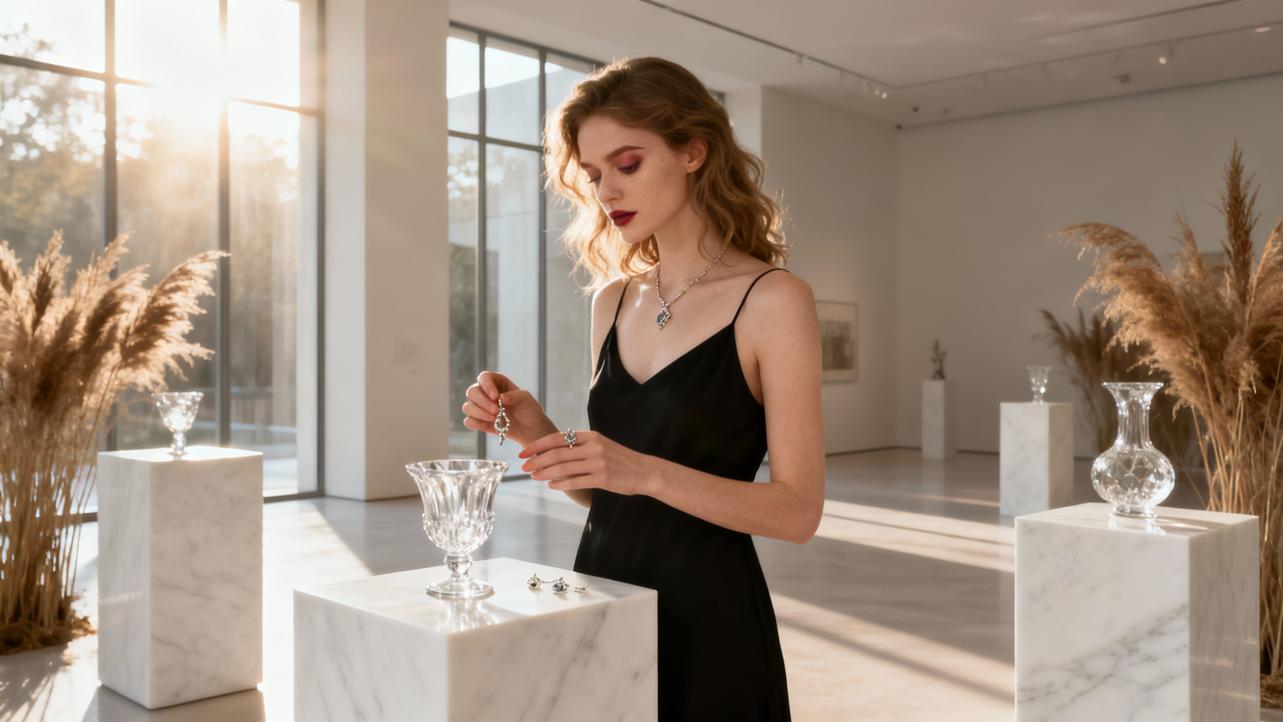
How Can Jewelry Serve as an Emotional Succor After a Breakup?
A breakup rearranges the furniture of a life. Routines vanish, roles shift, and meaning can feel temporarily unmoored. In those delicate first weeks and the quieter months that follow, a small, deliberate object worn close to the skin can offer steadier footing. Jewelry—chosen, transformed, or inherited with intention—can provide emotional succor by anchoring memory, creating ritual, and restoring a sense of self. As a connoisseur who has guided many clients through these thresholds, I have seen how a ring, locket, or modest bracelet can become not merely adornment, but a companion to healing.
Why Objects Help After Heartbreak
Emotional succor is comfort that steadies the spirit when it is unbalanced. After a breakup, comfort is most potent when it is tangible and repeatable. The Kentucky Counseling Center describes how tactile anchors—pieces you can feel, hold, and return to—help bring attention back to the body and interrupt anxious spirals. This sensory loop is surprisingly powerful: the cool edge of a gemstone, the subtle texture of an engraving, the weight of a pendant near the sternum. Such familiarity creates a feedback channel between touch and calm.
Ritual matters as well. The Ahead App Blog notes that symbolic ceremonies help the brain process transitions. When we take a physical action that mirrors an inner shift—whether we redesign a ring or dedicate a small moment each afternoon to reflection—our minds register the act as significant. This is less magical than it sounds; it is simply a way of telling the nervous system that a chapter has ended and a new one has begun. Over time, these multisensory rituals create new pathways for forward-looking habits.
Meaning remains personal. Verywell Mind’s discussion of the “Broken Jewelry Theory” underscores that interpretations are subjective. If a piece breaks in the wake of a split, you may choose to read it as an invitation to repair or to release—or as a simple mechanical failure. The insight is not in the sign; it is in the response you choose and what it clarifies for you.

The Many Faces of Post‑Breakup Jewelry
There is no single “right” piece. There are families of meaning, each useful in a different way. Some pieces keep love and memory close; some announce a fresh narrative; some carry private mantras; some serve as tactile anchors; others function as ritual tokens marking a threshold.
Remembrance and Continuing Bonds
Mourning and memorial jewelry have helped people navigate loss for centuries. Soul Spheres traces the history through the Victorian era, when hairwork, black enamel, and symbolic motifs like weeping willows, urns, and pearls-as-tears created wearable remembrance. Today, many opt for modern approaches. Sparrow Trades describes the quiet power of lockets and charm bracelets that gather stories over time. There are also pieces that hold physical remnants with dignity, such as ash pendants or fingerprint engravings.
For those drawn to a high-tech tribute, EverDear explains memorial diamonds grown from ashes or hair using high pressure and heat above 2,000 °F. The stone becomes a singular heirloom, cut and polished like any other diamond. The appeal is clear: a permanent, discreet memorial with design freedom. The considerations are equally important: consent within the family, secure settings, and a clear understanding of processes and timelines.
Reinvention and Closure
Transformation can be as potent as preservation. The Ahead App Blog suggests “jewelry transformation” as a breakup ritual—melting a ring into a new pendant, restringing beads into a bracelet that better fits your life, or recasting stones into a design born of your present identity. Verywell Mind proposes multiple responses when meaning feels complex: repair to honor continuation, repurpose to honor growth, or let go to honor release. The choice is the ceremony.
Personal symbolism elevates the result. Charles & Colvard explores how design choices—metals, silhouettes, and stone arrangements—translate a personal story. When you commission a redesign, narrate the story you want your piece to tell. Perhaps three stones stand for a journey through grief, resilience, and hope. Perhaps a low‑profile setting chooses practicality and movement over display. The finished piece should read like a clear, present sentence in your life.
Affirmations and Identity Anchors
The Kentucky Counseling Center highlights how jewelry can reinforce identity during transitions. Affirmation pieces—engravings that say “brave,” “begin,” or a private phrase visible only to you—act like wearable self-talk. Gemz by Emz observes that meaningful jewelry encourages mindfulness, nudging the wearer to notice gratitude and progress. These pieces rarely shout. Instead, they whisper the same quiet line, day after day, until it feels true.
Practicality bolsters psychology. For an affirmation to do its work, it helps if the piece is comfortable, appropriately weighted, and in a place you touch without thinking—ring edge, pendant rim, or a bracelet you unconsciously roll between fingers during a tough meeting.
Protective and Grounding Gemstones
Many people turn to stones traditionally associated with emotional healing. Sources like Ayana Crystals, Otterspirit, SforSparkle, SoulKu, and Rei of Light Jewelry describe rose quartz for self‑love, amethyst for calm, moonstone for new beginnings, rhodonite for forgiveness, green aventurine for heart soothing, and black onyx or black tourmaline for grounding and protection. These benefits are presented as belief‑based and anecdotal rather than clinical, and several publishers acknowledge the absence of quantitative evidence.
Viewed through a pragmatic lens, gemstone jewelry can still help for a simple reason: you interact with it. You hold it while breathing, place it by the bed, and wear it through stressful days, creating reliable tactile cues. If you are drawn to this tradition, choose stones that resonate personally and use them consistently. Treat them as companions to therapy, journaling, or support groups rather than substitutes.
Choosing Your Piece: A Practical Framework
Begin with intention. Decide what you want the piece to do: keep a loving bond close, mark a transition with ceremony, stabilize daily emotions, or speak an encouraging word to your future self. From there, evaluate design through the lens of function, comfort, and symbolism rather than trend alone.
Comfort drives compliance. Pieces that become daily companions are those you forget you are wearing until you need them. Test the tactile qualities: a faintly beveled edge for a calming fidget, a satin finish that feels soft, or an open‑back setting that brings coolness to the skin. Consider low‑snag designs if you plan to touch the piece often.
Durability protects meaning. Choose metals and settings that align with your lifestyle. If you are active, a bezel setting may protect edges better than claws. If you are drawn to sparkle but prefer a considerate budget or sustainable option, moissanite offers brightness and hardness suitable for daily wear, a point frequently emphasized by jewelers like Charles & Colvard. If you inherit stones, ask a bench jeweler to assess integrity before resetting.
Budget with clarity. Emotional impact does not scale with price. A simple silver pendant engraved with a line that steadies you may serve you better than a lavish purchase that feels performative. Save cost by repurposing a family stone, choosing lab-grown alternatives, or selecting a minimal design focused on meaning rather than carat weight.
Ethics and privacy matter. If you pursue memorial jewelry that holds ashes, ensure secure compartments and discuss sensitivity with family. For vintage mourning pieces, Soul Spheres recommends verifying authenticity, materials, and condition, and documenting provenance for your heirs. If crystals appeal to you, remember the evidence is anecdotal; let experience rather than hype determine value.
A Quick Comparison of Post‑Breakup Jewelry Paths
Category |
Typical Forms |
Emotional Mechanism |
Upside |
Considerations |
Remembrance |
Lockets, ash pendants, fingerprint charms, memorial diamonds |
Tangible bond and daily ritual of remembrance |
Comfort, continuity, family storytelling |
Privacy, consent, secure settings, social sensitivity |
Reinvention |
Recast rings, redesigned pendants, restrung beads |
Symbolic closure and new narrative |
Cathartic, future‑oriented, uniquely personal |
Requires thoughtful design; may carry mixed feelings |
Affirmation |
Engraved bands, mantra pendants, symbolic motifs |
Wearable self‑talk and identity reinforcement |
Discreet, repeatable, grounding |
Works best when comfortable and worn daily |
Grounding Gemstones |
Rose quartz, amethyst, moonstone, rhodonite, aventurine, black tourmaline |
Tactile anchors plus belief‑based meaning |
Accessible, ritual‑friendly |
Anecdotal evidence; choose durable settings |
Ritual Tokens |
Simple bands, charms linked to a ceremony |
Marks a threshold and encodes an intention |
Clear milestone and closure |
Ritual matters as much as the object |
Care, Cleansing, and Longevity
Treat a healing piece like a tool you intend to use for years. Clean metal and diamonds or moissanite with mild soap and warm water, then dry with a soft cloth. Avoid harsh chemicals and ultrasonic cleaners for porous or delicate stones. Follow the jeweler’s guidance for engravings and matte finishes so you do not polish away intentional texture.
Daily habits prevent damage. Remove pieces before swimming, strenuous workouts, or cleaning, and store jewelry separately in padded compartments to prevent scratches and tangles, as suggested by several consumer guides like Sparrow Trades and Inspereza. If your practice includes energetic cleansing—moonlight, sound bowls, or gentle smudging—treat those steps as optional rituals layered on top of sound physical care. The ritual supports the story you are telling yourself; the physical care preserves the object that carries it.

Benefits and Tradeoffs: A Clear View
The strongest benefit is structure. A piece you touch each morning quietly asks, Who am I becoming today. By providing a reliable cue, jewelry can help shift rumination into routine, and a once‑chaotic space into something navigable. Remembrance pieces sustain continuity; affirmation pieces fortify self‑talk; transformed pieces broadcast a turning point.
Tradeoffs exist. A piece that feels too tightly tied to the past can keep you circling old meanings. Costs can creep upward when sentiment nudges you toward grand gestures. Poor workmanship undermines trust, especially for memorial pieces. Finally, Verywell Mind cautions against reading certainty into symbolism; a broken chain may simply be a worn clasp. Treat meanings as prompts for reflection rather than verdicts.
Buying Tips and Ethics
Choose vendors who are transparent about materials and methods. For gemstones, ask for appropriate documentation or independent grading where relevant. For vintage mourning jewelry, verify authenticity and condition; for custom work, request bench photos and final measurements. If you commission memorial diamonds, confirm process details, expected timelines, and how personalization—cut, color, and setting—will be handled, drawing on the clear process descriptions offered by specialists like EverDear.
Sustainability and value can coexist. Repurposed family stones, carefully chosen lab‑grown options, and metals recycled from older pieces are thoughtful choices. Personalization—through engravings, dates, or handwriting—accounts for much of the emotional return on investment, a point echoed by brands that emphasize sentimental design such as Charles & Colvard and Gemz by Emz.
Small Rituals That Amplify Meaning
Pair the object with ceremony. The Ahead App Blog offers rituals that translate beautifully into jewelry‑centered practices. A letter‑burning ceremony can coincide with the first wear of a redesigned pendant, creating a felt before and after. A gentle, Fika‑style pause at the same hour each day—with a warm cup and your affirmation ring in view—builds a repeatable moment of steadiness. Some clients plant a tree or potted vine and hang the piece on its chain nearby for a quiet minute before putting it on, letting the plant’s growth mirror their own. Others embrace a Kintsugi‑inspired metaphor, choosing a design that visibly “mends” something broken with a new, deliberate line of gold. The piece is the token; the ritual is the transmission.
Takeaway
Jewelry does not erase grief, nor should it. What it can do is hold the thread steady while you walk. Whether you keep a bond close, alchemize an old symbol into a new one, or choose a small mantra you can touch in the dark, the right piece can anchor identity, provide continuity, and make healing feel less abstract. Let meaning guide design. Let comfort guide wear. And let the ritual of putting it on each day quietly teach your mind that you are moving forward.
FAQ
Is it healthy to keep wearing jewelry from an ex?
It depends on how it feels in your body, not what it should mean in theory. If the piece brings warmth or continuity, keep it for now. If it keeps you stuck, consider repairing it to symbolize strengthening, repurposing it into a new design, or setting it aside. Verywell Mind emphasizes that interpretations are personal; the most important data point is your felt response over time.
Should I redesign my engagement ring into something new?
Redesign is a powerful closure ritual when you are ready. Transforming a ring into a pendant or a minimalist band can honor your story while redirecting its meaning. The Ahead App Blog frames such transformations as ceremonies that mark an ending and a beginning. A skilled jeweler can help you preserve stones, refine proportions, and create a piece aligned with your current life.
Do gemstones actually help with heartbreak?
Publishers like Ayana Crystals, Otterspirit, SforSparkle, SoulKu, and Rei of Light Jewelry present benefits as belief‑based rather than clinical. Many people still find comfort in consistent use. The tactile ritual—holding a pendant while breathing, wearing it during anxious moments—can cue calm, a mechanism also highlighted by the Kentucky Counseling Center. Treat stones as companions to professional care and supportive relationships, not replacements.
Is memorial jewelry only for bereavement through death?
Remembrance pieces traditionally honor loved ones who have died, as described by Soul Spheres and Sparrow Trades. That said, you can also choose symbolic remembrance for a relationship chapter that mattered. If you use highly personal elements like ashes, consider family consent and privacy. Often, a photo locket, a birthstone cluster, or a minimalist charm achieves the same continuity without raising sensitivities.
What if my jewelry breaks soon after the breakup?
Pause before assigning meaning. Verywell Mind notes that the “Broken Jewelry Theory” is a reflective tool, not a rule. First, address the practical issue—inspect for worn clasps or bent prongs and repair if you wish to continue the bond. If repair feels wrong, repurpose or release the piece in a way that feels intentional. The choice you make can become the meaning you carry.
How should I care for a piece I wear daily for grounding?
Wash your hands before handling it, clean with mild soap and warm water when needed, and dry with a soft cloth. Remove it before swimming, tough workouts, or cleaning, and store it in a soft pouch or a separate compartment to prevent scratches, guidance echoed by practical sources like Sparrow Trades and Inspereza. If energetic cleansing resonates with you, add moonlight or sound as an optional ritual layered on top of sound physical care.
Sources Cited
Ahead App Blog; Kentucky Counseling Center; Verywell Mind; Soul Spheres; Sparrow Trades; Charles & Colvard; EverDear; Ayana Crystals; Otterspirit; SforSparkle; SoulKu; Rei of Light Jewelry; Gemz by Emz; Inspereza; Solacely; Vedic Crystals.
References
- https://www.verywellmind.com/broken-jewelry-theory-meaning-origins-and-interpretations-11688208
- https://www.gemzbyemz.co.uk/the-emotional-benefits-of-wearing-jewellery-with-meaning/
- https://dimplescharms.com/honoring-a-loved-one-memorial-jewelry-for-healing/?srsltid=AfmBOooHQ7-gFODryKVh8moEkM5UXJvGPTjjAZSRLHoHZsvCczYoc3NG
- https://everdear.co/blog/the-most-sentimental-piece-of-jewelry-keepsake-that-you-should-own
- https://kentuckycounselingcenter.com/how-personal-symbolism-in-jewelry-can-support-emotional-healing/
- https://sparrowtrades.com/grief-and-jewelry/?srsltid=AfmBOoomiccuv8o6e2ni4v0ExWIS_HAUCMJzhMj8VHLgyfehkpBqJYmy
- https://thetaramandal.com/blog/how-to-use-a-gemstone-for-love-and-healing-after-heartbreak
- https://www.wellandgood.com/health/the-jewelry-designer-that-heals-broken-hearts
- https://ahead-app.com/blog/Heartbreak/heartbreak-rituals-7-unexpected-ways-to-help-getting-over-a-breakup
- https://alberthern.com/blogs/news/sentimental-jewelry?srsltid=AfmBOorZoN3bvYq0rb_KmVe8d67LpIKildxd48m91RkCD7HVaOJ1lqEl