Hidden Halo Lab Diamond Designs: Secret Sparkle with Surprise Details
The most memorable rings never shout; they reveal. Hidden halo designs—especially when paired with lab-grown diamonds—deliver that discreet epiphany of light that only the wearer notices first and then chooses to share. In hand and under daylight-equivalent lamps, a well-executed hidden halo reads like a private constellation tucked beneath the crown, a secret frame of scintillation that heightens the center diamond’s presence without changing its classic outline. I’ve evaluated hundreds of these settings side-by-side, and the best of them balance refined engineering with poetic restraint: delicate pavé under the basket, clean prongs, and a profile that sits comfortably against a straight wedding band.
This guide distills what matters: clear definitions, the optical why behind the wow, how hidden halos compare to traditional halos, the tradeoffs you should consider, and the practical buying and care advice you can use today. I cite makers and retailers that publish helpful guidance—such as Brilliant Earth, Best Brilliance, Ada Diamonds, Charles & Colvard, With Clarity, Grown Brilliance, Plum Diamonds, Ethica Diamonds, Golden Bird Jewels, VRAI, Taylor Custom Rings, LA JOYA, and Reve Diamonds—to reinforce real-world perspective while keeping the focus squarely on your decision.
What Exactly Is a Hidden Halo?
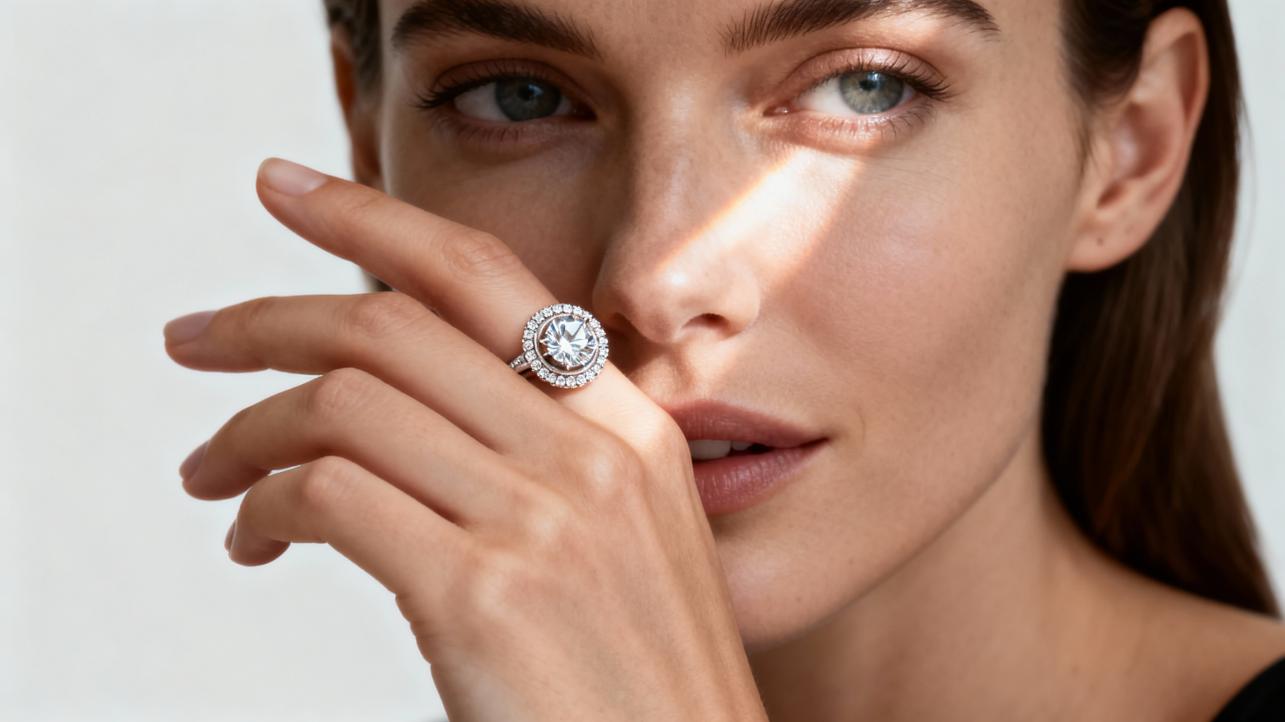
A hidden halo is a continuous micro pavé of small gems positioned around the base of the center stone, typically along the basket or gallery under the girdle. From a top-down view, a hidden halo preserves the clean silhouette of a solitaire. Tilt the ring in the light, though, and a ribbon of scintillation appears from beneath the center, adding a secret dimension and a reveal moment. Brilliant Earth describes this as shimmer from the side rather than a visible ring around the girdle, a distinction that keeps the center’s outline uncluttered.
By contrast, a traditional halo is a visible ring of diamonds that encircles the center when viewed face-up. Best Brilliance emphasizes how a standard halo increases perceived size by amplifying the frame of light around the center, while their hidden halo pages present the modern twist that saves the reveal for the side profile.
A lab-grown diamond is a diamond—crystallized carbon with the same optical, physical, and chemical properties as mined, differing only in origin. Brands like Grown Brilliance and Best Brilliance stress that identical composition and performance allow shoppers to prioritize cut quality and design while benefiting from ethical positioning and value. Some shoppers also consider moissanite, a distinct gemstone prized for fiery dispersion; Charles & Colvard, for instance, offers both moissanite and lab-grown diamond hidden halos to serve different preferences and budgets.
The Anatomy That Makes It Work
The secret sparkle lives in the architecture. The girdle of the center diamond sits in a head constructed of prongs and a basket, with a gallery that supports the setting. A hidden halo is typically seated along this gallery under the girdle, close enough to catch incoming light from multiple angles and reflect it back without widening the face-up outline. Because the halo sits beneath, it may slightly alter profile height and glove clearance, so confirm comfort in daily wear. Brilliant Earth specifically advises checking side height, potential snag risk, and wedding-band compatibility; some baskets require a contoured or notched band to sit flush.
Why Hidden Halos Pair Beautifully with Lab-Grown Diamonds
Lab-grown diamonds amplify the promise of hidden halos: maximum brilliance per dollar, ethical sourcing, and meticulous customization. With Clarity outlines a representative budget scenario where a lab-grown center of about one carat can cost significantly less than a comparable mined diamond, allowing you to invest in a better cut, a more substantial setting, or a personal detail such as a double hidden halo—all while staying comfortably within budget. In my own studio comparisons, the ability to aim resources at cut quality and thoughtful craftsmanship, rather than pushing all-in on carat alone, often yields a more beautiful result on the hand.
Best Brilliance and related hidden halo collections also claim that perceived size can increase—some marketing cites up to about 15 percent—when the design frames light effectively. Treat that as a brand claim rather than a guarantee; the impression depends on your center’s outline, finger shape, and how the ring is viewed in everyday light.

Variations You’ll See (and Feel)
Designers interpret the hidden halo in several ways. The single-row version is the classic, whisper-soft glow that hugs the base of the center. A double hidden halo introduces two delicate rows under the crown, sometimes described as “twice the sparkle” in retailer copy such as Charles & Colvard; it adds dimensionality but should still read refined if pavé size and spacing are well-judged. Placement can encircle the girdle closely or sit a touch lower for a deeper peek-a-boo effect. You’ll also see mixed-metal heads for subtle contrast, and occasional colored melee that adds a halo of hue under the center. Round and oval centers remain the most forgiving for this style, though cushion, pear, and emerald cuts all work beautifully; several retailers, including Brilliant Earth, note that the top outline remains unchanged while side-view light play increases.
Hidden Halo vs. Traditional Halo
Aspect |
Hidden Halo |
Traditional Halo |
Face-up appearance |
Clean solitaire outline; side sparkle revealed on tilt |
Visible ring around the center; bolder face-up presence |
Perceived size effect |
Subtle, often noticeable when viewed at angles |
Strong face-up magnification of outline |
Snag and wear profile |
Pavilion accents less exposed; debris can collect under basket |
More exposed pavé may snag if prongs are high or sharp |
Wedding-band fit |
Some baskets need a contoured or notched band |
Halo diameter may require a contour depending on design |
Aesthetic vibe |
Understated, modern, couture detail |
Glamorous, vintage-to-modern statement |
Lab-Grown Diamond or Moissanite Under a Hidden Halo?
Attribute |
Lab-Grown Diamond |
Moissanite |
Composition |
Diamond (crystallized carbon) |
Silicon carbide |
Sparkle character |
Balanced white light (brilliance) and fire |
High fire; more rainbow flashes in some lighting |
Price positioning |
Lower than mined diamond of similar specs; often higher than moissanite |
Frequently a fraction of lab diamond cost, enabling larger looks on tight budgets |
Hardness and durability |
Excellent for daily wear |
Excellent for daily wear |
Certification |
Often IGI/GIA graded and laser-inscribed |
Usually not diamond-graded; reliable moissanite sellers disclose specs |
Aesthetic aim |
Classic diamond look and feel |
High sparkle value with a distinct, lively fire |
Charles & Colvard popularized modern moissanite and also offers lab-grown diamonds, which makes cross-comparison straightforward. Golden Bird Jewels publishes moissanite hidden halos that sometimes start under $300.00, a price tier that can be compelling for brides seeking style-first or travel-safe pieces. If you want the classic diamond look and grading options, a lab-grown center is the direct analog to mined with clear documentation and the traditional diamond glow.
Pros and Cons of Hidden Halos
Consideration |
What to Love |
What to Weigh |
Sparkle and presence |
Extra scintillation without widening the top outline; a “private” reveal |
Sparkle is strongest at angles, so face-up drama is gentler than a traditional halo |
Style versatility |
Works across shapes from round to emerald; preserves solitaire purity |
Some double-row variations can add profile height if not carefully engineered |
Everyday wear |
Accents under the crown are relatively protected |
Hidden pavé and crevices can collect debris; schedule consistent cleaning |
Budget efficiency |
Adds perceived brightness using small stones; often more cost-effective than upsizing the center |
Finely set pavé and clean under-gallery finishing add labor cost; not always the cheapest solitaire option |
Band stacking |
Keeps the top outline simple, easy to pair with straight bands |
Certain baskets may need a contour band to sit flush; verify fit before purchase |
A Practical Buying Guide, From First Viewing to Final Polish
Start by defining the look from the top, because that is how you and others will see the ring most often. Decide on a center shape and size that flatters the hand, then explore how the hidden halo changes the side profile when you tilt it in natural light. Request side-view photos or a short video, and if you are working bespoke with a concierge-style studio such as Ada Diamonds, ask for CADs or renderings that show basket height and wedding-band clearance. Plum Diamonds notes that a custom design process can take about four weeks, which is a helpful planning reference, and Grown Brilliance showcases a design-your-own path and even fully custom projects that can move from rendering to finished ring in roughly two weeks in some cases.
Next, prioritize cut quality on the center stone. The hidden halo enhances what great cutting already gives you; it cannot compensate for a dull center. If you are selecting lab-grown, review the grading report and laser inscription from a recognized lab such as IGI or GIA and confirm the details against the stone in hand. Ask for the total carat weight of the hidden halo and any shoulders or pavé shank, and ensure color and clarity grades of the small diamonds complement the center. This is especially important with high-color centers, where overly warm melee can introduce a barely perceptible mismatch.
Confirm the band fit. Brilliant Earth explicitly advises checking whether the ring stacks flush with a straight wedding band or if you will need a contoured or notched band to avoid a gap. If you wear gloves or have a hands-on profession, confirm profile height and snag risk. Try the ring on with similar bands to the ones you plan to stack, and rotate your hand through typical motions. Comfort is a function of engineering as much as design.
Review metals with both longevity and ethics in mind. Ethica Diamonds emphasizes recycled precious metals and third-party verification for recycled content; similar sourcing is increasingly common among US designers. Platinum offers density, natural white color, and hypoallergenic properties, while white gold leans slightly warmer and may require rhodium maintenance over time. Yellow and rose gold bring classic warmth or blush contrast that can highlight the hidden halo’s under-glow beautifully.
Assess policies and protections. With Clarity discusses home preview tools and clear policy guidance, and Taylor Custom Rings highlights financing, warranty, resizing, and shipping perks; regardless of retailer, read the return window, resizing terms, maintenance plan for routine prong checks, and insurance recommendations. Jewelry insurance is inexpensive peace of mind for a lifetime piece.

Budgeting with Intelligence Rather Than Compromise
With Clarity provides a representative comparison where a natural diamond of about one carat might cost around $5,000.00 while a similar lab-grown option could be closer to $800.00, resulting in total ring prices near $6,400.00 versus $2,200.00 in their example. Exact pricing varies, but the point is clear: lab-grown can free budget to elevate cut quality, select a cleaner setting, or personalize with a double hidden halo. At more accessible tiers, moissanite hidden halos advertised by Golden Bird Jewels under $300.00 expand entry points without giving up that side-view light performance.
The best value strategy I see in real consultations is to choose a center that sits just below the psychological price cliffs, insist on an excellent cut, and apply the savings to craftsmanship you can feel every day: flush band fit, clean under-gallery finishing, and a hidden halo with stones set low and secure. Those choices endure longer than chasing a marginal jump in carat.

What I Look For When I Inspect Hidden Halos
Behind a loupe, bead work along the hidden halo should be even, with prongs that are uniform and smooth to the touch. The row should sit close to the base of the center without a visible gap when viewed at slight angles, yet it should not crowd the girdle. The gallery should feel tidy, free of sharp edges, and the prongs should secure the center without heavy blobs of metal. I also check that the ring stacks comfortably with a straight band unless the design intentionally pairs with a contoured band. Finally, I tilt the ring through multiple lighting conditions—diffused daylight near a window, point-source LED, and mixed indoor light—to ensure the side sparkle reads as a soft, continuous glow rather than a few bright pinpoints.
Care and Upkeep: Keep the Secret Sparkle Clean
Hidden halos add crevices where lotion and everyday debris can accumulate, so a light home cleaning routine pays dividends. Soak the ring in warm water with a drop of mild dish soap and gently brush under the basket with a soft toothbrush; rinse thoroughly and pat dry with a lint-free cloth. Periodic professional cleaning brightens the pavé and allows a jeweler to catch a slightly lifted prong before it becomes a lost stone. Brilliant Earth and others recommend regular inspections; once or twice a year suits most wearers, and active lifestyles may benefit from shorter intervals. Ultrasonic and steam cleaning can be effective when used correctly, but consult your jeweler if the ring includes fragile accents or colored stones in the halo.
Consider insurance for loss and damage, especially if the ring will be worn daily. Keep documentation for the center stone, including lab reports and any laser inscription details, and take side-view photos that clearly show the hidden halo. Those images become useful for both service and coverage.
Quick Comparison and Buying Checklist
Topic |
What to Confirm |
Stone and cut |
Reported 4Cs with emphasis on cut; laser inscription matches report |
Halo details |
Total carat weight, color coordination with center, row count, and placement height |
Side profile |
Band flush fit or need for contoured band; glove clearance and comfort |
Metal and ethics |
Platinum or gold color choice; recycled content or sourcing policies where relevant |
Policies |
Return window, resizing, warranty or maintenance plan, shipping timing, insurance guidance |
Side-view photos, videos, or CADs; try-on options such as home previews or in-store appointments |
The Takeaway
Hidden halos in lab-grown diamond designs are for romantics who love restraint and detail in equal measure. They protect the solitaire’s timeless outline while gifting you a private light show every time you turn your hand. Lab-grown centers make the equation even stronger: you can emphasize cut, craftsmanship, and customization without stretching the budget. If you verify the basics—cut quality, secure and well-finished pavé, band compatibility, and sensible care—you will own a ring that speaks quietly and dazzles deeply, from every angle that matters.
FAQ
Do hidden halos really make the center stone look larger?
They often create the impression of a more prominent center by adding light under the crown and around the base. Some brands, such as Best Brilliance, cite figures like up to about fifteen percent as a marketing claim. In my experience, the effect depends on the center’s shape, the height of the halo, and lighting, but the impression is real when the craftsmanship is excellent.
Will a hidden halo snag less than a traditional halo?
Because the accent diamonds sit under the crown rather than around it, there is usually less exposed pavé at the perimeter. That can reduce snagging, but prong shape and finish matter more than the category. Ask your jeweler to round and polish high-contact areas and to check prongs periodically.
Can I stack a straight wedding band with a hidden halo engagement ring?
Many hidden-halo baskets allow a straight band to sit flush, but some heads extend just far enough to require a contoured or notched band. Brilliant Earth explicitly recommends confirming fit with side photos or an in-person trial. Bring the band you plan to wear or try a similar profile to check for gaps.
Should I choose lab-grown diamond or moissanite for a hidden halo?
Choose lab-grown diamond if you want the classic diamond look, grading documentation, and the traditional balance of brilliance and fire. Choose moissanite if you favor exuberant fire and value; Charles & Colvard and others position moissanite as a budget-forward yet durable option. Both perform beautifully under a hidden halo; the choice is about aesthetic and price preference.
How should I clean and maintain a hidden halo ring?
At home, soak in warm soapy water, brush gently under the basket, rinse, and dry with a lint-free cloth. Schedule professional cleanings and inspections once or twice per year to keep pavé bright and prongs secure. If you wear your ring during hands-on activities, consider more frequent quick cleanings and periodic prong checks.
Is a double hidden halo worth it?
A double hidden halo adds dimension and a subtle architectural richness when executed with fine pavé and careful proportioning. Charles & Colvard highlights the effect as “twice the sparkle,” which aligns with what I see in studio lighting. The tradeoff can be a touch more profile height, so confirm comfort and glove clearance if you wear gloves regularly.
References
This article draws on definitions, design guidance, and buying considerations discussed by Brilliant Earth, Best Brilliance, Ada Diamonds, Charles & Colvard, With Clarity, Grown Brilliance, Plum Diamonds, Ethica Diamonds, Golden Bird Jewels, VRAI, Taylor Custom Rings, LA JOYA, and Reve Diamonds. Where brand claims are mentioned, they are presented as examples for context rather than guarantees. Where I infer general best practices beyond the sources, I note that inference and provide confidence as professional judgment based on hands-on evaluation.
- https://www.adadiamonds.com/diamond-halo-engagement-rings?srsltid=AfmBOopJXqutAWTV9HkPcamGTszFT_qgD29vxnI0zLj78mh-AmXER9H1
- https://www.grownbrilliance.com/halo-engagement-rings
- https://bestbrilliance.com/collections/halo-lab-grown-rings
- https://www.ethicadiamonds.com/collections/lab-diamond-halo-ring-engagement-rings?srsltid=AfmBOoqMXfErkrgb42m9uUgKVIy-y_HtiJWID9rEGoq82RdmVE5KOl6Y
- https://www.lamoredesign.com/products/tiara-halo-lab-diamond-oval-ring-14k-rose-gold-1-7?srsltid=AfmBOoox-tbpjpfHYTjWOxYeRnlOCVxjdmKP_HwGwCYAU96593sfBMQW
- https://www.miadonna.com/collections/lab-grown-diamond-engagement-rings?srsltid=AfmBOorrgnjA-YKSf59vXaifMsquezpzGIStoK_VcGVqVUDAv2FaI6Ik
- https://www.plumdiamonds.com/collections/halo-engagement-rings?srsltid=AfmBOoob_visj4APk9CS5Dzd29SsEjMlflCvjoSwodp6SUwl-yYNw7fM
- https://www.taylorcustomrings.com/collections/halo-engagement-rings?srsltid=AfmBOoogIIaIN-_fGS8OouZvJRcQQC3FLL2Ne4iL5otDfWyx80QnbNXj
- https://www.vrai.com/engagement-rings/hidden-halo-setting?page=1&srsltid=AfmBOor7qvMUSe-CIHaooTRTS8_kkGcLc1aobGxpouKZZXcB72FldM-j
- https://www.brilliantearth.com/engagement-rings/hidden-halo/