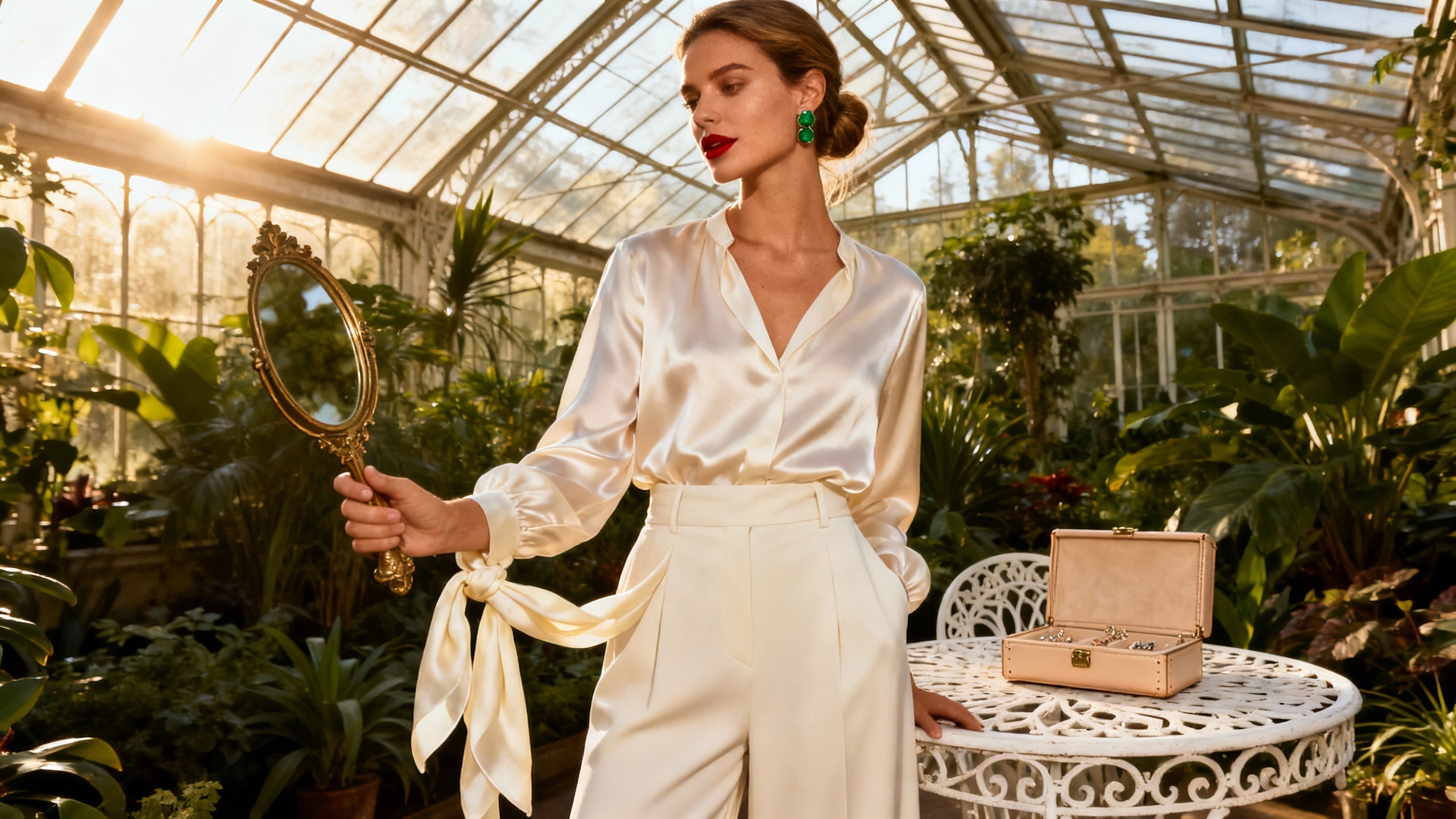
Lab-Created Jewelry for Anniversaries: Celebrate Your Love Story
Anniversaries invite us to honor the chapters we have written together and to choose a token worthy of the meaning we have built. Over the past decade, lab-created jewelry has stepped confidently into this moment, offering authentic gemstones—diamonds included—born through science, celebrated for beauty, and chosen for values. As someone who has stood at the bench and at the boutique counter watching couples compare sparkle against story, I have seen lab-created pieces deliver both. This guide distills what matters most when you are selecting, caring for, and confidently gifting lab-created jewelry for an anniversary.
What “Lab-Created” Really Means
Lab-created gemstones are real gemstones grown under controlled conditions that replicate the forces of nature. In practice, that means lab-grown diamonds share the same physical and chemical structure as mined diamonds; they are diamond through and through. Education resources from Grown Brilliance emphasize that these stones are visually indistinguishable to the naked eye and require specialized gemological equipment to separate from their mined counterparts. In other words, the sparkle you fall for is the same kind of sparkle that defined diamond’s legend.
Two principal growth methods are used for diamonds. High Pressure High Temperature (HPHT) mimics deep-earth formation with intense pressure and heat. Chemical Vapor Deposition (CVD) builds diamond layer by layer in a chamber from a carbon-rich gas. The GIA’s historical overview of lab-grown diamonds notes HPHT’s industrial roots in the 1950s and the rise of gem-quality production in the 1970s, with CVD taking off for gem applications in the 2000s. By the mid‑2010s, colorless lab-grown diamonds were widely available for jewelry, and both HPHT and CVD remain standard today, according to GIA’s timeline.
It is also helpful to separate lab-grown gems from simulants. While the GIA article’s title references simulants alongside lab-grown diamonds, the core takeaway from the sources compiled here is that “lab-grown” denotes the same chemistry as natural; a simulant only imitates the look. If your anniversary piece is lab-grown, you are buying the real gem species, just grown differently.

Why They Shine for Anniversaries
An anniversary gift needs beauty, symbolism, and confidence. Lab-grown diamonds and colored gemstones deliver on all three.
From a value perspective, consumer-facing commentary frequently cites a price advantage. A Quora overview puts the typical difference at about 20–40% below comparable mined diamonds. Because Quora is user-generated and pricing is fluid across retailers and seasons, it is wise to verify current market reality by requesting like-for-like quotes on the same carat weight, color, clarity, and cut from at least three reputable sellers. Retail education content from Carlsbad Jewelry supports the broader point that lab-grown tends to cost less, which helps couples choose larger stones or more intricate settings without straining the budget.
Ethics and sourcing transparency often carry real weight at anniversary milestones. Carlsbad Jewelry describes lab-grown diamonds as conflict-free and notes their appeal to environmentally conscious couples. That claim speaks to avoided mining impacts. At the same time, energy use during growth varies between HPHT and CVD equipment and between regions and facilities. While many brand stories emphasize sustainability, it is sensible to ask the retailer about energy sources, manufacturing location, and any third-party footprint disclosures before relying on sustainability as a primary decision factor. The likely cause of divergent sustainability claims is differing definitions and measurement timeframes; confirming the data a jeweler uses is a straightforward validation step.
Quality is the third pillar. Grown Brilliance underscores that lab-grown gems are cut and polished just like mined gems and present consistent quality thanks to controlled growth. In hand and on the body, a well-cut lab diamond has the same liveliness and face-up fire you expect from a natural. In my experience viewing stones at the loupe and when set, differences, if any, are diagnostic rather than aesthetic for daily wear.

A Short Timeline You Can Trust
Diamond’s lab-grown journey started in laboratories serving industry before setting foot in the jewelry case. The GIA’s historical notes show CVD diamonds produced in the early 1950s, gem-quality lab-grown diamonds appearing by the 1970s, commercial quantities arriving in the mid‑1980s, and the 2000s ushering in gem-quality CVD at lower pressures and temperatures than HPHT. By the mid‑2010s, colorless stones in commercial quantities made lab-grown a practical, compelling option for engagement rings and anniversary gifts. That arc—industry to gem, niche to mainstream—explains the rapid rise you are seeing and why selection today is broad across shapes, sizes, and settings.
The Best Anniversary Pieces, Matched to Meaning
Classic anniversary gifts translate beautifully in lab-grown form and feel particularly thoughtful when chosen for how they will be worn. Retail guidance from Carlsbad Jewelry highlights four enduring choices and one personal twist that pair well with yearly milestones.
A solitaire pendant is simplicity at its most luminous. It sits close to the heart, layers easily with everyday jewelry, and becomes a signature piece. An eternity band reads as a circle without beginning or end, which is why it is exchanged on first anniversaries or major milestones. Lab-grown diamond studs are the quiet essential—elegant, unfussy, and wearable from school drop-off to a black-tie dinner. A tennis bracelet drapes continuous brilliance around the wrist and dresses up or down effortlessly. Custom work, whether engraving on the inside of a band or designing a pendant around a particular stone and metal, can weave shared details into a piece you will both recognize instantly.
Anniversary Moment |
Piece Idea |
Why It Resonates |
Early years |
Solitaire pendant |
Versatile daily sparkle that becomes a signature |
Five to ten years |
Diamond stud earrings |
A wardrobe foundation that suits any setting |
Ten to twenty years |
Eternity band |
A literal circle of diamonds echoing commitment |
Major milestones |
Tennis bracelet |
A showpiece that remains wearable and refined |
Any year with a story |
Custom design |
Engraving, mixed gemstones, or a setting with personal meaning |

Pros and Cons in Plain Terms
Lab-grown’s benefits start with value, design freedom, and supply chain clarity. Lower typical prices for the same specifications expand your options and allow you to choose more ambitious settings without compromise. Designers have wide access to calibrated sizes and matching pairs, so clusters, halos, and line bracelets become more attainable. Traceable origin provides assurance about where your stone came from, a point Quora notes many modern buyers appreciate.
There are considerations to balance. Market prices and narratives evolve quickly; enthusiastic claims about environmental benefits may not reflect the energy mix of the specific grower that produced your stone. Resolving that uncertainty is as simple as requesting documentation or an explanation of the jeweler’s criteria. Another practical point is expectation-setting. A diamond’s hardness does not make it indestructible, and settings—especially with delicate prongs or pavé—need care. Multiple care sources below stress that daily habits and routine maintenance matter as much as the stone’s origin.
How to Judge Quality with Confidence
Evaluating a lab-grown diamond is the same skill set you would use for a mined diamond. Cut quality has the strongest effect on beauty; a well-cut stone looks lively and bright across lighting. Color and clarity are personal choices influenced by the design; metal color can affect how warmth or coolness reads when set. Carat weight does not tell the whole story—dimensions and cut determine finger coverage and face-up presence.
It is also reasonable to ask about growth method. HPHT and CVD produce equally real diamonds. What matters more to most buyers is how the stone looks and how it is set. The GIA notes both methods are widely used, and CVD gained traction for gem-quality production in the 2000s because of lower pressures and temperatures compared with HPHT. If a seller provides growth details, treat them as context rather than a verdict on beauty.
Diamond Growth Method |
How It Works |
Notes from Industry History |
HPHT |
High pressure and high temperature replicate deep-earth conditions |
Used since the 1950s; gem-quality appeared by the 1970s; remains common |
CVD |
Carbon-rich gas deposits diamond layers in a chamber |
Gem-quality adoption expanded in the 2000s; colorless stones widely available by the mid‑2010s |
If a report is available, ask who issued it and what it covers. A lab-grown diamond can be accompanied by an independent grading report; knowing the report’s scope and terminology helps you compare apples to apples. Grown Brilliance’s note that gemological equipment is required to distinguish lab-grown from mined is a reminder that third-party examination of any kind is a plus.
Care That Keeps the Sparkle
The best care routines are simple, repeatable, and gentle. Two credible care streams in the sources agree on principles while differing on a few tactics, which is exactly where thoughtful habits shine.
For at-home cleaning, a mild dish soap bath and a soft toothbrush remain the gold standard. Smart.DHgate’s care guide suggests a soak of about twenty to thirty minutes to loosen oils before brushing around the setting, rinsing with lukewarm water, and drying with a soft, lint-free cloth. Chupi’s jeweler guidance offers a shorter soak of about a minute, a gentle brush, a cool rinse, and patting dry with a cotton cloth. The differing times likely reflect how much buildup the brand expects to see on everyday rings and whether you clean weekly or only occasionally. If you are unsure, start with the shorter soak and extend gradually if residue remains, or ask your jeweler what they recommend for your specific setting.
Wearing habits matter. Smart.Dhgate emphasizes putting jewelry on last and taking it off first to limit contact with lotions and hairspray. Chupi points out that sunscreen and sand can dull or abrade a ring, and both Chupi and Grown Diamond Corporation advise removing jewelry before chores, workouts, swimming, or hot tubs. Chlorine and saltwater are unkind to metal and settings over time; a simple ring dish by the sink or a pouch in your bag helps you keep good habits effortless.
Professional attention is preventive maintenance. An annual inspection catches loose prongs and normal wear before they become lost stones. Chupi even notes an annual complimentary cleaning and assessment for a defined period on its rings, underscoring how common this service has become. Smart.DHgate and Grown Diamond Corporation add that ultrasonic and steam cleaning are best left to professionals, especially for delicate settings; ultrasonic agitation can loosen stones you meant to secure. If you are tempted by at-home ultrasonic devices, consult the jeweler who set your ring first.
Storage can be the difference between a pristine heirloom and a scratched shank. Separate compartments, soft pouches, and dry, cool environments keep pieces from rubbing and keep moisture at bay. Anti-tarnish inserts can help with metals prone to tarnish; while diamond itself does not tarnish, the rest of your jewelry benefits from that attention.
One point of disagreement across guides is the use of white vinegar. Grown Diamond Corporation describes a fifteen-minute soak in white vinegar followed by a soft-bristle brush and rinse. Smart.DHgate, more broadly, cautions against harsh chemicals and suggests sticking to non-abrasive cleaners. The likely reason for this discrepancy is that diamond tolerates mild acids, but certain metal finishes, adhesives holding small accent stones, or treated components may not. If you consider vinegar, test on a discreet area of the metal first and watch for any reaction, or better yet, default to mild soap and water unless your jeweler confirms your specific setting is vinegar-safe.

Practical Buying Tips for Your Anniversary
Begin with how your partner lives in their jewelry. Daily-wear pieces like studs and pendants are ideal if rings are removed for work. If a ring is the dream, choose a setting that matches your lifestyle; lower-profile bezels snag less than high-prong solitaires, and an eternity band is radiant but requires mindful wear because stones travel all the way around.
Ask for the details that matter before you check out. What is the return window and who performs repairs or prong checks? Does the piece come with an independent grading report, and if so, which lab and which grading scales are used? If the seller highlights sustainability, request a brief explanation of how they measure it. The extra two minutes of conversation pays dividends in confidence.
Finally, compare prices with specificity. The Quora estimate of 20–40% savings offers a directional expectation, but you will get far more accurate clarity by comparing stones with the same carat weight, color, clarity, cut parameters, and growth method if disclosed. Market conditions and retailer policies differ by region and timeframe; your short list will reveal the true spread in your city this season.

Lab-Grown Diamonds at a Glance
Attribute |
What to Know |
Composition |
Same physical and chemical structure as mined diamonds; visually indistinguishable to the naked eye according to Grown Brilliance |
Growth methods |
HPHT and CVD; both common in today’s market per GIA’s historical overview |
Market availability |
Colorless stones in commercial quantities since the mid‑2010s per GIA |
Typical pricing |
Often lower than mined; consumer commentary suggests around 20–40% less, but verify with like-for-like quotes (Quora; Carlsbad Jewelry notes lower cost generally) |
Detection |
Requires specialized gemological equipment according to Grown Brilliance |

Overlooked but Important Nuances
Across brand and blog advice, small discrepancies usually reflect differences in definitions, samples, or methods rather than outright contradiction. Cleaning soak times vary because day-to-day habits vary. Chemical cautions differ because metals, finishes, and adhesives differ. Sustainability narratives diverge because some measure avoided mining while others focus on energy inputs for growth. When two credible sources disagree, ask what definition they are using, what timeframe they measured, and whether their examples match your piece. A quick question to your jeweler or a careful at-home test on a non-critical area resolves most of these uncertainties.
Takeaway
Anniversaries deserve a gift that feels like the two of you: luminous, personal, and built on shared values. Lab-created jewelry offers authentic gemstones with modern provenance, opening doors to larger stones, thoughtful designs, and transparent sourcing. Ground your choice in cut quality and everyday wearability, lean on simple, gentle care, and do not hesitate to request documentation that aligns with your priorities. From a first pendant to a milestone eternity band, you can celebrate your story with brilliance meant for daily life.
FAQ
Q: Are lab-grown diamonds real diamonds? A: Yes. They share the same physical and chemical properties as mined diamonds and are visually indistinguishable to the naked eye, a point emphasized by Grown Brilliance. Identification as lab-grown versus mined requires specialized gemological equipment.
Q: Which is better, HPHT or CVD? A: Both methods yield real diamonds. The GIA’s historical account notes HPHT’s earlier development and CVD’s gem-quality expansion in the 2000s; what matters most for you is the beauty of the finished stone and the integrity of the setting rather than the growth method name.
Q: How much less do lab-grown diamonds usually cost? A: Consumer commentary often cites about 20–40% lower prices than comparable mined diamonds. Because sources like Quora reflect market snapshots and retailer strategy varies, the practical way to confirm is to compare like-for-like stones and settings across a few reputable sellers in the same timeframe.
Q: How should I clean my anniversary ring at home? A: Use warm water with a few drops of mild dish soap, a soft toothbrush, a thorough rinse, and a soft cloth to dry. Smart.DHgate suggests a twenty to thirty minute soak to loosen residue, while Chupi recommends a shorter soak with frequent gentle cleanings. Start shorter and extend only if needed, and have a jeweler perform deeper cleanings or inspections annually.
Q: Is vinegar safe for cleaning? A: Some guides, including Grown Diamond Corporation, describe a short white vinegar soak followed by a gentle brush and rinse. Others advise avoiding harsh chemicals entirely. The difference likely comes down to the metal, finish, and adhesives in a specific setting. If in doubt, stick to mild soap and water or ask your jeweler before trying vinegar.
Q: What are the best lab-grown jewelry pieces for anniversaries? A: A solitaire pendant, an eternity band, diamond studs, and a tennis bracelet are timeless options highlighted by Carlsbad Jewelry. For something uniquely yours, consider a customized design or a discreet engraving that anchors the piece to your story.
References
- https://4cs.gia.edu/en-us/simulants-moissanite-and-lab-grown-diamonds/
- https://radio.uta.edu/Ask-The-Experts/5%20Reasons%20to%20Buy%20a%20Lab%20Grown%20Diamond%20Engagement%20Ring.php
- https://blogs.cornell.edu/learning/your-complete-guide-to-lab-grown-diamonds/
- https://www.grownbrilliance.com/anniversary-gifts
- https://www.kay.com/lab-created-gemstones-101
- https://www.adadiamonds.com/knowledge-base/how-to-care-for-your-lab-grown-diamond-engagement-ring?srsltid=AfmBOoonQafDk58Fxt0eezZCcAUrZpBDljbTvlcmkQds8XUB_fO3pwCL
- https://www.cleanorigin.com/jewelry-gifts/?srsltid=AfmBOooU0sVRDps2gOIDYq62N7DcJRol2CVeUjA-fvT-SKVMojIUi6L0
- https://smart.dhgate.com/essential-tips-for-maintaining-and-caring-for-lab-grown-diamond-jewelry/
- https://www.josephjewelry.com/guide/gemstones-lab-created.php?srsltid=AfmBOoozCfqy4HJ0JujEXmJJxjppuZsF5UZG7-kWD58HXJdoRnp0xIrM
- https://www.loosegrowndiamond.com/how-to-clean-a-lab-grown-diamond/?srsltid=AfmBOor30X4QfFTDkYRhO7Zjb2y_dNwb_emyI2ysBcGQYE7pEC6HOKwa