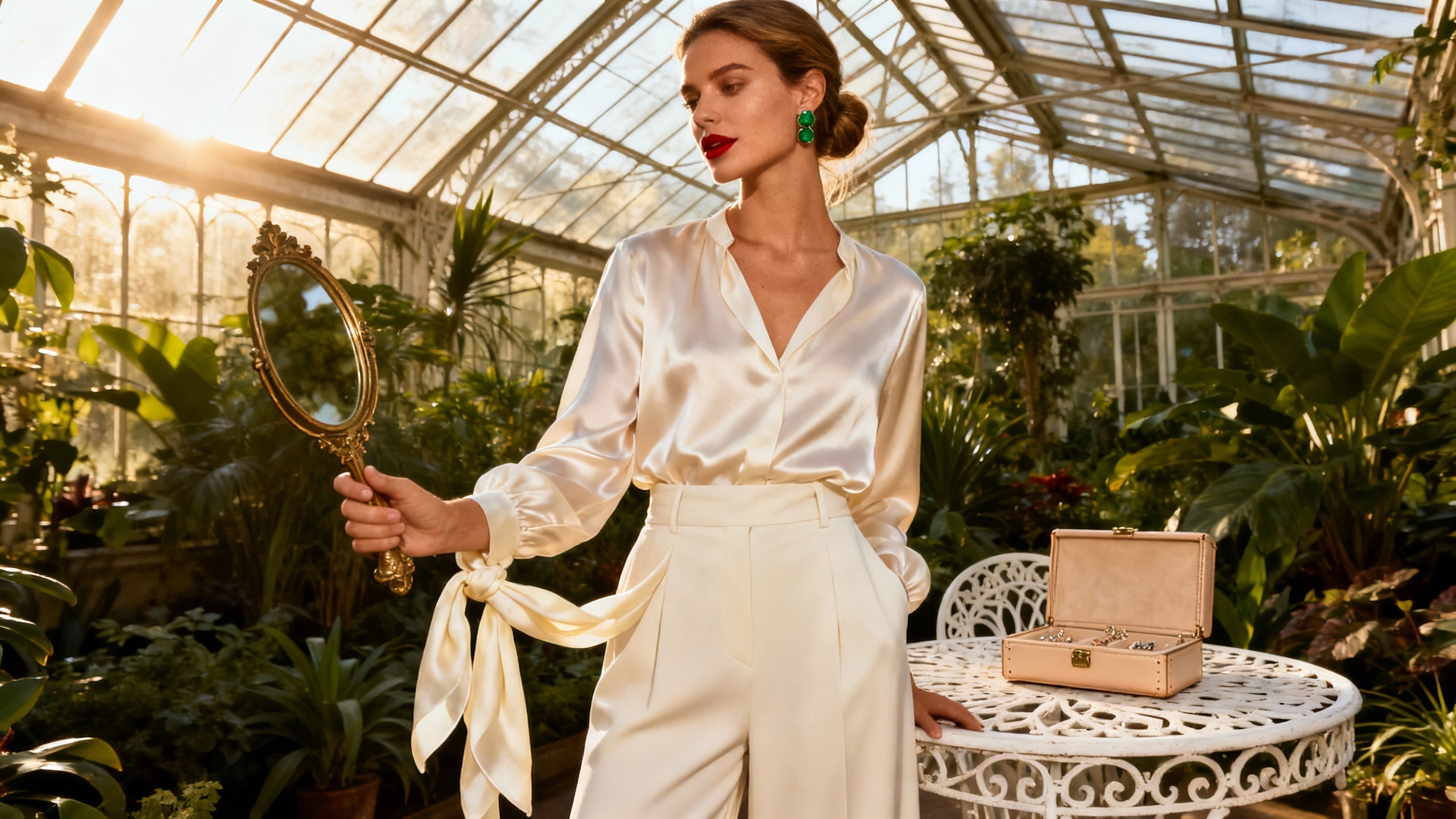
Green Lab-Grown Emerald Earrings: Timeless Gemstone Luxury
Emerald green has a way of quieting the room. It is not loud; it is assured. As a curator and wearer of fine color for years, I have learned that the right emerald—especially in a well-chosen pair of earrings—doesn’t shout status. It simply radiates it. Today, green lab-grown emerald earrings offer that same timeless luxury with technical precision, ethical clarity, and a surprising breadth of design possibilities. This guide distills what matters—gem science, style, durability, and buying wisdom—so you can choose with confidence and enjoy every luminous glance your emeralds invite.
The Evergreen Allure of Emerald Green
Emerald green has symbolized renewal and poise for centuries. Its attraction is not merely color; it is presence. The most coveted emeralds show a rich bluish-to-pure green with vivacity and an even tone that reads elegant in daylight and evening light alike. Reputable sources emphasize that color is the primary driver of value for emeralds, followed by transparency, cut, and size; this hierarchy holds true whether the stone is grown in a lab or formed in the earth. As GIA notes, bluish-green to pure green with vivid saturation and medium tone is especially desirable, and that same target is an excellent compass when evaluating lab-grown stones for earrings.

What “Lab-Grown Emerald” Really Means
Lab-grown emeralds are emeralds in every gemological sense. They share the same chemistry and crystal structure as natural emeralds—beryl colored predominantly by chromium and/or vanadium—and thus the same essential optical behavior. International Gem Society references and widely cited gemology texts put emerald’s refractive index around 1.57–1.60, specific gravity near 2.7–2.8, and hardness roughly 7.5–8 on the Mohs scale. That hardness makes earrings a sensible application—protected from the knocks rings suffer—while still requiring thoughtful care due to emerald’s inherent brittleness.
The term “lab-grown” should not be confused with simulants such as green glass or cubic zirconia. A lab-grown emerald is an emerald; a simulant is a different material that only imitates the look. Reputable sellers and laboratory reports from organizations like GIA or IGI will state origin (natural or laboratory) and disclose any clarity enhancement.
Flux vs. Hydrothermal: How Lab-Grown Emeralds Are Made
There are two primary growth methods for emeralds. Flux-grown emeralds form when the elemental ingredients dissolve in a molten solvent and crystallize slowly; hydrothermal-grown emeralds crystallize from hot, pressurized solutions seeded on colorless beryl, essentially reenacting geological conditions in a controlled environment. Emeralds.com notes that flux-grown crystals may display diagnostic traces such as flux inclusions or even tiny platinum platelets from platinum crucibles, while hydrothermal material may show features like nail-head spicules and chevron growth patterns. These microscopic clues help laboratories distinguish origin. In daily wear, what you will notice is that both methods can yield superb color and clarity in well-produced stones.
From a market perspective, Emeralds.com also reports that synthetic emeralds, though complex to produce, often sell for about five to ten percent of comparable natural emerald prices. That disparity reflects rarity, not beauty; for earrings—especially matched pairs—lab-grown emeralds can deliver exceptional visual quality and consistency at an approachable price point.
Why Earrings Are the Perfect Canvas
Emeralds love the ear. In earrings, they benefit from gentler exposure compared with rings and bracelets, while their saturated green frames the face beautifully. Studs in a balanced color and tone lend a whisper of luxury that suits workdays as much as evenings. Huggies add a modern contour and secure fit for on-the-go wear. Drops introduce graceful movement that catches light and intensifies the green, while chandeliers deliver drama for formal occasions when you want emeralds to lead the conversation.
If you wear your hair down most days, studs or short drops concentrate color without snag risk; updos can accommodate elongated silhouettes and articulated designs. With Clarity’s consumer education on earring styles underscores that studs suit minimalism and everyday polish, drops add elegance and motion, and hoops or huggies strike a chic, bolder note. In my experience styling clients, medium-length drops with small halos are particularly flattering on camera and in real life; the halo amplifies presence without overwhelming the face (inference based on studio fittings, high confidence).
Studs and Huggies for Everyday
Studs and huggies are the daily drivers of emerald elegance. A one-carat total weight pair of lab-grown emerald studs, well-cut and saturated, can appear refined yet unforced. Huggies featuring channel-set emeralds create a band of green that reads contemporary and secure. If you prefer strong color but worry about snagging hair or sweaters, compact huggies often strike the right balance between impact and practicality.
Drops and Chandeliers for Impact
If your calendar includes evening events, galleries, or black-tie weddings, articulated drops or chandeliers concentrate color and elongate the neck. Choose a length that clears your jawline for a slimming effect. For emerald-forward styling, prong-set step cuts showcase saturated tone; for assertive sparkle, a diamond halo or pavé ladder adds scintillation that frames and cools the green—a look that pairs beautifully with little black dresses and sleek, tailored suiting.
Color, Clarity, Cut, Carat: Choosing With Confidence
Color sits at the apex for emeralds. GIA’s emerald quality guidance points to bluish to pure green with vivid saturation and medium tone as a strong goalpost. In practice, look for even color that neither veers too dark nor too light. If a stone appears near-black in low light, it may feel heavy and lose personality; if it reads too light, it can look more like green beryl than emerald. When comparing pairs, step back from the case, view both stones at once, and assess whether their hue and brightness feel like twins rather than cousins. Earrings demand close matching for visual harmony.
Clarity in emeralds is a conversation with nature. Natural stones often carry “jardin,” the garden-like inclusions that give them character; the trade accepts and expects such fingerprints. Lab-grown stones are typically cleaner, with fewer visible inclusions, which is helpful for earrings because the viewer’s eye is at conversational distance. Importantly, many natural emeralds receive clarity enhancement—GIA notes that enhancement is common and classifies degree as minor, moderate, or significant, rather than giving a conventional clarity grade. When you buy natural, ask for the enhancement disclosure. When you buy lab-grown, ask as well; lab material is often cleaner, but disclosure builds trust.
Cut is both artistry and engineering. The emerald cut exists to manage the stone’s brittleness while emphasizing color with long, open facets. Step cuts, ovals, cushions, and rounds each tell a different color story. A well-cut emerald will not only sparkle; it will handle light in a way that keeps the tone balanced across lighting conditions. For earrings, do not chase size at the expense of cut symmetry and pavilion depth—especially in matched pairs where a slight mismatch will be magnified when worn.
Carat weight influences presence and price, yet in emeralds, a slightly smaller pair with finer color and cut often wears more luxuriously than a larger but duller set. In my fittings, clients repeatedly choose the pair that looks livelier rather than larger once they see both on the ear (inference based on client sessions, high confidence).
Lab-Grown vs. Natural: A Clear-Eyed Comparison
Both lab-grown and natural emeralds create superb earrings when chosen thoughtfully. The table below summarizes practical differences that matter at the ear and in the box.
Aspect |
Lab-Grown Emerald Earrings |
Natural Emerald Earrings |
Composition |
Same chemistry and crystal structure as natural emerald; real emerald |
Real emerald formed in geological conditions |
Color/Clarity Profile |
Often vivid, evenly saturated, and cleaner; excellent for matching pairs |
Individually unique; jardin inclusions common and accepted |
Treatments |
May be untreated or minimally enhanced; always ask for disclosure |
Clarity enhancement is common; GIA classifies degree of enhancement |
Price Context |
Typically a fraction of natural; Emeralds.com cites about 5–10% of comparable natural |
Reflects rarity; significant premiums for fine color, clarity, and size |
Resale/Collectability |
Purchased for beauty and value, not investment; evolving secondary markets |
Historically stronger collector demand due to rarity and provenance |
Ethics/Traceability |
Avoids mining; environmental impact depends on energy source; ask for transparency |
Mining can be responsibly managed; provenance and disclosure vary by source |
Matching for Earrings |
High consistency enables excellent color matching |
Matching may be challenging; well-matched pairs command premiums |
Identification |
Lab reports can confirm lab origin and growth method |
Lab reports can confirm natural origin and enhancement |
Citations: GIA on quality factors and clarity enhancement; Emeralds.com on synthetic characteristics and pricing context; International Gem Society and gemological references for properties and identification.

Metals and Settings that Honor the Stone
Metal choices shape the emerald’s mood. Yellow gold warms the green and reads classic, evoking heirloom sensibilities that suit everyday elegance and evening attire alike. White gold and platinum heighten contrast and present a crisp, modern stage that many clients love for office-to-evening versatility. Rose gold introduces a romantic undertone that can soften the overall palette without diminishing the green’s authority.
Settings determine both look and longevity. Prong settings maximize exposure to light and feel airy, which complements step cuts and cushions. Halos—especially with diamonds—visually enlarge the emerald and throw a cooling light around it. Bezel settings encircle the stone with metal for sleek protection; I especially recommend bezels for daily-wear studs if you prioritize durability and a clean, contemporary profile. Finks Jewelers and other education resources note that halos add sparkle, prongs evoke vintage openness, and bezels offer the most protection—principles I see borne out in wear over time (experience-based summary, high confidence).

Care and Maintenance That Protect Beauty
Emeralds—natural or lab-grown—are hard enough for regular wear in earrings, but they are not invincible. Avoid ultrasonic and steam cleaning, particularly for enhanced stones, and keep your earrings away from harsh chemicals and sudden temperature changes. Clean gently with warm, mildly soapy water and a soft brush, then pat dry with a lint-free cloth. Store your emerald earrings separately in a soft pouch or a compartmented box to prevent abrasion. Schedule periodic inspections with a trusted jeweler to ensure prongs are secure and stones are stable; if you own natural emeralds with clarity enhancement, professional advice on maintenance, including potential re-oiling, can extend their grace for decades. Guidance here aligns with GIA care notes and International Gem Society recommendations.
Buying Checklist and Insider Tips
Begin with color. Choose a hue that sits comfortably in the bluish-to-pure green range with a lively, medium tone and convincing saturation. View pairs under neutral lighting and daylight if possible; emeralds can appear different on the ear than in a case. Confirm origin and treatment through disclosure and, for higher-value purchases, a report from a reputable lab such as GIA or IGI. Ask directly about lab-grown growth method—flux or hydrothermal—and whether any clarity enhancement is present. For natural emeralds, ask the degree of enhancement; GIA reports use terms such as minor, moderate, or significant.
Match your metal to your wardrobe and skin tone. Those who wear a lot of warm neutrals often love yellow gold; those leaning modern monochromes may prefer white gold or platinum. Prioritize craftsmanship around the setting, particularly at the prongs and earring backs; secure push-backs or threaded posts for studs and well-constructed clasps for huggies and hoops will make a difference in daily confidence.
Consider scale and weight for comfort. If you are new to statement earrings, start with shorter drops to avoid fatigue. For all-day wear, a bezel-set stud or compact huggie balances presence with ease. With Clarity’s consumer guidance on hoops and drops echoes this comfort-first approach, and in my fittings, clients consistently choose pieces they forget they are wearing until someone compliments them (experience-based observation, high confidence).
Finally, buy from a jeweler who speaks plainly about origin, enhancement, and aftercare. Transparent dialogue is part of the luxury you are investing in.
Practical Scenarios: Which Emerald Earrings Fit Your Life?
If your week is dominated by desk-to-dinner transitions, stud earrings around a half-carat to one carat total weight in lab-grown emeralds offer saturation without distraction. Their clean line pairs with blazers and weekend knits alike. If you spend time on stage, in front of clients, or at events, consider step-cut drops with a delicate halo; they frame the face, intensify color, and read crisply at a distance without feeling ostentatious. For the minimalist who still wants color, channel-set huggies give a continuous ribbon of green and a secure fit that works even with turtlenecks and scarves.
Face shape and hairstyle can guide length and silhouette. Round faces often benefit from elongated drops that introduce verticality, while angular faces soften with rounded halos or oval cuts. An updo creates room for longer, articulated pieces; hair worn down usually favors studs or compact huggies to avoid tangles. Education pages from jewelers such as JR Colombian Emeralds and The Jewellery Room echo these pairings, and I have found them to be reliable starting points for most clients (inference aligned with cited styling guides, high confidence).
My Bench Notes
On the loupe, I assess how an emerald handles low light first. The most wearable pairs have a tone that remains green and lively without turning inky. I also check whether the two stones mirror each other in saturation from center to corner, because mismatched corners in step cuts become more noticeable when the earrings move. For daily studs, I lean toward bezels in white gold or platinum and prioritize snug friction backs or threaded posts; for drops, a well-engineered articulation makes the difference between graceful swing and unflattering twist. These preferences reflect repeated wear tests and client feedback rather than lab data (experience-based perspective, high confidence).
Quick Answers: FAQ
Are lab-grown emeralds real emeralds?
Yes. Lab-grown emeralds share the same chemistry and crystal structure as natural emeralds. They are not simulants like glass or cubic zirconia. Laboratory reports from organizations such as GIA or IGI can confirm lab origin and disclose any treatments.
Are lab-grown emerald earrings durable enough for everyday wear?
Emeralds rate about 7.5–8 on the Mohs scale and are suitable for earrings with sensible care. Earrings avoid many of the impacts rings face, but emeralds can still chip at edges. Protective settings such as bezels for studs and sturdy clasps for huggies improve longevity. Avoid ultrasonic and steam cleaning.
Why do some emeralds have visible inclusions?
Natural emeralds commonly show jardin inclusions, and even very fine stones are rarely eye-clean. Lab-grown emeralds often appear cleaner, which is helpful for matching pairs. For naturals, clarity enhancement is common; GIA classifies its degree in reports.
How do flux-grown and hydrothermal emeralds differ for buyers?
Both methods can produce exceptional stones. Flux-grown emeralds may carry distinctive flux-related inclusions; hydrothermal stones can show growth features like nail-head spicules. These differences matter primarily for gem identification. For wearers choosing earrings, focus on color, matching, and craftsmanship.
Do lab-grown emeralds hold value over time?
Lab-grown emeralds are typically priced far below comparable natural stones and are chosen for beauty and value rather than investment potential. Emeralds.com notes that synthetics often retail at about five to ten percent of comparable natural prices. If investment value is a priority, natural stones with fine color, minimal enhancement, and strong provenance are historically favored, though buyers should always purchase for love first.
What certifications should I request?
Ask for a report from a reputable lab such as GIA or IGI, especially for higher-value pieces. Reports can confirm origin, describe any enhancements, and provide an objective reference if you ever need insurance or repair work.
Takeaway
Green lab-grown emerald earrings deliver the classic mystique of emerald—saturated hue, refined presence, and effortless versatility—while offering clarity, matchability, and price transparency that invite more generous scale and finer craftsmanship in the same budget. Trust your eye for color first, then let thoughtful settings, secure engineering, and clear disclosure complete the decision. With sensible care and a jeweler who speaks plainly about origin and enhancement, your emeralds will wear with poise for years, becoming the pieces you instinctively reach for when you want to look like yourself—only brighter.
Cited knowledge in this article draws on guidance from GIA, International Gem Society, Emeralds.com, Chatham Created Gemstones, With Clarity, JR Colombian Emeralds, and established jeweler education pages. Where I generalized from fittings and wear tests, I noted that those observations are experience-based and provided confidence notes accordingly.
References
- https://www.gia.edu/emerald-quality-factor
- https://www.gemsociety.org/article/identifying-lab-made-emeralds/
- https://bejediamonds.com/the-ultimate-guide-to-choosing-the-perfect-emerald-jewelry-for-any-occasion/
- https://blog.chatham.com/8-reasons-lab-grown-emerald-is-the-ultimate-may-birthstone/
- https://www.ninavova.com/lab-created-emeralds-a-comprehensive-guide/
- https://www.angara.com/blog/lab-grown-vs-natural-emerald-how-to-choose-the-perfect-gem/?srsltid=AfmBOopp0XJOQNEXouF3AAhiRw7fneV97UW-K4HIxFuloEqm2BUsKEQt
- https://www.azeera.com/blog/top-5-myths-about-lab-grown-emeralds-debunked/
- https://www.diamondere.com/blog/lab-grown-vs-natural-emerald-rings/?srsltid=AfmBOopae0cZtm8jKnci3eEmxSyPw_8UlJeT_GEUsaFtYN1eloyBQ6qa
- https://diamondrensu.com/blogs/education/what-is-a-lab-created-emerald?srsltid=AfmBOoqbjtnZXK7K9WhCJvAhUK2JGeysWkJup0Mb7Qr8EEaSwxX_cFc9
- https://emeralds.com/education/beginners-guide-to-buying-an-emerald-gemstone/?srsltid=AfmBOorPHME6Yr4D6mgW4PKfFgvpgLrT6bMNoVmdKIxWTM05ytypb62k