Best Lab Grown Jewelry for Mother’s Day: Show Your Appreciation
Mother’s Day arrives every second Sunday in May with a tender reminder to honor the women whose everyday courage, patience, and love shape our lives. Jewelry, when chosen thoughtfully, becomes more than adornment; it carries a story, a memory, and a promise to keep her close. In recent years, lab grown diamonds and gemstones have transformed how I select and recommend fine jewelry for this occasion. They open a world of design freedom, traceability, and value without asking you to compromise on beauty or durability. Drawing on bench-side evaluations, studio appointments, and years of comparing stones under magnification, I will guide you through how to choose the best lab grown jewelry for Mother’s Day—what it is, why it matters, and how to buy with confidence.
Why Lab Grown Jewelry Speaks to This Moment
Lab grown diamonds and gemstones are real stones created in controlled environments that replicate nature’s conditions. They share the same crystal structures as their mined counterparts and are cut, polished, and graded by the same criteria. For families choosing Mother’s Day gifts today, these pieces offer three compelling advantages. First, they’re excellent value. Based on multiple market briefs and retailer disclosures, it is more certain that lab grown diamonds are typically priced about 20–40 percent below comparable mined stones, which means you can choose a larger carat, a finer cut, or a more intricate setting within the same budget. Exact spreads vary by brand and moment of purchase and still need to be verified against current listings, but the value trend holds across many categories.
Second, they align with modern expectations for ethics and transparency. Conventional mining has been linked to deforestation, heavy-metal pollution, and human-rights harms. Conscious Fashion Collective has documented how diamond and gold extraction can displace Indigenous communities and degrade ecosystems, while a study in the Proceedings of the National Academy of Sciences connects large-scale mining to significant tropical deforestation over recent decades. SCS Global Services outlines further impacts, from river diversions to mercury pollution, and notes that millions of people depend on complex supply chains that are not always transparent. These realities are why many responsible brands today foreground recycled precious metals, lab grown stones, audited sourcing, and circular programs. The Good Trade, Vogue, and Oprah Daily have each profiled artisans and companies prioritizing recycled gold, traceable or lab grown stones, and made-to-order production to reduce waste.
Third, the technology enables remarkable consistency and artistry. In my own loupe work, I find lab grown stones are often cut to exacting standards, with crisp facet junctions and consistent light return that make choosing a high-performance piece more accessible. That reliability supports design decisions that are meant to become heirlooms: tennis bracelets that sit fluidly on the wrist, precise solitaire pendants that catch the light at any angle, and huggie hoops she’ll reach for every day.
What “Lab Grown” Really Means
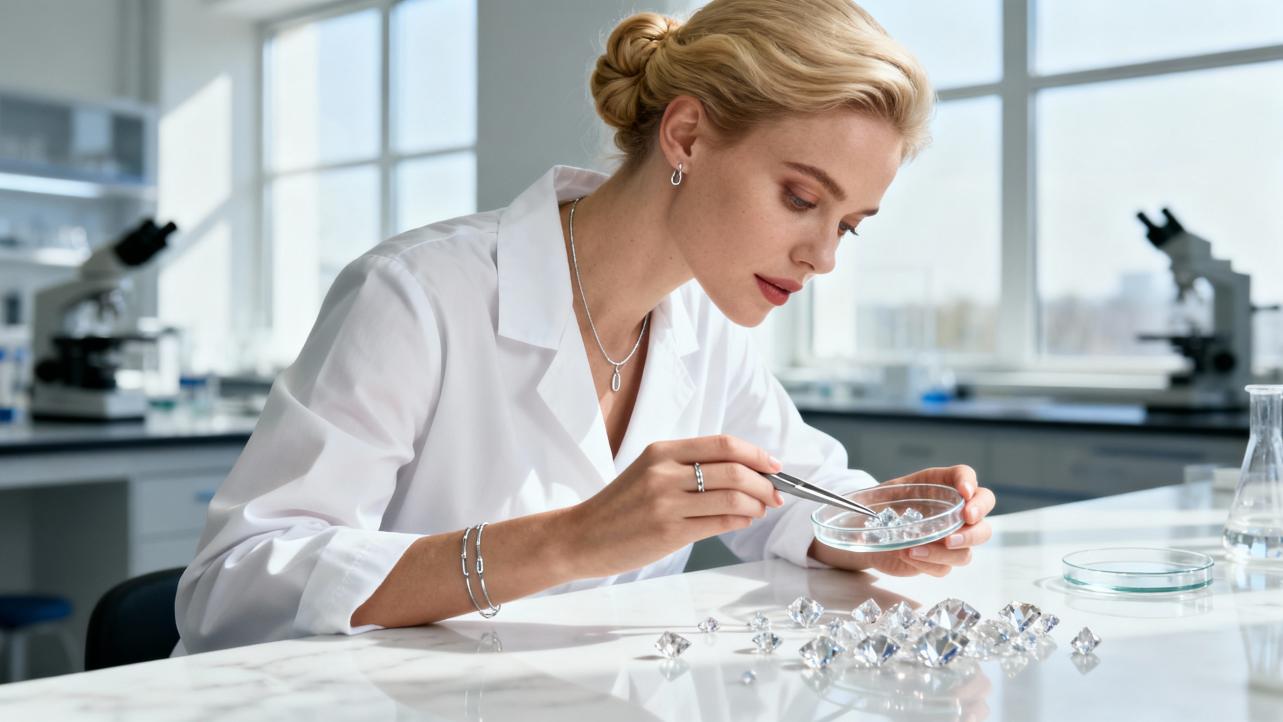
Two methods—HPHT and CVD—grow diamonds in the lab. They differ in equipment, conditions, and typical outputs, but both yield diamonds with the same fundamental properties as mined stones. CUNY Pressbooks and a research brief on Academia.edu describe these processes and have allowed me to compare growth signatures with what I see in finished jewelry. The conditions are formidable—far beyond a home kiln—and the final diamonds are cut and graded like any other. The table below clarifies the essentials.
Method |
How It Grows |
Typical Conditions |
Notes for Buyers |
HPHT (High Pressure–High Temperature) |
A diamond seed is placed in a press where carbon dissolves in a molten metal flux and crystallizes onto the seed. |
Roughly 2,300–2,600 °F and pressures on the order of hundreds of thousands of psi; sources note ranges approaching about 870,000 to 1,500,000 psi depending on the press and flux, which may varies by producer. |
HPHT can produce beautifully colorless stones and vivid fancy colors. Metallic inclusions are possible; reputable grading reports disclose growth method and clarity details. |
CVD (Chemical Vapor Deposition) |
Carbon-rich gas is energized into plasma; carbon atoms deposit layer by layer on a diamond seed. |
Approximately 1,500–2,200 °F in a low-pressure vacuum chamber; multiple crystals can grow in one run. |
CVD advances have delivered large, often Type IIa crystals prized for their purity. Post-growth treatments are sometimes used to fine-tune color; labs disclose this. |
Gemological institutes such as GIA provide reliable identification for origin and treatments, and disclosure is standard practice in responsible retail. This is not a second-tier substitute; it is a different path to the same crystalline marvel with audit trails modern buyers expect.

Choosing the Perfect Piece for Her Style
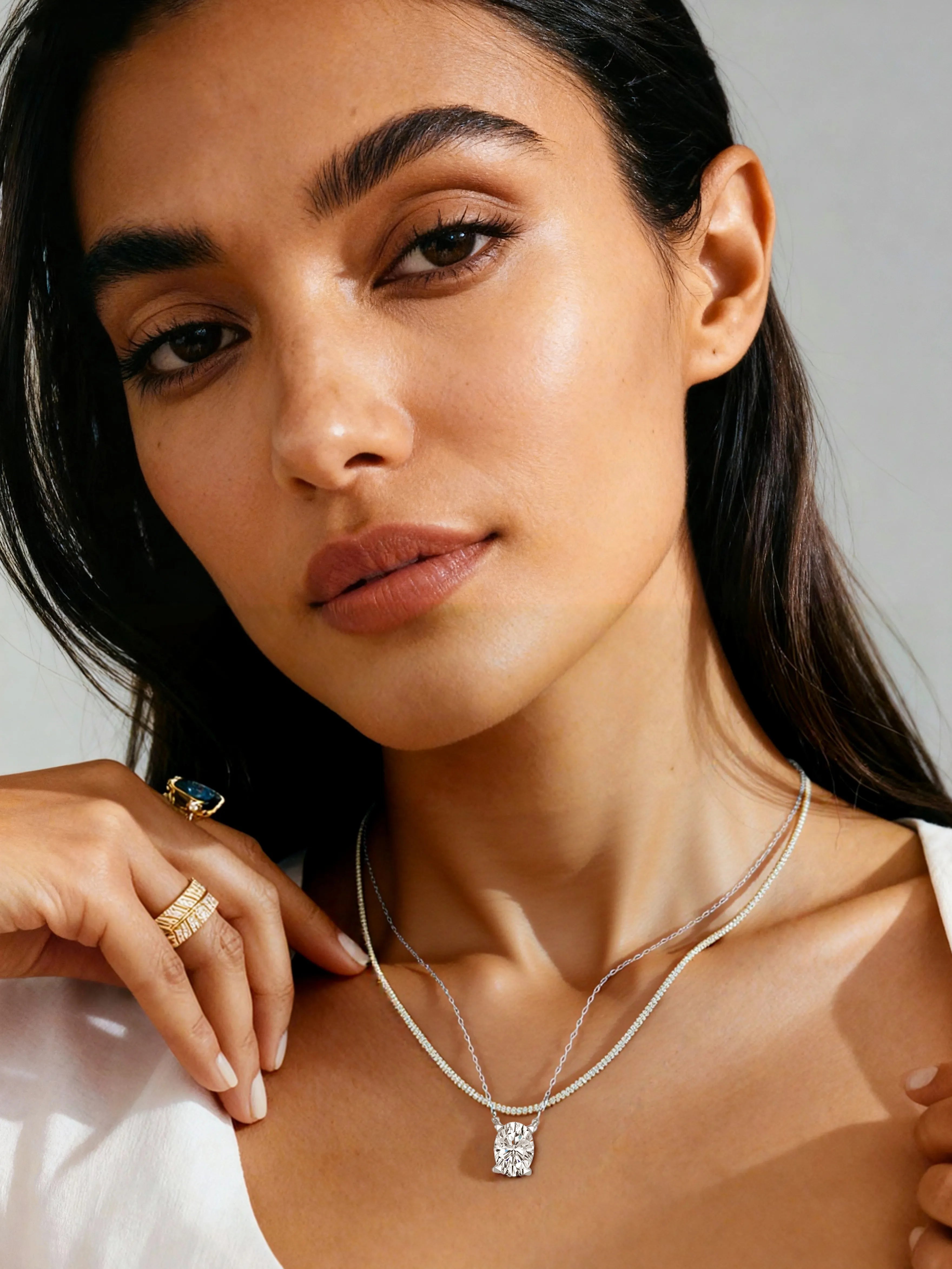
The most meaningful gift begins with a portrait of her daily life. I start by observing what she wears without thinking. If she lives in button-downs and knits, add lab grown diamond studs with secure screw-backs for a luminous but understated finish. If she stacks bracelets or watches, a flexible lab grown diamond tennis bracelet offers continuity and movement she can dress up or down. Whiteflash highlights the modern ease of tennis bracelets and bangles and shows how three-prong studs work as a wardrobe essential at many budgets, an observation that matches what I see on wrists and lobes Monday through Sunday. For a mother who prefers one signature piece, a round brilliant lab grown solitaire pendant set on a fine cable chain will rest against the collarbone with a clean, light-catching circle that invites layering without demanding it.
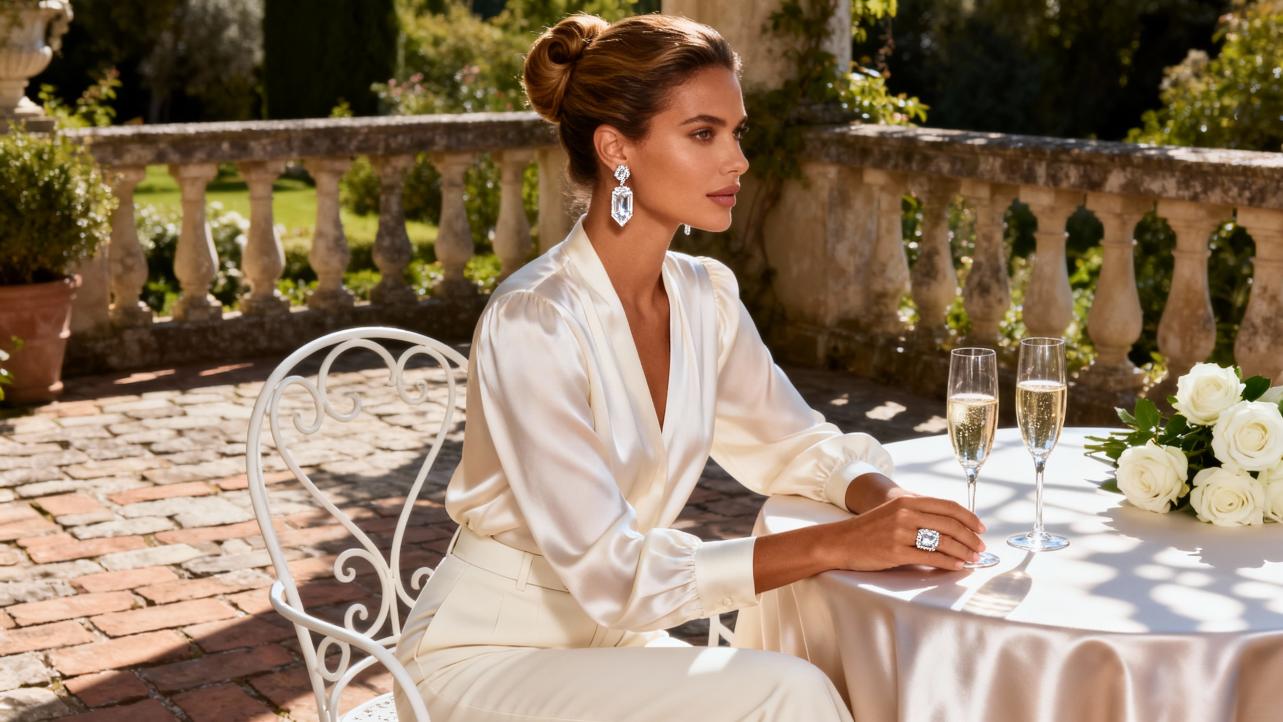
Hoops invite a little bravado while remaining practical, especially when you choose a hinged huggie or a small three-stone design that sits close to the ear. For evenings or milestone celebrations, cascade drops in graduated sizes elongate the neck and add a sculptural line of brilliance. Whiteflash’s discussion of cascade earrings mirrors how clients reach for these when they want to feel taller and more dressed without changing their outfit. If she loves quiet symbolism, a bezel pendant with a birthstone—sapphire for September, emerald for May—or a petite heart or initial rendered in lab grown diamond pavé will become a daily amulet. VRAI’s framing of “intentional gifts” resonates here: the best pieces are the ones that carry your message in her visual language.
Diamonds or Color? The Case for Lab Grown Gemstones
There is a particular joy in color that never fades. Brands like Grown Brilliance and Chatham present lab grown sapphires, rubies, and emeralds with rich saturation and consistent clarity that make design decisions beautifully straightforward. For blue lovers, a lab grown sapphire in a bezel ring or a fine-line pendant lends serenity. Ruby amplifies warmth and affection in a cushion halo, while emerald’s poised green lights up both yellow and white gold in pendants and statement studs. Retailers such as deBebians showcase a wide array of cuts—rounds, ovals, emerald-cut, pear, and cushion—along with multiple millimeter sizes for custom settings. If her style leans modern-minimalist, take a single vibrant stone and set it in a neatly engineered east–west orientation to create a subtle twist.
For mothers who appreciate craftsmanship, colored gemstones grown in the lab offer assurance of supply and uniformity without sacrificing authenticity. These are not simulated plastics; they are crystalline materials with the chemistry and optics of their mined counterparts. That fidelity makes color-forward gifts just as heirloom-worthy as diamonds when executed with thoughtful design and sound workmanship.

The Ethics and Impact, Made Clear
Sustainable jewelry is not only about avoiding harm; it is about choosing better systems. SCS Global Services surveys the scale of conventional extraction, citing earth displacement and pollution that can degrade watersheds and community health. Conscious Fashion Collective has reported on the social disruption and ecological damage associated with diamond and gold mining and has highlighted circular solutions such as reclaimed metals, carbon-capture diamond technologies, and redesigning heirlooms. The Good Trade, Vogue, and Oprah Daily each underline practical practices: recycled or Fairmined metals, audited supply chains, local or made-to-order production to minimize waste, and trade-in or recycling programs that keep materials in circulation.
On metals, recycled gold and sterling silver are refinable without loss of precious content. Luna & Rose’s use of 99 percent recycled sterling silver exemplifies how durability and aesthetics coexist with responsible inputs. Mainstream names like Brilliant Earth position their lines around responsible sourcing, traceability, and recycled metals; while each brand’s claims deserve scrutiny, the direction of travel is unmistakable. Even within traditional retail, a major US jeweler’s Mother’s Day catalog shows a robust mix of lab grown and natural diamond options across necklaces, rings, earrings, and bracelets at broad price bands, suggesting that value-led, lower-impact choices are already mainstream.
One important nuance is energy. Academia.edu’s research brief notes that HPHT and CVD can be energy-intensive; the environmental benefit therefore depends on the power mix and the producer’s efficiency. As a buyer, I tilt toward suppliers that publish life-cycle assessments, use renewables, or hold carbon-neutral certifications, and I ask explicitly about energy sources. Some producers provide third-party verification; others do not. This is where your values and patience for due diligence matter most.
Pros and Cons at a Glance
Option |
Strengths |
Considerations |
Lab Grown Diamonds |
Excellent value, high clarity and cut consistency, strong traceability, same durability and brilliance as mined; wide design freedom and quick availability. |
Energy intensity varies by producer; ask about power sources and published impact reports; resale norms are evolving and may differ by market. |
Lab Grown Gemstones (Ruby, Sapphire, Emerald, etc.) |
Vivid color with reliable supply and sizing; ethically straightforward; ideal for personal symbolism and custom designs. |
Some purists prefer naturals for rarity; disclose lab origin clearly for future appraisals. |
Vintage or Recycled Metal + Reused Stones |
Highest circularity; preserves family heritage; no new extraction; often cost-efficient when resetting heirlooms. |
Requires a skilled bench to evaluate prongs, channels, and stone integrity; timelines can be longer if redesigning. |
Mined Diamonds and Gemstones |
Historical romance; natural rarity; established secondary market in some categories. |
Environmental and social impacts documented by SCS Global Services and Conscious Fashion Collective; provenance and labor conditions vary widely. |

How to Buy with Confidence
Start with the story you want to tell, then translate it into specifications she will feel every day. For diamonds, cut quality matters most to the eye. Insist on excellent or ideal cuts with strong symmetry and polish; review high-resolution images and videos. Whiteflash’s guidance to use detailed media to judge light performance mirrors my own practice: you will see the difference before you ever hold the pendant or studs.
Next, confirm third-party grading. Reputable labs include GIA and IGI for lab grown diamonds; SGL appears in some markets; either way, ensure the grading report number matches the item you are buying. Expect clear disclosure of growth method and any post-growth treatments, especially with CVD. For colored gemstones, ask for make, clarity, and whether the stone has been diffusion-treated or color-enhanced; most lab grown rubies, sapphires, and emeralds are admirably straightforward.
Metal choice should reflect her palette. White and yellow gold dominate many US assortments, with sterling silver and rose gold also available. If she wears warm tones, 14k yellow gold provides both durability and a rich hue; if she prefers cool neutrals, 14k white gold or platinum will be her anchor. When in doubt, peek at her favorite rings or necklaces to match metal color and finish.
Pricing spans widely with taste. Lab grown diamond studs can be found in high-color, high-clarity one-carat ranges around a little over one thousand dollars per stone in some retailer examples, while full-line tennis necklaces ascend as carat totals climb. These figures fluctuate; use them as starting points and still need to be verified against current listings. In my experience, you will consistently see more carat-per-dollar with lab grown pieces, especially in line styles where total carat weight defines presence.
Timelines are the hidden hero of gift success. If you are customizing, plan two to four weeks ahead for production and any engraving or sizing, a recommendation echoed by jewelers who specialize in personalized work. Ready-to-ship items move faster, but Mother’s Day carries high order volumes and shipping cutoffs. Ask for a promised ship date in writing and track the package. If you are resetting an heirloom, leave time for stone evaluation, prong work, and a final polish.
Policies matter as much as polish. Brands like Limelight Diamonds emphasize certifications and even lifetime buyback and exchange; terms vary by market, but the concept is useful. In the US, look for clear return windows, resizing support, and warranty coverage on craftsmanship. Exchange programs and trade-up pathways can add long-term value, particularly for studs and solitaires that you may upgrade over time.
Care, Longevity, and Everyday Wear
Diamonds and corundum gems such as sapphire and ruby are durable choices for everyday wear. Even so, the setting and finish shape lifespan. A low-profile bezel guards a pendant or ring against snags, while screw-back posts keep studs secure in the daily rush. Clean gently with warm water, mild soap, and a soft brush, then pat dry. Avoid harsh chemicals and abrasives that can dull metal or cloud certain gems. Store pieces separately in fabric-lined compartments to prevent scratches and tangling. Brands like Ana Luisa advise simple, regular care, and that matches what keeps my own test pieces bright: quick cleanings, mindful storage, and a periodic professional check of prongs and clasps.
Mother’s Day Gift Ideas That Never Miss
Think in terms of her rhythm, then refine the details. A lab grown diamond solitaire pendant on a fine chain slips under collared shirts and silk blouses with equal grace. If she prefers movement, a lab grown diamond tennis bracelet offers a river of light she will feel every time her hand rests on a steering wheel or coffee cup. For color lovers, a lab grown emerald halo pendant radiates on yellow gold, while bezel-set lab grown sapphires as studs add a precise pop of blue that reads both classic and modern. If she has more than one child, birthstone charms arranged on a station necklace can grow with the family. And for a mother who has quietly kept the household clock wound, consider a pair of hinged hoops with three-stone accents that shine without ever shouting.
A Note on Sustainability and Proof
Sustainability claims deserve scrutiny. SCS Global Services urges circularity—reusing heirlooms, choosing recycled metals, and assessing producers’ energy sources. Conscious Fashion Collective and Vogue point to brands publishing traceable supply chains and measurable targets. If a retailer mentions carbon-neutral production or recycled content, ask for third-party documentation. I look for clear sourcing pages, annual impact reports, and certifications such as Fairmined for metals. Not every claim will come with perfect paperwork today; still, you can prioritize directionally better choices and request evidence. Over time, these questions reshape the market.
Frequently Asked Questions
Are lab grown diamonds real diamonds?
Yes. Lab grown diamonds have the same carbon crystal structure as mined diamonds, are cut and polished by the same methods, and are graded by the same 4Cs. Institutes such as GIA and IGI issue grading reports, and responsible sellers disclose the growth method and any treatments.
Do lab grown diamonds and gemstones last as long as mined stones?
They do. Durability is a property of the material, not its origin. Diamond is diamond whether grown in a modern chamber or the earth’s mantle. What most affects longevity is the setting’s engineering, wear habits, and regular maintenance.
How much can I save by choosing lab grown?
Market data and retailer disclosures suggest it is relatively certain that lab grown diamonds are commonly 20–40 percent less than mined diamonds of comparable size and quality. Exact differences may vary with brand, cut quality, and availability and still need to be verified against current listings when you shop.
What certifications or paperwork should I ask for?
For diamonds, request a grading report from a recognized lab such as GIA or IGI; some markets also use SGL. Reports should list carat weight, color, clarity, cut, and laser inscription. For metals, ask whether gold or silver is recycled or Fairmined and whether the brand publishes traceability information.
Are lab grown gemstones a good alternative for color?
Absolutely. Lab grown sapphire, ruby, and emerald offer vivid color and reliable sizing with ethical clarity. They are excellent for birthstone pieces, symbolic colors, and clean, modern silhouettes where you want high saturation without rarity-driven premiums.
What is a safe timeline for a custom Mother’s Day gift?
If you are customizing a ring, pendant, or bracelet, plan two to four weeks for production plus shipping. Ready-to-ship pieces can arrive sooner, but Mother’s Day demand increases lead times. Confirm ship dates, and allow a cushion for engravings or resizing.
Takeaway
A Mother’s Day gift should feel like a whisper of gratitude she hears every time the light catches it. Lab grown jewelry lets you express that sentiment with unmistakable brilliance, trustworthy documentation, and thoughtful value. Choose a design she will live in, match the metal to her palette, confirm credible grading and clear sourcing, and give yourself enough time for a calm, confident purchase. Whether you settle on a diamond solitaire that anchors her days or a gemstone halo that brings her favorite color to life, you are not simply buying jewelry—you are inscribing love in a material that endures.
References
This guide draws on reporting and education from Conscious Fashion Collective, SCS Global Services, CUNY Pressbooks, Academia.edu, The Good Trade, Vogue, Oprah Daily, Whiteflash, VRAI, Grown Brilliance, Chatham, deBebians, Limelight Diamonds, Luna & Rose, Brilliant Earth, and Helzberg Diamonds.
- https://www.academia.edu/129555736/New_Era_of_Lab_Grown_Diamond
- https://production.cbts.edu/Textbook/41X6ya/418178/Diamonds-Are-A-Girls-Best-Friend.pdf
- https://pressbooks.cuny.edu/learners/part/how-are-diamonds-created-in-a-lab-the-different-steps-explained/
- https://old.ntinow.edu/fulldisplay/tSFzbB/9S9175/diamonds_the_truth_behind-the__bling__answer-key.pdf
- https://dev.ppc.uiowa.edu/libweb/2P8017/index.jsp/DiamondsTheTruthBehindTheBlingAnswerKey.pdf
- https://www.thediamondguys.net/collections/mothers-day-lab-grown-diamond-gifts?srsltid=AfmBOopOCKdwxXYGoo3CUMN11bEGAJ9JBN3WLaiSAV4nhFio0KX80OGs
- https://www.grownbrilliance.com/gemstone-jewelry
- https://www.jared.com/lab-created-gemstones?srsltid=AfmBOorYH2pQZOoffYWzMcrk1ve2TNPu3pVRCbcwqYXt15i7Yibs-rp1
- https://www.kayoutlet.com/lab-created-gemstones-101
- https://lunaandrose.co/?srsltid=AfmBOoruSD_4x6hH2LHNAN5j6c-xIavBNMEDxGbFB7wS2dnc7OtUF-jj