Red Lab‑Created Ruby Necklaces: Bold Statement Jewelry Collection
The first time I styled a deep‑crimson lab‑created ruby pendant against a black satin gown, the room itself seemed to inhale and hold its breath. Red rubies have that effect—commanding, luminous, and unapologetically glamorous. When the ruby is lab‑created, you add modern precision, ethical clarity, and compelling value to the romance. This guide distills what I have learned hands‑on, and anchors that experience in reputable gemstone knowledge so you can select, wear, and care for red lab‑created ruby necklaces with authority and confidence.
What “Lab‑Created Ruby” Really Means
A lab‑created ruby is not a simulant. It is corundum—aluminum oxide—colored by trace chromium, just like its mined counterpart. That chemistry yields the same remarkable hardness and everyday resilience. On the Mohs scale, rubies sit at a formidable 9, second only to diamonds, which makes lab‑created ruby necklaces well suited to frequent wear when the setting and chain are properly engineered. GIA emphasizes that color drives value and beauty in rubies, with the most prized hues sitting in the vibrant red to slightly purplish‑red window. In practice, lab creation often delivers consistently saturated color with fewer visible inclusions, while still offering the lively fluorescence that gives rubies their inner glow under varied lighting—a phenomenon jewelry lovers have admired for generations, as heritage‑focused houses such as John Atencio frequently note when discussing ruby’s symbolism, history, and July birthstone status.
From an ethics and sourcing perspective, lab creation offers traceable, high‑control production without the environmental variability inherent to mining. That said, the romance of natural rarity remains compelling to many collectors, and it’s reasonable to expect the secondary‑market value of natural rubies to exceed that of lab‑created examples, a point lifestyle jewelers such as Argent & Asher have summarized by noting that synthetic rubies share physical composition but are generally less valued. If you are buying to wear and enjoy rather than to collect, the equation often favors lab‑created: identical chemistry, impressive durability, precise cuts, and strong color for a fraction of the cost.

Lab‑Created vs. Natural: A Clear Comparison
Dimension |
Lab‑Created Ruby |
Natural Ruby |
Look & performance |
Identical chemistry; often cleaner and evenly saturated |
May show characteristic inclusions; color varies by origin |
Price & availability |
Lower cost; reliable supply in desired sizes and shapes |
Higher cost, especially in fine qualities and larger sizes |
Ethics & transparency |
Controlled production; straightforward disclosure when labeled correctly |
Requires careful provenance; ethical sourcing possible but variable |
Collectability & resale |
Lower collector prestige; value concentrates in craftsmanship |
Rarity carries prestige; fine stones command notable premiums |
Consistency for design |
Excellent color and cut consistency for matched suites |
Natural variance adds uniqueness but complicates matching |
Documentation to request |
Clear statement of lab origin and any treatments |
Lab report when value warrants; explicit treatment disclosure |
The core takeaway is simple: if your priority is a bold, wearable statement with top‑tier sparkle for a smart budget, lab‑created is an excellent choice, provided that the listing clearly discloses origin and any post‑growth treatments.
Color, Contrast, and How to Wear Red
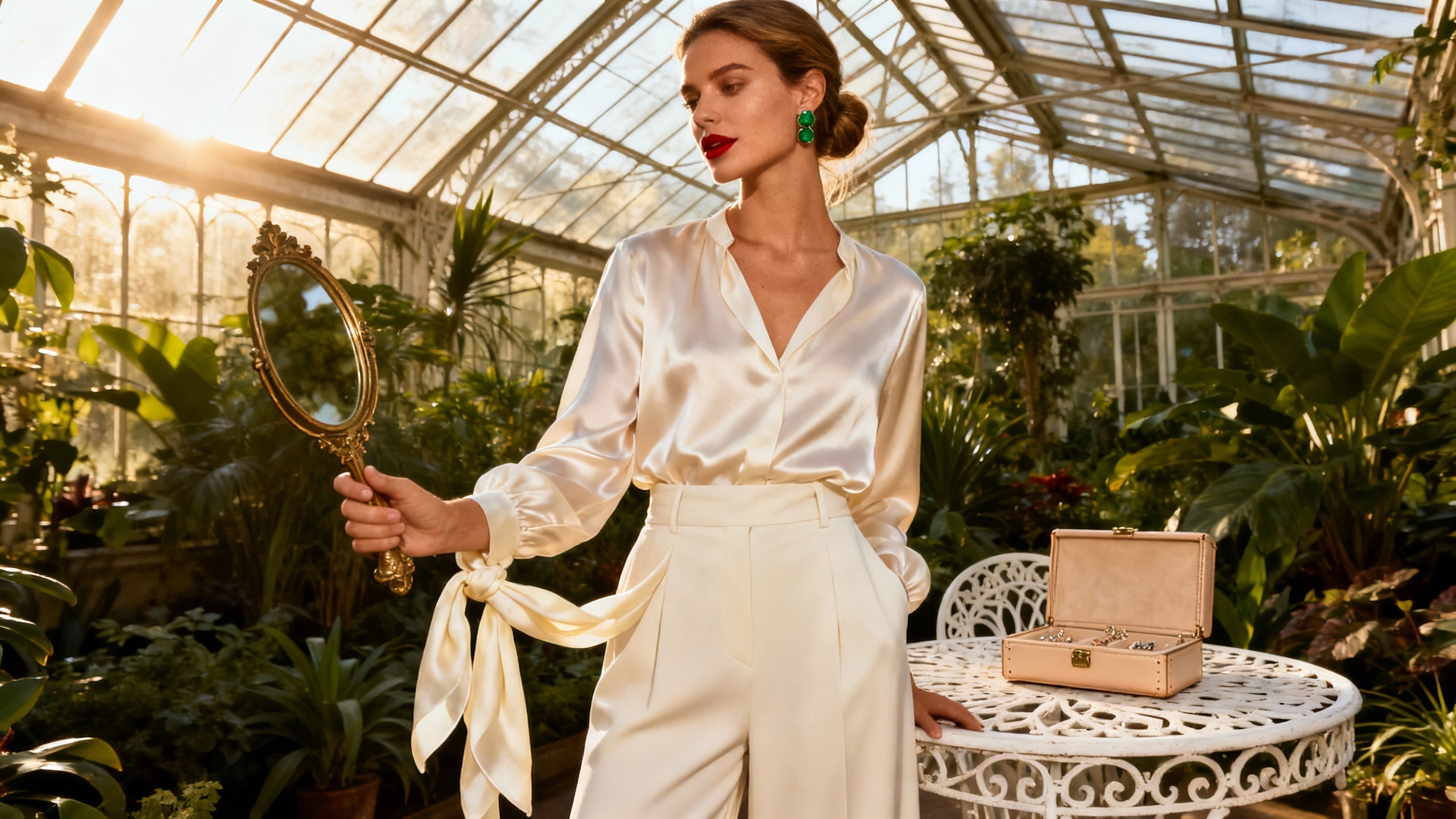
Red rubies thrive on deliberate contrast and disciplined color stories. Styling editors at The Natural Ruby Company and Al Joher remind us that complementary, contrasting, and monochromatic strategies all work—if you keep the ruby in the starring role. Green, which sits opposite red on the color wheel, delivers high‑impact harmony. A forest‑green blouse or an emerald velvet sheath lets a red pendant erupt into vivid life without shouting. Navy, royal blue, and midnight are a refined alternative when you want depth without chromatic conflict. Black remains the timeless stage on which rubies perform with cinematic intensity, while crisp white produces a gallery‑clean frame that heightens vibrancy. If you love romantic minimalism, blush and soft pinks build a monochrome story around your necklace; vary textures—silk, crepe, fine gauge knits—so the look never falls flat.
Celebrity choices support these principles in the wild. GemsNY’s curation points to pendants and halo silhouettes seen on red carpets and in spotlight moments, such as a sleek solitaire favored by Victoria Beckham and the layered square pendant Taylor Swift wore at a major game. That range—from spare to starburst—illustrates how lab‑created rubies move effortlessly from day to night as long as the outfit supports the stone’s centrality.
Necklines and Lengths That Flatter
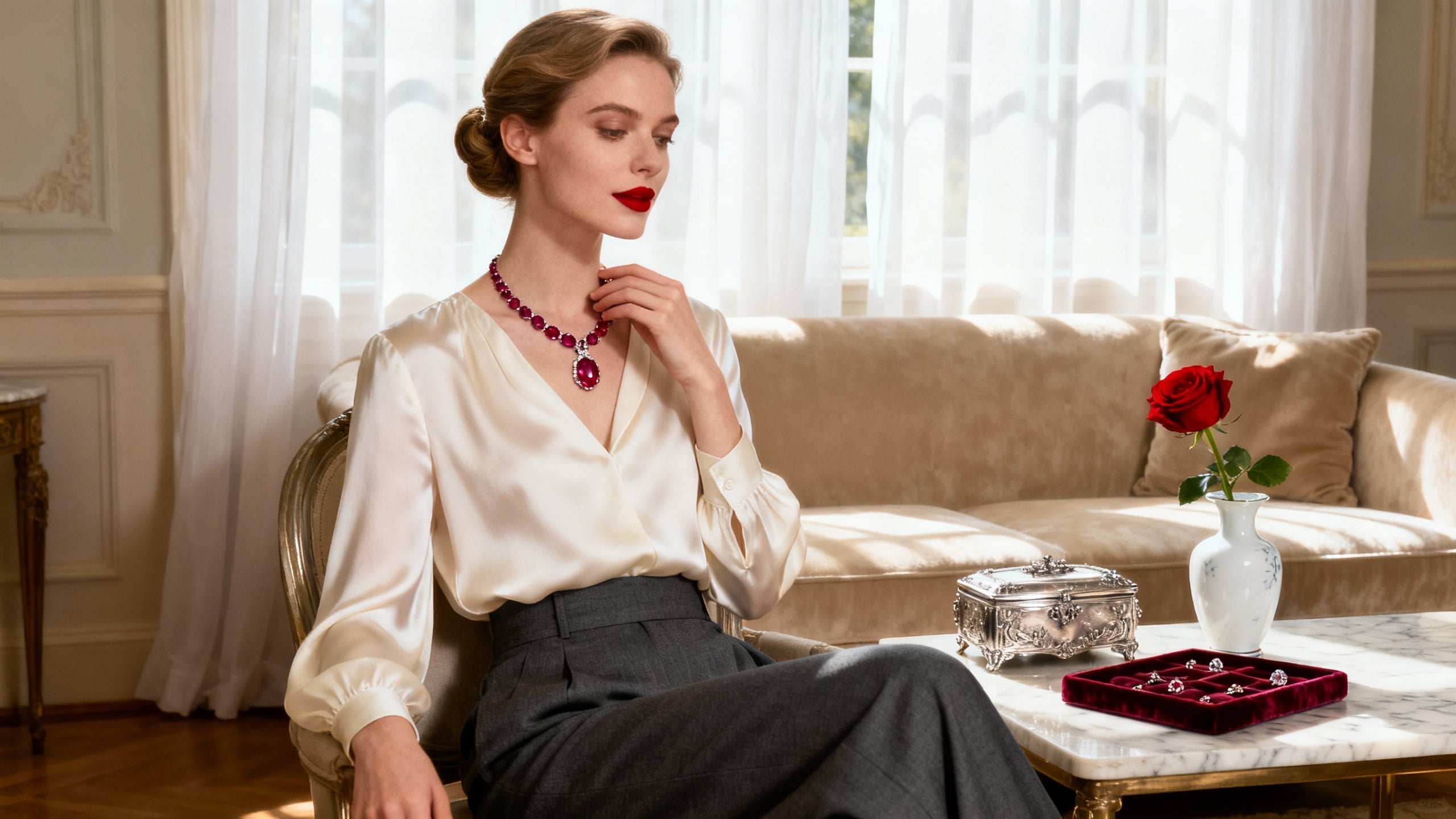
Neckline geometry controls how the eye discovers your necklace. Ferko’s Fine Jewelry articulates a straightforward framework: pair open space with presence, and coverage with finesse. A V‑neck begs for drop and line, making a slim pendant or a Y‑shape the natural partner. Off‑the‑shoulder and strapless silhouettes invite chokers and sculptural collars because the collarbone becomes a luminous stage. High necks call for verticality—long pendants and opera lengths that pull the gaze downward and elongate the torso. In everyday American wardrobes, 16–18 inches sits reliably near the collarbone for a majority of frames; chokers around 14 inches highlight the clavicle with ballet‑like poise; opera lengths from 24 inches and beyond suit turtlenecks or column dresses where you want movement and length without crowding the neckline.
Necklace Length |
Best Necklines |
Visual Effect |
~14 in choker |
Strapless, off‑the‑shoulder, bateau |
Accentuates collarbone; crisp, architectural presence |
16–18 in collarbone |
Crew, scoop, shallow V, most daywear |
Balanced focal point; easy to layer with a longer chain |
20–22 in matinee |
Deeper scoop, open collars, wrap tops |
Adds breathing room; frames the face without competing with prints |
24–30 in opera |
Turtleneck, high‑neck dresses, layered looks |
Elongates line; draws eye downward; elegant with winter knits |
When layering with a lab‑created ruby pendant, keep a two‑inch spacing between chains to prevent tangling and visual traffic. Let the ruby serve as the focal piece and let supporting chains add shimmer, not competition.

Metals, Skin Undertones, and the Mood You Create
Metal color does not just coordinate; it sets the mood. Education‑driven retailers such as Angara and broader styling sources agree on the broad strokes. Yellow gold intensifies warmth and reads classic, even regal, which pairs beautifully with the inherent heat of red. Rose gold deepens the romance and feels intimate and modern at once. White metals—white gold, platinum, and even sterling in budget‑conscious settings—deliver a cool, contemporary contrast that sharpens the red and projects polish. If your skin leans warm, yellow and rose gold tend to harmonize effortlessly. If you lean cool, white metals keep things crisp. Neutrals can wear any metal; choose the palette that coheres with your wardrobe and the story you want the necklace to tell.

Shapes, Settings, and Signature Silhouettes
Cut shape and setting architecture decide whether your necklace whispers, speaks, or sings. GemsNY’s design roundups map this terrain clearly. Ovals and rounds feel classic and balanced; princess or square cuts present a tailored, modern face; cushions offer softness; marquises elongate with chic drama; hearts telegraph romance without apology; pears add movement and vintage charm.
Settings finalize the personality and the practicality. A solitaire announces confidence and often suits daily wear, especially in a precise lab‑created ruby whose color does the heavy lifting. Bezels press a clean metal rim around the stone for modern minimalism and excellent security—ideal for active days and layered looks. Halos and starbursts wrap the center with diamonds for amplified scintillation and a red‑carpet attitude. Twist halos introduce torque and motion into the frame, great when you want energy without bulk. In daily life, I reach for bezels and slim prong solitaires for meetings and travel, then reserve starbursts and ornate collars for evenings when the neckline and lighting can do them justice.
Shape/Setting |
Style Message |
Practical Notes |
Best Moment |
Oval/round solitaire |
Classic, balanced, versatile |
High light return; easy to layer |
Everyday to office |
Princess/square solitaire |
Modern, tailored, sleek |
Graphic lines; pairs well with white metals |
Work to cocktails |
Cushion |
Soft, romantic |
Gentle corners reduce snagging |
Date nights, weddings |
Marquise bezel |
Elongated, editorial |
Secure and striking; directional |
Statement day‑to‑night |
Heart bezel/solitaire |
Sentimental, iconic |
Readable symbol; great for gifting |
Anniversaries, milestones |
Pear halo/starburst |
Vintage‑tinged glamour |
Maximum sparkle; more formal |
Evening and events |

Everyday to Evening: Styling That Respects Context
A red lab‑created ruby necklace can be the one jewel that ties your week together when styled with intention. For casual polish, think small and precise. A 16‑inch collarbone solitaire in rose gold over a white shirt and jeans sends a quiet but confident signal. In offices where refinement matters, less is more: a single pendant or a bezel‑set ruby with tiny diamond accents will light the face without drawing undue attention; pair with a navy sheath or charcoal blazer to keep the red authoritative, not aggressive. After dark, let the stone step forward. Deep black velvet, midnight satin, or champagne lamé give halos the stage they deserve, a formula that red‑carpet stylists and celebrities have reiterated season after season. The discipline is the same in every setting: craft a color story first, then fit shape, setting, and length to the neckline.

Quality, Grading, and Price Reality
Color sits at the top of the hierarchy for ruby quality, as gemologists at GIA stress. You are seeking a red that is vivid and properly balanced: not so purple that it cools into magenta, not so orange that it leans into garnet territory, and not so dark that it swallows light. Minor inclusions are expected; what matters is whether they distract the eye or compromise durability. Cut should protect the color and avoid windowing—those pale see‑through areas that leak light—especially in larger stones. With lab‑created rubies, the baseline often starts higher for color consistency and clarity, which is one reason they excel in statement necklaces.
Retailers may use their own quality tiers for colored gems. GemsNY, for instance, describes grades from A up to AAAA or even AAAAA in “untreated heirloom” contexts. Because grading systems differ by brand, your best defense is to compare like for like: the same millimeter size, the same metal, comparable clarity or grade, and similar total diamond weight if accents are involved. For budget planning, a curated set of lab‑grown ruby pendant examples highlighted by GemsNY ranged from about $503.00 for an entry oval solitaire to about $4,703.00 for a top‑tier round halo in 18K white gold, with several compelling value picks in the $898.00 to $2,138.00 window for premium lab‑grown center stones. Prices vary by retailer, metal, diamond quality, and craftsmanship, but this gives a realistic sense of the spectrum.

Buying Smart: A Connoisseur’s Checklist in Practice
A great lab‑created ruby necklace feels effortless because the diligence happened before you clicked buy. Start by verifying origin disclosure and any treatments. Heat enhancement is standard in the colored‑stone world, but you should know what you are purchasing, and you should be cautious with lead‑glass–filled rubies in necklaces you plan to wear frequently because their durability and cleaning limitations are significant. Reputable education sources such as Angara emphasize the value of clear disclosures.
Move next to metal and engineering. Choose a metal color that supports your skin tone and wardrobe, and confirm the chain is sized for the pendant’s weight with a secure clasp you can operate easily. For pendants, 16–18 inches suits most collarbones and layers well; if you prefer open necklines, ensure the drop ends within the negative space for balance. Review return and warranty terms, look for real‑life photos or short videos under varied lighting, and, when comparing prices, hold variables constant so that you are evaluating equivalently—millimeter size, grade tier, metal purity, and accent‑stone quality if present. A quick conversation with the seller about resizing options, lead times, and whether the piece is ready to ship or built to order will save headaches around holidays and travel.

Care and Longevity Without Anxiety
Cleaning a lab‑created ruby necklace is straightforward. Mix mild soap with warm water, use a very soft brush to reach around prongs and bezels, and pat dry with a lint‑free cloth. Avoid harsh household chemicals, and be mindful of ultrasonic or steam cleaning if the stone is fracture‑filled or extensively treated; when in doubt, ask the retailer first. Store your necklace in a dedicated pouch or compartment so the ruby does not abrade softer gems in a shared box. Remove your necklace for sports, heavy cleaning, and chlorinated pools, wipe it down after wear to clear cosmetics and lotion, and have the prongs and clasp inspected periodically so the piece remains road‑worthy for years.
The Case for Lab‑Created: Balanced Pros and Cons
Choosing lab‑created ruby is, at heart, a decision about intention. If your aim is to build an expressive, wearable wardrobe of red statement necklaces without chasing natural rarity, lab‑created delivers an extraordinary combination of beauty, durability, and value. You gain reliable color, precise cutting, and ethical clarity that fits easily into modern life. The tradeoffs are real but manageable: lower collector prestige than natural, lighter resale prospects, and the need to read disclosures carefully so you know whether a stone has treatments that affect care. As Argent & Asher’s plain‑spoken guidance suggests, the market recognizes the difference in valuation even though the atoms are the same. For most style‑driven wearers, the value proposition is compelling.
My Styling Playbook: What Works, Repeatedly
When I want a lab‑created ruby necklace to sing in daylight, I reach first for a bezel or slender prong solitaire at the collarbone over a white shirt, pairing it with a thin gold chain that sits two inches longer. I build a seamless office look with a navy sheath and a clean white‑gold pendant that floats like punctuation at the end of the collarbone. When the day includes dinner, I swap in a starburst halo and move to black or deep green silk; the ruby explodes under low light, and the diamonds spray light outward without overpowering the center. Monochrome can feel daring in red‑on‑red moments: a burgundy sweater with a cushion‑cut pendant reads quietly confident, especially in rose gold. The rule I never break is to let the ruby act as lead character; earrings and bracelets become its supporting cast—studs, not chandeliers, unless the neckline and occasion demand spectacle.

Quick Reference: Shapes, Settings, and Moments
Ruby Necklace Type |
The Feel |
Pairing Notes |
Rose‑gold oval bezel pendant |
Warm, romantic, streamlined |
Ideal over cream silk or blush knits; great daytime signature |
White‑gold princess solitaire |
Modern and crisp |
Sharp with a black blazer or a minimalist cocktail dress |
Yellow‑gold pear halo |
Vintage‑inflected glamour |
Electric against black velvet or deep navy satin |
Marquise bezel on long chain |
Editorial and elongated |
Striking over high‑neck cashmere or column dresses |
The idea is not to memorize combinations. It is to build a personal grammar so red always reads intentional and elevated.
FAQ
Q: Are lab‑created rubies as durable as natural rubies for a necklace I’ll wear often? A: Yes. Both are corundum at Mohs 9, which makes them highly resistant to scratching in daily life. Focus on a secure setting and an appropriately sturdy chain, and observe common‑sense care.
Q: How can I tell if a ruby has treatments that affect cleaning? A: Ask the seller to disclose treatments in plain language. Heat is widely accepted. Fracture‑ or lead‑glass filling improves appearance but limits cleaning options and durability; avoid ultrasonic and steam cleaners in that case.
Q: What metal should I choose if I want the red to pop without feeling heavy? A: White gold and platinum sharpen contrast and feel modern. Yellow gold amplifies warmth and reads classic. Rose gold adds romantic softness. Choose the effect and the skin‑tone harmony you prefer.
Q: What length is the most versatile for a pendant? A: For many people, 16–18 inches sits right at the collarbone, which flatters most crew and scoop necklines and layers easily with a longer chain.
Q: Are there realistic price expectations for lab‑created ruby pendants? A: Curated examples highlighted by GemsNY ranged from about $503.00 for a simple oval solitaire to about $4,703.00 for a top‑tier round halo in 18K white gold, with strong value in the $898.00 to $2,138.00 tier. Prices vary by brand, metal, and diamond accents.
Q: Why do stylists recommend green or navy with red rubies so often? A: Green is red’s complementary color, so the combination feels vibrant and intentional. Navy provides deep contrast without stealing focus. Education pieces from The Natural Ruby Company and Al Joher underline these color‑theory fundamentals.
Takeaway
A red lab‑created ruby necklace is modern jewelry’s perfect paradox: timeless fire delivered with today’s precision, ethics, and value. If you ground your choice in color that flatters, a silhouette that fits your necklines, and craftsmanship that respects daily life, the result is a piece that performs from weekday to gala. Trust the fundamentals gemologists champion—color, cut, and honest disclosure—then let your eye finish the story with metal, length, and styling. When you do, the necklace will not merely match your outfit; it will define it.
Brief sources cited: GIA for quality factors and color primacy, GemsNY for design archetypes and market examples, John Atencio for symbolism and July birthstone context, Angara for everyday wear, care, and disclosure guidance, The Natural Ruby Company and Al Joher for color‑pairing strategy, Ferko’s Fine Jewelry for neckline logic, and Argent & Asher for concise notes on synthetic versus mined value.
References
- https://hongkong.gia.edu/research-news/tropical-paradise-ocean-inspired-jewelry-gemstones
- https://conference.auis.edu/index.php/797m0G/890153/TheOneAndOnlyRuby.pdf
- https://www.dickinsonjewelers.com/blog-post/4-ways-to-wear-rubies-that-youll-fall-in-love-with
- https://blog.gemsny.com/10-ruby-necklace-designs-for-celebrity-like-fashion/
- https://aljoher.ca/blogs/news/how-to-style-ruby-jewelry-outfits
- https://www.angara.com/blog/colored-gemstone-everyday-outfits/?srsltid=AfmBOooySoLz28vly6HazZU7lAYrCctiK_DG0aLJpFhgFm6Tn1ZE1l0d
- https://www.argent-asher.com/blogs/guides/how-to-style-ruby-jewellery-for-every-occasion?srsltid=AfmBOoo4J1iai4pENyHwu6jy6-BMYm_1lY7N3BZPc7abCfE3qDE0AZMk
- https://www.diamondere.com/blog/matching-rubies-to-your-outfits/?srsltid=AfmBOoqhNgiBhIWqt5TkBf5cc7Pq52-bnYi8sMAyEWqKZlnMGCXUhsOx
- https://www.etsy.com/listing/1133436212/lab-created-ruby-necklace-high-jewelry
- https://ferkosfinejewelry.com/blogs/journal/matching-jewelry-with-your-dress?srsltid=AfmBOoomtb7sKfeJxZau4fY00JT2xqL_I7PGvdf3NTuF67qAr4uskuGu