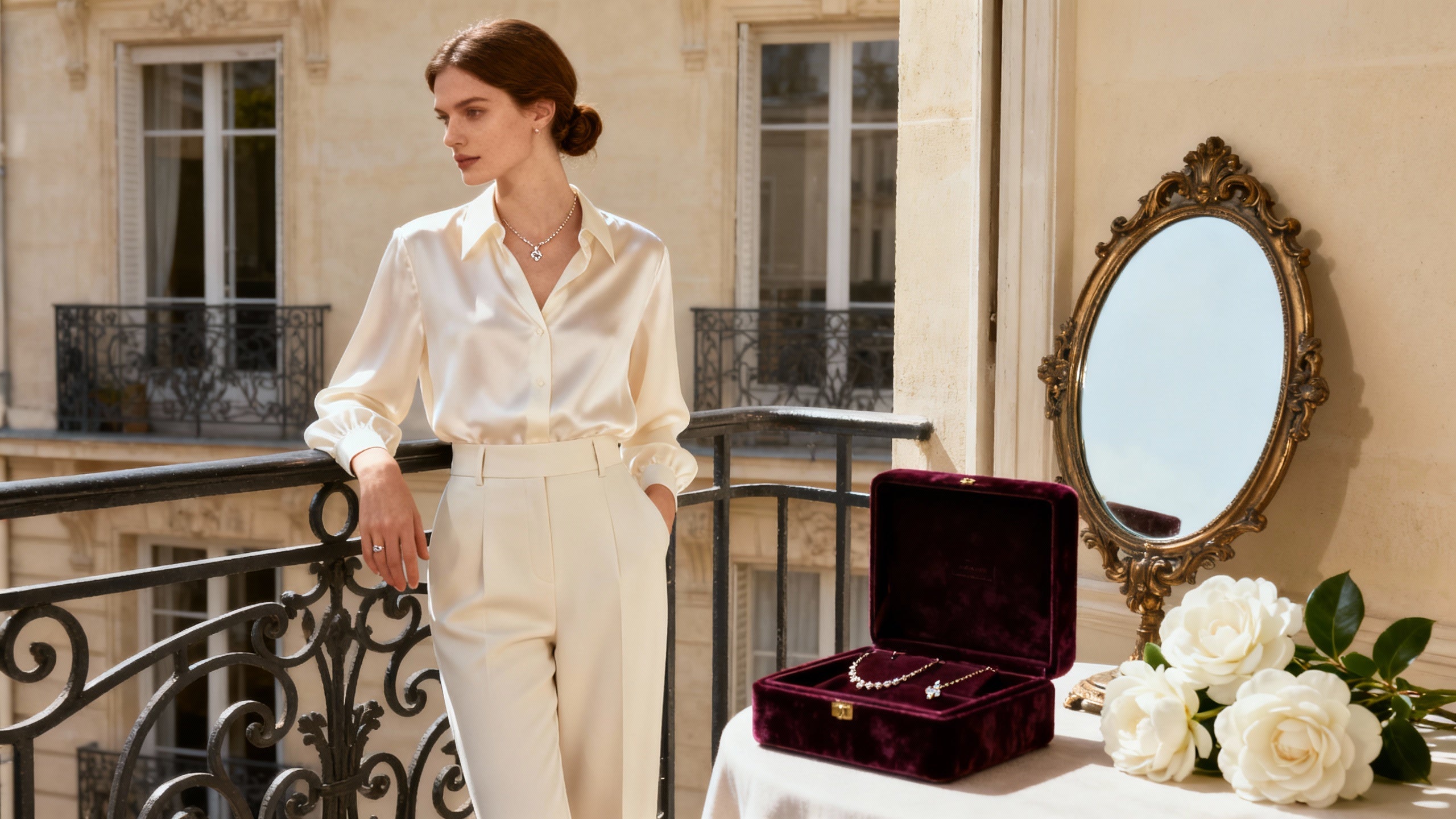
What Appropriate Jewelry Should Parents Wear to School Meetings?
Walking into a school meeting as a parent can feel surprisingly high stakes. You are there to talk about grades, progress, sometimes delicate behavior or emotional topics. The teachers and administrators are seeing you not only as “Mom” or “Dad,” but as a partner in your child’s education. Long before you say the first word, your appearance is already telling a story.
Jewelry, when chosen with intention, can make that story reassuring, respectful, and quietly confident.
Over the years I have helped teachers, executives, and parents refine what I think of as “conversation jewelry” for serious settings. The best pieces do what good parenting does: they support, they don’t overshadow. Drawing on professional style guidance from sources such as Corporette, LifestyleGCC, LaCkore Couture, Mvraki, and several back‑to‑school jewelry specialists, let us explore how parents can choose jewelry that feels like you, yet fits beautifully into the school environment.
Why Jewelry at School Meetings Matters
School meetings are not red‑carpet events, but they are social encounters shaped by human perception. Office‑wear research cited by LifestyleGCC notes that more than half of first impressions come from appearance, and a 2023 survey reported by the same source found that 71% of employees believe subtle jewelry helps them maintain a polished look at work. Those statistics were gathered in corporate settings, but the principle translates seamlessly to a parent seated across from a teacher.
Jewelry can:
- Signal that you respect the occasion and have made an effort.
- Convey warmth and approachability through gentle color and shine.
- Suggest reliability and composure through small, well‑kept pieces like a classic watch or simple ring.
On the other hand, jewelry can also distract from the purpose of the meeting. Professional stylists at Corporette and Mvraki repeatedly emphasize that noisy bracelets, oversized sparkle, and too many pieces at once pull attention away from your words and toward your accessories. In a school context, that means the glitter may speak louder than your concern or support.
The goal is not to impress with luxury, but to look like a thoughtful, grounded adult who is ready to listen and collaborate.
What “School‑Appropriate” Jewelry Really Means
When I translate the best corporate and academic jewelry guidance into a school setting, I come back to three core ideas: quiet, minimal, and intentional.
Jewelry experts advising teaching professionals and office workers agree on several points. CaratLane’s teacher‑focused guidance, LifestyleGCC’s office‑wear article, and LaCkore Couture’s corporate meeting tips all frame appropriate jewelry as simple, elegant, and non‑distracting. Mvraki’s academic conference guide adds a practical rule of thumb: keep total jewelry to roughly three or four pieces at most, counting earrings as one piece.
School‑appropriate jewelry for parents follows the same logic:
Quiet Pieces should not jingle, clank, or flash dramatically when you gesture or take notes. Corporette is unequivocal: noise is never good in professional settings. In classrooms and conference rooms, it is even more crucial, because sound travels in small spaces and teachers are attuned to distractions.
Minimal Less is more. Many style guides recommend no more than three or four pieces at once: for example, earrings, a watch, and a simple ring, or earrings, a delicate necklace, and a wedding band. This restrained approach echoes both Mvraki’s conference capsule and LifestyleGCC’s “one ring per hand” guidance.
Intentional Pieces should look chosen, not accidental. Everyday minimalism, as described by Matheu’s Fine Watches & Jewelry, focuses on delicate chains, slim rings, and classic studs in quality metals that layer easily and work from day to evening. For parents, this means favoring versatile staples that could just as comfortably accompany you to the office as to a parent–teacher conference.
When you keep those three ideas in mind, the question becomes not “Is jewelry appropriate?” but “Is this piece quiet, minimal, and intentional enough for this particular conversation?”

Reading the Room: Matching Jewelry to the Type of School Meeting
Not all school meetings are alike. A five‑minute hallway check‑in is very different from a scheduled discussion about learning challenges or a celebratory awards night. Professional guides for corporate and academic events repeatedly emphasize matching jewelry to the formality of the occasion, and that hierarchy adapts well for parents.
Here is a simple way to think about it.
Meeting type |
Overall tone |
Jewelry goal |
Good choices |
Routine parent–teacher conference |
Professional, warm |
Calm, attentive, collaborative |
Studs or small hoops, watch, simple ring or pendant |
Sensitive or disciplinary meeting |
Serious, focused |
Respect, stability, low distraction |
Tiny studs, no necklaces if neckline is busy, quiet watch |
Academic performance or awards night |
Polished, celebratory |
Slightly elevated, still understated |
Pearl or gemstone studs, slim pendant, refined bracelet |
PTA or volunteer planning session |
Relaxed, practical |
Approachable, energetic, not noisy |
Small hoops, delicate layered necklaces, slim cuff |
Virtual meeting with teacher or counselor |
Screen‑focused, close‑up |
Flatter face on camera, avoid glare and noise |
Medium studs, short pendant, no jangling bracelets |
Note how none of these scenarios call for dramatic chandelier earrings or a stack of clinking bangles. Even for more festive evenings, the best pieces mirror Mvraki’s advice for academic galas: allow at most one focal statement piece and keep everything else minimal.
Earrings: Your Most Reliable Ally
If you choose only one category of jewelry for a school meeting, let it be earrings. They frame your face, stay mostly out of your way, and, when chosen well, feel almost invisible to you while adding gentle polish to everyone else’s view.
Several student‑focused guides, including Senyda Jewels and FAD Magazine, advise young people to avoid overly large, flashy earrings in academic settings and instead favor delicate, subtle designs. The reasons apply equally to parents: large earrings move, glint, and steal attention every time you turn your head.
Drawing together advice from Senyda, LifestyleGCC, and corporate stylists, here is how to choose wisely.
Stud earrings Small studs are the safest and most universally recommended option. Senyda highlights small round studs and slender designs with tiny stones as ideal for maintaining a neat appearance without drawing excessive attention. LifestyleGCC notes that studs sit close to the ear, stay quiet, and support strong first impressions in interviews and presentations. In a school meeting, they convey that you are put‑together but not trying to put on a show.
Small hoops and huggies Many professional style sources, including Corporette and LaCkore Couture, praise small hoops that “hug” the ear. The key is scale and simplicity. Tiny gold or silver huggies that barely extend beyond the earlobe can look modern and warm without reading as evening wear. Office‑wear guidance for teachers and conference attendees generally cautions against hoops much larger than about an inch in diameter, because they swing and can be distracting.
Delicate drops If you prefer a bit of movement, a slim drop earring with a small pearl or gemstone can still be appropriate, especially for an evening performance or awards night. Academic jewelry guides suggest reserving more noticeable drops for slightly dressier events and keeping daytime or potentially tense meetings firmly in the stud or huggie category.
The pros of subtle earrings are straightforward: they highlight your eyes, brighten your face, and rarely cause comfort issues. The main “con” is psychological rather than practical; if you are accustomed to bold earrings, scaling back can feel unfamiliar at first. Remember that in this context, you want the teacher or administrator looking into your eyes, not tracking the swing of a crystal fringe.

Necklaces: Framing the Conversation, Not Dominating It
Necklaces are powerful. They sit at the center of your body’s “communication zone,” near your collarbones and gestures. Worn well, they bring light to your face; worn poorly, they command the conversation.
Back‑to‑school style guides from Atolea and LLUME encourage students to use thin chain necklaces and simple pendants as versatile staples that move easily between classes, work, and social events. Conference and corporate articles from Mvraki and LaCkore Couture echo this advice for adults: delicate chains, solitaire pendants, and classic pearls are ideal for formal or semi‑formal meetings.
For parents at school, consider three key questions before putting on a necklace.
Does it compete with your neckline? Mvraki recommends pairing necklaces to necklines: pendants for V‑necks, simple short chains for scoop or crew necks, and skipping necklaces altogether if your neckline is already high or embellished. That logic works beautifully for school meetings. A clean shirt or sweater with a single small pendant looks thoughtful; a busy printed blouse plus a multi‑strand statement necklace can feel like visual overload.
Is it visually louder than your message? Many office and conference sources warn against “cocktail” diamonds or large, sparkling bib necklaces outside of evening events. Corporette is particularly clear about avoiding dangly diamond earrings and highly bedazzled pieces in serious daytime settings. For parents, anything that looks like it belongs at a gala rather than in a classroom is likely to distract from what you are saying.
Does it carry meaning in a subtle way? One of the more charming trends in student jewelry, highlighted by F. Silverman Jewelers and Mvraki’s back‑to‑school roundup, is personalization: initials, nameplates, birthstones, and meaningful charms. Parents can borrow this idea gracefully with a refined initial pendant, a small birthstone representing a child, or a tiny symbolic charm. The key is scale. A delicate, coin‑sized pendant on a slim chain feels intimate; a large script nameplate surrounded by glittering stones may feel more like a performance than a partnership.
The pros of an understated necklace include warmth, a touch of personality, and the ability to dress up a simple top. The cons arise when necklaces are too heavy, noisy, or low‑cut for the setting. If you find yourself fidgeting with the chain as you anticipate a difficult conversation, take that as a cue to remove it. True confidence jewelry feels so natural you forget you are wearing it.

Bracelets, Watches, and Rings: Quiet Details at Your Hands
When you sign forms, flip through a grade report, or simply rest your hands on the table, whatever lives on your wrists and fingers becomes part of the conversation. Professional jewelry guides treat this zone with caution, and parents should too.
Watches Corporette and LifestyleGCC both champion the watch as a subtle symbol of reliability and respect for time. It does not need to be expensive; what matters is that it looks clean, in good condition, and proportionate to your wrist. LaCkore’s corporate meeting guide recommends sleek, minimalist watches with slim cases for formal settings, and office‑wear advisers note that a watch can stop you from repeatedly checking your cell phone, which can appear disengaged or impatient.
Bracelets Nearly every set of professional guidelines warns against noisy bracelets. Atolea cautions students to avoid pieces that clink against desks; LifestyleGCC and Mvraki say the same for office and academic events. For parents, that means choosing a single slim bangle, a quiet chain bracelet, or a low‑profile cuff that does not jingle when you move your hands or type notes. If you enjoy stacks of bracelets, reserve them for off‑campus days; stacked bangles belong in the playground, not in a serious discussion with a school counselor.
Rings LifestyleGCC describes a “one‑ring rule” for each hand to keep the look balanced and professional. Mvraki’s conference guide similarly recommends limiting ring stacks when you are also wearing a watch or cuff. In school meetings, wedding rings, a simple band, or a modest right‑hand ring are usually sufficient. Large cocktail rings or multiple fashion rings draw the eye down to your hands and can feel overly expressive, especially in tense or emotional discussions.
These small choices communicate far more than their size suggests. A classic watch and one or two well‑chosen rings say “steady, composed adult.” A handful of chunky rings and tinkling charm bracelets may say “restless” even if you feel entirely calm.

Metals, Colors, and School Spirit
Color is where jewelry meets emotion. Several back‑to‑school and trend articles, particularly from Atolea and Mvraki, lean on basic color theory to help students pair jewelry with their wardrobes in thoughtful ways. Parents can apply the same concepts with a gentler hand.
Warm versus cool tones LaCkore Couture and LifestyleGCC both mention coordinating metal tones with complexion and clothing. Their guidance is simple: silver and white gold tend to flatter cooler skin tones and bluish or gray‑based outfits, while yellow and rose gold sing against warmer skin and earth‑tone clothing. You do not need to turn this into a science project, but noticing whether you feel more “alive” in one metal over another can help you build a small, harmonious school‑meeting capsule.
Complementary and contrasting colors Atolea explains that complementary colors sit opposite each other on the color wheel, such as blue and orange or purple and yellow. They create a harmonious but gently striking pairing. Contrasting colors, like bright red against soft pink, share no common hue and feel bolder and more attention‑grabbing. In a school meeting, complementary combinations are usually safer. A navy dress with small citrine or amber studs (blue with warm gold) feels composed; neon‑green earrings with a burgundy blouse might commandeer the room.
School colors Back‑to‑school guides from Mvraki and several student‑oriented brands suggest wearing gemstone jewelry in school colors as a refined alternative to logo hoodies and merch. Parents can echo this with subtle choices: a tiny garnet pendant for a school with deep red in its branding, or a narrow sapphire‑colored bracelet for a school with blue tones. The spirit is supportive, but the execution stays polished.
Mixing metals Mixed‑metal “bridge pieces” are praised by Corporette and Matheu’s Fine Watches & Jewelry as a way to blend gold and silver confidently. LaCkore recommends starting with one dominant metal and then adding small touches of the second color, using two‑tone pieces or gemstones to tie them together. If you wear a wedding ring in yellow gold but prefer a stainless steel watch, consider a mixed‑metal bracelet or a necklace with both tones to make the combination feel intentional rather than accidental.
Sustainability and values Trends reports from F. Silverman and Mvraki highlight an increasing interest in recycled metals, eco‑friendly materials, and lab‑grown gemstones. A 2025 Statista study cited in those articles found that more than 70% of Gen Z consumers consider sustainability important when buying accessories. If your children are part of that generation, they are watching your choices. Opting for recycled silver hoops or a lab‑grown diamond pendant can quietly align your personal style with the values you are trying to instill at home.

Comfort, Safety, and Respect: Non‑Negotiables
No matter how beautiful a piece is, it is wrong for a school meeting if it hurts, distracts, or feels unsafe.
Comfort and skin sensitivity Back‑to‑school and student‑oriented guides repeatedly stress comfort and hypoallergenic materials for all‑day wear. Atolea, Mvraki, and several student jewelry brands recommend titanium, surgical steel, sterling silver, stainless steel, and quality gold plating over cheap base metals, especially for those sensitive to nickel. Parents may not be wearing their pieces for quite as many hours as students, but the same rule applies: if you constantly feel an earring digging or a bracelet pinching, your attention is not fully on the conversation.
Safety and practicality Teacher‑focused guidance summarized from CaratLane and academic conference advice from Mvraki both emphasize avoiding sharp, oversized, or easily snaggable jewelry in educational environments. Parents may find themselves leaning over small desks, navigating crowded hallways, or hugging a child in distress on the way out of a meeting. Long, pointy pendants and oversized rigid cuffs are poorly suited to that reality. Choose smooth edges, moderate lengths, and pieces that will not catch on a backpack strap or a knitted sweater.
Respectful symbolism Student trend articles indulge in playful motifs from Y2K smiley beads to oversized statement charms. Those can be delightful on teenagers. For parents in a school meeting, symbolism is best handled with restraint. Personalized pieces, zodiac signs, or meaningful charms can absolutely appear, but in small forms and refined settings. Selenichast, for example, frames zodiac and butterfly jewelry as talismans of identity and transformation; the same energy in a tiny pendant feels poetic, whereas a large, glittering symbol may distract from the seriousness of a conversation about grades or behavior.
Physically comfortable, emotionally appropriate jewelry allows you to be fully present. If you find yourself twisting a ring, adjusting a hoop, or worrying about whether a necklace is “too much,” that is valuable feedback from your body. Listen to it.
Caring for a Small “School Meeting Capsule”
One of my favorite ideas from Mvraki’s academic jewelry guide is the concept of a small, well‑considered capsule collection: ten to fifteen pieces that can cover an entire conference season. Parents can borrow that discipline for school meetings.
Think in terms of roles rather than quantity: a pair of everyday studs, a slightly dressier pair (perhaps pearls or small colored stones), one or two delicate necklaces, a watch you trust, and a couple of rings or bracelets you know will not misbehave. Corporette’s experience‑based advice is that a few well‑chosen pieces in good metals get far more wear and respect than drawers of cheap, faddish items.
To keep this capsule ready for any meeting, lean on the care routines echoed across Atolea, Mvraki, Matheu’s, and various student guides:
Clean gently Use mild soap and a soft cloth to remove skin oils and residue from frequently worn pieces. Harsh chemicals and rough scrubbing can damage plating and stones.
Store separately Compact organizers and soft pouches prevent tangles and scratches. This is especially useful if you keep your “school meeting” jewelry in a specific spot so you are not hunting for it five minutes before leaving home.
Check clasps and settings Both back‑to‑school and conference guides emphasize inspecting clasps and stone settings periodically. A loose clasp that fails in the school parking lot is more than inconvenient; it can turn a sentimental piece into a lost‑and‑found adventure.
Travel thoughtfully If you are heading directly from work to a school meeting, consider a small jewelry case or resealable pouch in your bag. That way you can swap out a larger daytime statement ring for a subtler band, or remove a bracelet that feels too expressive for a sensitive discussion.
A cared‑for capsule gives you one less decision to make on a day when your energy should be focused on your child, not on your accessories.
What Not to Wear: Common Jewelry Missteps at School
Because many of the same mistakes show up in corporate offices, academic conferences, and classrooms, the warnings from those worlds read like a checklist for parents as well.
Noisy stacks Multiple bangles or charm bracelets that clatter when you write or gesture are universally discouraged in office‑wear and teacher‑wear articles. In a quiet meeting room, the sound feels amplified.
Oversized sparkle Dangling crystal chandeliers, diamond‑encrusted watches, and large cocktail rings belong to the “cocktail jewelry” category that Corporette and Mvraki both flag as inappropriate for professional and academic events. In a school setting, they may look showy rather than supportive.
Too many pieces Mvraki’s “three to four pieces” rule is a helpful upper limit. Earrings, one necklace, one ring, and perhaps a watch are usually enough. When you layer multiple necklaces, rings, and bracelets all at once, you enter the “maximalist stack” territory that Essence celebrates for fashion‑forward students, not for parents in serious meetings.
Trend without filter Y2K beads, chunky resin rings, and animated motifs are joyful trends for students, described enthusiastically by F. Silverman, Mvraki, and student‑targeted brands. On a parent in a teacher conference, they can read as trying to match teenage energy rather than offering adult grounding. If you love those trends, integrate them outside of meeting contexts or channel their spirit through one small, well‑made piece.
Jewelry with distracting slogans Teacher‑wear summaries caution against pieces that carry potentially controversial or loud slogans. The same discretion serves parents well. Jewelry that shouts a message can unintentionally shift the meeting away from your child’s needs and into a conversation about your accessories.
When in doubt, ask yourself: if my jewelry were completely invisible, would anything important about my personality be lost? If the honest answer is no, you are on the right track for school.
Adapting Your Jewelry for Virtual School Meetings
Since 2020, more schools have used video calls for parent–teacher conferences and counseling sessions. Blue Nile’s guide to “Zoom‑worthy” jewelry offers several insights that apply perfectly to virtual school meetings.
Cameras crop tightly, so the focus is on your face and upper chest. Medium‑sized studs, small hoops, and short pendants in metals that complement your skin tone show up clearly without overwhelming the screen. Overly shiny, highly reflective pieces can create glare under home lighting, and noisy bracelets land uncomfortably close to your laptop or headphone microphone.
For virtual meetings, prioritize:
- Earrings that frame your face without swinging dramatically.
- Necklaces that sit high enough to stay visible on camera, but not so bold they become the star of the frame.
- Quiet wrists; consider removing bracelets so nothing taps the desk or keyboard audibly.
And just as for in‑person meetings, keep the count modest. The camera magnifies everything, including visual clutter.
Short FAQ
Can I wear a statement piece to a school meeting?
Yes, but with care. Professional and academic guides repeatedly recommend one focal piece at most in serious settings. If you love a particular bold ring or necklace, let it be the star and keep every other piece extremely understated. For a routine or sensitive meeting, consider saving true statement jewelry for another day; for a celebratory awards night, a slightly stronger focal piece can feel more appropriate.
Is it appropriate to wear my engagement ring set and a watch?
In almost all cases, yes. LifestyleGCC and Corporette both treat wedding and engagement rings, along with a classic watch, as core parts of a polished everyday look. The key is to avoid adding multiple extra fashion rings and a stack of bangles on top. Engagement ring, wedding band, a simple additional ring at most, and a refined watch create a balanced, respectful impression.
How should fathers approach jewelry for school meetings?
Most of the guidance applies equally. Blue Nile’s advice for men on video calls translates nicely: a classic metal or leather‑strap watch, a simple ring, and, if desired, a subtle chain that stays mostly inside the shirt collar. Overly chunky chains, large logo bracelets, or statement rings can distract just as much on fathers as on mothers. Aim for clean lines, quality materials, and pieces that look at home in a business‑casual office.
What if my jewelry has cultural or religious significance?
Pieces that carry deep personal meaning deserve a place in important moments. The key is to let them lead with dignity rather than competition. Wear your cultural or religious jewelry with pride, and keep the rest of your accessorizing minimal so that nothing detracts from its significance or from the conversation about your child.
Closing Thoughts
The most appropriate jewelry for school meetings does not shout; it listens with you. When you choose pieces that are quiet, minimal, and intentional, you allow teachers and administrators to see you as you wish to be seen: steady, attentive, and deeply invested in your child’s education. Think of your studs, slender rings, and simple watch as a kind of visual handshake. They do not have to be expensive, only considered. And once that story is set, your words can take their rightful place at the center of the room.
References
- https://corporette.com/how-to-build-a-jewelry-collection-for-work/
- https://www.lewisjewelers.com/journals/fashion-jewelry-styles-great-for-going-back-to-school
- https://www.rummeles.com/page/back-to-school-jewelry-trends-minimalist-styles-for-students.html
- https://atoleajewelry.com/blogs/waterproof-jewelry-blog/back-to-school-jewelry
- https://www.bluenile.com/blog/love-brilliant/beautiful-jewelry-for-your-next-video-call?srsltid=AfmBOoqo2Msz2g5oyNM53GYO4Jxmo2CYnZl9pnvetBhHqlnzYaK9WUUU
- https://www.caratlane.com/blog/jewellery-accessorizing-tips-for-teaching-professionals/?srsltid=AfmBOop4bPtvamTvtQVBjf8GhFdxhkBnUaYsUB-jbLtmziSL9qKjxWnh
- https://cateandchloe.com/blogs/bling-buzz/how-to-choose-the-perfect-jewelry-to-complement-your-back-to-school-wardrobe?srsltid=AfmBOopOMjgj_bE-oxpi_3I40VeAQ3C4GGVrdMZTrywAVWNg1ikPKUzv
- https://www.donderojewelry.com/blog/jewelry-styling/jewelry-ideas-for-prom-and-other-formal-events
- https://www.essence.com/fashion/back-to-school-jewelry-trends/
- https://fsilverman.com/f-silverman-jewelers-news/3-hot-trends-in-back-to-school-jewelry/