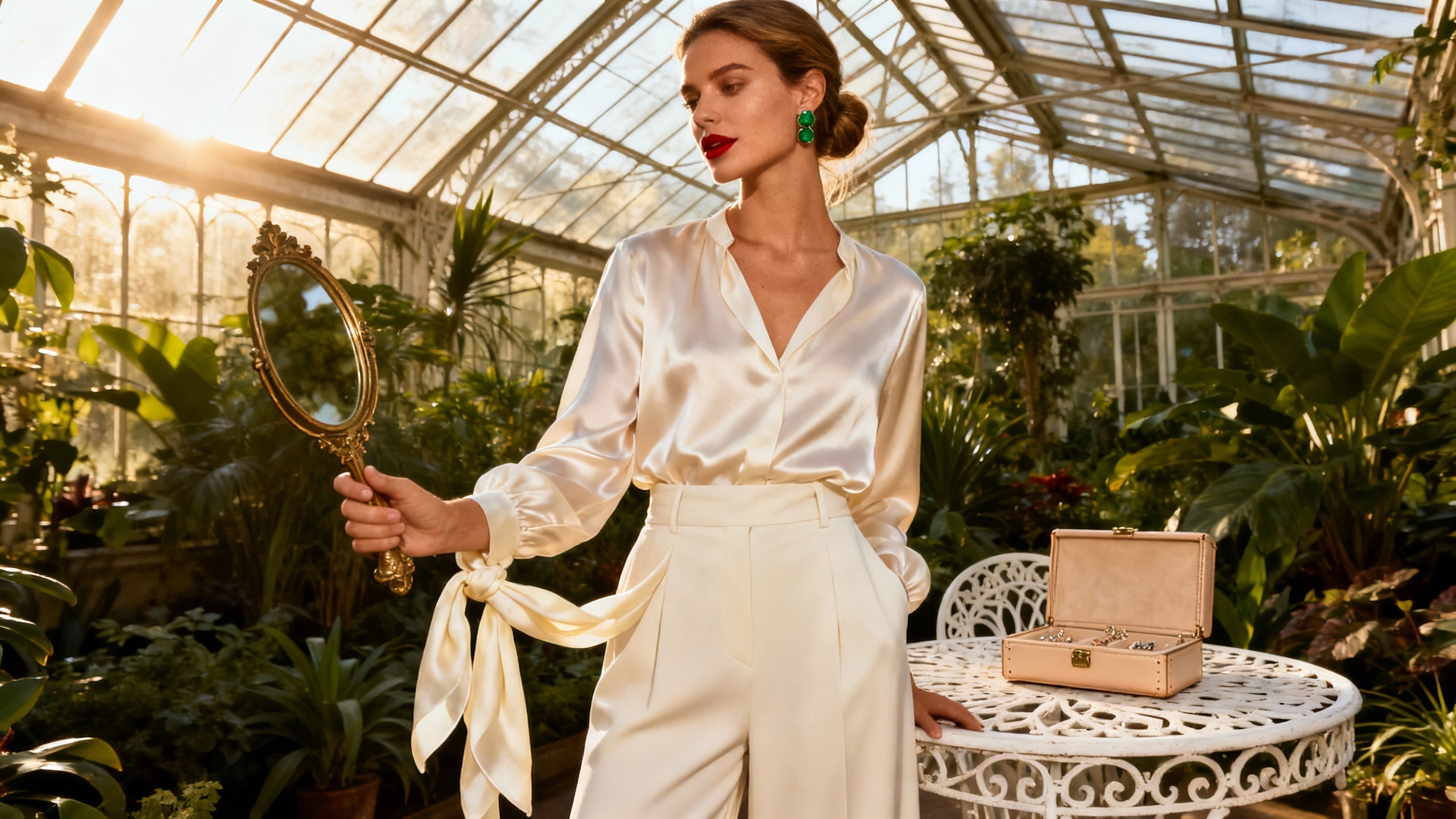
Lab-Grown Earrings for Graduations: Elegant Gifts to Mark Achievement
Graduation is a threshold moment, a bright line between what has been earned and what comes next. Jewelry that endures—especially earrings—carries that meaning forward, becoming both a wearable keepsake and a confidence-boosting finishing touch under a cap and gown. Lab-grown diamond earrings deliver that symbolism with clarity: they are real diamonds, often more budget-friendly than mined stones, and they adapt beautifully to a graduate’s style, major, and next-step wardrobe. Drawing on bench-side fittings, side-by-side stone comparisons, and recent market guidance from respected retailers and reviewers, this guide explains how to choose the right pair, what to look for in quality and comfort, and how to care for a gift meant to be worn for years.
What “Lab-Grown” Means—and Why Graduates Love It
A lab-grown diamond is a diamond with the same chemical composition, crystal structure, and optical properties as mined diamonds. In practice, that means the sparkle, hardness, and durability that make diamonds suitable for lifelong wear apply equally to lab-grown options. Independent consumer guides highlight this parity and note that buyers typically save substantially on lab-grown pieces compared with mined equivalents. LabGrownCarats.com, which tests products and frames recommendations with editorial independence, cites savings in the range of roughly 60–80% compared with mined diamonds. In several places, that same source also references more conservative comparisons closer to 30–40%. The discrepancy is unsurprising: savings vary by exact specifications, brand premiums, time of year, and whether the “mined” comparison is a like-for-like independent grade or a house standard. A simple validation step is to compare two diamonds with the same carat weight, cut quality, color, and clarity from two retailers on the same day and calculate the difference.
Beyond price, many graduates care about ethics and climate impact. LabGrownCarats.com mentions sellers like Vrai that promote zero-emission production. Because sustainability claims differ across labs and regions, I recommend asking the retailer which energy sources power growth facilities, whether third-party audits are available, and how shipping and setting manufacturing are handled. A quick check—requesting a concise energy and certification statement—can clarify marketing versus measurable practices.
Why Earrings Are the Perfect Graduation Gift
Earrings are visible in photos and in person during the ceremony and the celebrations that follow. Studs and huggies sit securely while the tassel swings, and they transition seamlessly to job interviews, internships, and first-day office looks. Importantly, earrings are easy to gift without the sizing complexity of rings. In fittings I’ve done for spring and early-summer ceremonies, low-profile studs and petite huggies are the most requested for “under the mortarboard” proportions, while bolder shapes gain traction for the dinner that follows.
An overlooked practical insight is how caps and tassels interact with jewelry. Elevated halo settings and long drops can snag on fabric during hugs or when the tassel is moved from right to left. If the ceremony is the main stage, a bezel-set stud or a streamlined huggie minimizes snag risk; the statement piece can debut at the party. This is a pragmatic choice more guides could emphasize, and you can validate it quickly during a try-on with the cap in place.
Styles at a Glance
The styles below all work for graduation; what changes is their profile, how they photograph, and how they feel for a long ceremony.
Style |
What It Looks Like |
Ceremony Practicality |
Typical Appeal |
Budget Context |
Classic studs |
Single stones on the lobe; martini, basket, or bezel settings |
Very secure, low snag risk; ideal under cap |
Minimalist to timeless; never out of place |
LabGrownCarats.com notes examples around $1,000.00 for 1.0 cttw studs and curated picks starting near $285.00 |
Huggies/hoops |
Small hoops close to the ear; can be plain or pavé |
Low to moderate profile; comfortable for hours |
Modern and versatile; day-to-night |
Prices vary widely with total diamond weight and metal |
Ear arcs |
Diamonds climbing along the ear’s curve |
Secure when fitted correctly; distinctive in photos |
Fashion-forward; strong personality |
Featured by LabGrownCarats.com as a standout contemporary choice |
Drops |
Diamonds suspended below the lobe |
Elegant but more snag-prone under cap and tassel |
Photogenic for celebrations; consider after-ceremony wear |
Pricing depends on carat total weight and design complexity |
If in doubt, classic studs deliver the most ceremony-proof elegance per dollar, with huggies a close second for all-day comfort.

Understanding Quality for Earring Pairs
The 4Cs—Applied to Ears, Not Just Cases
LA JOYA’s guidance puts the 4Cs—cut, color, clarity, and carat—at the center of how earrings are matched. For pairs, the nuance is that you are evaluating two stones together. Symmetry across color and clarity avoids one diamond reading warmer or more included than the other. Even when both stones meet your target grades, they should be visually compatible as a duo. That harmony is what makes a pair feel “right” at arm’s length and in graduation photos.
Cut is the driver of sparkle. With studs, you experience the light return straight on. Well-cut stones fire even under auditorium lighting. Because carat weight translates differently into face-up size across cuts and makes, I always evaluate pairs side-by-side rather than on paper. LA JOYA emphasizes expert matching for size, color, and clarity; that pair mindset should be your baseline regardless of seller.
A Subtle Matching Insight Many Shoppers Miss
Weight parity alone does not guarantee that two stones look like twins. In practice, table size, crown height, and overall make influence how each diamond returns light. If one stone has a larger table or a shallower crown, the pair can sparkle slightly out of sync. This is a small nuance, but it is noticeable in still photos. It is reasonable to ask the retailer for side-by-side images of the exact stones, and if possible, a short video under neutral light. Many online sellers can provide this on request; if they cannot, ask whether their workshops pre-match pairs for cut performance, not just for weight and lab grades.
Color and Lighting Reality Check
Color matching is most honest when you view pairs in multiple environments. I compare studs at a window during mid-morning daylight and under a warm lamp similar to indoor ceremony lighting. If a pair is going to drift slightly in tone, this is when you will see it. It takes less than five minutes in the store or at home during the return window and can save years of noticing a tiny mismatch.

Settings and Backings: Look, Security, Comfort
Settings determine profile, security, and style. LA JOYA points to timeless solitaires, vintage-inspired halos, sleek bezels, and dramatic three-stone designs—each crafted for security, beauty, and comfort. For ceremonies and professional settings, a martini or bezel stud gives you the lowest profile. Halos create visual presence at smaller carat totals but tend to sit higher; I reserve them for after the ceremony if snagging is a concern. Three-stone front-facing settings add presence for drops and ear arcs and suit graduates with expressive style.
Backings are comfort hardware and deserve more attention than most guides give them. Friction backs are quick to put on and adjust; screw backs feel more secure to nervous wearers but can be fiddly, especially with long nails. I have fitted graduates who prefer locking backs for peace of mind during the ceremony and photos; if you are unsure, ask to try two backing styles on the same pair for ten minutes and choose the one you forget you are wearing. If that is not possible online, pick the style that matches what the graduate already wears successfully.

How Much Should You Spend?
One advantage of lab-grown earrings is how far your budget goes without compromising on sparkle. LabGrownCarats.com points to curated gift picks starting around $285.00, a real-world example of 1.0 carat total weight studs around $1,000.00, and a pink lab-grown diamond pendant around $660.00. Those numbers are snapshots and will vary with carat weight, cut quality, color, clarity, metal, and the retailer’s sourcing approach. If you are optimizing for value in stud earrings, prioritize cut quality and matched appearance first, then size. Two slightly smaller, beautifully cut stones will outshine larger, compromised cuts in every graduation photo.
There is also disagreement in how much you will “save” against mined equivalents. The same reviewer cites both a roughly 60–80% range and a more conservative band closer to 30–40%. Differences stem from time frames, retail channels, and whether the baseline mined comparison is a major-brand piece with design premiums or an unbranded equivalent. A practical way to resolve this for your purchase is to pick a target specification and run an A–B search across two respected retailers on the same day.

A Note on Sustainability Claims
Some brands promote low or zero-emission growth and supply chains. LabGrownCarats.com highlights Vrai’s zero-emissions positioning, and other retailers such as Brilliant Earth emphasize climate-conscious programs and sustainably graded diamonds. Because definitions can vary, ask three precise questions before you buy: which energy sources power growth, whether a third party audits those claims, and how the setting and shipping emissions are considered. If the seller shares a short statement that answers those points, you can feel confident the claim is more than marketing. If they cannot, choose based on the jewelry’s intrinsic quality and the retailer’s transparency rather than a headline.
Pros and Considerations
Aspect |
What You Gain |
What to Weigh |
Value |
Typically lower prices for the same visual impact; potential for larger or higher-spec stones within budget, per LabGrownCarats.com |
Savings vary widely by specification and comparison method; verify on the day you buy |
Ethics |
Conflict-free sourcing and options marketed as low-emission |
Sustainability claims differ; ask for energy sources and any audits before relying on the claim |
Availability |
Consistent supply and better selection in specific sizes and shapes |
Fast-changing inventories; pairs should be matched intentionally, not just by weight |
Wearability |
Diamonds remain durable and scratch-resistant for daily wear |
Backing choice and setting profile affect comfort and snag risk under caps and tassels |
Buying Tips From the Bench
My process for graduation earrings is simple and pragmatic. I start by defining the ceremony context. If the pair will be worn during the event, I recommend a bezel or low-profile martini stud or a close huggie to minimize snags. Next, I ask for side-by-side images or a short video of the actual stones under neutral light, validating that they look like twins in color and sparkle. I then choose the backing that the graduate already wears comfortably. I finish with a quick lighting test—daylight and a warm lamp—because this mirrors real life on the day and in family photos. If any step is not possible with a given retailer, I prioritize one that can pre-match pairs for earring use, not just for technical grades.

Where to Buy: What Different Retailers Emphasize
Several US-facing retailers have clear strengths in lab-grown diamond jewelry, as summarized by LabGrownCarats.com. James Allen earns praise for advanced inspection tools and gemologist guidance. Clean Origin is noted for competitive prices and a large lab-grown selection. Ritani offers extensive loose inventory, strong aftercare, and high-quality preset pieces. Brilliant Earth leans into ethically focused programs and climate-conscious options. With Clarity excels in engagement flow but is also worth reviewing for earrings. Blue Nile, a long-established name, now carries lab-grown alongside mined, and Grown Brilliance has been recognized for strong value in custom and preset designs. Use each retailer’s strengths to your advantage—if detailed imaging and video matter, start with those that specialize in it; if budget efficiency tops the list, begin with those reviewed as price leaders.
Care and Maintenance
Diamond earrings are durable, but their settings still deserve steady care. A gentle clean in warm water with a drop of mild dish soap and a soft brush restores luster after the ceremony weekend and during busy weeks that follow. Rinse thoroughly and blot dry with a clean cloth. Store them separately or in a soft pouch to avoid scuffs on metal. If the earrings have pavé or delicate halos, I prefer hand-cleaning over ultrasonic baths unless the retailer explicitly recommends otherwise. Before big days like graduation, check that the backs are firm and the posts straight; after the event, a quick inspection confirms everything remained snug.
Two Practical Insights You Can Validate Quickly
Color harmony and cut consistency matter more in pairs than they do in single-stone pieces. You can validate both by requesting side-by-side images or a short video of your exact stones and reviewing them under neutral and warm light. Another subtle factor is closure comfort over hours, not minutes. If the wearer has never used screw backs, a locking or friction back may be more comfortable for a long ceremony. If you cannot try on, make the decision based on what they already wear daily and confirm that the retailer’s return window allows an exchange for a different back if needed.

Your Takeaway
Lab-grown earrings are a smart, elegant way to mark achievement. They deliver the sparkle and durability of diamond at an often friendlier price, with ethical and climate-aware options that resonate with today’s graduates. For the ceremony itself, a low-profile stud or huggie is a safe, photogenic choice; for the celebrations and the workweek ahead, pick the style that best fits the graduate’s personality. Match pairs intentionally, confirm comfort with the right backing, and do a quick lighting check. If sustainability is part of the story you want to tell, ask focused questions and choose sellers that provide straightforward answers. With those steps, you are giving more than jewelry—you are offering a wearable reminder of resilience, effort, and the bright road ahead.
FAQ
Are lab-grown diamond earrings real diamonds?
Yes. Lab-grown diamonds have the same chemical, physical, and optical properties as mined diamonds and exhibit the same sparkle and durability. LabGrownCarats.com emphasizes this parity throughout its guidance.
How big should graduation studs be?
There is no single right size. In my fittings, many graduates gravitate to visually balanced studs that do not overwhelm the lobe in photos, and LabGrownCarats.com cites an example of 1.0 carat total weight studs around $1,000.00. Some prefer smaller for minimalism, others larger for presence; a quick try-on with the cap is the best validator.
How much can I expect to save with lab-grown earrings?
Savings vary. LabGrownCarats.com references both higher savings bands and more conservative figures, and both can be true depending on timing, specifications, and comparison baselines. The fastest way to decide for your purchase is to compare two like-for-like pieces from respected retailers on the same day.
Are sustainability claims reliable?
Some are, some are marketing. LabGrownCarats.com notes brands that promote zero-emission growth or climate-conscious programs. Ask which energy sources power growth, whether any third party audits those claims, and how setting and shipping are included. Choose transparent sellers.
Which backing is best for a long ceremony?
Friction backs are quick and comfortable; screw backs can feel more secure but require patience. Locking backs provide reassurance. If you cannot test, select what the graduate already wears comfortably and confirm you can exchange backs if needed.
How should I clean and store the earrings?
Use warm water with a drop of mild dish soap and a soft brush, rinse thoroughly, and dry with a clean cloth. Store separately or in a pouch. For pavé or delicate halos, favor hand-cleaning unless the seller advises otherwise.
A Short Note on Price Examples and Sources
Prices mentioned, such as curated gift picks near $285.00, around $1,000.00 for 1.0 carat total weight studs, and a pink pendant around $660.00, are drawn from LabGrownCarats.com’s recent guidance and are subject to change with inventory and promotions. Guidance on pair matching and settings emphasizes LA JOYA’s focus on the 4Cs and secure, comfortable craftsmanship for symmetry and wearability. Where sustainability is discussed, references to zero-emission positioning are attributed to brand claims as reported by LabGrownCarats.com and should be verified directly with the seller through concise documentation.
References
- https://www.gia.edu/gems-gemology/summer-2024-gia-update-on-laboratory-grown-diamonds
- https://blogs.cornell.edu/learning/your-complete-guide-to-lab-grown-diamonds/
- https://us.pandora.net/en/earrings/lab-grown-diamond-earrings/?srsltid=AfmBOopdIHoNrc0B2EVx5f8KSwajKRfb6RusTn9ZC9sxgNeTvGyAO8Og
- https://www.grownbrilliance.com/graduation-gifts
- https://bestbrilliance.com/collections/earrings-1
- https://www.cleanorigin.com/diamond-stud-earrings/?srsltid=AfmBOor_SM9NwLmiNW0QS_XqrGw-s6HcRg-c_MsoUSwLPqL0Givd0LtR
- https://smart.dhgate.com/expert-tips-for-choosing-the-perfect-lab-grown-diamond-earrings-that-suit-your-style-and-budget/
- https://www.diamondsfactory.com/diamond-earrings/lab-diamond
- https://labgrowncarats.com/lab-grown-diamond-graduation-gift-ideas/
- https://www.miadonna.com/collections/lab-grown-diamond-earrings?srsltid=AfmBOorrApiG-koskcEZ6I-OTeeqmnVyxF2zr9SekTv3oaH96RULNTgs