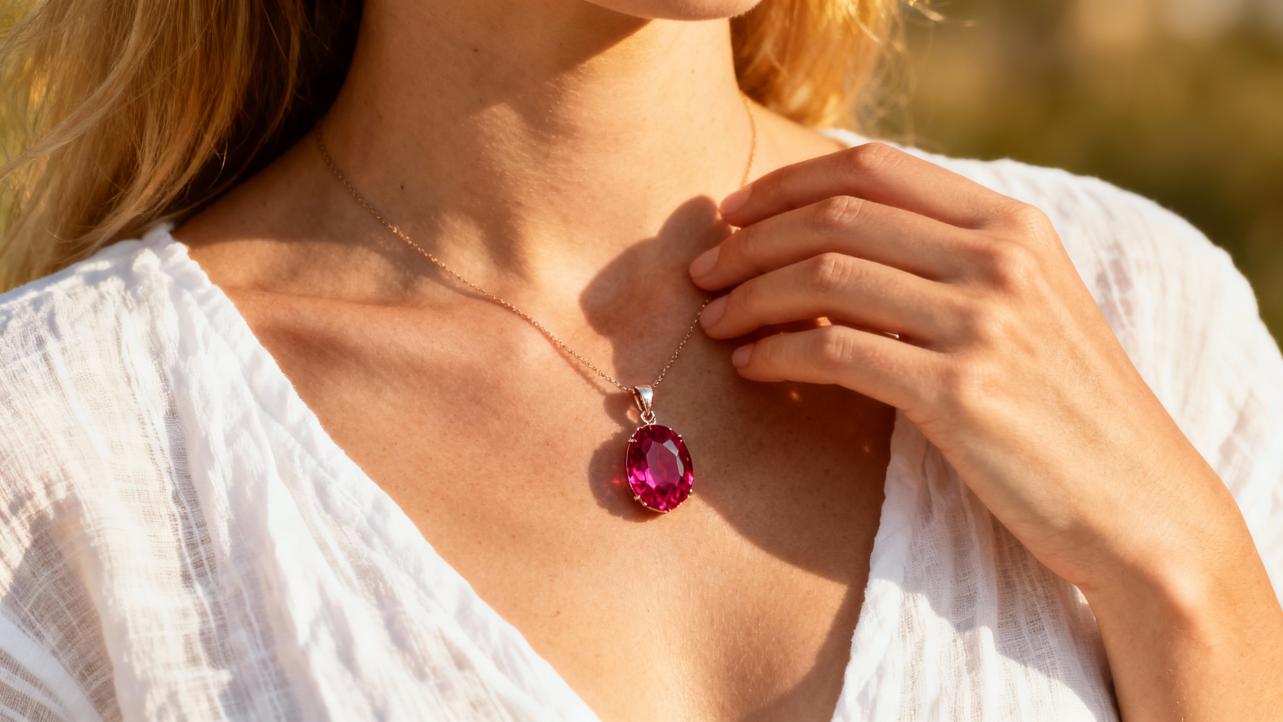
Lab Grown Ruby Jewelry for July Birthdays: Vibrant Gifts for Summer Celebrations
Rubies belong to July the way fireworks belong to the evening sky. Their saturated crimson, powered by traces of chromium in corundum, holds its color against summer sun and party lights alike. In the studio, I reach for lab grown rubies when a client wants July’s birthstone with vivid color, everyday durability, and a price that leaves room for the celebration itself. They are real rubies in every meaningful sense—same chemistry, structure, and optical fire—just born in a controlled environment rather than underground. For summer gifting, that combination of beauty, resilience, and value makes lab grown ruby jewelry a natural fit.
This guide distills practical advice from bench experience and reputable authorities to help you choose, wear, and care for lab grown ruby jewelry with confidence. You will find clear definitions, nuanced pros and cons, straightforward cleaning steps, and buying tips that matter for July birthdays and every season that follows.
What Exactly Is a Lab Grown Ruby?
A lab grown ruby is corundum created in a controlled environment with the same chemical composition as mined ruby: aluminum oxide colored red by trace chromium. Because the crystal structure and chemistry are identical, the physical and optical behavior is the same as natural ruby. Shelby Gem Factory explains that lab grown gems match natural gems in refractive index, dispersion, and hardness, which is why they look and wear like their mined counterparts. Jewelry Boxes corroborates the basics of corundum and chromium as the source of ruby’s red.
On hardness, the most reliable figure for ruby—natural or lab grown—is 9 on the Mohs scale. This is consistently referenced in professional care guidance from AotuJewelry and The Natural Ruby Company. A few retail pages present a broader range such as 8.5 to 10. Because such ranges can confuse buyers, a cautious approach is to validate hardness and treatment assumptions with a credentialed gemologist or by consulting a recognized reference like GIA. In practice, I treat all rubies as hard enough for frequent wear but not indestructible; a hard blow at the wrong angle can still chip a facet.
Why Lab Grown for July Gifts
Lab grown rubies give July gift-givers several tangible advantages. They typically offer a lower price-per-carat compared with comparable-looking mined rubies, making larger center stones or richer design options attainable without compromising on durability or brilliance; Shelby Gem Factory notes significant cost savings and consistent quality. Growth in a controlled environment often yields fewer internal inclusions, which means bright, even color and a clean look that flatters minimalist solitaires and pavé-heavy designs alike. Ethical sourcing and a smaller environmental footprint are attractive for many families celebrating milestones with intention.
For the recipient, lab grown rubies bring practical joy. They are hard enough for frequent wear during summer’s active calendar—from rooftop dinners to July 4 weekends—while holding their polish and saturated hue when cared for sensibly.
Lab Grown vs. Natural Ruby at a Glance
Criterion |
Lab Grown Ruby |
Natural Ruby |
Care Note |
Composition and optics |
Same corundum chemistry and optical behavior |
Same |
Clean and store identically for most scenarios. |
Clarity consistency |
Often fewer inclusions and very even color |
Inclusion patterns vary; some have visible feathers or crystals |
Inclusions can influence tolerance for ultrasonic cleaning. |
Price-per-carat |
Generally lower for comparable look |
Often higher for fine quality due to rarity |
Savings can be directed to better settings or larger carat. |
Controlled growth with transparent origin |
Depends on mine and supply chain |
Consider personal values and documentation. |
|
Treatments encountered |
Commonly heat-treated; rare cases of glass filling exist |
Heat-treated common; lead-glass filling seen in lower-grade material |
Treatment disclosure affects cleaning choices. |
The table’s care notes reflect shared guidance across AotuJewelry, Best Brilliance, and The Natural Ruby Company that both lab grown and natural rubies benefit from the same day-to-day maintenance, with specific cautions tied to treatments and inclusion density.
Color, Cut, and Setting That Sing in Summer
Ruby’s color lives in the red family thanks to chromium, with nuances that shift from bright cherry to deep crimson depending on body color and tone. Lab grown rubies excel at delivering that vivid, even saturation that holds up beautifully in daylight and candlelight. In summer, crisp cuts help the stone throw light: a round or oval brilliant captures sparkle; an emerald cut emphasizes depth of color and sleek lines.
In my shop, I favor secure, low-profile settings for pieces meant to be worn to cookouts or poolside gatherings. A bezel-protected pendant or a half-bezel ring paired with solid 14k gold offers strength without weighing down a delicate neckline or hand. That metal choice nods to Shelby Gem Factory’s observation that durable settings contribute to a jewel’s long life.

Real-World Durability: What to Expect
Rubies, including lab grown, are among the most durable colored gems. At 9 on the Mohs scale, they resist scratches from most household contacts. Even so, corundum can chip if struck sharply on an exposed edge. AotuJewelry and Best Brilliance both emphasize the everyday habits that make the difference: remove your ring before workouts, yard work, and heavy cleaning; avoid chlorine and harsh household chemicals; wipe pieces with a soft cloth after wear to lift oils and sunscreen residue. Store rubies in individual pouches or separate compartments so a diamond does not abrade them and they do not scuff softer gems.
Settings deserve attention too. The Natural Ruby Company recommends annual professional inspections to ensure prongs are not thinning and stones are not loose. I check halos and pavé lines more often, since small stones near the hand endure more knocks.
Treatments and Why Disclosure Matters
Heat treatment is common and stable for rubies—natural and lab grown—to optimize color and minimize visible inclusions. Other treatments, like fracture filling with high-lead glass, can make otherwise unsalable material appear clear enough for jewelry, but the result is more vulnerable to chemicals, heat, and ultrasonic cleaning. GIA documented an unusual but important case: a lead glass–filled laboratory-grown ruby. That example underscores an overlooked truth in consumer guides: even lab grown rubies can carry treatments that change care rules. If you want carefree maintenance, it is worth asking the seller to disclose any enhancements beyond heat.
In the studio, I assume the least aggressive cleaning method until treatment details are confirmed. A jeweler’s loupe or microscope can reveal telltale features of glass filling—flattened gas bubbles and a blue-orange flash along fractures as documented by GIA—yet identification is best left to trained professionals.
Cleaning Approaches That Protect the Stone
Gentle hand-cleaning maintains luster without risk. Mix mild dish soap in lukewarm water, brush crevices with a soft toothbrush, rinse thoroughly, and pat dry with a lint-free cloth. This simple routine appears across AotuJewelry, Best Brilliance, Jewelry Boxes, and The Natural Ruby Company. Wiping pieces after wear helps extend the time between deeper cleanings.
Whether to use ultrasonic or steam cleaning depends on the stone. The Natural Ruby Company notes that professionals sometimes use ultrasonic or steam on stable stones, while multiple sources caution against these methods for rubies with fractures, heavy inclusions, or glass filling. Jewelry Boxes adds that ultrasonic can disturb fracture-filled stones. The apparent disagreement usually comes down to definitions and sample differences: “stable” often means heat-treated with no significant open fractures, while “avoid” targets stones with glass-filled fissures or other vulnerable enhancements. A practical, low-risk path is to ask your jeweler to inspect under magnification and confirm the treatment status; if there is any uncertainty, stick to hand-cleaning.
Heat and Thermal Shock: An Underestimated Risk
Sudden temperature swings can stress corundum. Jewelry Boxes advises avoiding extreme heat and abrupt temperature changes, and the thermal-shock principle shows up in an unexpected corner of the trade: Gordo Scientific warns that applying alcohol or other cleaners to hot ruby or sapphire can crack them. Although that content addresses gemstones used at high heat in a different context, the physics apply. Let jewelry cool to room temperature before cleaning, and never move a hot gem straight into liquid.
Sunlight and Pool Season
Summer jewelry meets sunblock, salt, and chlorine. Best Brilliance encourages removing gemstone jewelry before sports or swimming to prevent both chemical and impact damage. The Natural Ruby Company adds a subtlety rarely stated elsewhere: avoid prolonged direct sunlight for extended periods if the ruby is heat sensitive due to certain treatments, as slight fading is possible. That is not a call to hide your jewelry indoors, only a reminder to store treated pieces out of sunny windows for weeks at a time and to minimize chemical exposure at pools.

Ruby Treatment and Cleaning Guide
Treatment or Condition |
Typical Indicator (for jewelers) |
Recommended Cleaning |
Special Caution |
Untreated or standard heat-treated |
No glassy flash in fractures; clean internal structure |
Hand-clean with mild soap and lukewarm water; jeweler may use ultrasonic or steam if structure is sound |
Confirm under magnification before ultrasonic or steam. |
Heavily included or fractured |
Visible feathers or stress lines reaching surface |
Hand-clean only with soft brush; avoid ultrasonic and steam |
Impacts and vibration can propagate fractures. |
Lead-glass filled |
Blue-orange flash along fractures; flattened gas bubbles |
Hand-clean gently; avoid ultrasonic, steam, acids, or strong cleaners |
GIA reports glass-filled rubies—natural and rare lab grown—are sensitive to chemicals and heat. |
Unknown treatment |
No documentation; uncertain visual cues |
Default to hand-cleaning; ask a jeweler to assess |
When in doubt, do not use ultrasonic or steam. |
This table synthesizes guidance from The Natural Ruby Company, Jewelry Boxes, Best Brilliance, and GIA. If any diagnostic language is unfamiliar, ask a jeweler to explain what they see under the microscope in plain terms; it is your right to understand how a gem has been enhanced.

Buying Tips for a Confident July Gift
Start by deciding whether the recipient will appreciate the value and ethics of a lab grown stone or the romance of a mined gem. Both are beautiful; lab grown typically stretches a budget further, and Shelby Gem Factory underscores their consistency and transparent origin. Request written disclosure of any treatments. Because GIA has documented rare glass-filling even in lab grown rubies, it is wise to ask explicitly whether the gem is glass filled or simply heat treated.
Examine craftsmanship as closely as you examine the stone. Solid 14k gold or platinum settings tolerate summer wear better than hollow or very thin components. Run a fingernail gently over each prong; nothing should snag. Ask for a quick loupe lesson so you can see the prong tips and seat with your own eye. For gifts intended for daily wear—think classic solitaire pendant or bezel-set studs—choose low-profile settings that will not catch on swimwear or beach totes.
Finally, discuss maintenance and policies. The Natural Ruby Company recommends annual professional cleaning and inspection; make sure the store offers this and stands behind its workmanship. If long-term resale is of interest, understand buyback or trade-up policies in writing. Because secondary market dynamics vary by brand and region, it is prudent to evaluate the store’s specific program rather than rely on general claims.
Pros and Trade-Offs of Lab Grown Ruby
Aspect |
Advantage |
Consideration |
Beauty and performance |
Identical optical and physical behavior to natural; rich, even color |
Uniformity can look very “perfect”; some buyers prefer natural inclusion character |
Value |
More stone or finer color within a given budget |
Secondary-market perceptions vary; rely on store programs rather than assumptions |
Ethics and transparency |
Traceable origin and smaller environmental footprint |
Still important to secure honest treatment disclosure |
Care |
Same durable daily-wear profile as natural ruby |
Treatments, if present, dictate cleaning limits |
The advantages are compelling for most gift scenarios. The key is to buy from a seller who can articulate the gem’s treatment history and stand behind care guidance.
The Home Care Kit I Recommend
A simple kit supports nearly every care routine you need. Keep mild dish soap, a soft child-size toothbrush, a microfiber cloth, and a few soft pouches in the drawer where jewelry is stored. The soap lifts sunscreen and body oils without harming the gem or setting. The toothbrush reaches prongs and galleries that collect lotion. The microfiber cloth dries without lint. Separate pouches prevent a diamond stud or tennis bracelet from scratching your ruby pieces. This modest kit aligns with the core practices emphasized by AotuJewelry, Best Brilliance, Jewelry Boxes, and The Natural Ruby Company.
Gift Ideas for July Celebrations
For July birthdays that coincide with outdoor parties and travel, a bezel-set lab grown ruby pendant stays secure and glows against summer skin. Bezel-set studs pair without fuss from boardwalk to black tie and resist the knocks that can loosen prongs. A slim lab grown ruby anniversary band creates a saturated ribbon of red that stacks beautifully with diamond bands for Independence Day outfits, balancing patriotic color with refined elegance. Whatever the choice, choose designs that are wearable beyond July; lab grown rubies play well with white, yellow, or rose gold and complement year-round wardrobes.
Takeaway
Lab grown ruby jewelry delivers July’s birthstone in its most approachable form: saturated color, robust durability, intelligent value, and clear ethics. Treat the gem like the fine corundum it is—clean it gently, remove it during harsh activities, store it separately, and have it inspected annually—and it will hold its glow long after the sparklers fade. Ask sellers to disclose treatments plainly so you can tailor care with confidence. With that clarity and a well-chosen setting, a lab grown ruby becomes a summer gift that keeps its shine through every season.
FAQ
Are lab grown rubies real rubies?
Yes. Lab grown rubies are corundum with the same chemistry, crystal structure, and optical properties as mined rubies. Shelby Gem Factory describes lab grown gems as chemically, physically, and optically identical to their natural counterparts, and Jewelry Boxes explains that chromium within corundum creates ruby’s red in both origins. The difference is origin, not substance.
Can lab grown rubies be worn every day?
They are excellent for frequent wear. Multiple care guides, including AotuJewelry and Best Brilliance, point out that ruby’s hardness supports daily use when paired with smart habits. Remove pieces before sports, heavy yard work, and chores involving harsh chemicals, wipe them after wear, and schedule annual inspections. Diamonds can scratch rubies, so store pieces separately.
Is ultrasonic cleaning safe for lab grown ruby jewelry?
It depends on the stone’s structure and treatments. The Natural Ruby Company notes professionals may use ultrasonic or steam for stable stones, while Jewelry Boxes and Best Brilliance caution against these methods for fracture-filled or heavily included rubies because vibration and heat can worsen fractures or damage glass filling. If treatment status is unknown, hand-clean with mild soap and lukewarm water and ask a jeweler to confirm whether the stone is suitable for ultrasonic cleaning under magnification.
Do rubies fade in sunlight?
In general, rubies are stable. However, The Natural Ruby Company advises avoiding prolonged direct sunlight for extended periods in heat-sensitive treated rubies, where slight fading could occur. As a practical habit, store jewelry out of sunlit windows and avoid leaving pieces in a hot car. If you suspect treatment sensitivity, ask your jeweler and observe the stone over time in consistent lighting.
How can I tell if a ruby is lead-glass filled?
Lead-glass filling can sometimes be recognized under magnification by an experienced jeweler as blue-orange flashes along fractures and flattened gas bubbles. GIA documented those features in both natural and, rarely, laboratory-grown rubies. Because identification requires training and the right tools, the most reliable approach is to ask for treatment disclosure and request a bench inspection. If glass filling is present, avoid ultrasonic, steam, acids, and strong household cleaners.
Is the hardness of ruby ever listed as something other than 9?
The professional consensus in care literature places ruby at 9 on the Mohs scale, while some retail content presents a broad 8.5 to 10 range. Differences likely stem from varying explanations of hardness scales and generic statements spanning multiple stones. For clarity, rely on sources that focus specifically on corundum, and treat ruby as a 9 for practical care decisions. A gemologist can address questions with examples and context.
References
- https://www.gia.edu/ruby-care-cleaning
- https://snr.unl.edu/data/geologysoils/birthstones/ruby.aspx
- https://diposit.ub.edu/dspace/bitstream/2445/218706/1/881771.pdf
- https://www.fredmeyerjewelers.com/treatment?srsltid=AfmBOop79LqBLexGVpB_QiQQTGU_I_J9TKuoobCIYliaahZAp6o7P1U8
- https://www.diamondsfactory.com/blog/how-to-clean-gemstone-jewelry
- https://myjewelpark.com/how-to-clean-a-lab-grown-ruby-without-ruining-the-color%EF%BC%9F/
- https://www.shelbygemfactory.com/caring-for-your-lab-grown-gems-ensuring-long-lasting-brilliance/
- https://sheragems.com/a-guide-to-caring-for-lab-grown-gemstones/
- https://aljoher.ca/blogs/news/essential-care-tips-for-ruby-jewelry-ultimate-guide
- https://www.angara.com/blog/can-ruby-be-worn-every-day/?srsltid=AfmBOoplterYvwxnuRkbryNps3tobr7qBMQNMlnxB5tP0jr0KezmzZe8